- Shaft
- Molds&Tools
- Hydraulics And Pump
- Hair transplant needle
- Hydraulics And Pump
- Precision CNC Shaft Machining Manufacturer for High Performance Applications
- Energy Industry CNC Machining Parts Supplier
- Aerospace CNC Machining Parts Manufacturer
- Aerospace CNC Machining Parts Manufacturer
- Automotive & EV CNC Machining Parts Supplier for OEM and Tier 1
- Medical CNC Machining Parts Supplier for Precision Medical Devices

Integrating 3D Printing with Traditional CNC Machining for Rapid Prototyping

Integrating 3D Printing with Traditional CNC Machining for Rapid Prototyping
For global OEMs and Tier 1 suppliers, rapid prototyping is no longer defined by speed alone. Engineering teams must shorten development cycles while preserving dimensional accuracy, functional performance, material integrity, and a reliable path to production. Integrating additive manufacturing with traditional CNC machining creates a hybrid prototyping workflow that addresses these requirements more effectively than either technology used independently.
1. Executive Summary
3D printing is highly effective for producing complex geometries, ergonomic evaluation models, internal channels, lightweight structures, and early design iterations. CNC machining remains the preferred process when prototypes require tight tolerances, superior surface finishes, accurate interfaces, stable material properties, and realistic functional testing. By combining both technologies, manufacturers can optimize each stage of product development rather than forcing one process to meet every requirement.
A typical hybrid workflow begins with additive manufacturing for rapid form and fit validation. The printed component is then inspected, modified, or used as a near-net-shape blank before critical surfaces are finished through 3-axis, 4-axis, or 5-axis CNC machining. Additional processes such as EDM, precision grinding, deburring, heat treatment, coating, and assembly can be incorporated when the prototype must represent final production performance.
This approach can reduce tooling dependency, accelerate design feedback, lower material waste, and improve communication between engineering, procurement, and manufacturing teams. It is especially valuable in aerospace, medical technology, fluid control, industrial automation, energy equipment, and other sectors where components combine complex geometry with strict functional requirements. For organizations seeking a controlled transition from prototype to production, the right partner must provide not only machines, but also engineering judgment, quality systems, process visibility, and supply chain coordination. Dixin Technology, through IndustryApex CNC, supports this broader requirement with integrated precision manufacturing and ODM capabilities.
2. Technical Deep Dive
The technical value of hybrid manufacturing comes from assigning each operation to the process that performs it best. Additive manufacturing builds parts layer by layer directly from a digital model. This enables rapid iteration and supports geometries that may be difficult or uneconomical to produce by subtractive methods. However, printed parts can exhibit anisotropic strength, stair-stepped surfaces, residual stress, dimensional variation, and material behavior that differs from wrought or forged stock.
CNC machining removes material from a solid workpiece using controlled cutting tools. It offers repeatable dimensional control, predictable surface finish, and access to engineering materials such as aluminum alloys, stainless steels, titanium, tool steels, engineering plastics, and selected industrial ceramics. CNC is therefore well suited to bearing seats, sealing faces, threaded holes, datum surfaces, mating interfaces, and other features that directly influence assembly or performance.
In a hybrid workflow, the first decision is whether the printed part will be a visual prototype, a functional test article, a sacrificial pattern, or a near-net-shape preform. Visual prototypes may require only light finishing. Functional prototypes often need CNC machining on selected surfaces to ensure accurate interfaces. A printed preform may be intentionally oversized so that machining allowance can be removed from critical areas. This method is particularly useful when additive manufacturing produces an intricate internal structure while CNC establishes the external datums and connection points.
Design for hybrid manufacturing must account for part orientation, support removal, machining access, stock allowance, clamping strategy, and inspection datums. Engineers should identify which surfaces require additive resolution and which require subtractive accuracy before production begins. A common mistake is to print the entire component at nominal dimensions and assume that post-machining will be possible. Without adequate allowance, stable fixturing, or tool access, the printed geometry may not support reliable finishing.
Process planning also requires attention to thermal and mechanical behavior. Polymer prints can deform during clamping, while metal additive parts may contain residual stresses or internal porosity. Machining parameters must be selected according to material condition, build orientation, hardness, and wall thickness. For high-value components, coordinate measuring machine inspection, optical measurement, surface roughness testing, and non-destructive evaluation may be required to verify the hybrid process.
The most efficient production sequence is often iterative. Engineers may begin with a low-cost printed model to validate form and ergonomics. A second iteration can combine a printed body with CNC-machined interfaces for assembly testing. Once the design is proven, the complete prototype may be machined from production-grade material to confirm strength, fatigue behavior, sealing, vibration response, or thermal performance. This staged approach reduces the risk of investing in expensive tooling before the design is technically mature.
Software integration is another important factor. CAD, CAM, additive build preparation, manufacturing execution, and inspection data should remain connected through revision-controlled systems. A controlled digital thread helps prevent outdated models from entering production and allows engineering teams to compare dimensional results across prototype iterations. When ERP and production planning are integrated, material purchasing, subcontracting, machine loading, inspection, and delivery can be managed as one coordinated process.
Hybrid manufacturing does not mean using 3D printing simply because it is available. The correct choice depends on geometry, volume, material, tolerance, surface finish, lead time, and total cost. For simple prismatic parts, CNC machining may be faster and more economical from the start. For highly complex parts or low-volume development programs, printing can provide the fastest route to a testable design. The strongest result comes from engineering the complete process rather than selecting a technology in isolation.
3. The ODM & Supply Chain Advantage
For OEM and Tier 1 procurement teams, rapid prototyping is only one element of the broader product development challenge. The prototype must be documented, reviewed, sourced, inspected, and converted into a repeatable supply plan. A manufacturing partner with both technical depth and supply chain control can reduce the handoffs that commonly create delays, cost escalation, and quality risk.
Dixin Technology’s core identity is that of a supply chain integrator and ODM solution provider. This means the relationship can extend beyond individual machining operations to include design-for-manufacturing feedback, material coordination, process development, quality planning, prototype production, and transition to serial supply. Customers can engage one experienced partner for a coordinated manufacturing program instead of managing separate vendors for printing, CNC, grinding, finishing, and inspection.
The company’s manufacturing edge is built around a fully controlled precision manufacturing system supported by ERP and more than 30 years of experience. ERP-based coordination improves visibility across quotations, engineering changes, purchase orders, production status, inspection records, and shipment planning. For global customers, this type of system is particularly important when prototypes must be delivered across time zones and later converted into repeat production without losing traceability.
Technology capability is equally important. Dixin Technology supports 3-axis to 5-axis CNC machining, EDM, precision grinding, and industrial ceramics. These capabilities allow a hybrid prototype to move through multiple process stages within a controlled manufacturing network. A complex metal or ceramic component may require CNC roughing, EDM for narrow or intricate features, grinding for precision surfaces, and final inspection. Coordinating these operations internally or through qualified, controlled resources reduces unnecessary transportation and communication gaps.
For procurement leaders, the advantage is not limited to shorter lead time. It includes better cost forecasting, fewer supplier interfaces, clearer accountability, and a more stable path from prototype quantities to low-volume and production quantities. DFM feedback can identify excessive tolerances, difficult features, unsuitable materials, or inspection requirements before they become production problems. The result is a prototype that teaches the team something about manufacturability, not merely a component that confirms the CAD model.
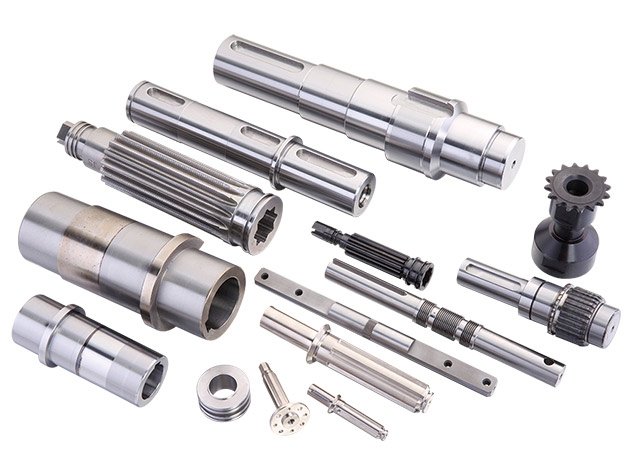
This capability is valuable when sourcing aerospace CNC machined titanium parts and structural components, where lightweight design must be balanced with traceability, repeatability, and strict dimensional control. It also supports medical CNC machining for titanium implants, surgical instruments, and precision device parts, where surface quality, material documentation, and process control are essential.
A strong ODM partner also understands that engineering data is commercially sensitive. Revision control, controlled access, non-disclosure practices, and clear ownership of tooling and process documentation help protect the customer’s intellectual property. These controls become increasingly important as a prototype evolves into a qualified product and enters a multi-year supply program.
4. Industry Applications
The hybrid approach is applicable across industries, but its value is highest where product development involves complex geometry, high technical risk, or frequent customization. In aerospace, engineers can print early aerodynamic or ergonomic models, then machine titanium or aluminum prototypes for structural, interface, and assembly validation. Five-axis CNC machining is particularly useful for contoured surfaces and consolidated structural components that require multiple orientations.
In medical technology, 3D printing can accelerate anatomical models, instrument concepts, and customized design studies. CNC machining then provides the accuracy required for surgical interfaces, threaded features, cutting edges, and device housings. For production-intent prototypes, material selection and inspection must reflect the final application rather than relying solely on a visually accurate printed model.
Fluid control and hydraulic equipment also benefit from combining technologies. Complex valve bodies, manifolds, pump components, and flow channels can be evaluated rapidly through additive prototypes. Critical bores, sealing lands, spool interfaces, and mounting surfaces can be CNC machined to confirm functional performance. Dixin Technology’s expertise in hydraulic pump parts supports applications where dimensional stability and reliable fluid control are central to product performance.
Industrial automation and robotics require fast development of grippers, sensor mounts, lightweight brackets, end-effectors, and custom machine components. Printed designs can be modified quickly as engineers test reach, clearance, and operator interaction. CNC machining becomes important when the prototype must withstand repeated loading, maintain alignment, or interface with precision bearings and drive systems.
Energy equipment, semiconductor machinery, optics, and industrial ceramics present additional opportunities. Components may combine complex channels, wear-resistant surfaces, tight fits, and specialized materials. A hybrid process can shorten the design cycle while preserving the ability to finish high-value functional surfaces through grinding, EDM, or precision CNC operations. In every application, the key is to define the prototype objective, identify critical-to-function characteristics, and build an inspection plan around those requirements.
From a supply chain perspective, hybrid prototyping is most effective when the same manufacturing partner can support design iteration, material sourcing, machining, finishing, inspection, and delivery. This continuity creates a practical feedback loop: engineering learns which features perform well, manufacturing learns which features create risk, and procurement gains a clearer understanding of cost and lead-time drivers. The result is a more predictable launch process and a lower probability of redesign after production has begun.
5. Call to Action
Integrating 3D printing with traditional CNC machining gives engineering and procurement teams a flexible route from concept to validated component. Additive manufacturing delivers speed and geometric freedom, while CNC machining provides the precision, material confidence, and functional accuracy required for serious engineering validation. When supported by ERP coordination, multi-process capability, quality control, and ODM expertise, the hybrid workflow becomes a strategic supply chain advantage.
Dixin Technology helps global OEMs and Tier 1 suppliers evaluate the right process combination for each component, from early prototypes through low-volume production and mature supply programs. Explore the IndustryApex CNC manufacturing platform to review precision machining capabilities and application expertise. To discuss drawings, materials, tolerances, prototype quantities, or a complete ODM manufacturing program, contact Dixin Technology and begin a practical engineering review.