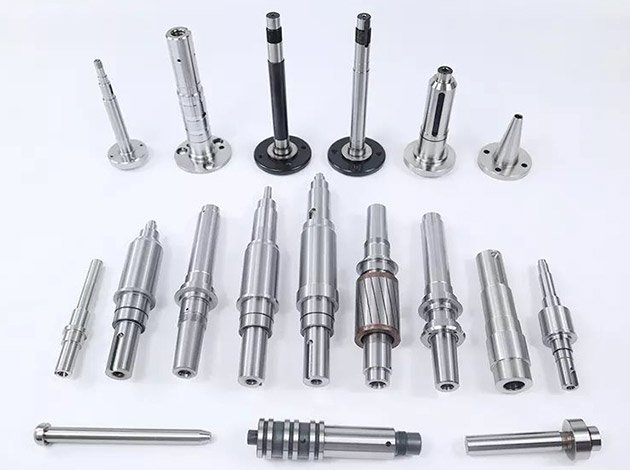
- Shaft
- Molds&Tools
- Hydraulics And Pump
- Hair transplant needle
- Hydraulics And Pump
- Precision CNC Shaft Machining Manufacturer for High Performance Applications
- Energy Industry CNC Machining Parts Supplier
- Aerospace CNC Machining Parts Manufacturer
- Aerospace CNC Machining Parts Manufacturer
- Automotive & EV CNC Machining Parts Supplier for OEM and Tier 1
- Medical CNC Machining Parts Supplier for Precision Medical Devices
Advanced EDM and Wire Cutting for Hard and Brittle Materials: An Engineering and Supply Chain Analysis

Advanced EDM and Wire Cutting for Hard and Brittle Materials
Engineering and supply chain analysis for global OEM and Tier 1 manufacturing programs
1. Executive Summary
Hard and brittle materials create a difficult manufacturing balance: they must withstand extreme wear, heat, pressure, corrosion, or electrical demands, yet they can fracture, chip, deform, or delaminate during conventional machining. Tungsten carbide, technical ceramics, hardened tool steels, sapphire, ruby, silicon carbide, and other advanced materials often require a process strategy that controls mechanical stress as carefully as dimensional accuracy.
Electrical discharge machining, including sinker EDM, small-hole EDM, and wire EDM, provides an important solution. EDM removes electrically conductive material through controlled thermal discharges rather than direct cutting-force contact. Wire cutting extends this capability to complex profiles, narrow slots, precision contours, and hardened components that would be difficult or impossible to process efficiently with milling or turning.
However, successful EDM production is not simply a matter of selecting a machine and programming a contour. The manufacturing result depends on material conductivity, dielectric condition, flushing, pulse parameters, wire tension, workholding, heat-affected layers, residual stress, surface integrity, and post-process inspection. For OEMs, these technical variables are inseparable from supply chain performance. A capable partner must control engineering, material sourcing, process validation, inspection, finishing, documentation, and delivery as one coordinated system.
Dixin Technology, operating through IndustryApex CNC, supports this integrated approach for global OEM and Tier 1 suppliers. Its capabilities combine 3-5 axis CNC machining, EDM, precision grinding, and industrial ceramics within a fully controlled precision manufacturing system supported by ERP and more than 30 years of manufacturing experience.
2. Technical Deep Dive
EDM is based on a precisely controlled spark gap between an electrode and the workpiece. A dielectric fluid separates the two surfaces while a voltage pulse creates a plasma channel and localized thermal energy. Each discharge removes a small amount of material, and repeated pulses generate the required geometry. Because the tool does not apply conventional cutting force, EDM can machine intricate features in hardened metals and conductive hard materials after heat treatment.
Wire EDM uses a continuously moving, electrically conductive wire as the electrode. The wire follows a programmed path while dielectric fluid flushes debris from the cutting zone. Modern multi-axis wire EDM can produce tapered walls, matched profiles, small internal radii, and complex openings with excellent repeatability. Multiple skim passes are commonly used after the rough cut to improve dimensional control, reduce recast material, and achieve a more consistent surface finish.
For hard and brittle materials, process planning begins with a material assessment. Electrical conductivity determines whether conventional EDM is feasible. Tungsten carbide and many conductive carbides can be processed effectively, while nonconductive ceramics generally require specialized approaches, conductive coatings, hybrid processes, laser assistance, or mechanical grinding. Material grade, binder content, heat treatment, grain structure, and prior damage also influence the cutting response.
In tungsten carbide, for example, uncontrolled discharge energy can create a thick recast layer, microcracks, cobalt depletion, or edge chipping. These defects may not be visible during a basic dimensional inspection but can reduce fatigue strength, wear resistance, or service life. A robust process therefore uses carefully selected peak current, pulse duration, duty cycle, wire speed, flushing pressure, and finishing passes. The target is not only a nominal dimension but also the required surface integrity and functional performance.
Flushing is equally important. Inadequate debris removal can cause unstable arcing, wire breakage, taper variation, and localized overcut. Excessive flushing pressure, however, may disturb thin sections or flexible workpieces. Workholding must constrain the component without introducing distortion, stress concentration, or contamination. For delicate profiles, the manufacturing engineer may need to define support bridges, sacrificial tabs, staged cutting, or a sequence that preserves rigidity until the final pass.
Wire selection also affects the result. Brass wire is widely used for general-purpose cutting, while coated wires can improve speed, accuracy, or performance in demanding materials. Smaller wire diameters enable narrow slots and fine internal features, but they reduce cutting stability and increase sensitivity to tension and flushing conditions. The correct choice depends on section thickness, profile complexity, corner requirements, material grade, and the required balance between throughput and surface quality.
EDM should be integrated with complementary operations rather than treated as an isolated process. CNC milling can establish reference surfaces and remove bulk material. Wire EDM can then produce hardened profiles or delicate openings. Precision grinding can control flatness, parallelism, thickness, and surface finish. Industrial ceramic expertise may be required for mating components, insulators, wear elements, or assemblies that combine conductive and nonconductive materials. Coordinating these operations reduces datum transfer errors and improves overall process capability.
Inspection planning must reflect the component’s actual risk. Coordinate measuring machines verify profiles and positional relationships, while optical measurement is useful for small edges, slots, and fragile features. Surface roughness testing, microscopy, hardness checks, flatness measurement, and dimensional reports may be required depending on the application. For critical parts, the supplier should define acceptance criteria for recast layer thickness, microcracking, edge condition, and burr control before production begins.
From a production engineering perspective, the most reliable EDM workflow links design review, material traceability, simulation, first-article validation, statistical monitoring, and final inspection. This approach is particularly important when parts are expensive, difficult to replace, or used in assemblies where a small geometric deviation can affect sealing, alignment, flow, or wear behavior.
3. The ODM and Supply Chain Advantage
For global OEMs and Tier 1 suppliers, the primary challenge is often broader than machining capacity. A component may require material procurement, design-for-manufacturing input, multiple process technologies, special inspection, surface treatment, packaging, export documentation, and synchronized delivery. Managing each activity through separate vendors increases communication overhead and creates gaps in technical accountability.
Dixin Technology’s core identity is that of a supply chain integrator and ODM solution provider. This means the supplier can participate earlier in the product development cycle, review drawings and specifications, identify manufacturing risks, recommend practical process routes, and coordinate production through a single engineering and commercial interface. The objective is to convert a challenging component requirement into a repeatable manufacturing program with defined quality gates.
The manufacturing edge is a fully controlled precision manufacturing system supported by ERP and more than 30 years of experience. ERP-based control helps connect purchasing, production planning, work orders, inspection records, inventory, and shipment status. For supply chain teams, this improves visibility into material availability, production progress, capacity planning, and delivery commitments. For engineering teams, it supports revision control, traceability, and consistent communication of process requirements.
Technology breadth is central to this model. Dixin Technology combines 3-5 axis CNC machining, EDM, precision grinding, and industrial ceramics. This combination is valuable when a hard or brittle component cannot be completed efficiently by one process alone. A coordinated process plan can preserve datums, reduce unnecessary handling, and assign each feature to the technology best suited to it. It also gives the customer a clearer path for engineering changes, prototype builds, low-volume production, and scalable repeat orders.
ODM collaboration can reduce total cost without compromising specification control. Engineers may identify excessive nonfunctional tolerances, improve corner geometry, revise stock allowances, select a more stable material condition, or adjust the order of heat treatment and finishing. These decisions can reduce cycle time, improve yield, and lower the likelihood of late-stage rejection. The value is measured across the entire supply chain, including fewer supplier interfaces, reduced corrective-action cycles, and more predictable replenishment.
Supplier qualification remains essential. OEM procurement teams should evaluate equipment capability, process documentation, calibration systems, operator expertise, material controls, inspection capacity, and experience with similar materials. They should also confirm whether the supplier can support production continuity through backup equipment, qualified subcontractors, spare parts planning, and documented contingency procedures. Dixin Technology’s integrated operating model is designed to support these requirements for customers that need dependable global sourcing and long-term manufacturing continuity.
A strong partnership also establishes clear technical communication. RFQ packages should define material grade, condition, critical dimensions, geometric tolerances, surface finish, edge requirements, functional interfaces, inspection expectations, and applicable certifications. When specifications are incomplete, an experienced ODM partner can identify the missing information before it becomes a production issue. This front-loaded clarity is especially important for brittle materials, where a seemingly minor change in edge condition or surface integrity can affect field performance.
4. Industry Applications
Advanced EDM and wire cutting serve a broad range of industries where wear resistance, precision, and material performance are more important than simple machining speed.
Aerospace and Defense
Aerospace components often combine difficult alloys, hardened materials, tight positional requirements, and strict traceability. Wire EDM is suitable for precision slots, profiles, cooling features, and tooling components, while EDM can support hardened dies, fixtures, and wear inserts. Dixin Technology’s aerospace CNC machining and aircraft structural component capabilities provide a broader manufacturing context for customers requiring coordinated precision production.
Medical and Surgical Equipment
Medical devices and surgical instruments may require small features, burr control, corrosion-resistant materials, and highly repeatable surfaces. EDM can produce complex profiles in hardened stainless steels and other conductive materials, while precision grinding supports critical mating and functional surfaces. For manufacturers developing implants, instruments, and device components, Dixin Technology offers ISO-certified CNC machining for medical components.
Hydraulics and Fluid Control
Hydraulic valves, pump components, sleeves, spools, and wear elements depend on controlled clearances, surface finish, roundness, and resistance to erosion. EDM and grinding can support hardened valve materials and complex internal geometries where conventional cutting introduces unacceptable tool wear or distortion. Customers can review Dixin Technology’s hydraulic pump parts manufacturing expertise for fluid-control applications.
Tooling, Dies, and Mold Manufacturing
Tool steels, carbide inserts, cold heading dies, mold components, and wear plates are natural applications for EDM. Wire cutting can create precise die openings and replaceable inserts, while sinker EDM can form cavities, ribs, sharp internal details, and features that are difficult to reach with rotating tools. The ability to machine after hardening helps preserve geometry and reduce distortion associated with subsequent heat treatment.
Semiconductor, Optics, and Advanced Ceramics
Semiconductor and optics equipment often uses precision ceramics, sapphire, carbide, and other materials selected for thermal stability, insulation, wear resistance, or optical performance. These applications demand careful control of chipping, contamination, flatness, and microdamage. Where the material is nonconductive, specialized ceramic machining and grinding may complement or replace conventional EDM. The process route must be selected according to the material’s electrical and mechanical behavior rather than by geometry alone.
Energy, Automation, and Industrial Machinery
Energy systems, automation equipment, and heavy machinery use wear-resistant components in demanding environments. EDM can produce repeatable profiles in hardened steel and carbide components used for forming, sealing, metering, and motion control. Integrated CNC, EDM, grinding, and ceramic manufacturing helps support both prototype development and production programs with changing volume requirements.
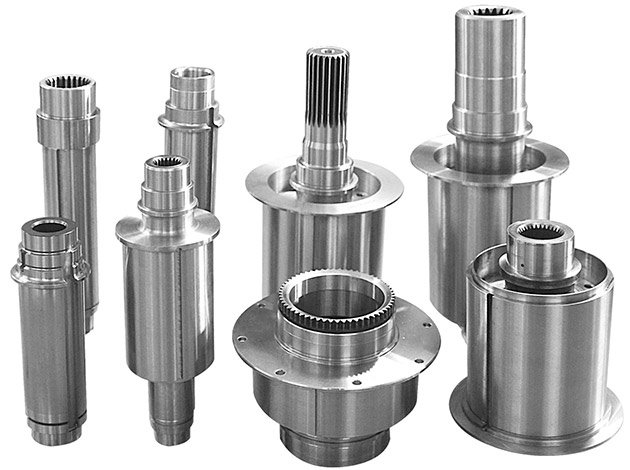
Across these industries, the strongest results come from aligning process capability with application risk. A supplier should understand how the part will be loaded, sealed, cooled, guided, worn, sterilized, or inspected in service. That functional understanding allows the manufacturing team to prioritize the dimensions and surface characteristics that matter most, while maintaining a practical and economical production route.
5. Call to Action
Advanced EDM and wire cutting can make hard and brittle materials manufacturable at the precision level required by modern OEM programs, but the process must be engineered as part of a complete supply chain solution. Material behavior, discharge control, finishing, inspection, traceability, and delivery planning all contribute to the final result.
Dixin Technology and IndustryApex CNC help global OEM and Tier 1 customers move from complex drawings to controlled production through integrated ODM support and precision manufacturing. Share your material specification, 2D drawing, 3D model, annual volume, tolerance requirements, and inspection needs with the engineering team through Contact Us. For an overview of the company’s capabilities and manufacturing scope, visit the IndustryApex CNC home page.