- Shaft
- Molds&Tools
- Hydraulics And Pump
- Hair transplant needle
- Hydraulics And Pump
- Precision CNC Shaft Machining Manufacturer for High Performance Applications
- Energy Industry CNC Machining Parts Supplier
- Aerospace CNC Machining Parts Manufacturer
- Aerospace CNC Machining Parts Manufacturer
- Automotive & EV CNC Machining Parts Supplier for OEM and Tier 1
- Medical CNC Machining Parts Supplier for Precision Medical Devices
Ruby and Sapphire Component Machining for Fluid Control Systems: Engineering, ODM, and Supply Chain Analysis


Ruby and Sapphire Component Machining for Fluid Control Systems
In fluid control systems, the smallest wear surface can determine the reliability, efficiency, and service life of the complete assembly. Ruby and sapphire components are used where conventional metals, ceramics, and engineering plastics cannot provide the required combination of hardness, chemical resistance, dimensional stability, and low friction. Typical parts include orifices, valve seats, nozzles, bearing elements, guide components, metering inserts, and wear-resistant contact surfaces.
For global OEMs and Tier 1 suppliers, successful procurement requires more than access to a hard material. It requires a manufacturing partner able to translate fluid-control performance requirements into a repeatable component design, controlled process route, verified inspection plan, and dependable supply chain. Dixin Technology, operating through IndustryApex CNC, supports this requirement through integrated engineering, precision machining, industrial ceramic capability, and production management.
1. Executive Summary
Ruby and sapphire are single-crystal forms of aluminum oxide with exceptional hardness, high wear resistance, strong electrical insulation, and excellent stability in demanding chemical environments. Sapphire is commonly selected for transparent or structural applications, while ruby, which contains chromium, is often used when a contrasting visual signature or specific optical and contact characteristics are beneficial. Both materials can support long-life fluid control components exposed to abrasive media, high cycle counts, pressure fluctuations, and aggressive process fluids.
The engineering challenge is that these materials are difficult to process. Their hardness makes conventional turning and milling unsuitable for many geometries. Brittle fracture, edge chipping, subsurface damage, residual stress, and contamination must be controlled through material selection, fixturing, diamond-based tooling, grinding, polishing, and carefully sequenced inspection. Dimensional tolerances must also be considered alongside surface finish, roundness, concentricity, aperture geometry, and sealing behavior.
A qualified supplier therefore contributes at three levels. First, the supplier helps define a manufacturable component that meets flow, pressure, wear, and assembly requirements. Second, the supplier establishes a controlled production process with traceability and repeatable inspection. Third, the supplier integrates sourcing, machining, finishing, quality documentation, and delivery planning so that the component does not become a bottleneck within the customer’s valve, pump, instrumentation, or metering assembly.
Dixin Technology combines more than 30 years of manufacturing experience with an ERP-managed production system and capabilities covering 3-5 axis CNC machining, EDM, precision grinding, and industrial ceramics. This combination is suited to OEM programs that require technical accountability, stable quality, and scalable international supply.
2. Technical Deep Dive
Fluid-control performance begins with the interface between the component and the working medium. A ruby or sapphire orifice must maintain its aperture geometry when exposed to particles, pressure pulses, temperature changes, and repeated flow cycles. A valve seat must preserve sealing contact without developing grooves or deformation. A guide or bearing element must maintain alignment while minimizing friction and resisting chemical attack. These requirements make geometry control as important as material hardness.
Sapphire offers a Mohs hardness of approximately 9 and maintains useful mechanical and insulating properties across a broad operating range. Its resistance to many acids, alkalis, and solvents makes it valuable in chemical processing, analytical equipment, semiconductor fluid delivery, and high-purity systems. Ruby provides comparable hardness because its primary crystal structure is corundum. The difference in color can help with identification, inspection, and service differentiation, while the final material choice should be based on application chemistry, optical requirements, geometry, and total cost.
Component design should account for the limitations of brittle materials from the beginning. Sharp internal corners, abrupt wall transitions, thin unsupported sections, and aggressive press-fit interference can create stress concentrations. Designers should use appropriate edge breaks, controlled radii, adequate wall thickness, and assembly clearances. When the part functions as a metering insert, the inlet and outlet geometry should be evaluated for flow stability, cavitation risk, pressure loss, and susceptibility to particle blockage.
The process route commonly starts with certified raw material and incoming verification. Crystal orientation, grade, dimensional stock, and visible defects should be reviewed before machining. Depending on the geometry, material may be produced through diamond sawing, grinding, lapping, laser-assisted processing, EDM-compatible hybrid methods, or precision CNC operations using diamond tooling. The most suitable route depends on feature size, aperture requirements, volume, tolerance, and the acceptable level of subsurface damage.
Precision grinding is often central to producing flat sealing faces, cylindrical bores, and controlled outside diameters. Grinding parameters must balance material removal rate against heat generation and fracture risk. Excessive force or an unsuitable abrasive can create microcracks that are not immediately visible but may propagate during assembly or service. Lapping and polishing are used when the application requires a low-roughness sealing interface, optical clarity, or reduced particle retention.
Small holes and intricate features require particular attention. A fluid metering aperture may be only a fraction of a millimeter in diameter, but even a minor deviation in circularity or taper can change flow rate. Inspection may include optical measurement, coordinate measurement, air gauging, profilometry, roundness analysis, and functional flow testing. For critical applications, the supplier should correlate dimensional results with actual pressure-flow behavior rather than relying on dimensional inspection alone.
Cleanliness is another important control point. Particles from grinding, polishing compounds, tooling, or packaging can damage downstream valves or contaminate a high-purity process. A robust process should define cleaning chemistry, rinsing quality, drying method, handling requirements, protective packaging, and inspection conditions. Traceability should connect raw material certificates, process records, operator or machine data, inspection results, and final release documentation to a defined lot.
Thermal and mechanical assembly conditions also influence performance. Ruby and sapphire have different thermal expansion behavior from metals, so press fits, brazed joints, adhesive bonds, and mechanical retainers must be engineered to avoid excessive stress. Where a component is installed into a stainless steel, nickel alloy, titanium, or ceramic housing, the design team should evaluate temperature range, interference variation, pressure loading, vibration, and shock. Dixin Technology can support this assessment as part of a broader custom component and assembly development process.
Manufacturing documentation should include a drawing review, critical-to-quality feature list, control plan, inspection method, acceptance criteria, and change-control procedure. For new programs, first-article inspection and capability studies help establish whether the selected process can consistently achieve the required tolerance. For repeat production, statistical monitoring of key dimensions and periodic requalification can protect performance over time.
3. The ODM & Supply Chain Advantage
For many fluid-control products, the best sourcing result comes from an ODM solution provider rather than a supplier that only produces parts to a drawing. Dixin Technology’s core identity is that of a supply chain integrator and ODM solution provider. This means the engagement can include design-for-manufacturing feedback, material and process recommendations, prototype development, inspection planning, production coordination, and delivery support.
An ODM approach is particularly useful when the customer’s existing design was developed around a different material or manufacturing process. A metal insert may wear too quickly, a plastic component may absorb chemicals, or a conventional ceramic may not provide the required surface finish. Dixin Technology can review the functional requirement and help determine whether ruby, sapphire, industrial ceramic, carbide, or another engineered material provides the appropriate balance of performance and cost.
The manufacturing edge is a fully controlled precision manufacturing system supported by ERP and more than 30 years of experience. ERP control improves visibility across purchasing, production scheduling, work orders, quality records, inventory, and shipment status. For global OEM and Tier 1 customers, this reduces dependence on informal communication and provides a stronger basis for forecast planning, lot traceability, engineering changes, and repeat ordering.
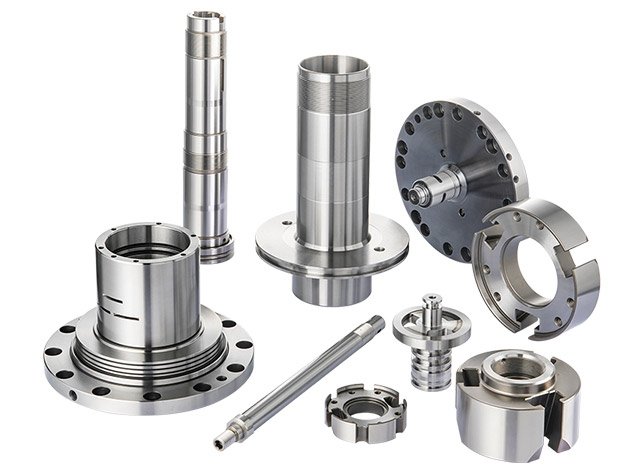
Technical capability spans 3-5 axis CNC machining, EDM, precision grinding, and industrial ceramics. A 3-axis process may be adequate for straightforward features, while 4-axis and 5-axis machining can reduce setups and improve positional control on complex geometries. EDM and specialized processing can address features that are difficult to produce with conventional cutting. Precision grinding supports the dimensional and surface requirements of sealing, bearing, and metering interfaces. Industrial ceramic expertise broadens the available material and process options when ruby or sapphire is not the optimal solution.
This integrated structure can reduce supply-chain friction. Instead of coordinating separate companies for material sourcing, machining, grinding, polishing, inspection, and packaging, the customer can work through one technical and commercial interface. Consolidation does not eliminate the need for qualification; it makes qualification more coherent because the manufacturing partner can own the relationships between processes and verify the final component as a complete product.
Supply continuity should be addressed during the quotation and design phase. Important questions include raw-material availability, approved equivalents, minimum order quantities, production capacity, tooling ownership, safety stock, lead-time assumptions, and contingency planning. For high-value equipment, a small ruby or sapphire component can have a disproportionate effect on delivery if it is single-sourced without a clear replenishment strategy. An experienced integrator can help create a practical stocking and release model based on demand volatility and service requirements.
Quality assurance should be aligned with the customer’s risk profile. Standard documentation may include certificates of conformity, material certification, dimensional reports, surface-finish data, and lot traceability. More critical applications may require first-article packages, process validation, capability data, cleanliness certificates, functional flow testing, or controlled packaging. The correct level of documentation is the level that demonstrates control of the product’s critical risks without adding unnecessary administrative cost.
Dixin Technology’s experience across high-precision sectors also supports disciplined project execution. Its work with industries such as aerospace components and medical precision parts reflects the value of controlled processes, documented inspection, and attention to material behavior. The same manufacturing discipline applies to fluid-control components where reliability and traceability are central procurement requirements.
4. Industry Applications
Ruby and sapphire components appear across fluid-control applications where long service life and dimensional stability justify the material investment. In precision dispensing systems, sapphire orifices help maintain consistent dosing under repeated cycles. In analytical instruments, chemically resistant components can protect accuracy when samples or reagents are aggressive. In semiconductor and high-purity equipment, polished surfaces and controlled cleanliness support contamination-sensitive processes.
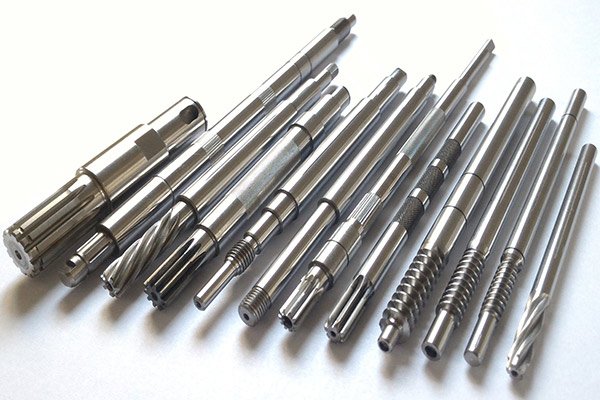
In pumps and valves, hard inserts can resist erosion caused by abrasive particles or high-velocity flow. Valve seats, plungers, guides, and wear rings may benefit from low friction and resistance to deformation. These parts should be designed together with the mating component, because the correct hardness and surface finish of one part cannot compensate for poor alignment, unsuitable loading, or an incompatible seal.
Industrial gas and pressure-control equipment may use sapphire windows, sensing interfaces, or metering elements where the operator needs visual inspection combined with chemical and pressure resistance. In laboratory and life-science equipment, ruby bearings and sapphire contact surfaces can reduce wear and support repeatable motion in miniature mechanisms. In fuel, lubricant, and chemical delivery systems, material selection must include compatibility with additives, temperature, pressure, and expected particle content.
Hydraulic and pneumatic equipment presents a different combination of requirements. Flow passages, valve components, and pump interfaces may encounter pressure spikes, contamination, and high cycle counts. Suppliers specializing in hydraulic pump parts understand that a component’s functional performance depends on dimensional relationships across the entire assembly. A sapphire or ruby insert may be valuable when conventional wear surfaces cannot maintain the required clearance or sealing behavior.
Application qualification should include real operating conditions. Bench testing can measure leakage, flow coefficient, pressure drop, cycle life, particle generation, and dimensional change. Where the component is used in a safety-critical or contamination-sensitive system, testing should represent the actual mating materials, assembly method, temperature range, fluid chemistry, and pressure profile. Design validation and production validation should be treated as related but separate activities: the first proves that the design works, and the second proves that the manufacturing process can reproduce it.
Whether the requirement is a standard insert, a miniature nozzle, a custom valve seat, or a complete engineered subassembly, the procurement specification should identify the critical function rather than only the material name. Include operating fluid, pressure and temperature range, target flow, allowable leakage, dimensional tolerances, surface requirements, assembly method, cleanliness level, inspection documentation, annual volume, and expected service life. This information allows the supplier to recommend a technically sound and commercially realistic solution.
5. Call to Action
Ruby and sapphire component machining is a specialized engineering activity in which material selection, geometry, process control, inspection, and supply planning are inseparable. A reliable production result depends on controlling brittle-material risks while preserving the functional characteristics required by the fluid-control system.
Dixin Technology can support global OEMs and Tier 1 suppliers from concept review through production delivery. Share your drawing, 3D model, material specification, operating conditions, forecast, and quality requirements for an engineering assessment. The team can evaluate manufacturability, propose an appropriate process route, identify inspection requirements, and develop an ODM or component-supply plan.
For an initial discussion, visit the IndustryApex CNC home page or contact Dixin Technology with your project details. Early technical input can help reduce redesign, shorten qualification cycles, and establish a dependable source for high-precision ruby and sapphire fluid-control components.