- Shaft
- Molds&Tools
- Hydraulics And Pump
- Hair transplant needle
- Hydraulics And Pump
- Precision CNC Shaft Machining Manufacturer for High Performance Applications
- Energy Industry CNC Machining Parts Supplier
- Aerospace CNC Machining Parts Manufacturer
- Aerospace CNC Machining Parts Manufacturer
- Automotive & EV CNC Machining Parts Supplier for OEM and Tier 1
- Medical CNC Machining Parts Supplier for Precision Medical Devices

Custom Gear Manufacturing: From Prototyping to Mass Production

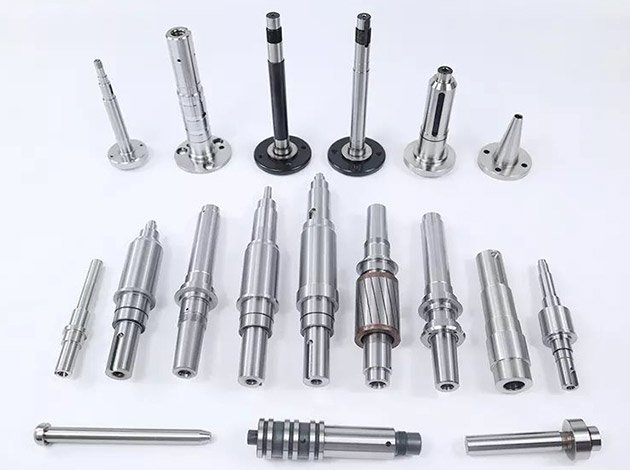
Custom Gear Manufacturing: From Prototyping to Mass Production
Custom gear manufacturing is a controlled engineering process that connects functional requirements, material science, precision machining, quality assurance, and supply chain execution. For OEMs and Tier 1 suppliers, the objective is not simply to produce a gear that fits an assembly. The objective is to develop a repeatable, traceable, and scalable component that performs reliably over its service life while meeting cost, lead-time, and compliance targets.
1. Executive Summary
Custom gears are used in drivetrains, robotics, automation systems, pumps, medical devices, aerospace mechanisms, construction equipment, and industrial transmission systems. Each application introduces different requirements for torque capacity, noise, wear resistance, backlash, dimensional stability, corrosion resistance, and operating temperature. These requirements must be translated into a manufacturable design before production begins.
The most effective development path starts with application analysis and prototype planning. Engineers define the gear geometry, material, heat-treatment route, surface finish, inspection method, and expected production volume together rather than treating each decision independently. This approach reduces redesign risk and provides a clear bridge from early prototypes to production tooling and mass manufacturing.
A capable manufacturing partner also contributes beyond machining. It should support design for manufacturability, process validation, supplier coordination, quality documentation, production scheduling, and logistics. Dixin Technology, operating through IndustryApex CNC, supports global OEM and Tier 1 customers with integrated precision manufacturing and ODM services for custom gears and related transmission components.
2. Technical Deep Dive
From Requirements to Gear Geometry
Custom gear development begins with the load profile and operating environment. Engineers evaluate transmitted torque, rotational speed, duty cycle, shock loading, temperature, lubrication, allowable noise, and expected service life. These parameters influence the gear type and its geometry, including spur, helical, bevel, planetary, worm, internal, rack-and-pinion, or specialized spline-compatible designs.
Critical design variables include module or diametral pitch, pressure angle, tooth count, helix angle, face width, profile shift, root fillet, lead modification, and backlash. The design must balance performance with manufacturability. For example, increasing face width may improve load capacity but can make fixturing, inspection, and distortion control more demanding. Tightening tooth-flank tolerances may improve transmission accuracy but can raise grinding time and production cost.
Prototype production provides an opportunity to verify these trade-offs. A prototype should be evaluated not only for dimensional conformity but also for mesh quality, contact pattern, noise, vibration, thermal behavior, and compatibility with mating components. Prototype data can identify problems such as incorrect center distance, excessive runout, insufficient root strength, or an unsuitable surface treatment before the design reaches high-volume production.
Material Selection and Heat Treatment
Material selection depends on the required combination of strength, hardness, toughness, fatigue resistance, corrosion resistance, and dimensional stability. Common gear materials include alloy steels, stainless steels, tool steels, bronze, brass, aluminum alloys, engineering plastics, and engineered ceramics. For high-load applications, carburizing, nitriding, induction hardening, and through-hardening may be considered. The correct choice depends on tooth loading, wear mechanisms, core toughness, geometry, and production volume.
Heat treatment is often one of the highest-risk stages in custom gear manufacturing because it can create distortion, residual stress, hardness variation, and changes in tooth geometry. A robust process therefore defines pre-heat-treatment allowances, datum strategy, loading orientation, quenching controls, and post-treatment finishing requirements. Precision grinding or hard finishing may be required to restore tooth profile, lead, concentricity, and surface quality.
Machining and Finishing Processes
The manufacturing route typically includes material preparation, turning, gear hobbing or shaping, milling, drilling, broaching, heat treatment, grinding, deburring, cleaning, and final inspection. The exact sequence depends on the gear design and required accuracy. Multi-axis CNC machining can support complex features, integrated shafts, irregular bores, and low-volume prototypes. EDM can address difficult internal profiles, hardened materials, and specialized geometries where conventional cutting is limited. Precision grinding is used when tight dimensional and gear-mesh requirements demand a controlled hard-finishing operation.
Process stability matters more than a single successful sample. Production engineers establish workholding methods, tool-life limits, in-process checks, cutting parameters, coolant controls, and inspection frequencies. Datums should reflect functional assembly surfaces so that measured results correlate with actual performance. For larger programs, statistical process control can be used to monitor tooth thickness, runout, bore size, pitch deviation, profile error, lead error, and surface roughness.
Quality Assurance and Validation
Gear inspection should match the risk profile of the application. Basic verification may include dimensional inspection, hardness testing, surface roughness measurement, and visual examination. Higher-precision applications may require coordinate measuring machines, gear analyzers, roundness measurement, form inspection, material certification, non-destructive testing, and documented inspection reports.
Functional validation can include rolling tests, contact-pattern checks, torque testing, endurance testing, noise analysis, and environmental testing. For aerospace, medical, and other regulated sectors, configuration control and traceability are essential. Manufacturing records should connect raw material certificates, process parameters, heat-treatment results, inspection data, nonconformance actions, and shipment documentation to the relevant purchase order or lot.
3. The ODM & Supply Chain Advantage
For global OEM and Tier 1 suppliers, custom gear sourcing is increasingly evaluated as a supply chain decision rather than a standalone machining purchase. A supplier that only quotes a drawing may leave the customer responsible for coordinating material vendors, heat-treatment subcontractors, inspection laboratories, tooling, packaging, export documentation, and corrective actions. This fragmented model can increase lead time and create uncertainty when engineering changes occur.
Dixin Technology’s core identity is that of a supply chain integrator and ODM solution provider. The company works with customers to convert product requirements into manufacturable designs, validated process plans, and controlled production programs. This is especially valuable when the customer has a performance target or assembly concept but needs support refining the gear geometry, selecting materials, or organizing the industrialization path.
The manufacturing edge is a fully controlled precision manufacturing system supported by ERP and more than 30 years of manufacturing experience. ERP-based planning improves visibility across materials, capacity, work orders, inspection status, and delivery schedules. Centralized control also helps engineering and production teams respond consistently to revisions, demand changes, and quality events.
Dixin Technology’s technology capabilities include 3-axis to 5-axis CNC machining, EDM, precision grinding, and industrial ceramics. This combination allows a project to use the most appropriate process for each feature and material instead of forcing every component through a single production method. It also supports adjacent components such as shafts, sleeves, housings, wear parts, ceramic elements, and other precision transmission components.
Scaling the Production Program
Moving from prototype to mass production requires a deliberate transfer of knowledge. Prototype documentation should capture the lessons that will influence production tooling, inspection fixtures, cutting strategies, and operator instructions. Before volume release, the supplier should confirm process capability, gauge repeatability, packaging requirements, incoming material controls, and contingency plans for critical operations.
Production scalability is influenced by more than machine count. It depends on whether the gear can be loaded consistently, whether tooling is available, whether heat treatment has adequate capacity, whether inspection can keep pace with output, and whether secondary suppliers are qualified. A supply chain integrator can coordinate these dependencies and reduce the risk that one outsourced operation becomes the bottleneck.
Cost should also be evaluated across the total program. Unit price is affected by material yield, machining cycle time, tool consumption, heat treatment, grinding allowance, inspection effort, packaging, freight, and inventory strategy. DFM recommendations such as standardizing bore sizes, reducing unnecessary tolerances, improving fixturing access, or selecting a more available material can lower total cost without compromising functional performance.
4. Industry Applications
Custom gears are central to many engineered products, but their design priorities vary by industry.
Aerospace and Defense
Aerospace mechanisms require lightweight, high-strength, traceable components with dependable performance under vibration, temperature variation, and demanding duty cycles. Gear geometry, material certification, heat treatment, surface integrity, and inspection records must be tightly controlled. Dixin Technology also supports customers seeking aerospace CNC machining and titanium aircraft parts, including precision structural and mechanical components.
Medical Equipment
Medical equipment gears may be used in surgical robotics, imaging systems, laboratory automation, powered instruments, and precision positioning mechanisms. Low backlash, low noise, clean processing, corrosion resistance, and repeatable motion are often more important than maximum torque. Material and finishing choices must align with cleaning, sterilization, and biocompatibility requirements where applicable. Related manufacturing expertise is available through Dixin Technology’s services for ISO-certified CNC machining for medical components.
Hydraulics, Pumps, and Fluid Control
Hydraulic and pump systems rely on precision components that maintain controlled clearances and resist wear in demanding fluid environments. Gears may drive pumps, metering systems, actuators, or auxiliary mechanisms. Surface finish, concentricity, sealing interfaces, and material compatibility influence efficiency and service life. Customers can also review specialized hydraulic pump parts manufacturing capabilities for complementary components.
Construction, Agricultural, and Industrial Automation
Construction and agricultural machinery typically impose high shock loads, contamination exposure, and long operating cycles. Gears must deliver strength and wear resistance while remaining economical at production volumes. In industrial automation, the priorities may shift toward positioning accuracy, low backlash, smooth operation, and repeatability. A flexible manufacturing route allows the design and process to be adapted to the actual application rather than relying on a generic catalog component.
5. Call to Action
Successful custom gear manufacturing depends on early engineering alignment and disciplined production control. The right partner should be able to review drawings or application requirements, recommend manufacturable solutions, manage prototype development, validate critical characteristics, and scale the approved design into stable mass production.
Dixin Technology and IndustryApex CNC provide an integrated resource for global OEMs and Tier 1 suppliers requiring custom gears, transmission components, precision machined parts, grinding, EDM, and industrial ceramic solutions. Share your drawings, specifications, expected annual volume, material requirements, and performance targets through the Contact Us page to begin a technical and supply chain review.