- Shaft
- Molds&Tools
- Hydraulics And Pump
- Hair transplant needle
- Hydraulics And Pump
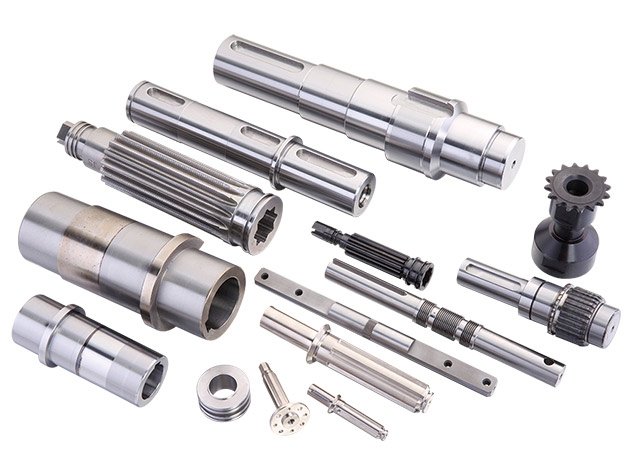
- Precision CNC Shaft Machining Manufacturer for High Performance Applications
- Energy Industry CNC Machining Parts Supplier
- Aerospace CNC Machining Parts Manufacturer
- Aerospace CNC Machining Parts Manufacturer
- Automotive & EV CNC Machining Parts Supplier for OEM and Tier 1
- Medical CNC Machining Parts Supplier for Precision Medical Devices

Optimizing Supply Chains with Low MOQ Micro-Batch CNC Production


Optimizing Supply Chains with Low MOQ Micro-Batch Production
For global OEMs and Tier 1 suppliers, supply chain performance is increasingly determined by flexibility, responsiveness, and control over technical risk. Low minimum order quantity (MOQ) micro-batch production gives engineering and procurement teams a practical way to validate designs, reduce inventory exposure, and maintain production continuity without committing to large volumes before demand is proven.
Dixin Technology, operating through IndustryApex CNC, combines precision machining, engineering support, and supply chain coordination to help customers move from prototype quantities to repeatable production. The result is a sourcing model that supports faster product launches while protecting quality, cost, and delivery performance.
1. Executive Summary
Traditional sourcing models often force manufacturers to choose between expensive one-off prototypes and high-volume production orders. Both options can create supply chain friction. Prototypes may not represent production economics, while large MOQs can tie up working capital in parts that may later require design changes, qualification updates, or demand adjustments.
Low MOQ micro-batch production creates an intermediate manufacturing strategy. Instead of ordering thousands of components immediately, an OEM can purchase a controlled quantity for design verification, pilot assembly, regulatory testing, customer trials, or limited market release. Once the design and demand profile are confirmed, the supplier can scale the same manufacturing process with lower transition risk.
This approach is especially effective for complex CNC components, where material costs, setup requirements, inspection demands, and process capability must be understood before volume production. A capable manufacturing partner can use ERP-controlled planning, standardized work instructions, qualified materials, and documented inspection data to make small-batch production commercially useful rather than treating it as informal prototype work.
The most important benefits include lower inventory risk, shorter development cycles, earlier field feedback, improved engineering control, and more resilient replenishment. These benefits are strongest when low MOQ production is integrated into a broader ODM and supply chain program.
2. Technical Deep Dive
Micro-batch production generally refers to manufacturing a limited quantity of parts under production-oriented controls. The exact batch size depends on component complexity, material, process route, inspection requirements, and customer qualification needs. The defining characteristic is not simply a small number of pieces. It is the ability to manufacture those pieces using a controlled process that can be repeated and scaled.
For CNC components, the process begins with design for manufacturability review. Engineers assess datum strategy, tolerances, tool access, wall thickness, surface requirements, material condition, and inspection method. A low MOQ order is an opportunity to resolve these issues early. For example, a critical bore may require a different finishing sequence, a thin titanium wall may need revised workholding, or a hydraulic sealing surface may need tighter control of roughness and roundness than indicated by a basic drawing review.
Process planning is particularly important when the component requires multiple operations. A 3-axis or 5-axis machining sequence may be combined with EDM, precision grinding, heat treatment, coating, deburring, or specialized cleaning. Each additional operation creates a potential handoff, queue, or quality risk. A controlled micro-batch allows the supplier and customer to confirm the complete route before volume commitments are made.
Inspection planning should be established at the same time as machining planning. Critical-to-function dimensions need a clear measurement method, suitable equipment, and a defined sampling or full-inspection requirement. Depending on the part, this may include coordinate measuring machine inspection, optical measurement, surface roughness testing, hardness verification, thread gauging, or material certification review. Inspection records from the micro-batch can establish a baseline for future production control.
Material purchasing is another major factor. Low MOQ does not necessarily mean that every material can be purchased in a proportionally small quantity. Aerospace alloys, medical-grade titanium, engineered plastics, ceramics, and specialty steels may have supplier pack sizes, mill minimums, or certification requirements. A manufacturing partner with established purchasing channels can consolidate material demand across programs and reduce the cost impact of small orders.
Production economics also depend on setup efficiency. The supplier should separate one-time engineering and setup costs from recurring piece costs where practical. Fixtures, soft jaws, probing routines, reusable programs, and inspection templates should be designed with the next batch in mind. This converts the first micro-batch into a manufacturing asset instead of a disposable development exercise.
Digital production control strengthens this model. ERP integration can connect quotations, bills of material, inventory, work orders, inspection status, supplier records, and shipping information. When the customer needs a second batch, the supplier can retrieve the approved process information and identify which variables changed. This supports shorter lead times and better traceability than restarting the job from a quotation email and an old drawing attachment.
Supply chain teams should also define the trigger for replenishment. A kanban threshold, forecast window, engineering release milestone, or customer order signal can initiate the next micro-batch. The objective is to match production timing with consumption without allowing inventory to fall below the operational safety level. For high-value components, this can materially reduce carrying costs while preserving service continuity.
Low MOQ production is not a substitute for capacity planning. If demand becomes stable, repeated small orders may be less efficient than a scheduled production agreement. The best model can therefore evolve: micro-batches support introduction and validation, scheduled releases support predictable demand, and larger campaigns are used when material economics and consumption justify them.
3. The ODM & Supply Chain Advantage
The greatest value of low MOQ micro-batch production appears when the supplier operates as more than a machining subcontractor. Dixin Technology’s core identity is that of a supply chain integrator and ODM solution provider. This means the supplier can contribute to product definition, process selection, sourcing coordination, manufacturing execution, quality management, and delivery planning.
For OEM and Tier 1 customers, this integrated model reduces the number of interfaces that must be managed internally. Instead of coordinating a machine shop, material supplier, finishing vendor, inspection provider, and logistics partner separately, the customer can work through one accountable manufacturing organization. This is important for parts that require several specialized processes or controlled documentation.
Dixin Technology has a fully controlled precision manufacturing system supported by ERP and more than 30 years of manufacturing experience. In a micro-batch program, that experience helps identify hidden cost and schedule drivers early. Engineering teams can review whether a tolerance is functionally necessary, whether a material substitution is acceptable, whether a fixture should be built for repeat use, and whether a secondary operation should be brought under tighter process control.
The manufacturing technology portfolio includes 3-axis to 5-axis CNC machining, EDM, precision grinding, and industrial ceramics. This combination is useful for customers developing components that cannot be completed efficiently through conventional milling or turning alone. EDM can address intricate profiles and difficult conductive materials. Precision grinding can control tight fits and functional surfaces. Industrial ceramics can support applications requiring wear resistance, thermal stability, electrical insulation, or chemical resistance.
An ODM-oriented supplier also improves design feedback. During a small production run, the manufacturing team can identify recurring issues such as chip evacuation problems, distortion after heat treatment, tool wear at a critical edge, or inconsistent surface finish. Corrective action can then be incorporated into the design or process before demand increases. This reduces the likelihood that an unresolved issue will be multiplied across a high-volume order.
For regulated or safety-critical sectors, documentation must scale with production. Material certificates, first-article records, inspection reports, process approvals, nonconformance records, and change control should be retained in a structured system. A micro-batch is therefore a useful qualification step, provided that its records are generated under the same quality framework expected for later production.
This approach supports global OEM and Tier 1 suppliers that need dependable communication across time zones and manufacturing locations. Clear revision control, agreed approval gates, and consistent reporting create visibility from purchase order through shipment. The customer gains a more reliable basis for forecasting, inventory decisions, and supplier performance evaluation.
4. Industry Applications
Low MOQ micro-batch production is applicable wherever component value, technical uncertainty, or demand variability makes large initial orders impractical.
Aerospace and Defense
Aerospace programs commonly require complex structural, engine, and flight-control components with strict material and inspection requirements. Small batches can support prototype aircraft, qualification testing, maintenance programs, and low-rate initial production. Dixin Technology’s aerospace CNC machining capabilities are relevant to titanium aircraft parts, 5-axis components, and precision structural applications where traceability and process repeatability are essential.
Medical Equipment and Surgical Devices
Medical manufacturers often need limited quantities for design validation, clinical evaluation, regulatory submissions, and controlled product launches. Titanium implants, surgical instruments, and high-precision device parts may require close dimensional control, specialized finishing, and documented material handling. A micro-batch can help the engineering team verify fit, function, cleanability, and user feedback before committing to a larger production schedule. More information is available through Dixin Technology’s ISO-certified medical CNC machining service.
Hydraulics and Fluid Control
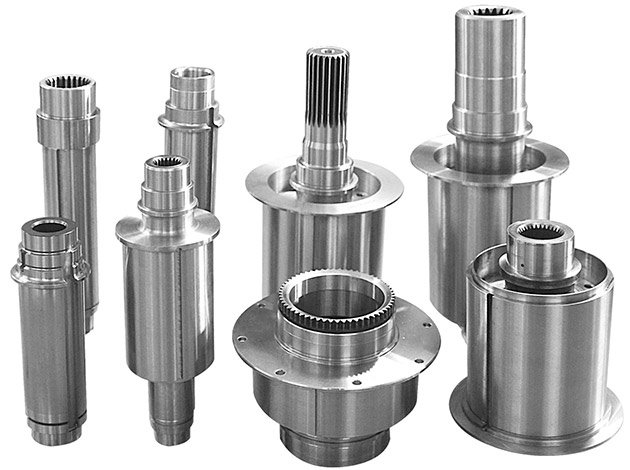
Hydraulic valves, pump components, sleeves, spools, manifolds, and sealing interfaces can be sensitive to surface finish, concentricity, clearance, and contamination. Low MOQ production allows equipment manufacturers to validate flow performance and assembly behavior while keeping inventory focused on proven configurations. Customers developing hydraulic systems can review the dedicated hydraulic pump parts capability for relevant component applications.
Industrial Automation and Machinery
Automation builders and machinery OEMs frequently produce configurable equipment with changing customer specifications. Micro-batches support pilot installations, replacement components, machine upgrades, and regional variants. Parts can be manufactured in controlled quantities while the integrator confirms installation conditions and maintenance requirements.
Energy, Optics, and Advanced Materials
Energy systems, optical equipment, and advanced-material applications often combine demanding geometries with specialized materials. Industrial ceramics, precision grinding, EDM, and multi-axis machining can support early-stage development and limited production. The ability to maintain process records from the first batch also helps engineering teams establish repeatability for later qualification.
5. Call to Action
Low MOQ micro-batch production is most effective when it is treated as a controlled stage in the supply chain rather than an exception to normal manufacturing. The right partner can help convert engineering intent into a repeatable process, coordinate specialized operations, and scale output as demand becomes clearer.
Dixin Technology supports global OEM and Tier 1 customers with integrated ODM, precision machining, ERP-controlled production, and supply chain coordination. To discuss a component, drawing package, prototype requirement, or recurring micro-batch program, contact the IndustryApex CNC team. Provide the available drawings, material requirements, target quantities, tolerances, inspection expectations, and delivery objectives so the manufacturing route can be evaluated efficiently.