- Shaft
- Molds&Tools
- Hydraulics And Pump
- Hair transplant needle
- Hydraulics And Pump
- Precision CNC Shaft Machining Manufacturer for High Performance Applications
- Energy Industry CNC Machining Parts Supplier
- Aerospace CNC Machining Parts Manufacturer
- Aerospace CNC Machining Parts Manufacturer
- Automotive & EV CNC Machining Parts Supplier for OEM and Tier 1
- Medical CNC Machining Parts Supplier for Precision Medical Devices

Integrating 3D Printing with Traditional CNC Machining for Rapid Prototyping

Integrating 3D Printing with Traditional CNC Machining for Rapid Prototyping
For global OEMs and Tier 1 suppliers, rapid prototyping is no longer limited to producing a visual model or proving that a concept can function in isolation. A successful prototype must also provide evidence that the design can transition into a controlled, repeatable, and commercially viable production process. Integrating additive manufacturing with traditional CNC machining creates a practical bridge between early design exploration and production-quality component validation.
1. Executive Summary
Three-dimensional printing and CNC machining serve different but complementary purposes. Additive manufacturing builds parts layer by layer, allowing engineers to evaluate complex geometries, internal channels, lightweight structures, ergonomic features, and assembly concepts quickly. CNC machining removes material from a solid workpiece to achieve tight tolerances, controlled surface finishes, reliable material properties, and a production-representative result.
Used together, these technologies shorten development cycles while improving technical confidence. 3D printing can be used for low-cost form studies, fit checks, tooling aids, and rapid design iterations. CNC machining can then validate critical interfaces, load-bearing features, sealing surfaces, threads, bearing seats, and other areas where dimensional accuracy or material performance matters. This staged approach helps engineering teams avoid the cost and delay of machining every early design iteration from billet.
The greatest value comes from managing the process as one engineering and supply chain workflow. Design-for-additive and design-for-machining decisions should be considered together, with material selection, tolerances, inspection, finishing, documentation, and future production requirements defined at the beginning. Dixin Technology, operating through IndustryApex CNC, supports this integrated model by combining ODM engineering support, precision manufacturing, process control, and supply chain coordination for demanding industrial customers.
2. Technical Deep Dive
The choice between 3D printing and CNC machining should be based on the purpose of the prototype rather than on a general preference for one process. Additive manufacturing is especially effective when the design is changing rapidly or when the component contains geometry that would be difficult to produce conventionally. Engineers can print multiple versions of a housing, bracket, duct, manifold, or ergonomic interface in a short period, then compare fit, access, assembly sequence, and functional behavior.
However, printed parts may not represent the final product accurately. Polymer prototypes can differ from metal components in stiffness, thermal behavior, wear resistance, and dimensional stability. Metal additive processes may introduce anisotropy, residual stress, surface roughness, support-removal requirements, and post-processing considerations. A printed prototype may demonstrate the concept while still failing to predict how the production component will perform.
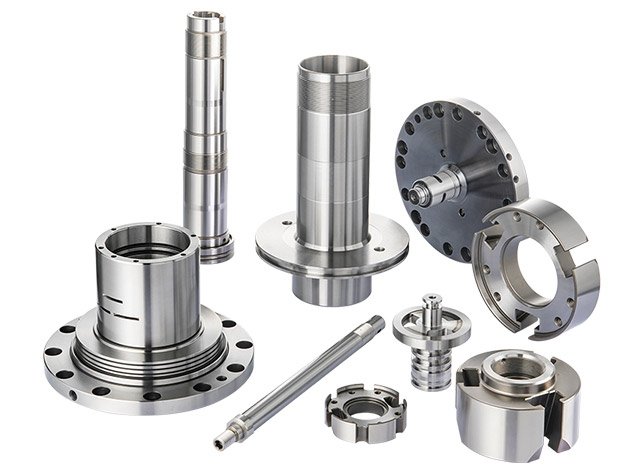
CNC machining provides a valuable second level of validation. A machined prototype can be manufactured from the intended alloy, such as aluminum, stainless steel, titanium, engineering steel, or a copper-based material. It can include production-representative threads, dowel holes, bores, datum structures, and sealing interfaces. Machining also enables engineers to assess the interaction between real material properties and the final assembly, including torque response, vibration, pressure containment, fatigue-sensitive geometry, and contact wear.
A disciplined hybrid workflow normally begins with a design review. The engineering team identifies which features require rapid visual or ergonomic feedback and which features require production-level accuracy. Non-critical external geometry may be printed first, while a precision insert, mating component, shaft, or interface plate is CNC machined. This arrangement allows the team to test the complete assembly without machining every component at the highest cost level.
For example, an additive-manufactured fluid manifold can be used to verify routing and packaging, while CNC-machined ports, threads, sealing faces, and test adapters provide reliable data for pressure and leakage evaluation. In a robotic mechanism, printed covers and cable-management features can be combined with machined shafts, bearing seats, gears, and mounting plates. In an aerospace development program, printed models may support airflow or installation studies, followed by machined titanium or aluminum parts for structural and environmental testing.
Design transfer is a critical technical risk. A geometry that is easy to print may be difficult to fixture or access with a cutting tool. Conversely, a CNC-friendly design may be unnecessarily heavy or contain features that additive manufacturing could simplify. Engineers should therefore establish a common feature strategy. Datums, tolerance zones, mating surfaces, hole locations, and inspection points must remain consistent as the design moves between additive and subtractive processes.
Post-processing deserves equal attention. Printed parts may require machining of reference surfaces, reaming of holes, tapping, heat treatment, surface coating, or abrasive finishing. CNC-machined components may require deburring, passivation, anodizing, plating, grinding, or specialized cleaning. When these operations are planned as part of the prototype route, the resulting component gives a more accurate indication of production cost, lead time, and quality requirements.
Inspection should also be proportionate to the engineering risk. Coordinate measuring machines, optical inspection, surface measurement, hardness testing, material certification, and pressure testing may be required for critical parts. For low-risk fit checks, basic dimensional verification may be sufficient. The important principle is to define acceptance criteria before manufacturing begins, so that prototype results are objective and transferable to design decisions.
Combining additive and CNC processes also improves manufacturability feedback. Early printed iterations expose packaging and assembly problems. Machined iterations reveal tool access, fixturing, tolerance stack-up, burr formation, surface-finish requirements, and realistic production cycle considerations. Together, they provide a more complete picture than either technology can deliver independently.
3. The ODM & Supply Chain Advantage
The technology combination becomes more powerful when it is managed by a manufacturing partner that understands both engineering intent and commercial delivery. Dixin Technology’s core identity is that of a supply chain integrator and ODM solution provider. This means the partner is involved not only in making a part, but also in translating drawings, specifications, prototypes, purchasing requirements, quality expectations, and production plans into one coordinated execution model.
For OEM and Tier 1 purchasing teams, this reduces the number of handoffs between a design office, prototype supplier, CNC machine shop, finishing provider, inspection laboratory, and production source. Each handoff can introduce delays, inconsistent interpretations, duplicated inspection, or gaps in traceability. An integrated provider can maintain a clearer technical baseline and identify issues earlier, especially when the prototype is intended to become a production component.
Dixin Technology operates with a fully controlled precision manufacturing system supported by ERP and more than 30 years of manufacturing experience. ERP-based coordination helps connect engineering revisions, material purchasing, work orders, capacity planning, inspection records, and delivery status. For a global customer, this visibility is important because prototype work often involves several iterations and frequent design changes. Controlled revision management reduces the risk of producing an obsolete configuration or mixing components from different design versions.
The manufacturing edge includes 3-axis, 4-axis, and 5-axis CNC machining, EDM, precision grinding, and industrial ceramics. These capabilities support a broad range of prototype and production requirements. Multi-axis machining can reduce setups and improve access to complex surfaces. EDM is useful for intricate profiles, narrow slots, hard materials, and features that are difficult to produce with conventional cutting tools. Precision grinding supports tight dimensional control and high-quality functional surfaces. Industrial ceramics extend the material range for applications requiring electrical insulation, thermal resistance, wear resistance, or chemical stability.
This breadth enables a practical process-selection strategy. A customer may begin with a printed prototype, progress to a 3-axis machined version for initial metal validation, and then move to 5-axis machining or EDM when the geometry and performance requirements are finalized. Precision grinding and ceramic manufacturing can be introduced where the application demands higher wear performance, more stable interfaces, or specialized environmental resistance.
An ODM partner also contributes to value engineering. During a prototype review, manufacturing engineers can recommend changes to wall thickness, corner radii, tool clearance, datum placement, tolerancing, material utilization, and assembly strategy. These recommendations should preserve the functional requirements while improving yield, inspection efficiency, and production scalability. The result is not simply a prototype that works, but a design that is better prepared for controlled sourcing.
Supplier integration is particularly important for regulated or technically demanding sectors. Aerospace programs may require traceable materials, approved processes, and detailed inspection documentation. Medical programs may require controlled cleaning, biocompatible material management, and precise documentation. Fluid-control programs may require pressure testing, surface-finish control, and reliable sealing interfaces. A manufacturing partner with integrated process ownership can align these requirements earlier in the development cycle.
4. Industry Applications
The hybrid prototyping model applies across industries where design speed must be balanced with performance and manufacturability.
Aerospace and Defense
Aerospace engineers frequently use additive manufacturing for lightweight brackets, ducting concepts, equipment layouts, and installation studies. CNC machining then validates structural interfaces, high-strength components, and flight-representative material behavior. For titanium and aluminum components, 5-axis machining can produce complex structural geometry with fewer setups and improved consistency. Teams developing aerospace CNC machined titanium aircraft parts and structural components can use this workflow to reduce design risk before committing to larger production volumes.
Medical Devices
Medical device developers benefit from printed prototypes for ergonomic evaluation, instrument handling, enclosure design, and surgical workflow studies. CNC-machined prototypes are valuable when the device requires precise mating features, corrosion-resistant materials, repeatable actuation, or close dimensional control. For teams sourcing ISO-certified CNC machining for medical components, titanium implants, surgical instruments, and high-precision device parts, early process alignment can make later validation and documentation more efficient.
Hydraulics and Fluid Control
Hydraulic engineers can print manifolds, valve bodies, guards, and installation mockups to confirm routing and packaging. CNC machining remains essential for spool bores, sealing surfaces, threaded ports, and pressure-critical cavities. These features require controlled tolerances and surface finishes that directly affect leakage, response, and service life. A coordinated development route is well suited to hydraulic pump parts and other fluid-control components where functional testing must reflect production conditions.
Automation and Industrial Equipment
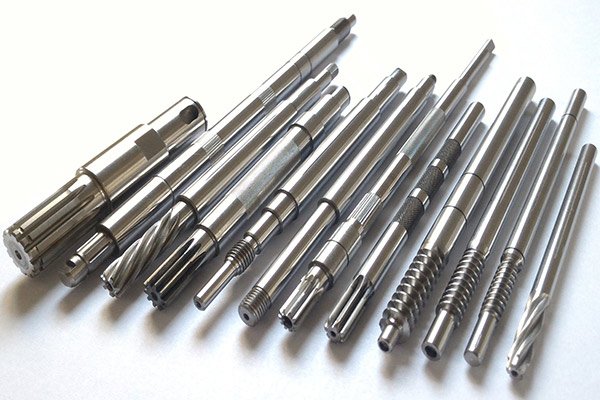
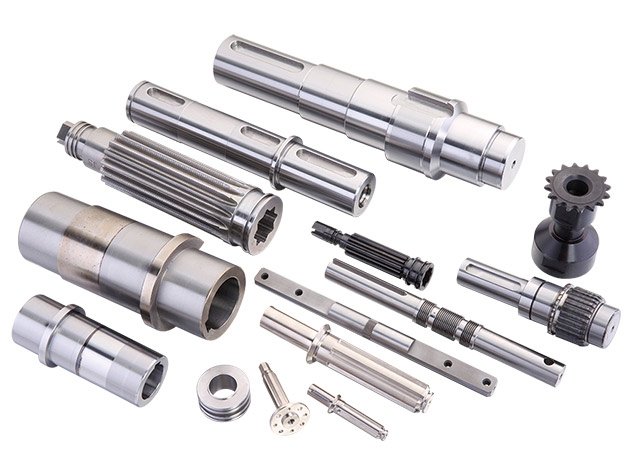
Automation builders can print grippers, sensor mounts, guards, and cable-routing concepts while machining shafts, couplings, bearing carriers, and precision mounting plates. This lets teams test motion envelopes and operator access early while reserving high-accuracy manufacturing for parts that determine repeatability and machine performance.
Energy and Process Equipment
Energy equipment often combines large assemblies with specialized wear, thermal, or corrosion requirements. Printed models help confirm access and serviceability, while CNC, EDM, grinding, and ceramic capabilities support the final functional features. This is particularly useful when prototype quantities are limited but the cost of a field failure is high.
5. Call to Action
Integrating 3D printing with traditional CNC machining gives engineering and supply chain teams a faster, more reliable route from concept to production. Additive manufacturing accelerates iteration and reveals design issues early. CNC machining validates critical geometry, real materials, functional interfaces, and manufacturability. The strongest results come from treating both technologies as connected stages in one controlled development process.
Dixin Technology and IndustryApex CNC support global OEMs and Tier 1 suppliers with ODM engineering, precision machining, ERP-coordinated production, inspection, finishing, and supply chain integration. Share your 3D model, drawing, material requirement, target quantity, and validation objectives with the team through the Contact Us page. For broader manufacturing support and component sourcing information, visit the IndustryApex CNC home page.