- Shaft
- Molds&Tools
- Hydraulics And Pump
- Hair transplant needle
- Hydraulics And Pump
- Precision CNC Shaft Machining Manufacturer for High Performance Applications
- Energy Industry CNC Machining Parts Supplier
- Aerospace CNC Machining Parts Manufacturer
- Aerospace CNC Machining Parts Manufacturer
- Automotive & EV CNC Machining Parts Supplier for OEM and Tier 1
- Medical CNC Machining Parts Supplier for Precision Medical Devices
The Role of Supply Chain Integrators in Agile Manufacturing

The Role of Supply Chain Integrators in Agile Manufacturing
Agile manufacturing is no longer limited to flexible production equipment or shorter machining cycles. For global OEMs and Tier 1 suppliers, agility depends on how effectively engineering, sourcing, production, quality, logistics, and supplier coordination operate as one system. A supply chain integrator provides this operational connection, helping manufacturers respond to demand changes, engineering revisions, capacity constraints, and compliance requirements without losing control of cost or quality.
1. Executive Summary
Manufacturing supply chains are under sustained pressure. Customers expect shorter lead times, product customization, transparent quality records, and rapid response to market changes. At the same time, manufacturers must manage material volatility, complex global sourcing networks, increasingly demanding tolerances, and documentation requirements across multiple industries.
In this environment, a supply chain integrator serves as a central technical and commercial partner. Rather than treating machining, finishing, inspection, procurement, and logistics as disconnected activities, the integrator coordinates them through a controlled process. This approach allows OEMs and Tier 1 suppliers to reduce the number of active supplier interfaces while gaining better visibility into production status, risks, and delivery performance.
For precision components, the value is especially significant. A component may require 3- to 5-axis CNC machining, EDM, precision grinding, industrial ceramics, heat treatment, surface finishing, and specialized inspection. Each additional process creates an opportunity for delay, variation, or communication failure. A qualified integrator combines these requirements within a managed supply chain and aligns the manufacturing plan with the customer’s drawings, specifications, and production schedule.
Dixin Technology, operating through IndustryApex CNC, positions itself as a supply chain integrator and ODM solution provider for global OEM and Tier 1 customers. Its fully controlled precision manufacturing system, supported by ERP and more than 30 years of experience, is designed to connect product requirements with repeatable manufacturing execution. The result is a more responsive supply model that supports engineering development, production ramp-up, and ongoing component supply.
2. Technical Deep Dive
Agile manufacturing is often described as the ability to change quickly. In technical terms, it is the ability to absorb change without creating uncontrolled disruption. That requires more than available machine capacity. It requires accurate information, disciplined process control, qualified suppliers, and rapid decisions based on current production data.
A supply chain integrator contributes at several levels. During quotation and design review, the integrator evaluates part geometry, material selection, tolerance requirements, inspection criteria, and expected annual volume. This early assessment can identify manufacturing risks before a design reaches production. For example, a deep internal feature may require EDM rather than conventional milling, while a thin-wall ceramic component may require a different fixturing and grinding strategy. Addressing these issues during design review reduces late engineering changes and avoidable tooling costs.
Process planning is the next critical layer. A robust plan defines the sequence of operations, datum strategy, workholding method, in-process inspection points, and final acceptance criteria. For complex components, the correct sequence can determine whether a part remains stable throughout machining. A supply chain integrator coordinates these decisions across internal departments and external process partners, preserving the technical intent of the original drawing.
Digital integration also supports agility. An ERP-supported manufacturing system can connect purchase orders, material certificates, work orders, inventory, inspection records, nonconformance reports, and shipment data. When these records are managed within a common system, stakeholders can identify the status of an order without relying on fragmented email updates. This improves schedule visibility and makes it easier to prioritize urgent requirements or adjust production plans when demand changes.
Quality management is equally important. Agile supply chains cannot depend on final inspection alone. They require quality to be built into each stage through first-article inspection, process capability monitoring, calibrated measurement equipment, traceable material control, and documented corrective action. The integrator’s role is to ensure that quality expectations remain consistent when work moves between machining, grinding, EDM, coating, and other processes.
Capacity planning provides another advantage. A supply chain integrator can compare current machine loading, labor requirements, tooling availability, raw material status, and subcontractor capacity before confirming a delivery commitment. This creates a more realistic production promise. It also allows the integrator to identify bottlenecks early and allocate work to qualified resources without compromising process control.
For OEM customers, the practical outcome is fewer supply chain surprises. Instead of independently managing multiple specialist suppliers, the customer receives a coordinated manufacturing service with one accountable technical interface. That does not eliminate complexity; it places complexity under structured management.
3. The ODM & Supply Chain Advantage
The distinction between a conventional contract manufacturer and an ODM-capable supply chain integrator is important. A contract manufacturer generally produces to an established specification. An ODM solution provider contributes earlier, helping translate product requirements into a manufacturable, scalable, and cost-controlled design.
Dixin Technology’s core identity is that of a supply chain integrator and ODM solution provider. This model is valuable when customers need support with design for manufacturability, prototype development, process selection, supplier coordination, and production launch. The objective is not simply to produce a part, but to create a reliable path from engineering intent to repeatable supply.
The company’s manufacturing edge comes from a fully controlled precision manufacturing system supported by ERP and more than 30 years of industrial experience. Process control begins with technical review and continues through material sourcing, machining, secondary operations, inspection, packaging, and delivery. This integrated structure helps maintain consistent information and accountability as orders move through the production cycle.
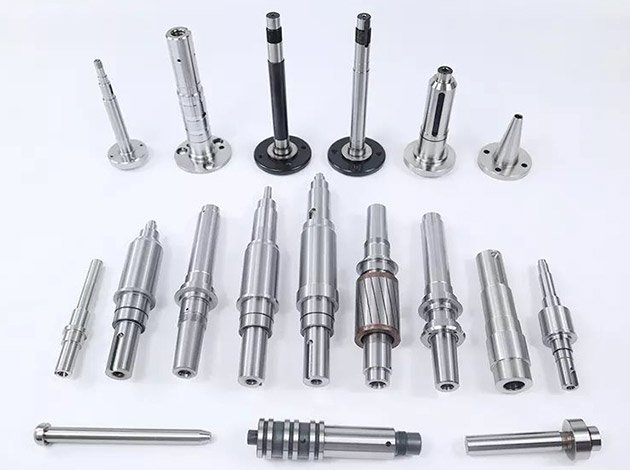
Dixin Technology’s technical capabilities include 3- to 5-axis CNC machining, EDM, precision grinding, and industrial ceramics. These capabilities support a broad range of difficult components, including tight-tolerance metal parts, complex structural components, wear-resistant tooling, and ceramic elements used in demanding environments. Combining these technologies under coordinated management can reduce handoffs and shorten the time required to qualify a complete component.
For aerospace programs, supply chain integration is particularly relevant because structural and flight-related parts require strict traceability, controlled processes, and reliable documentation. Dixin Technology’s aerospace CNC machining and titanium aircraft parts services address the need for complex geometries, difficult materials, and precision manufacturing in a controlled supply environment.
Medical manufacturers face a similar need for process discipline, although the materials, validation requirements, and product risks differ. The company’s capabilities for ISO-certified CNC machining of medical components support applications such as titanium implants, surgical instruments, and high-precision device parts.
In fluid power and industrial equipment, an integrated approach helps maintain dimensional consistency across mating components. Hydraulic valve spools, sleeves, pump components, and other precision parts depend on controlled fits and surface characteristics. Dixin Technology’s hydraulic pump parts manufacturing capability is aligned with these requirements.
The target audience for this model is global OEM and Tier 1 suppliers that need dependable production capacity without building and managing every specialized process internally. An integrator can support supplier rationalization, reduce administrative overhead, and provide a clearer escalation path when technical or schedule issues arise.
4. Industry Applications
Supply chain integration supports industries where component performance, traceability, and delivery reliability directly affect the customer’s operations.
Aerospace and Defense
Aerospace programs often involve titanium, aluminum, nickel alloys, and other materials that require specialized cutting strategies and careful process control. Components may pass through CNC machining, EDM, grinding, surface treatment, and detailed inspection. A supply chain integrator coordinates these steps while maintaining material traceability and documentation. This is particularly useful for structural parts, aircraft hardware, engine-related components, and low-volume programs with frequent engineering updates.
Medical Equipment and Surgical Products
Medical components demand repeatable processes, clean handling, tight dimensional control, and reliable inspection records. Integrators help connect design review with production validation and ongoing supply. For surgical instruments and implant-related components, effective coordination reduces the risk that a change in material, tooling, finishing, or inspection method will be introduced without proper review.
Hydraulics, Pumps, and Fluid Control
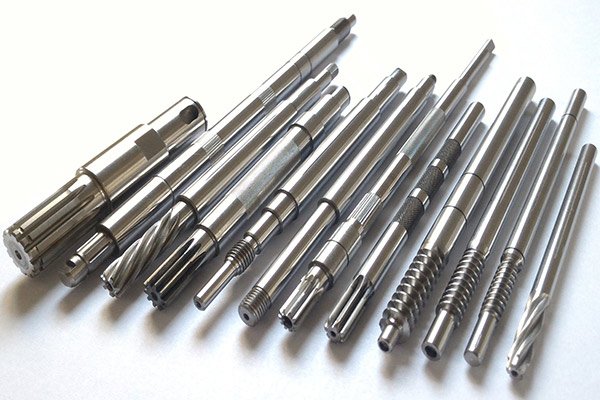
Hydraulic and pump assemblies depend on accurate interfaces, controlled clearances, and dependable surface finish. A small variation in a spool, sleeve, shaft, or housing can influence leakage, efficiency, service life, and system response. Integrators coordinate machining and finishing operations so that critical features are measured against the functional requirements of the complete assembly, not viewed in isolation.
Industrial Automation and Machinery
Automation equipment and construction machinery often require custom shafts, gears, structural components, fixtures, and wear parts in variable quantities. Demand may increase rapidly after a successful equipment launch, then shift toward service and replacement volumes. A supply chain integrator can support prototype quantities, production ramp-up, and replenishment programs through coordinated capacity and inventory planning.
Energy and Semiconductor Equipment
Energy systems and semiconductor equipment frequently use high-performance alloys, ceramics, precision-ground parts, and complex machined assemblies. These components may require tight tolerances and strict controls over contamination, surface quality, or thermal behavior. By coordinating specialized manufacturing processes, an integrator helps customers reduce qualification time and maintain consistent supply as product platforms evolve.
Across these applications, the strongest results come from early technical communication. Drawings, 3D models, material specifications, quality clauses, packaging requirements, and delivery targets should be reviewed together. This enables the manufacturing partner to build a supply strategy around the actual product risk and operating environment.
5. Call to Action
Agile manufacturing requires a supply chain that can respond with technical accuracy as well as speed. A capable supply chain integrator connects engineering, manufacturing, quality, procurement, and logistics into one accountable process. For OEMs and Tier 1 suppliers, this can improve schedule confidence, simplify supplier management, and create a more reliable path from prototype to production.
Dixin Technology and IndustryApex CNC provide integrated ODM and precision manufacturing support for complex components across aerospace, medical, hydraulics, industrial machinery, energy, and other demanding sectors. To discuss a part, assembly, material, tolerance requirement, or production program, visit the IndustryApex CNC home page or contact the Dixin Technology team with your drawings and supply requirements.