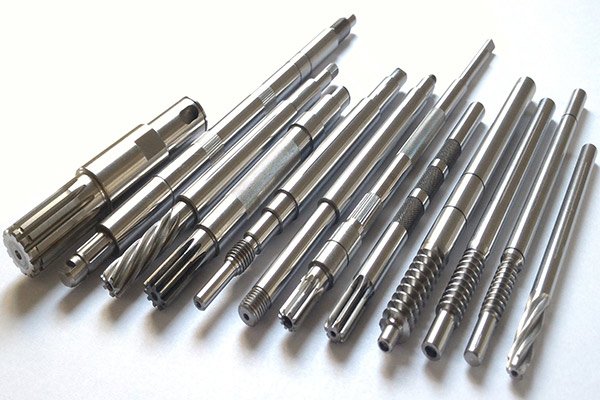
- Shaft
- Molds&Tools
- Hydraulics And Pump
- Hair transplant needle
- Hydraulics And Pump
- Precision CNC Shaft Machining Manufacturer for High Performance Applications
- Energy Industry CNC Machining Parts Supplier
- Aerospace CNC Machining Parts Manufacturer
- Aerospace CNC Machining Parts Manufacturer
- Automotive & EV CNC Machining Parts Supplier for OEM and Tier 1
- Medical CNC Machining Parts Supplier for Precision Medical Devices
Advanced EDM and Wire Cutting for Hard and Brittle Materials: Engineering, Quality, and Supply Chain Strategy

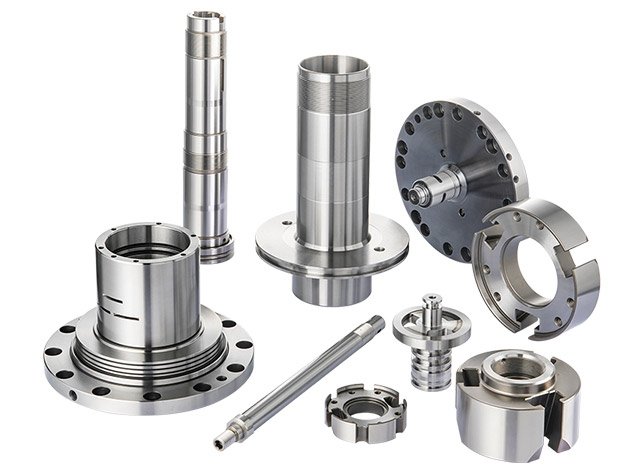
Advanced EDM and Wire Cutting for Hard and Brittle Materials
For global OEMs and Tier 1 suppliers, machining hard and brittle materials is rarely a simple capacity question. It is an engineering and supply-chain decision involving material behavior, geometric complexity, tolerance capability, inspection discipline, production continuity, and total landed risk. Electrical discharge machining (EDM) and wire EDM provide critical production routes when conventional cutting processes encounter excessive tool wear, unstable forces, edge damage, or unacceptable scrap rates.
Executive Summary
Materials such as tungsten carbide, hardened tool steel, high-temperature nickel alloys, titanium alloys, conductive ceramics, and certain specialty composites place significant demands on conventional machining. Their hardness, toughness, abrasiveness, thermal sensitivity, or brittleness can reduce cutter life and make complex internal profiles difficult to produce consistently. EDM addresses these constraints through controlled electrical discharges rather than direct mechanical cutting force. Wire EDM extends the approach to precision contouring, fine slots, narrow kerfs, and intricate through-features.
The value of EDM is not that it replaces CNC machining in every case. Its value is that it enables geometries, materials, and quality windows that are otherwise costly or unreliable to achieve. A capable manufacturing partner combines 3-5 axis CNC machining, EDM, precision grinding, material knowledge, process planning, and metrology into one controlled production system. This integrated approach helps purchasing, quality, and engineering teams reduce supplier handoffs, stabilize lead times, and protect critical component performance.
Dixin Technology, operating through IndustryApex CNC, supports precision-component programs where hard-material machining must align with disciplined production control and OEM-level supply requirements. The practical objective is to select the process sequence that meets functional requirements with the lowest sustainable risk, rather than selecting a process based only on a single tolerance or machine specification.
Technical Deep Dive
EDM removes material by producing a controlled series of electrical sparks between an electrode and an electrically conductive workpiece. A dielectric fluid separates the two, regulates the discharge environment, flushes removed particles, and assists thermal control. Each discharge melts and vaporizes a very small volume of material. Because the process does not rely on a cutting edge applying high mechanical force, it is especially useful for hard conductive materials and delicate features that could deform, chip, or crack under conventional cutting loads.
In sinker EDM, a shaped electrode is used to create a complementary cavity in the workpiece. This makes the process well suited to deep ribs, sharp internal corners, non-round cavities, fine mold details, and complex internal forms. Wire EDM uses a continuously fed conductive wire, commonly brass or coated wire, to cut a programmed contour through the workpiece. It is highly effective for punches, dies, precision inserts, carbide wear parts, micro-slots, intricate profiles, and close-tolerance mating features.
The term “hard and brittle” covers materials with different failure mechanisms. Tungsten carbide is extremely wear-resistant but can chip at unsupported edges. Hardened steels retain high hardness after heat treatment and may require stable thermal management to avoid dimensional movement. Nickel-based superalloys can resist conventional tooling and accumulate heat at the cutting zone. Conductive technical ceramics can be prone to microcracking if process energy is excessive. Process selection must therefore begin with the specific grade, material condition, blank geometry, functional surfaces, and downstream assembly requirements.
Wire EDM accuracy is influenced by more than the machine’s stated positioning resolution. Important variables include wire diameter, wire tension, discharge energy, flushing pressure, workpiece thickness, thermal stability, dielectric condition, and the number of finishing passes. Roughing passes prioritize material-removal rate, while skim cuts progressively reduce recast-layer thickness, improve surface finish, correct profile variation, and refine the final size. For tightly controlled tooling and precision components, engineers should define not only dimensional tolerances but also requirements for surface integrity, edge condition, and burr-free transitions.
The heat-affected surface produced by EDM deserves specific attention. EDM can leave a recast or “white” layer whose condition depends on material, pulse parameters, flushing, and finishing strategy. In many applications, a carefully controlled finishing sequence is sufficient. In fatigue-sensitive, sealing, optical, medical, or high-load service, the engineering team may specify additional polishing, grinding, lapping, or surface validation. The right acceptance criteria should be linked to component function, not applied as a generic requirement that adds cost without improving performance.
EDM also imposes design constraints. The workpiece must be electrically conductive, wire EDM generally requires a start hole or an accessible through-cut path, and the wire diameter limits the smallest internal corner radius. Tall sections, deep narrow features, and poor flushing conditions may require modified parameters or staged processing. These are not reasons to avoid the process; they are reasons to involve manufacturing engineering early. A design-for-manufacturability review can determine whether to use rough machining before heat treatment, wire EDM after heat treatment, grinding on functional diameters, and EDM only where its geometry advantage is essential.
A robust process plan often uses several technologies in sequence. CNC milling or turning establishes reference faces, external forms, and stock allowance. Heat treatment delivers the required mechanical properties. Wire EDM then produces high-precision profiles without creating heavy mechanical loading. Precision grinding finishes critical flats, diameters, or sealing surfaces. Final inspection confirms dimensions, form, surface condition, and traceability. By treating the part as a controlled manufacturing route rather than a collection of isolated operations, OEM teams can improve repeatability and prevent tolerance stack-up between suppliers.
The ODM & Supply Chain Advantage
For OEM and Tier 1 procurement teams, a precision component is only as dependable as the system producing it. Dixin Technology’s core identity is that of a supply-chain integrator and ODM solution provider. This means the engagement can extend beyond making a drawing-defined part. It can include manufacturability input, material sourcing coordination, process-route definition, prototype-to-production transition, quality-document alignment, packaging planning, and delivery management.
The reference edge is a fully controlled precision manufacturing system supported by ERP discipline and more than 30 years of manufacturing experience. ERP-based coordination matters because hard-material components frequently involve multiple dependencies: approved raw-material grades, heat-treatment condition, electrode or wire planning, CNC preparation, EDM capacity, grinding schedules, inspection records, and shipment commitments. When these dependencies are coordinated within a controlled system, the supplier can manage change, capacity, and traceability more effectively than a fragmented chain of independent job shops.
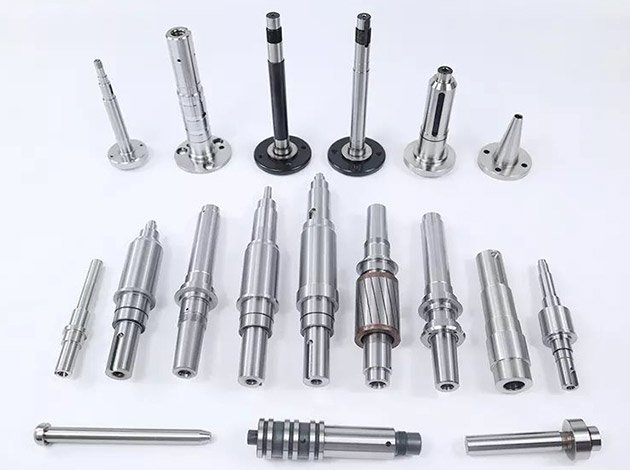
Dixin Technology’s capability base includes 3-5 axis CNC machining, EDM, precision grinding, and industrial ceramics. This range supports process combinations that match the component rather than forcing every feature through one technology. CNC machining provides productive stock removal and complex datum creation. EDM enables force-free cutting of conductive hard materials and intricate features. Precision grinding controls critical finish and geometry. Industrial ceramic expertise supports applications where wear, insulation, temperature resistance, chemical resistance, or dimensional stability drive material selection.
For an ODM program, early technical collaboration can materially improve sourcing outcomes. Engineering teams can review tolerance allocation, identify which dimensions are function-critical, recommend practical corner radii, assess whether a part should be machined before or after heat treatment, and separate cosmetic from performance requirements. Supply-chain teams can then establish a repeatable part family, define inspection plans, align packaging with damage risk, and set a production strategy that supports forecast demand as well as urgent replenishment needs.
Global customers also benefit when one manufacturing partner can coordinate related components, not merely one difficult part. Tooling inserts may be linked to carbide wear members; a hydraulic assembly may involve precision spools, sleeves, seals, and housings; an aerospace mechanism may require titanium structures alongside hardened locking elements. Consolidation should never compromise specialization, but a controlled integrator can reduce administrative load, simplify technical communication, and make corrective action more traceable across the assembly supply base.
The preferred commercial model is transparent and engineering-led. Suppliers should identify technical risks before release, document material and revision requirements, confirm measurable acceptance criteria, and provide the inspection evidence appropriate to the part’s application. For recurring production, this creates a stable feedback loop: manufacturing data informs process improvement, quality trends reveal potential drift before it becomes a field issue, and procurement gains better visibility into lead-time drivers and capacity constraints.
Industry Applications
In aerospace, EDM and wire cutting support components where material strength, heat resistance, weight control, and complex geometry converge. Typical uses include tooling, fixture elements, turbine-related tooling features, high-strength alloy mechanisms, and precision structural interfaces. Aerospace programs require careful control of material identity, revision status, inspection records, and process consistency. For related manufacturing support, explore aerospace CNC machining and titanium aircraft parts.
Medical-device manufacturing often requires small, precise, burr-controlled features in titanium, stainless steel, and specialized instrument materials. EDM can support intricate surgical instrument components, fine slots, profile features, and tooling used to form precision devices. The correct process route must also consider cleaning, surface finish, inspection, biocompatibility-related requirements where applicable, and documented traceability. Dixin Technology’s medical CNC machining capabilities provide context for high-precision device, implant, and surgical-instrument component programs.
Fluid-control and hydraulic systems depend on tightly controlled interfaces that manage pressure, flow, leakage, and wear. Hardened valve components, precision sleeves, specialized seats, and manufacturing tooling can benefit from EDM and grinding combinations. Functional requirements should include concentricity, cylindricity, surface finish, edge quality, and contamination control, because minor surface or geometry defects can influence sealing and flow behavior. See hydraulic pump parts manufacturing for related component categories.
Tooling, mold, semiconductor, energy, optics, and industrial automation programs also rely on EDM where hard materials and fine geometry intersect. Tungsten carbide dies, mold inserts, precision punches, wire-forming tools, conductive ceramic components, and wear-resistant mechanical parts are common examples. In these markets, the most valuable supplier is not simply the shop with an EDM machine. It is the manufacturing partner that can balance machining speed, finishing quality, material risk, inspection rigor, and delivery reliability across a full production lifecycle.
Call to Action
When a component involves hardened steel, tungsten carbide, titanium, nickel alloy, conductive ceramic, or a difficult precision profile, engage manufacturing engineering before the design is locked or the supplier base is fragmented. Dixin Technology can evaluate the drawing, material condition, critical features, tolerances, expected volumes, and quality-document requirements to recommend a practical manufacturing route.
For a technical review, RFQ discussion, or supply-chain assessment, contact IndustryApex CNC. The objective is a production solution that protects part function, controls risk, and remains repeatable from prototype through serial supply.