- Shaft
- Molds&Tools
- Hydraulics And Pump
- Hair transplant needle
- Hydraulics And Pump
- Precision CNC Shaft Machining Manufacturer for High Performance Applications
- Energy Industry CNC Machining Parts Supplier
- Aerospace CNC Machining Parts Manufacturer
- Aerospace CNC Machining Parts Manufacturer
- Automotive & EV CNC Machining Parts Supplier for OEM and Tier 1
- Medical CNC Machining Parts Supplier for Precision Medical Devices

Large-Scale Machining: Gantry Milling and Crankshaft Grinding for Global OEM Supply Chains

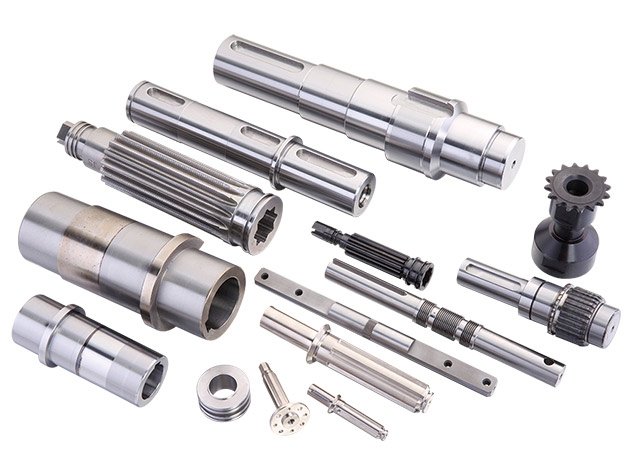
Large-Scale Machining: Gantry Milling and Crankshaft Grinding for Global OEM Supply Chains
Large, high-value components create a different class of manufacturing risk. Their material cost, long cycle times, difficult handling requirements, and demanding geometric tolerances mean that an error discovered late in production can affect an entire assembly program. For global OEMs and Tier 1 suppliers, gantry milling and crankshaft grinding are not simply machining processes. They are controlled manufacturing systems that must deliver dimensional stability, repeatable surface integrity, traceable quality, and dependable supply continuity.
1. Executive Summary
Large-scale machining supports critical equipment across transportation, energy, construction, industrial automation, fluid power, aerospace, and process manufacturing. Gantry milling provides the reach, rigidity, and multi-axis access required to machine large bases, frames, housings, structural plates, mold blocks, and welded fabrications. Crankshaft grinding delivers the precision needed to finish main journals, rod journals, eccentric shafts, and other rotating components whose performance depends on tight diameter control, roundness, cylindricity, surface finish, and index accuracy.
For procurement and engineering teams, the technical challenge is only one part of the decision. A capable supplier must also manage raw-material qualification, process planning, fixture design, in-process inspection, finishing, packaging, documentation, and delivery coordination. This is especially important when parts are large enough that logistics damage, fixture distortion, or thermal movement can compromise otherwise sound machining work.
Dixin Technology, operating through IndustryApex CNC, supports international OEM and Tier 1 programs with integrated precision manufacturing and ODM supply-chain coordination. By combining 3-5 axis CNC machining, EDM, precision grinding, industrial ceramics, quality control, and ERP-based process management, the company helps customers reduce supplier interfaces while maintaining control over performance-critical components.
The practical value of an integrated approach is measurable: fewer handoffs, earlier manufacturability feedback, clearer accountability for quality, more stable lead times, and a production route that is planned around final functional requirements instead of isolated operations. Whether the requirement is a heavy gantry-milled machine structure or a precisely ground crankshaft, the objective is the same: deliver a component that performs correctly when assembled, not merely one that passes a limited dimensional inspection.
2. Technical Deep Dive
Gantry Milling for Large and Complex Workpieces
Gantry milling is particularly effective for components that are too large, too heavy, or too geometrically complex for conventional vertical machining centers. The machine architecture supports broad work envelopes and enables the cutting head to travel over a fixed or moving table. This arrangement is well suited to large welded frames, machinery beds, press components, turbine-related structures, automation bases, die and mold blocks, and precision structural elements.
Rigidity is central to the process. Large parts often include deep pockets, long machined faces, multiple datum systems, and extensive material removal. The milling strategy must manage cutting forces while maintaining positional accuracy over long travel distances. Tool selection, spindle speed, feed rate, radial engagement, axial depth, and cutter path all affect deflection, vibration, heat generation, and cycle time. High-efficiency roughing can reduce time substantially, but it must be balanced against residual stress in the workpiece and the stability of the fixture.
Thermal control is another major consideration. A large casting or welded fabrication can change dimensionally as its temperature equalizes with the shop environment. Machine structure, spindle heat, coolant temperature, and the time between roughing and finishing all influence final geometry. Effective process planning therefore establishes stable datums early, sequences material removal symmetrically where possible, allows stress-relief operations when required, and reserves critical finishing operations for a controlled final setup.
For complex assemblies, 3-5 axis CNC capability allows engineers to reduce secondary setups and reach inclined faces, precision bores, profiles, and transition surfaces more efficiently. Fewer setups generally improve datum consistency and reduce handling risk. However, multi-axis machining must be supported by collision-free programming, verified toolpaths, appropriate workholding, and inspection methods aligned with the functional datum scheme in the drawing.
Crankshaft Grinding and Rotating-Component Accuracy
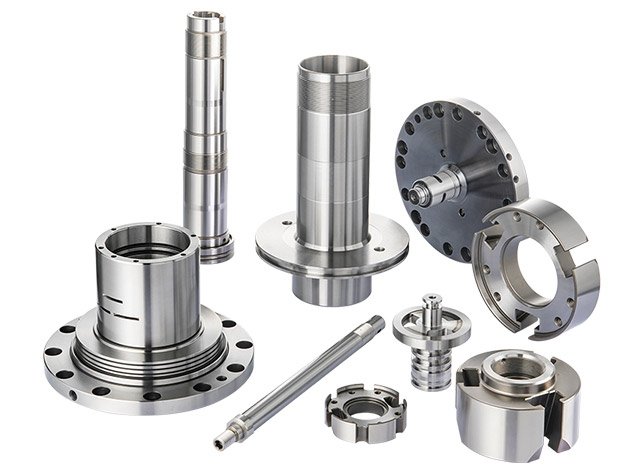
Crankshaft grinding is a specialized finishing process used when rotational geometry and surface quality directly affect fatigue life, lubrication behavior, bearing performance, vibration, and power transmission. It is applied to engine crankshafts, compressor shafts, pump eccentrics, transmission shafts, and other components with offset journals or demanding concentric features.
The process begins with a controlled incoming condition. Forged, cast, or pre-machined shaft blanks are checked for material condition, straightness, center-hole quality, allowance distribution, and datum integrity. These factors determine whether the part can be held accurately between centers or in dedicated fixtures. Before grinding, operations such as turning, heat treatment, straightening, and intermediate inspection must be coordinated so that sufficient grinding stock remains without creating unnecessary cycle time.
Critical crankshaft characteristics include journal diameter, taper, out-of-roundness, cylindricity, runout, shoulder geometry, fillet radius, index position, and surface roughness. A journal can measure correctly at a single point yet still fail to perform if its form or surface integrity is poor. Grinding parameters must therefore control wheel specification, dressing condition, coolant delivery, spark-out time, infeed rate, and balance. Improper thermal management can create grinding burn, microstructural damage, residual tensile stress, or surface defects that reduce service life.
For offset journals, the relationship between main bearing axes and crankpin axes must be maintained precisely. Accurate indexing and controlled workpiece rotation are essential. Fillet regions require particular attention because they are common fatigue-sensitive locations. Depending on the application, subsequent finishing may include polishing, superfinishing, deburring, cleaning, crack detection, dynamic balancing, corrosion protection, and protective packaging.
Measurement capability must match the component’s function. In-process gauging supports correction during production, while final inspection may include precision micrometers, roundness measurement, profilometry, coordinate measurement, runout verification, magnetic particle inspection, and documented control plans. For global programs, inspection records should be traceable to the batch, operation route, material certificate, and final shipment.
3. The ODM & Supply Chain Advantage
Dixin Technology’s core identity is that of a supply-chain integrator and ODM solution provider. This model is designed for OEMs and Tier 1 suppliers that need more than a machine shop quotation. Customers often require a partner that can assess the drawing, identify production risks, recommend process changes, organize the appropriate manufacturing route, and take responsibility for the delivered component across multiple processes.
With more than 30 years of experience and a fully controlled precision manufacturing system supported by ERP, Dixin Technology coordinates production information from quotation through shipment. ERP-driven planning improves visibility across material purchasing, capacity allocation, work orders, quality checkpoints, and delivery dates. For large-scale machined parts, this control is important because a delay in forging, heat treatment, specialized grinding, or final inspection can affect the entire production schedule.
The manufacturing system combines 3-5 axis CNC machining, EDM, precision grinding, and industrial ceramics. This breadth enables engineering teams to design a process around the component rather than force the component into a narrow process capability. Gantry milling can establish large structural surfaces and precision interfaces; EDM can produce difficult internal or hardened features; grinding can complete critical shafts and journals; and industrial ceramic capability can support demanding wear, insulation, thermal, or corrosion-resistance requirements.
ODM involvement begins before machining. Dixin Technology reviews material selection, part geometry, tolerance allocation, datum strategy, manufacturability, finishing requirements, inspection access, and packaging needs. For example, a large welded base may need machining allowances, stress-relief planning, lifting-point considerations, and a measurement strategy that accounts for its size. A crankshaft may need a different heat-treatment route or fillet specification to achieve fatigue performance without unnecessary grinding difficulty. Early technical communication prevents late-stage changes that cause cost escalation or schedule disruption.
Supply-chain integration also simplifies commercial management. Instead of separately coordinating raw material, rough machining, heat treatment, finishing, inspection, and export packaging, the customer works through a defined manufacturing owner. This reduces interface risk and makes corrective action faster when deviations occur. It is especially useful for prototype-to-production transitions, where the first article often reveals improvements needed in fixtures, process sequence, measurement points, or packing methods.
For global OEM and Tier 1 programs, the required outcome is dependable repeatability at scale. Dixin Technology supports this through documented manufacturing routes, controlled suppliers, inspection traceability, and production planning tied to customer requirements. The result is a more resilient sourcing structure for components that are costly to remake and operationally critical after installation.
4. Industry Applications
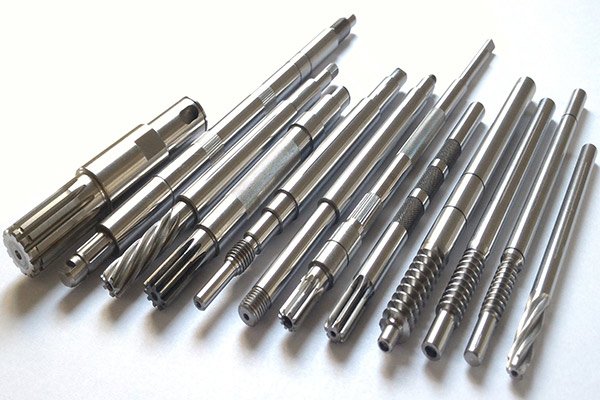
Drivetrain, Engines, and Heavy Equipment
Crankshaft grinding is directly relevant to engines, compressors, drivetrains, and large rotating equipment. Ground crankshafts and eccentric shafts support stable bearing contact, efficient lubrication, reduced vibration, and predictable service life. Gantry milling complements these applications by machining engine test stands, gearbox housings, axle structures, production fixtures, and heavy equipment frames. For programs involving vehicle and powertrain systems, controlled form accuracy and surface finish are essential to assembly quality and field reliability.
Hydraulics, Pumps, and Fluid Control
Fluid-power equipment depends on accurate mating surfaces, valve bores, pump housings, drive shafts, and precision sealing interfaces. Gantry milling can machine large hydraulic manifolds, pump bases, structural mounting surfaces, and test equipment, while precision grinding supports shafts, sleeves, and rotational elements. Dixin Technology provides dedicated support for hydraulic pump parts and fluid-control components, where dimensional consistency, material selection, and surface integrity influence pressure capability and leakage performance.
Aerospace Structures and Production Equipment
Aerospace manufacturing requires strict control over traceability, precision, and process discipline. Large gantry milling is useful for structural fixtures, assembly tooling, aircraft structural components, and complex aluminum, titanium, or high-strength alloy workpieces. Multi-axis access reduces setup changes and supports precise relationships among mounting holes, pockets, profiles, and functional interfaces. Learn more about Dixin Technology’s capabilities for aerospace CNC machining and aircraft structural components.
Medical, Chemical, and High-Precision Equipment
Although medical components are generally smaller than heavy machinery structures, the same controlled manufacturing principles apply: stable processes, validated materials, precise finishing, and reliable documentation. Precision grinding and multi-axis machining support surgical instruments, implant-related components, medical-device equipment, and chemical-processing hardware. Dixin Technology’s ISO-certified CNC machining for medical components demonstrates how stringent tolerance and material requirements can be managed through an integrated manufacturing approach.
Energy, Construction, and Industrial Automation
Energy systems, construction machinery, and automated production lines use large bases, bearing seats, brackets, housings, rollers, shafts, and custom machine elements. These parts are often produced in low to medium volumes but carry high operational importance. Gantry milling provides flexibility for large work envelopes and varied geometries, while grinding provides the precision required for rotating interfaces. A supplier with integrated engineering support can help customers select the most economical route for prototypes, pilot runs, and recurring production.
5. Call to Action
Large-scale components require a manufacturing partner that understands the relationship between process capability, supply-chain coordination, and final equipment performance. Dixin Technology helps global OEMs and Tier 1 suppliers source precision gantry-milled structures, ground crankshafts, eccentric shafts, hydraulic components, and customized industrial parts through a controlled ODM manufacturing system.
For a technical review of your drawing package, tolerance requirements, material specification, production forecast, or current supply challenge, contact Dixin Technology. Provide available 2D and 3D files, annual volume, inspection requirements, and target delivery schedule so the engineering team can recommend an appropriate manufacturing and supply plan.