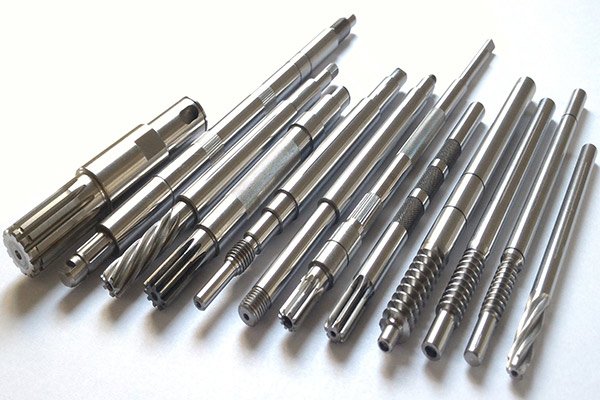
- Shaft
- Molds&Tools
- Hydraulics And Pump
- Hair transplant needle
- Hydraulics And Pump
- Precision CNC Shaft Machining Manufacturer for High Performance Applications
- Energy Industry CNC Machining Parts Supplier
- Aerospace CNC Machining Parts Manufacturer
- Aerospace CNC Machining Parts Manufacturer
- Automotive & EV CNC Machining Parts Supplier for OEM and Tier 1
- Medical CNC Machining Parts Supplier for Precision Medical Devices

Integrating 3D Printing with CNC Machining for Rapid Prototyping

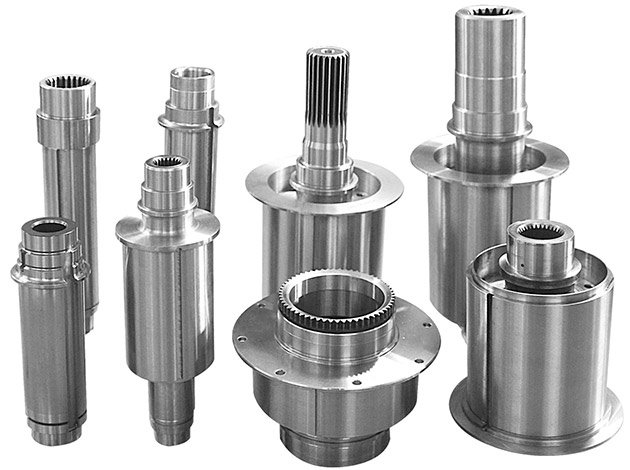
Integrating 3D Printing with CNC Machining for Rapid Prototyping
For global OEMs and Tier 1 suppliers, rapid prototyping is no longer defined simply by how quickly a physical part can be produced. The real objective is to validate design intent, functional performance, manufacturability, material behavior, and supply-chain readiness before production tooling or capacity is committed. Integrating additive manufacturing with traditional CNC machining creates a practical hybrid route that accelerates this validation while preserving the accuracy, surface quality, and material integrity required for engineering decisions.
Executive Summary
3D printing and CNC machining solve different problems in the prototype development cycle. Additive manufacturing is highly effective for rapidly producing complex geometries, internal passages, lightweight structures, and early design iterations without dedicated tooling. CNC machining delivers tighter dimensional tolerances, superior surface finishes, dependable material properties, and interfaces that accurately reflect production-part requirements. When combined within a controlled engineering workflow, these technologies reduce prototype lead time while improving the quality of design verification.
The hybrid approach begins by assigning each feature to the process that offers the best balance of speed, risk, cost, and quality. A prototype housing may be printed to evaluate its overall envelope, internal routing, and assembly clearances, then CNC machined on sealing surfaces, bearing bores, mounting faces, threaded holes, and datum features. A metal additive blank can similarly be machined to final dimensions where surface finish, concentricity, flatness, or positional accuracy is critical. This creates a prototype that is faster than a fully machined first article and more functionally representative than a purely printed model.
At Dixin Technology, IndustryApex CNC, this model supports customers that need more than prototype parts. They need a disciplined route from concept through design verification, pilot production, and scalable supply. The value lies in integrating process planning, material selection, inspection strategy, and supplier coordination into one manufacturing decision framework.
Technical Deep Dive
Successful hybrid prototyping depends on engineering the part for both additive and subtractive processes from the start. The CAD model should identify functional datums, critical-to-quality dimensions, tolerance zones, surface-finish requirements, load paths, fluid boundaries, and features that will be machined after printing. Treating machining as a finishing operation only is a common mistake. Instead, CNC machining must be planned as an intentional second-stage manufacturing process with defined stock allowances, fixturing surfaces, and inspection references.
For polymer prototypes, 3D printing is valuable for packaging studies, fit checks, ergonomic reviews, airflow mockups, and low-load functional assemblies. However, printed polymers may have anisotropic strength, variable thermal stability, and less reliable threads or bearing interfaces. CNC machining can add precision holes, metal inserts, sealing lands, and mating surfaces that make the prototype suitable for more demanding testing. For metal components, additive processes such as powder-bed fusion can create complex internal channels, topology-optimized shapes, and near-net geometries that would be difficult or uneconomical to machine from billet. CNC operations then establish the precision features that production assemblies depend on.
Material selection must be tied to the purpose of the build. Early proof-of-concept parts may use cost-effective printed polymers, while functional tests may require machined aluminum, stainless steel, titanium, engineering thermoplastics, or printed metal alloys. The engineering team should distinguish between a visual prototype, an assembly prototype, a functional prototype, and a qualification prototype. Using a material or process that cannot support the intended test can produce misleading results and delay the project later.
Dimensional planning is equally important. Additive processes generally require post-processing because thermal distortion, shrinkage, residual stress, support removal, and layer-based surface texture affect part accuracy. Designers should specify machining stock around bores, threads, sealing faces, high-precision pockets, and critical locating surfaces. The machining allowance must be large enough to remove additive irregularities but controlled enough to avoid excessive cycle time or distortion. Orientation during printing also matters because it influences build support, thermal gradients, surface quality, and the accessibility of features during subsequent CNC operations.
Inspection should be designed into the process rather than applied only at final release. A robust workflow uses incoming material checks, in-process dimensional verification, coordinate measurement where required, and final inspection against the prototype’s functional requirements. For a hybrid part, inspection data can reveal whether deviation originated in the additive build, stress relief, fixturing, machining, or finishing. This traceability is particularly valuable when prototype learning must be converted into a production control plan.
Lead-time gains are achieved through parallel work, not through additive manufacturing alone. While a printed near-net part is being built, engineers can prepare CNC programs, fixtures, inspection methods, purchased components, and assembly tooling. The prototype can move directly from print post-processing to machining, measurement, and functional testing. This overlap reduces idle time between design iterations and gives procurement teams earlier visibility into future production requirements.
The ODM & Supply Chain Advantage
Dixin Technology operates as a supply-chain integrator and ODM solution provider for global OEM and Tier 1 programs. This position matters because rapid prototyping often involves more than a single manufactured component. A prototype assembly may require machined metals, printed structures, standard fasteners, ceramics, seals, coatings, heat treatment, and specialized inspection. Fragmented sourcing can produce inconsistent revision control, unclear accountability, and delays caused by multiple handoffs. An integrated manufacturing partner coordinates these requirements under a unified technical and commercial plan.
With more than 30 years of experience and a fully controlled precision manufacturing system supported by ERP, Dixin Technology can align prototype execution with the information discipline required for later production. ERP-supported planning improves visibility across material procurement, routing, work orders, capacity, revision status, inspection records, and shipment requirements. For supply-chain teams, this means prototype urgency does not have to eliminate traceability. For engineering teams, it means decisions made during prototype development can be documented and carried forward instead of being rediscovered during production launch.
The manufacturing capability set includes 3-axis, 4-axis, and 5-axis CNC machining, EDM, precision grinding, and industrial ceramics. This combination allows a prototype program to use additive manufacturing where complexity and iteration speed provide value, then apply precision manufacturing processes where functional performance demands control. Five-axis machining can reach compound angles and complex structural features efficiently. EDM can create narrow slots, hardened features, and intricate profiles. Precision grinding supports demanding requirements for roundness, flatness, parallelism, and surface finish. Industrial ceramics provide options for high-temperature, electrically insulating, wear-resistant, or chemically resistant applications.
The ODM advantage also begins earlier than manufacturing. Engineering support can assess whether a concept should be printed, machined, built as a hybrid part, or redesigned for a more economical production route. This design-for-manufacturability review considers tolerance allocation, material availability, inspection practicality, tool accessibility, batch economics, finishing, and assembly interfaces. The result is not simply a faster prototype. It is a prototype strategy that reduces uncertainty in the next phase of the product lifecycle.
Industry Applications
In aerospace, hybrid prototyping supports the development of lightweight brackets, ducting interfaces, fixtures, structural concepts, and complex fluid-routing components. Additive manufacturing can quickly validate topology-optimized forms or internal geometries, while CNC machining finishes critical mounting faces, bores, and load-transfer interfaces. For production-oriented aerospace development, see Dixin Technology’s capabilities for aerospace CNC machining and titanium aircraft parts.
Medical-device development benefits from rapid iterations of surgical instruments, device housings, implant-related tooling, and precision assembly components. Printed prototypes can accelerate human-factors evaluation and geometry validation, while CNC machining provides the precision needed for critical interfaces and test fixtures. Dixin Technology supports demanding requirements through its ISO-certified CNC machining for medical components, including titanium implants, surgical instruments, and high-precision device parts.
For fluid-control, industrial automation, and pump programs, the hybrid method is useful for manifolds, valve bodies, impellers, enclosures, and flow-test hardware. Printed components can verify flow paths and package constraints before expensive machining begins, while CNC machining establishes sealing faces, threads, spool bores, and other features that determine hydraulic reliability. Learn more about Dixin Technology’s hydraulic pump parts manufacturing capabilities.
Semiconductor equipment, energy systems, automation machinery, and advanced industrial tools also benefit from this combined approach. Complex low-volume parts can be tested quickly, then refined based on actual assembly, thermal, vibration, pressure, and service data. The hybrid workflow is especially effective when prototype quantities are low, revision cycles are frequent, and the final part will require high-precision CNC features.
Call to Action
Rapid prototyping should create evidence for the next engineering decision, not merely produce a part quickly. By integrating 3D printing with CNC machining, Dixin Technology helps OEM and Tier 1 teams validate complex designs, protect critical tolerances, manage supply-chain risk, and establish a clearer transition toward production.
For a review of your prototype architecture, material options, machining requirements, and supply strategy, contact Dixin Technology. Our engineering team can help determine the most effective additive, CNC, or hybrid route for your program.