- Shaft
- Molds&Tools
- Hydraulics And Pump
- Hair transplant needle
- Hydraulics And Pump
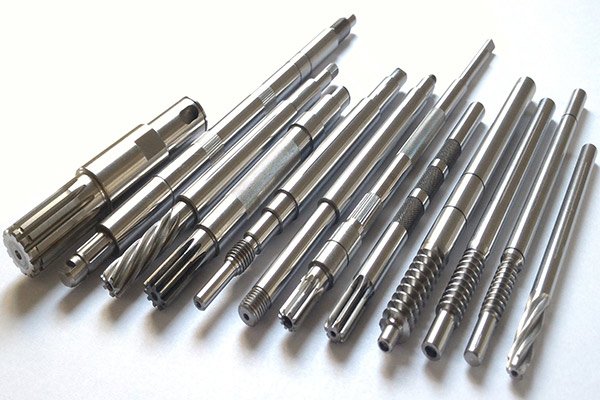
- Precision CNC Shaft Machining Manufacturer for High Performance Applications
- Energy Industry CNC Machining Parts Supplier
- Aerospace CNC Machining Parts Manufacturer
- Aerospace CNC Machining Parts Manufacturer
- Automotive & EV CNC Machining Parts Supplier for OEM and Tier 1
- Medical CNC Machining Parts Supplier for Precision Medical Devices
How ERP Systems Ensure Quality Control in CNC Mass Production

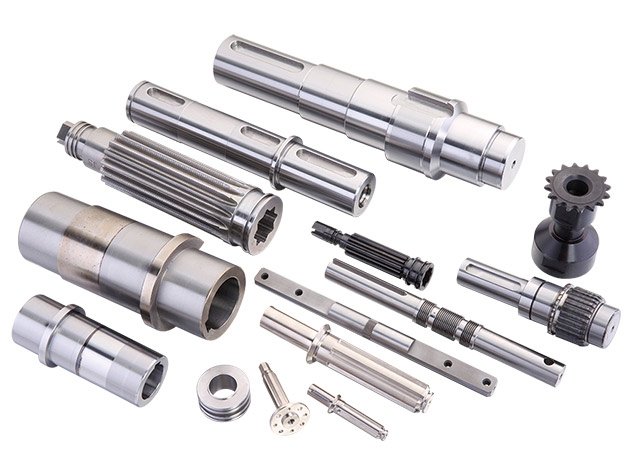
How ERP Systems Ensure Quality Control in CNC Mass Production
For global OEMs and Tier 1 suppliers, CNC mass production is not controlled by machining capacity alone. Quality depends on how effectively engineering data, materials, processes, inspection records, production schedules, and supplier information are connected. An enterprise resource planning system, or ERP, provides the operational structure that links these activities into one controlled manufacturing workflow.
At Dixin Technology, operating through IndustryApex CNC, ERP is part of a fully controlled precision manufacturing system developed through more than 30 years of manufacturing experience. The result is a production environment designed to deliver repeatable quality, responsive supply chain management, and documented process control for demanding industries.
1. Executive Summary
ERP systems ensure quality control in CNC mass production by creating a single source of truth for product specifications, production routings, approved materials, machine capacity, inspection requirements, nonconformance records, and shipment documentation. Instead of treating quality as a final inspection activity, ERP embeds quality checkpoints throughout the product lifecycle.
When a customer releases a drawing revision, the ERP system can connect the current revision to the correct bill of materials, CNC program reference, tooling requirement, work instruction, and inspection plan. When raw material arrives, its heat number and certification can be linked to a specific production order. During machining, operators and inspectors can record dimensional results against defined acceptance criteria. If a measurement fails, the system can quarantine affected work, trigger a corrective action, and preserve a complete traceability record.
This approach is especially valuable in high-volume CNC production, where a small process deviation can affect thousands of components. ERP improves quality in five practical ways: it standardizes production instructions, controls revisions, tracks material and lot genealogy, manages in-process inspection, and turns production data into actionable improvement information. These capabilities help manufacturers reduce variation, prevent undocumented changes, shorten root-cause investigations, and provide customers with reliable evidence of conformity.
2. Technical Deep Dive
Quality begins with controlled product data
A CNC component may depend on a complex set of technical inputs: CAD files, drawing tolerances, surface-finish requirements, material grades, heat-treatment conditions, special-process specifications, packaging standards, and customer-specific inspection formats. If these records are stored across disconnected spreadsheets, email threads, and local workstation folders, the risk of using obsolete information increases.
ERP systems establish controlled relationships between these records. A part number can be associated with a current engineering revision, approved manufacturing route, tooling list, inspection plan, and customer order. Access permissions and revision workflows help ensure that only authorized personnel can release or modify production information. The system can also retain superseded revisions for historical reference without allowing them to be used accidentally for new orders.
Routing control converts engineering intent into repeatable work
Manufacturing quality depends on more than the final drawing. The sequence of operations influences datum control, thermal distortion, burr formation, clamping deformation, and the ability to inspect critical features. An ERP routing defines the approved process sequence, such as material preparation, turning, 3-axis or 5-axis milling, EDM, heat treatment, precision grinding, cleaning, inspection, and packaging.
Each operation can include required resources, setup instructions, estimated cycle time, tooling, fixtures, inspection frequency, and approval requirements. This provides a repeatable framework for mass production and allows process engineers to update the route when capability studies or corrective actions identify a better method. The routing also creates a production history that can be compared across lots, machines, shifts, and operators.
Material traceability protects component integrity
Material control is a central quality requirement for aerospace, medical, hydraulic, semiconductor, and other engineered products. ERP systems can record supplier identity, purchase order, material grade, certificate of conformity, heat or lot number, incoming inspection result, and storage status. This information follows the material into the production order and, where required, into the finished-product certificate.
For titanium, stainless steel, aluminum alloys, engineering plastics, and industrial ceramics, this traceability supports both compliance and rapid investigation. If a supplier reports a material concern, the manufacturer can identify potentially affected work orders and shipments without placing unrelated production on hold. This targeted response reduces disruption while protecting the customer.
Inspection plans move quality upstream
Final inspection alone cannot control a mass-production process. ERP quality modules can assign inspection plans to incoming materials, first articles, in-process operations, and finished goods. A plan may specify measurement characteristics, sampling frequency, gauges, tolerances, inspection method, and the employee or department responsible for approval.
For example, a critical bore may require 100 percent inspection, while a less critical external dimension may be checked according to an approved sampling plan. The system can prevent an operation from being closed until required measurements are entered and accepted. Results may be captured manually, imported from coordinate measuring machines, or connected to shop-floor data collection systems, depending on the manufacturing architecture.
Digital records improve legibility and reduce transcription errors. They also make trends easier to identify. A gradual movement toward the upper tolerance limit may indicate tool wear before components become nonconforming. Production and quality teams can then schedule tool replacement, adjust offsets under an approved procedure, or review the cutting conditions.
Nonconformance management creates a closed loop
When a component fails an inspection, ERP provides a controlled path for disposition. The affected quantity can be placed on hold and separated from conforming inventory. Quality personnel can document the defect, suspected cause, containment action, rework instruction, scrap decision, or customer concession. The system can associate the event with a machine, operator, tool, material lot, supplier, program revision, and production order.
This information supports structured root-cause analysis using methods such as 5 Why, fishbone analysis, process capability review, and corrective and preventive action. The important point is that the correction can be connected back to the production process. A revised setup instruction, inspection frequency, tool-life limit, or supplier requirement can be released through the same controlled system, creating a documented feedback loop.
Capacity and maintenance data also affect quality
Production planning is often treated as a delivery issue, but it has direct quality consequences. Overloaded machines, rushed setups, excessive overtime, and unplanned subcontracting can increase process variation. ERP planning tools combine orders, routings, available capacity, tooling, labor, and material status to create a more realistic production schedule.
When maintenance records are connected to equipment and work orders, manufacturers can monitor preventive maintenance, spindle service, calibration status, and machine downtime. A coordinate measuring machine, gauge, or cutting tool can be blocked from use when calibration or service is overdue. This prevents measurement uncertainty and equipment degradation from becoming hidden sources of nonconformance.
Data security and auditability matter to OEM customers
Global OEMs need more than a statement that parts were inspected. They require confidence that records are complete, attributable, and protected from uncontrolled changes. ERP audit trails can show who released a revision, approved a deviation, entered an inspection result, closed a nonconformance, or authorized shipment.
Role-based access, electronic approvals, backup policies, and controlled document storage strengthen the reliability of the quality management system. These capabilities are particularly important when customer programs require long-term record retention, serialization, special-process verification, or detailed supplier reporting.
3. The ODM & Supply Chain Advantage
Dixin Technology’s manufacturing model is built around the identity of a supply chain integrator and ODM solution provider. For customers, this means the engagement can extend beyond machining individual parts. Engineering input, manufacturability review, process development, production planning, quality control, sourcing, and delivery coordination can be managed as connected activities.
The advantage becomes clear when a component has tight tolerances, difficult materials, multiple process requirements, or a demanding ramp schedule. An ODM partner can review the design for machining access, datum strategy, tool reach, workholding, inspection feasibility, and total manufacturing cost before production begins. ERP then provides the operational framework for translating the approved design into controlled production.
Dixin Technology maintains a fully controlled precision manufacturing system supported by ERP and more than 30 years of experience. This combination links long-term process knowledge with current production visibility. Engineers can use historical cycle times, defect data, tooling performance, and supplier records to make better decisions on new programs. Supply chain teams can see material status, work-in-process, capacity constraints, inspection queues, and shipment readiness in one operating environment.
The manufacturing technology base includes 3-axis through 5-axis CNC machining, electrical discharge machining, precision grinding, and industrial ceramics. Each capability introduces different quality considerations. Multi-axis machining requires careful control of work offsets, tool paths, and collision-free setups. EDM requires attention to electrode condition, burn parameters, recast layers, and dimensional results. Precision grinding requires control of wheel condition, heat generation, dressing, and surface finish. Industrial ceramics require disciplined handling, specialized processing, and inspection for chipping, cracking, and dimensional stability.
ERP helps coordinate these capabilities across one order instead of treating them as isolated departments. A part can move from CNC machining to EDM, grinding, cleaning, and inspection with clear operation status and required documentation. Where an outside special process is necessary, supplier approvals, purchase orders, certificates, and incoming verification can be tied to the same traceability chain.
For global OEMs and Tier 1 suppliers, this integrated structure reduces communication friction. The customer receives a clearer view of production status and quality evidence, while the manufacturer gains better control over priorities and constraints. It also supports scalable outsourcing decisions: processes can be assigned internally or to approved partners without losing visibility of the overall order history.
Supply chain resilience is another benefit. ERP data can expose single-source materials, long-lead tooling, capacity bottlenecks, and supplier performance trends before they threaten delivery. Procurement teams can use approved supplier lists and historical quality data to balance price, lead time, and risk. Production planners can simulate demand changes and identify whether additional shifts, machines, tooling, or qualified suppliers are required.
These benefits do not come from software alone. The ERP must be supported by disciplined master data, clear ownership, standardized work, trained users, and management commitment. When these conditions are in place, the system becomes a practical control mechanism for quality and supply chain execution rather than merely an administrative database.
4. Industry Applications
Aerospace and defense
Aerospace programs require strict configuration control, material traceability, inspection documentation, and long record-retention periods. ERP can connect titanium or nickel alloy certificates to specific aircraft components and preserve the relationship between drawing revision, CNC program, process route, inspection result, and shipment. For demanding applications involving 5-axis machining and structural components, customers can review Dixin Technology’s aerospace CNC machining capabilities.
Medical components
Medical manufacturers need controlled materials, repeatable processes, documented inspection, and strong change management. ERP supports lot traceability for components such as titanium implants, surgical instruments, and high-precision device parts. It can also manage approved suppliers, cleaning requirements, packaging status, and release approvals. More information is available through the medical CNC machining resource.
Hydraulics, pumps, and fluid control
Hydraulic valve spools, sleeves, pump components, and fluid-control parts often depend on precise fits, low surface roughness, concentricity, and controlled leakage performance. ERP inspection plans can define bore, diameter, roundness, surface finish, and functional test requirements. Linking inspection results to machine, tool, and material data helps teams address drift before it becomes a field issue. Dixin Technology’s hydraulic pump parts manufacturing capability addresses these precision requirements.
Industrial machinery and automation
Automation equipment, drivetrain systems, construction machinery, and energy equipment frequently combine machined housings, shafts, gears, fixtures, and wear-resistant components. ERP supports coordinated production across multiple part numbers and delivery dates. It also helps manufacturers manage engineering changes when a machine design evolves during installation or field validation.
Semiconductor and precision equipment
Semiconductor equipment suppliers require cleanliness, dimensional consistency, specialized materials, and careful process sequencing. ERP can enforce approved routes for precision machining, EDM, grinding, cleaning, and inspection while maintaining records for each lot. This is useful when the customer needs repeatability across multiple production releases rather than a one-time prototype result.
5. Call to Action
Quality control in CNC mass production is strongest when engineering, manufacturing, inspection, procurement, and logistics operate from connected information. ERP systems provide that connection by controlling revisions, standardizing routings, preserving traceability, managing inspection, and converting nonconformance data into process improvement.
For OEM and Tier 1 teams evaluating a machining partner, the key question is not only whether a supplier owns capable machines. Ask how the supplier controls engineering changes, verifies material identity, manages in-process inspection, protects calibration status, handles nonconforming product, and reports production evidence. These operational details determine whether quality can scale with volume.
Visit the IndustryApex CNC homepage to review Dixin Technology’s precision manufacturing and supply chain capabilities. For drawings, forecast requirements, material specifications, or a discussion of an ODM production program, contact the Dixin Technology team.