- Shaft
- Molds&Tools
- Hydraulics And Pump
- Hair transplant needle
- Hydraulics And Pump
- Precision CNC Shaft Machining Manufacturer for High Performance Applications
- Energy Industry CNC Machining Parts Supplier
- Aerospace CNC Machining Parts Manufacturer
- Aerospace CNC Machining Parts Manufacturer
- Automotive & EV CNC Machining Parts Supplier for OEM and Tier 1
- Medical CNC Machining Parts Supplier for Precision Medical Devices
Cold Heading Tooling vs. CNC Machining: Which Manufacturing Method Is Right for Your Project?

Cold Heading Tooling vs. CNC Machining: Which Manufacturing Method Is Right for Your Project?
For OEMs and Tier 1 suppliers, selecting between cold heading and CNC machining is not simply a process decision. It affects unit cost, tooling investment, material utilization, qualification timelines, dimensional capability, inventory strategy, and long-term supply resilience. The best choice depends on the component geometry, production volume, material, functional requirements, and the point at which a project sits in its product lifecycle.
1. Executive Summary
Cold heading and CNC machining solve different manufacturing problems. Cold heading is a high-volume metal-forming process that shapes wire or slug stock through compressive force. It is exceptionally effective for fasteners, pins, studs, rivets, shafts, and other rotational or near-rotational components. Once a stable design and sufficient annual demand justify the tooling investment, cold heading can deliver very high throughput, strong material utilization, improved grain flow, and lower piece-part cost.
CNC machining is a subtractive process in which material is removed from bar, billet, plate, casting, forging, or other stock forms. It is usually the more flexible choice for prototypes, low-to-medium production volumes, highly complex geometries, tight feature relationships, and components requiring multiple secondary operations. Modern 3-axis, 4-axis, and 5-axis CNC systems can manufacture precise parts with pockets, cross-holes, threads, contours, ports, splines, sealing surfaces, and critical datums that are impractical or uneconomical to form through heading alone.
In many successful sourcing programs, the answer is a hybrid route rather than an either-or decision. A cold-headed blank can establish the primary geometry efficiently, followed by CNC turning, milling, grinding, EDM, heat treatment, coating, or inspection operations for critical features. This approach can reduce machining time and scrap while retaining the accuracy needed for demanding assemblies.
Dixin Technology, operating through IndustryApex CNC, supports this manufacturing decision from a supply-chain and design-for-manufacturability perspective. The objective is to identify the production route that delivers a qualified part at the right cost, quality level, and delivery risk for the full program life.
2. Technical Deep Dive
How Cold Heading Works
Cold heading, also called cold forming or cold forging in many applications, begins with wire or rod stock cut into a controlled blank. The blank is transferred through one or more dies where punches apply compressive force and displace material into the required form. Depending on the component, the process may include upsetting, extruding, heading, piercing, trimming, thread rolling, and other forming stages.
The defining technical characteristic is that metal is displaced rather than removed. This creates substantial material-efficiency benefits. A machined bolt or pin may begin as oversized bar stock and generate chips as the diameter, head, flange, or shank is cut. A headed component forms most of those features directly, producing significantly less waste. The resulting grain flow can follow the component shape, which may improve fatigue resistance and mechanical performance when the part is correctly designed, formed, and heat treated.
Cold heading is best suited to ductile materials and geometries compatible with die access and controlled material flow. Carbon steels, alloy steels, stainless steels, aluminum, copper alloys, and selected specialty materials are common choices. However, difficult-to-form alloys, aggressive reductions, sharp transitions, deep recesses, and complex non-axisymmetric features can increase die wear, forming loads, process risk, and tooling cost.
How CNC Machining Works
CNC machining uses programmable machine tools to remove material and produce the final geometry. CNC turning is efficient for shafts, sleeves, valve components, connectors, and other rotational parts. CNC milling is used for prismatic features, pockets, bores, profiles, and complex surfaces. Multi-axis machining reduces setups and enables feature access from multiple orientations, which improves datum control and reduces handling-related variation.
CNC machining provides greater design freedom than cold heading. It can accommodate detailed profiles, variable wall thicknesses, angled features, ports, internal cavities, complex threads, and precision interfaces. It also offers a faster route to engineering validation because production can begin from digital programming and workholding rather than dedicated multi-station forming dies.
Comparing Cost, Volume, and Lead Time
The most visible difference is the cost structure. Cold heading typically requires higher non-recurring engineering investment because dies, punches, transfer tooling, gauges, and process development are specific to the part. In return, cycle times can be extremely short and material yield can be excellent. The unit cost decreases sharply when the tooling cost is amortized over high annual volumes.
CNC machining has lower initial tooling investment and greater flexibility for design changes. Its recurring cost is more sensitive to machining cycle time, setup time, material removal rate, tool wear, inspection requirements, and operator or automation content. For prototypes, bridge production, low-volume service parts, and variable demand, CNC machining often offers a better economic and operational fit.
Volume thresholds should not be evaluated by a single annual quantity alone. A 100,000-piece program may still favor machining if the geometry is complex, engineering changes are likely, or demand is fragmented across many configurations. Conversely, a simpler component at lower volume may justify cold heading if it has a long lifecycle, a stable specification, and high material-removal content when machined from bar stock.
Tolerance and Quality Considerations
Both processes can support demanding quality requirements, but they achieve them differently. Cold heading can hold consistent primary dimensions after process stabilization, particularly on formed diameters, head features, and lengths. Yet secondary CNC machining, grinding, rolling, or sizing may be required for precision bearing fits, sealing lands, concentricity, flatness, surface finish, or complex positional tolerances.
CNC machining is generally more appropriate when numerous critical dimensions must relate to one datum scheme, when tolerance accumulation must be minimized, or when precision features cannot be accessed reliably in a forming die. The right engineering question is not which process is inherently more precise; it is which sequence controls the features that matter to the assembled product.
Design-for-Manufacturability Questions
Before committing to a route, engineering teams should assess part symmetry, length-to-diameter ratio, allowable material grades, head-to-shank transitions, undercuts, internal geometry, thread requirements, surface finish, heat-treatment distortion, critical-to-function dimensions, inspection plan, annual volume, and expected design-change frequency. These factors identify whether a part should be fully machined, fully formed, or produced as a near-net cold-headed blank with secondary precision operations.
3. The ODM & Supply Chain Advantage
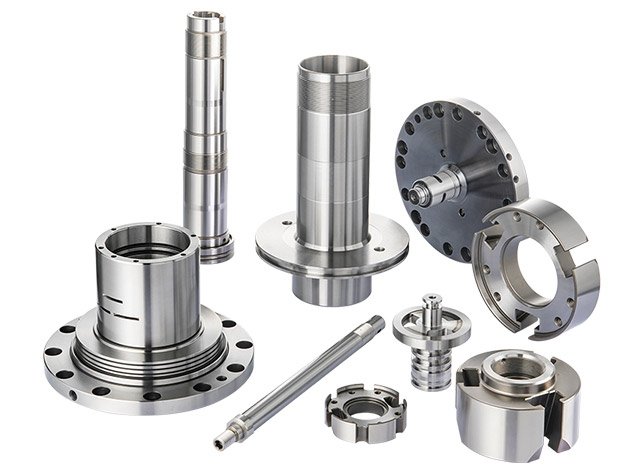
For global OEMs and Tier 1 suppliers, selecting a manufacturing process is only one component of sourcing success. The broader requirement is a controlled supply system that connects design review, material procurement, tooling, production routing, quality assurance, traceability, packaging, and delivery performance. Dixin Technology is positioned as a supply chain integrator and ODM solution provider, helping customers turn drawings, samples, and functional requirements into scalable production solutions.
With more than 30 years of manufacturing experience, Dixin Technology operates a fully controlled precision manufacturing system supported by ERP-based planning and execution. This integrated approach improves visibility across material status, work orders, outside processes, capacity, inspection records, and shipment readiness. For programs with demand variability or multiple part families, ERP control supports practical decisions about safety stock, lot sizing, replenishment cadence, and delivery commitments.
The manufacturing platform includes 3-axis to 5-axis CNC machining, EDM, precision grinding, and industrial ceramics capabilities. This breadth matters when a component requires more than one process. For example, a cold-formed blank may need CNC-machined cross features, wire EDM detail, precision-ground diameters, or a ceramic counterpart selected for wear, insulation, or chemical resistance. Instead of dividing responsibility among disconnected suppliers, an integrated provider can coordinate the route around common technical requirements and documented quality controls.
ODM support also creates value before production release. Dixin Technology can review a drawing for manufacturability, identify unnecessary machining content, assess whether cold heading is feasible, recommend tolerances based on functional needs, and propose a phased route from prototype machining to volume tooling. This is especially valuable where a customer needs first articles quickly but expects future volume economics.
Supply-chain risk should be addressed early. Tooling life, alternate material sources, heat-treatment capacity, plating requirements, inspection gauges, packaging protection, and customs documentation can all influence a program more than nominal piece price. The correct sourcing decision balances total landed cost, quality exposure, lead time, continuity planning, and responsiveness to design changes.
4. Industry Applications
Aerospace and Defense
Aerospace programs commonly require precision, traceability, controlled materials, and robust documentation. Cold heading can be advantageous for high-volume fastening hardware and specialized formed pins, while CNC machining is essential for complex structural, actuator, engine, and flight-control components. Explore Dixin Technology’s aerospace CNC machining capabilities for titanium aircraft parts, 5-axis machining, and structural components.
Medical Devices
Medical components often combine difficult materials, strict surface requirements, and precise functional geometry. CNC machining is commonly selected for implants, surgical instruments, and device housings because of the complexity and low-to-medium lot sizes involved. Cold heading may still support selected pins, screws, and high-volume fastening elements. Review Dixin Technology’s ISO-certified medical machining services for precision device parts and titanium components.
Hydraulics, Pumps, and Fluid Control
Hydraulic systems demand controlled sealing surfaces, concentricity, bore quality, and wear resistance. CNC turning, milling, grinding, honing, and finishing are often central to valve spools, sleeves, pump bodies, manifolds, and fittings. Cold heading can reduce cost for compatible fasteners, plugs, retainers, and blank forms, followed by machining of critical sealing or flow-control features. See Dixin Technology’s hydraulic pump parts capabilities for application-specific sourcing support.
Automotive, Industrial Equipment, and Fasteners
Cold heading is particularly strong in automotive and industrial fastener supply because stable, high-volume demand rewards the process’s speed and material efficiency. Transmission parts, sensor housings, shafts, fittings, and actuator elements may use either process depending on geometry. A hybrid cold-form-plus-machining route often delivers the best balance of strength, repeatability, and cost.
Semiconductor, Energy, and Automation Equipment
Equipment manufacturers in these sectors frequently need custom precision parts in changing quantities, often with tight tolerances and specialized materials. CNC machining, EDM, precision grinding, and industrial ceramics are valuable for fixtures, motion components, vacuum-compatible parts, insulating elements, and wear-critical assemblies. The supply strategy should preserve flexibility while establishing a credible path to scale when demand becomes predictable.
5. Call to Action
Choose cold heading when your component is geometrically suitable, the design is stable, volume is sufficient, and material utilization or grain flow offers a clear advantage. Choose CNC machining when you need rapid iteration, complex features, tighter feature relationships, flexible lot sizes, or a lower initial tooling commitment. Choose a hybrid manufacturing route when near-net forming can remove cost while precision machining protects the critical functional dimensions.
Dixin Technology can evaluate your drawings, material specifications, annual forecast, target cost, and quality requirements to recommend a production route aligned with your program objectives. Contact Dixin Technology to discuss cold heading tooling, CNC machining, hybrid manufacturing, and integrated ODM supply-chain support for your next project.