- Shaft
- Molds&Tools
- Hydraulics And Pump
- Hair transplant needle
- Hydraulics And Pump
- Precision CNC Shaft Machining Manufacturer for High Performance Applications
- Energy Industry CNC Machining Parts Supplier
- Aerospace CNC Machining Parts Manufacturer
- Aerospace CNC Machining Parts Manufacturer
- Automotive & EV CNC Machining Parts Supplier for OEM and Tier 1
- Medical CNC Machining Parts Supplier for Precision Medical Devices

Why Choose China for High-Precision CNC Shaft Machining? A B2B Engineering and Supply Chain Analysis

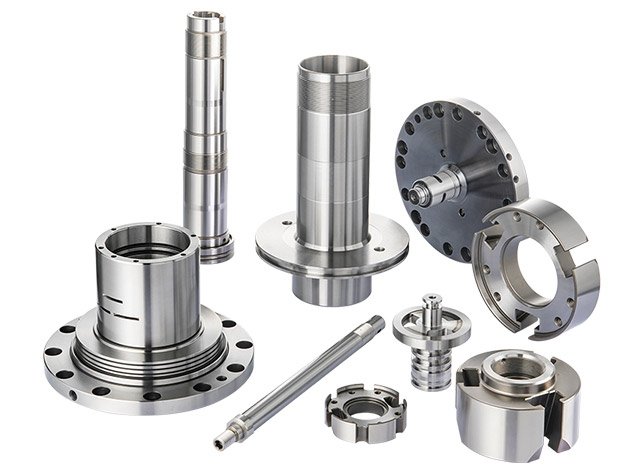
Why Choose China for High-Precision CNC Shaft Machining?
For global OEMs and Tier 1 suppliers, high-precision CNC shaft sourcing is no longer a simple question of unit price. It is a decision involving dimensional capability, material control, process stability, lead-time resilience, documentation quality, and the supplier’s ability to manage complex production programs. China has become a strategically important location for precision shaft manufacturing because mature machining capacity is increasingly paired with integrated engineering support, modern quality systems, and responsive supply-chain coordination.
1. Executive Summary
High-precision shafts are critical load-transfer and motion-control components used across aerospace, medical devices, hydraulic systems, industrial automation, electric drivetrains, pumps, robotics, and precision instruments. Although a shaft may appear geometrically straightforward, its performance depends on tightly controlled diameter, concentricity, runout, straightness, surface finish, hardness profile, thread accuracy, spline geometry, and material integrity. A minor deviation can cause vibration, leakage, premature bearing wear, seal failure, noise, thermal buildup, or assembly rejection.
China is a compelling sourcing location for CNC shaft machining when buyers select a supplier with proven process control and engineering ownership. The country’s advantage is not limited to labor economics. It includes dense material and finishing ecosystems, broad machine-tool availability, experienced production workforces, short domestic logistics routes between specialists, and the ability to consolidate machining, grinding, heat treatment, coating, inspection, and packaging under a coordinated production plan.
Dixin Technology, operating through IndustryApex CNC, supports customers that require more than a machine shop. The company acts as a supply-chain integrator and ODM solution provider, combining precision manufacturing, engineering coordination, sourcing control, and quality traceability. This model is especially relevant for OEMs that need a dependable partner for prototype validation, low-volume production, recurring serial supply, and program scale-up.
The practical value proposition is clear: China can provide competitively engineered precision shafts with high process flexibility, but successful procurement depends on supplier qualification. Buyers should prioritize manufacturability review, documented inspection plans, raw-material traceability, capability verification, communication discipline, and total landed cost rather than evaluating quotations on machining price alone.
2. Technical Deep Dive
Precision Shaft Requirements Extend Beyond Diameter Tolerance
A high-precision CNC shaft is usually defined by a combination of functional dimensions rather than one tolerance callout. Critical requirements may include bearing-seat diameters, journal cylindricity, shoulder perpendicularity, radial runout between multiple features, spline or keyway position, thread concentricity, and surface roughness at sealing or contact zones. Depending on the application, a shaft may require micron-level grinding control, highly stable geometric relationships, and repeatable performance over large production quantities.
For example, hydraulic spool and pump shafts require highly refined surfaces and controlled clearances to support pressure containment and predictable fluid flow. Drive shafts and transmission shafts may require precise spline engagement, torsional strength, controlled case depth, and fatigue resistance. Medical and aerospace shafts may demand titanium, stainless steel, or high-temperature alloy machining with full material certification and lot traceability.
Process Planning Determines Production Stability
Reliable shaft machining begins with process engineering. The manufacturing route is selected according to material condition, geometry, critical tolerances, annual volume, and end-use loading. A typical sequence may include raw-material verification, cutting or forging preparation, CNC turning, milling of flats or keyways, drilling, threading, heat treatment, straightening, cylindrical grinding, centerless grinding, surface treatment, final inspection, cleaning, and protective packaging.
Turning efficiently establishes primary diameters, shoulders, grooves, tapers, and threads. Multi-axis milling supports cross holes, oil passages, keyways, flats, and complex interface features. Precision grinding then controls bearing fits, sealing lands, and surface finish where turning alone cannot reliably maintain the required tolerance or roundness. For features with difficult internal geometry or hardened material conditions, EDM can provide a controlled alternative. Selecting the correct sequence is essential because heat treatment, clamping force, machining stress, and material removal can all affect shaft straightness and final geometry.
Material and Heat-Treatment Control Are Functional Requirements
Precision shaft performance is strongly tied to material selection and metallurgical control. Common materials include carbon steel, alloy steel, stainless steel, aluminum alloys, brass, titanium, tool steel, and nickel-based alloys. The engineering team must consider tensile strength, fatigue resistance, corrosion resistance, machinability, hardness, thermal expansion, wear characteristics, and compatibility with coatings or heat treatment.
Where shafts operate under cyclic torque, abrasive contact, elevated temperatures, or corrosive media, material certificates alone are insufficient. A capable supplier must manage incoming-material identification, confirm the appropriate heat-treatment route, monitor distortion risk, and retain records for hardness or coating verification. For critical components, this may include chemical composition checks, hardness testing, microstructure review, and dimensional reinspection after treatment.
Inspection Must Reflect Functional Risk
Dimensional inspection should be matched to the function of the part. Coordinate measuring machines, optical systems, micrometers, bore gauges, roughness testers, hardness testers, runout fixtures, and custom go/no-go gauges all have a role in shaft quality assurance. First-article inspection confirms that the approved process can meet drawing requirements. In-process verification reduces the risk of producing a full batch with a drifting dimension. Final inspection validates critical characteristics before shipment.
For international sourcing programs, buyers should request a control plan that identifies critical-to-quality features, inspection frequency, measurement methods, acceptance criteria, and traceability rules. This creates an objective basis for communication and helps prevent ambiguity between engineering intent and production execution.
3. The ODM & Supply Chain Advantage
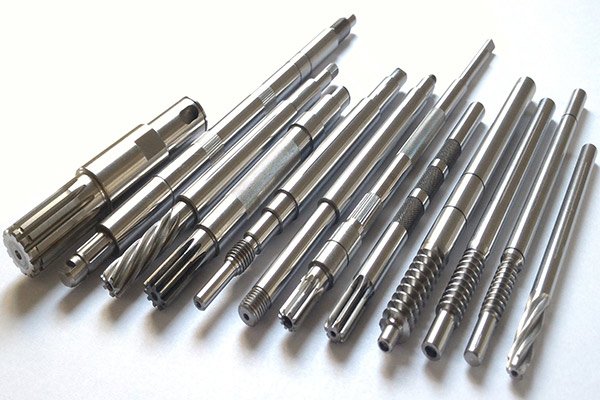
China’s strongest advantage for precision CNC shaft programs is its ability to connect multiple manufacturing disciplines within a dense industrial network. Instead of managing separate suppliers for raw material, turning, grinding, heat treatment, coatings, inspection, and packaging, OEMs can work with an integrated partner that coordinates the full route. This reduces handoffs, shortens response cycles, and establishes clearer accountability for finished-part quality.
Dixin Technology: Supply Chain Integrator and ODM Solution Provider
Dixin Technology’s core identity is not limited to producing individual machined components. As an ODM solution provider and supply-chain integrator, it helps customers transform design intent into manufacturable, repeatable, and commercially viable component programs. This includes drawing review, tolerance analysis, material recommendations, process selection, prototype feedback, supplier coordination, quality planning, and logistics preparation.
This approach is particularly valuable when a shaft assembly includes multiple operations or complementary components. A program may require a ground shaft, an industrial ceramic wear component, a hardened sleeve, a precision fastener, or a specialized coating. Managing these requirements through one coordinated engineering and production interface reduces administrative load for the buyer while improving alignment among upstream suppliers.
Controlled Manufacturing Systems Support Predictability
Dixin Technology operates a fully controlled precision manufacturing system supported by ERP management and more than 30 years of experience. ERP-based coordination supports material planning, order tracking, production scheduling, process records, inventory visibility, and shipment management. For global customers, this improves visibility across the lifecycle of a production order and makes it easier to respond to engineering revisions, demand changes, and delivery priorities.
The manufacturing capability spans 3-axis to 5-axis CNC machining, EDM, precision grinding, and industrial ceramics. This breadth matters because high-precision shafts often require a combination of processes rather than a single machine operation. Complex features can be machined with multi-axis equipment, hardened precision diameters can be finished by grinding, and challenging wear or insulation requirements can be addressed with suitable ceramic solutions.
Cost Competitiveness Should Be Measured as Total Program Value
A low quoted machining rate does not necessarily translate into a low total cost. OEMs should evaluate scrap risk, inspection coverage, engineering responsiveness, transit time, packaging quality, documentation completeness, and the cost of managing multiple suppliers. China can create substantial program value when a qualified supplier reduces these hidden costs through integrated planning and disciplined execution.
Early design-for-manufacturing engagement is another cost lever. Adjusting a noncritical tolerance, standardizing thread forms, selecting an available material grade, or revising an inaccessible geometry can reduce cycle time and improve yield without compromising functional performance. An ODM-oriented supplier can provide this input before expensive production issues emerge.
4. Industry Applications

Aerospace and Defense
Aerospace shafts are used in actuation systems, landing systems, engine-adjacent equipment, flight-control mechanisms, and structural assemblies. These parts can require demanding material traceability, titanium or high-strength alloy machining, precise geometry, and controlled documentation. Buyers sourcing such work should evaluate capability for complex machining, finishing, inspection, and strict change management. Learn more about Dixin Technology’s aerospace CNC machining capabilities.
Medical Devices and Surgical Equipment
Medical shafts may be used in surgical instruments, diagnostic systems, implant-related assemblies, fluid-handling devices, and laboratory automation. Typical requirements include burr-free features, corrosion-resistant materials, highly finished surfaces, biocompatible material options, and reliable lot control. Precision machining must support both component functionality and downstream cleaning, assembly, and regulatory documentation needs. Review the available medical CNC machining solutions for specialized applications.
Hydraulics, Pumps, and Fluid Control
Hydraulic and pump shafts operate in environments where surface finish, concentricity, hardness, and corrosion resistance directly influence sealing performance and service life. Precision shaft features can include seal lands, stepped journals, threaded ends, cross-drilled lubrication passages, and coupling interfaces. Dixin Technology supports fluid-control programs through its hydraulic pump parts manufacturing expertise, where dimensional consistency and material performance are essential.
Automation, Robotics, and Electric Mobility
Automation and robotics systems rely on shafts for servo drives, gearboxes, encoders, actuators, grippers, conveyors, and positioning assemblies. These applications frequently require compact geometry, repeatable runout control, fine surface finish, and dependable production consistency. Electric mobility adds requirements for drivetrain integration, high rotational speed, torque transfer, and lightweight design. China’s mature ecosystem for motors, bearings, gears, electronics, and machining makes it well positioned to support these interconnected programs.
Industrial Equipment and Energy Systems
Industrial machinery, renewable-energy equipment, compressors, packaging lines, process equipment, and power-transmission systems require shafts engineered for long operating cycles and demanding environments. Depending on the use case, the shaft may need wear resistance, high torque capacity, corrosion protection, balanced rotation, or compatibility with custom bearings and housings. Integrated sourcing is particularly useful where a shaft must be delivered with associated sleeves, gears, housings, or precision ceramic wear parts.
5. Call to Action
Choosing China for high-precision CNC shaft machining can strengthen cost competitiveness and supply resilience when the manufacturing partner has engineering depth, controlled processes, and transparent quality systems. Dixin Technology helps global OEMs and Tier 1 suppliers source and develop precision shaft components through integrated CNC machining, grinding, EDM, industrial ceramics, ERP-based production control, and coordinated supply-chain management.
For a technical review of your drawing, material specification, tolerance stack-up, target volume, or sourcing challenge, contact Dixin Technology. The engineering team can assess manufacturability, recommend an efficient production route, and develop a quality-focused quotation for your precision shaft program.