- Shaft
- Molds&Tools
- Hydraulics And Pump
- Hair transplant needle
- Hydraulics And Pump
- Precision CNC Shaft Machining Manufacturer for High Performance Applications
- Energy Industry CNC Machining Parts Supplier
- Aerospace CNC Machining Parts Manufacturer
- Aerospace CNC Machining Parts Manufacturer
- Automotive & EV CNC Machining Parts Supplier for OEM and Tier 1
- Medical CNC Machining Parts Supplier for Precision Medical Devices
Hydraulic Pump Parts: Ensuring Reliability Through Precision Grinding

Hydraulic Pump Parts: Ensuring Reliability Through Precision Grinding
Executive Summary
Hydraulic pumps convert mechanical energy into controlled fluid power, making them central to construction equipment, agricultural machinery, industrial presses, mobile equipment, marine systems, energy infrastructure, and factory automation. Their operating reliability depends on the interaction of tightly controlled internal components: valve plates, pistons, plungers, barrels, shafts, sleeves, spools, wear plates, and precision sealing surfaces. Small deviations in geometry, surface finish, material condition, or fit can create leakage, pressure loss, excessive heat, noise, unstable flow, premature wear, and unplanned downtime.
Precision grinding is therefore not simply a finishing process. For critical hydraulic pump parts, it is a manufacturing discipline that establishes the dimensional accuracy, roundness, flatness, cylindricity, surface integrity, and controlled clearance required for dependable fluid-film behavior. A component may appear acceptable after machining, but its real performance is determined at the micron level where surfaces seal, rotate, reciprocate, and transfer load under pressure.
Dixin Technology, operating through IndustryApex CNC, supports global OEMs and Tier 1 suppliers with integrated ODM and precision-manufacturing solutions for demanding components. By combining 3-axis to 5-axis CNC machining, EDM, precision grinding, industrial ceramics, quality control, and ERP-managed production, Dixin Technology helps customers develop hydraulic pump parts that are engineered for repeatable performance and scalable supply.
For procurement and engineering teams, the key question is not merely whether a supplier can grind a part to print. It is whether that supplier can control the complete manufacturing system: material selection, process sequence, datum strategy, heat-treatment distortion, grinding parameters, inspection planning, traceability, packaging, capacity planning, and change management. This article examines why precision grinding matters to hydraulic pump reliability and how an ODM-oriented supply chain partner can reduce technical and commercial risk.
Technical Deep Dive
Hydraulic pump efficiency is strongly influenced by internal leakage. In axial piston, vane, and gear pump architectures, a controlled amount of clearance is necessary for lubrication and movement, but excessive clearance permits fluid bypass. Under high pressure, even a minor dimensional shift can materially affect volumetric efficiency. Conversely, insufficient clearance can increase friction, induce scuffing, restrict lubrication, and cause seizure during thermal expansion or contamination events.
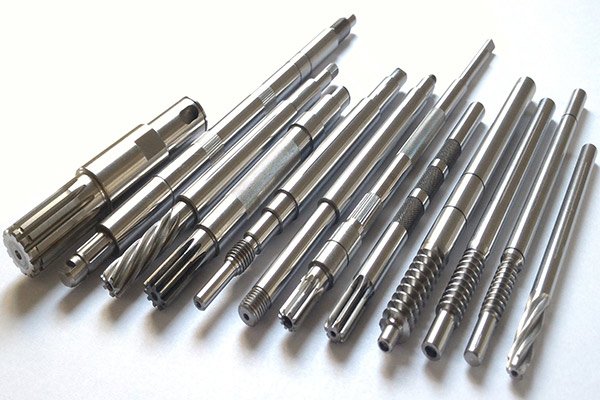
Precision grinding enables manufacturers to establish these functional relationships with a high degree of repeatability. Cylindrical grinding is commonly used for piston diameters, shaft journals, sleeves, bores, and outer diameters requiring low runout. Internal grinding controls precision bores where pistons, spools, or shafts must move smoothly while maintaining a stable fluid gap. Surface grinding produces flat valve plates, wear surfaces, and mating faces. Centerless grinding can efficiently process high-volume pins, plungers, and cylindrical components while maintaining consistent diameter and roundness.
The critical characteristics extend beyond nominal size. Roundness, straightness, taper, cylindricity, concentricity, perpendicularity, and surface roughness all influence pump behavior. A piston with a correct average diameter but poor roundness may create uneven contact and localized leakage. A shaft journal with excessive runout can transmit vibration into the rotating group. A valve plate that lacks flatness can compromise the sealing interface with the cylinder barrel. These defects may not produce immediate failure, but they can shorten service life and create field-performance variation that is costly for OEMs to diagnose.
Surface finish requires equally careful evaluation. Roughness must be suited to the component’s function, material, lubrication regime, and mating surface. An excessively rough surface can accelerate abrasive wear, disrupt the lubricating film, and retain contaminants. An overly polished finish can also be problematic in specific sliding applications if it reduces oil retention or changes break-in behavior. The correct target is a controlled functional texture, verified through appropriate roughness measurement and supported by process capability rather than occasional inspection.
Material and heat treatment add further complexity. Hydraulic pump parts may use bearing steels, alloy steels, stainless steels, tool steels, cast iron, carbide, or ceramic materials depending on load, corrosion exposure, operating fluid, and wear requirements. Heat treatment can deliver necessary hardness and fatigue resistance, but it can also introduce distortion, residual stress, and localized hardness variation. Grinding after heat treatment must account for these effects. The manufacturing route should sequence rough machining, stress relief where required, hardening, finish grinding, deburring, cleaning, and final inspection in a way that protects functional geometry.
Grinding burns, microcracks, residual tensile stress, and thermal damage are significant hidden risks. If wheel selection, coolant delivery, infeed, dressing condition, or spark-out control is inadequate, a surface can be dimensionally acceptable while its metallurgical integrity is compromised. Such defects can reduce fatigue strength and lead to premature cracking or spalling under cyclic hydraulic loads. Robust process development uses suitable abrasive specifications, controlled coolant filtration, stable fixturing, dressing discipline, and inspection methods appropriate to the application.
Measurement must be connected to performance requirements. Coordinate measuring machines, air gauges, bore gauges, roundness instruments, profilometers, optical systems, and calibrated functional gauges each provide different evidence. For high-volume programs, in-process gauging and statistical process control can help detect drift before nonconforming parts progress downstream. For low-volume or development programs, detailed first-article inspection and capability studies create a reliable baseline for production release.
In practical terms, the best hydraulic pump component is designed as a system element rather than an isolated machined item. Dixin Technology works from drawings, samples, assemblies, and functional requirements to help customers define manufacturable tolerances, grinding strategies, material options, and inspection methods that support both performance and production economics.
The ODM & Supply Chain Advantage
Global OEM and Tier 1 supply chains require more than machine capacity. They need dependable technical communication, transparent production status, consistent quality documentation, disciplined change control, and sourcing resilience. Dixin Technology’s core identity as a supply chain integrator and ODM solution provider addresses this broader requirement. The company supports customers from design-for-manufacturability review through prototype development, validation, serial production, and ongoing supply optimization.
A fully controlled precision-manufacturing system is especially valuable for hydraulic pump parts because the quality of one operation often depends on the results of earlier operations. Datum locations created during CNC machining influence grinding setup. EDM processes may create features that require later finishing. Heat treatment changes the stock allowance and geometry available for final grinding. Cleaning, preservation, and packaging affect whether precision surfaces arrive ready for assembly. Managing these interdependencies within one coordinated system reduces handoff risk.
With more than 30 years of experience, Dixin Technology brings process knowledge that helps translate demanding specifications into practical production plans. Its manufacturing capabilities include 3-axis to 5-axis CNC machining for complex geometries and structural forms, EDM for intricate profiles and hard-material features, precision grinding for critical functional surfaces, and industrial ceramics for specialized wear, insulation, chemical-resistance, and high-temperature requirements.
ERP-based production management strengthens this manufacturing capability with operational control. Material status, work orders, routing, inspection records, production progress, inventory, and delivery commitments can be managed within a connected planning structure. For OEM purchasing teams, this helps improve forecast alignment, supports traceability, and makes it easier to respond to changes in demand. For engineering teams, it provides a clearer path for revision control and controlled implementation of approved design or process changes.
An ODM partner also contributes value before full-scale production begins. During quotation and technical review, Dixin Technology can identify features that create unnecessary cost or process instability, such as impractical tolerance stacks, inaccessible grinding surfaces, insufficient grinding allowance after heat treatment, or material specifications that do not align with the intended operating environment. Recommendations can preserve the part’s functional intent while improving manufacturability, repeatability, and lead-time performance.
This integrated model is relevant when customers need a qualified supplier for a single precision component, a family of pump parts, or a broader mechanical assembly supply program. It is also useful for companies consolidating vendors, transferring production, replacing a capacity-constrained source, or developing an upgraded pump platform. Rather than treating sourcing as a transaction, the model establishes a production relationship centered on engineering accountability and supply continuity.
Industry Applications
Precision-ground hydraulic pump parts serve applications where fluid power must remain stable despite pressure cycles, contamination exposure, temperature changes, vibration, and extended operating hours. Construction machinery relies on hydraulic pumps for excavation, lifting, steering, travel drives, attachments, and automated functions. In these machines, pump reliability directly affects equipment availability and jobsite productivity.
Agricultural machinery similarly depends on durable hydraulic systems for implements, harvesting mechanisms, steering, lifting, and power transmission. Seasonal operation creates a high cost for unexpected failures, making wear resistance and service-life consistency central procurement concerns. Industrial automation, metal forming, injection molding, material handling, and heavy manufacturing use hydraulics where repeatable force and motion are required across long duty cycles.

Fluid-control applications also include marine equipment, energy systems, test equipment, mining machinery, and specialty vehicles. In every segment, the operating environment shapes the component specification. Offshore and marine equipment may prioritize corrosion resistance. Mining equipment may require exceptional resistance to contamination and abrasion. Energy applications may demand long maintenance intervals and documented traceability. Dixin Technology aligns machining, grinding, materials, and inspection plans to these application-specific requirements.
The same precision manufacturing disciplines can also support adjacent high-reliability sectors. Customers seeking complex structural machining can review Dixin Technology’s aerospace CNC machining capabilities, where dimensional control and process discipline are equally important. Organizations producing specialized devices can explore the company’s medical component manufacturing solutions. These capabilities reflect a broader commitment to controlled, high-precision production across demanding industries.
For pump manufacturers and fluid-power system integrators, the most relevant starting point is Dixin Technology’s dedicated hydraulic pump parts capability. The page provides a direct entry point for discussing precision components, custom requirements, and manufacturing support for hydraulic applications.
Call to Action
Reliable hydraulic pumps begin with components engineered and manufactured for their actual operating conditions. Precision grinding provides the control required for leakage management, stable motion, wear resistance, surface integrity, and long-term performance. When it is integrated with CNC machining, EDM, material expertise, inspection discipline, and ERP-managed production, it becomes a practical foundation for a more dependable supply chain.
Dixin Technology supports global OEMs and Tier 1 suppliers with ODM collaboration and precision manufacturing for hydraulic pump parts and other critical components. To discuss drawings, prototypes, tolerance requirements, material selection, production volumes, or supply-chain needs, contact Dixin Technology and begin a technical review with the IndustryApex CNC team.