- Shaft
- Molds&Tools
- Hydraulics And Pump
- Hair transplant needle
- Hydraulics And Pump
- Precision CNC Shaft Machining Manufacturer for High Performance Applications
- Energy Industry CNC Machining Parts Supplier
- Aerospace CNC Machining Parts Manufacturer
- Aerospace CNC Machining Parts Manufacturer
- Automotive & EV CNC Machining Parts Supplier for OEM and Tier 1
- Medical CNC Machining Parts Supplier for Precision Medical Devices

Integrating 3D Printing with Traditional CNC for Rapid Prototyping: A B2B Engineering and Supply Chain Analysis

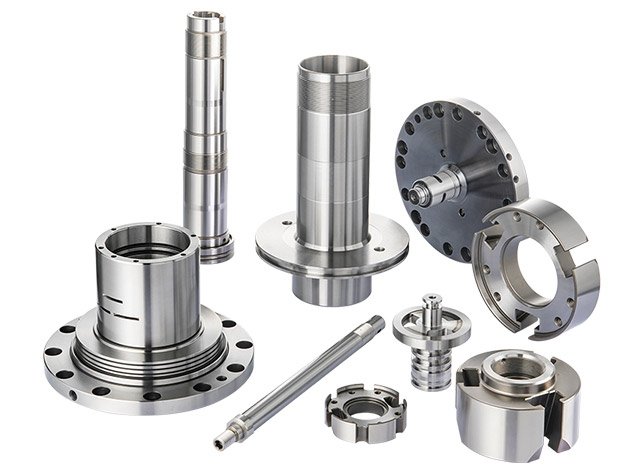
Integrating 3D Printing with Traditional CNC for Rapid Prototyping
For global OEMs and Tier 1 suppliers, rapid prototyping is no longer a choice between additive manufacturing and subtractive machining. The most effective development strategy combines both technologies in a controlled workflow: 3D printing accelerates design validation and enables complex geometry, while CNC machining delivers the accuracy, material performance, surface finish, and repeatability needed for functional qualification and transition to production.
1. Executive Summary
Product-development teams face increasing pressure to shorten validation cycles without introducing uncontrolled manufacturing risk. A prototype must often demonstrate more than form and fit. It may need to withstand pressure, heat, fatigue, chemical exposure, assembly loads, or measurement requirements that resemble its final operating environment. In these cases, 3D printing alone may be too limited by material properties, anisotropy, porosity, tolerance variation, or surface finish. Traditional CNC machining alone can be slower and less economical when a design includes complex internal channels, lightweight lattice structures, or frequent geometry changes.
A hybrid rapid-prototyping model resolves these constraints. Additive manufacturing is used where it creates the greatest engineering value: fast iterations, topology optimization, low-volume shape creation, conformal cooling paths, and geometries that would require multiple machining setups or assemblies. CNC machining is then applied to critical interfaces such as sealing faces, bearing bores, threaded holes, precision datum features, mounting surfaces, and high-load contact areas. This combination allows engineers to test production-relevant functionality earlier while maintaining a practical cost and lead-time profile.
For procurement and supply-chain leaders, the value is equally significant. Integrating additive and CNC processes through one qualified manufacturing partner reduces handoffs, lowers revision-management risk, consolidates quality documentation, and creates a clearer route from prototype to serial production. Dixin Technology, operating through IndustryApex CNC, supports this model through controlled precision manufacturing, engineering coordination, and a supply-chain approach designed for complex industrial programs.
2. Technical Deep Dive
Successful integration begins with design-for-manufacturing decisions rather than selecting a machine first. Engineers should classify each feature according to its functional requirement. Noncritical external geometry, internal passages, lightweight structures, and early ergonomic features may be appropriate for additive manufacturing. Features with tightly controlled tolerances, defined geometric dimensioning and tolerancing requirements, low roughness specifications, or critical sealing and assembly functions should generally be machined after printing or produced entirely by CNC.
In a common hybrid process, a component is first manufactured as an additive near-net shape. The printed part includes sufficient machining allowance around critical surfaces. Following stress relief, support removal, and initial inspection, the part is fixtured using engineered datums. CNC milling, turning, drilling, reaming, tapping, EDM, or grinding then establishes the final functional geometry. This workflow is especially useful when a component has complex geometry but must interface accurately with conventionally manufactured mating parts.
Machining allowance is a key consideration. Too little stock may leave material discontinuities, print distortion, or support-removal marks on the finished surface. Too much stock increases cycle time and can offset the benefit of additive manufacturing. The appropriate allowance depends on the printed material, process stability, part size, heat-treatment condition, feature accessibility, and required final tolerance. Dixin Technology reviews these conditions before production so the additive blank, fixtures, cutting strategy, and inspection plan support the intended result.
Material selection requires equally careful analysis. Polymer printing can be highly effective for fit checks, assembly validation, jigs, fixtures, and non-load-bearing prototype components. Metal additive manufacturing supports more demanding applications, but material qualification must account for powder chemistry, build orientation, thermal history, density, post-processing, and mechanical-property directionality. When the prototype is intended to inform a production CNC part, engineers should determine whether the printed material is representative enough for the test objective. A structural test, for example, may require machined billet material even if an additive model was used to validate geometry.
Metrology closes the loop. Coordinate measuring machines, optical measurement, gauges, and process-specific inspection records are necessary to determine whether the hybrid route meets engineering intent. Critical dimensions should be referenced from functional datums rather than from unverified printed surfaces. For complex parts, inspection results also provide feedback for compensation of additive distortion and refinement of machining fixtures. This creates a repeatable engineering process rather than a one-off prototype exercise.
The result is a more disciplined prototype definition. Instead of asking whether a part can be printed, OEM teams can ask which features should be printed, which should be machined, what material condition is required, and what evidence is needed to approve the next design gate. That shift improves design decisions and reduces late-stage rework.
3. The ODM & Supply Chain Advantage
The technical benefits of hybrid manufacturing become more valuable when they are supported by coordinated program ownership. Dixin Technology is positioned as a supply-chain integrator and ODM solution provider, helping customers connect prototype requirements with manufacturability, sourcing, quality control, and long-term production planning. This approach is important for global OEMs and Tier 1 suppliers managing multiple revisions, geographically distributed teams, and increasingly strict performance expectations.
Rather than treating additive manufacturing, CNC machining, finishing, and inspection as disconnected purchase orders, a controlled supply-chain model manages the part as one engineering deliverable. The manufacturing route is documented, revision status is controlled, and quality requirements are translated into process plans. This reduces the risk that a prototype is built from obsolete files, machined against incorrect datums, or delivered without the evidence needed for a design review.
Dixin Technology’s manufacturing edge is built on a fully controlled precision manufacturing system supported by ERP coordination and more than 30 years of manufacturing experience. ERP-driven visibility strengthens material planning, order tracking, capacity coordination, and traceability across the manufacturing cycle. For purchasing teams, this provides a more reliable basis for prototype scheduling, pilot builds, and production forecasting.
The available process capability includes 3-axis, 4-axis, and 5-axis CNC machining, EDM, precision grinding, and industrial ceramics. These capabilities allow the engineering team to select processes based on actual feature requirements rather than forcing every design into one method. Five-axis machining can access complex compound angles and reduce setup accumulation. EDM can produce fine internal geometry or hard-material features that are difficult to cut conventionally. Precision grinding can achieve demanding tolerances and surface conditions. Industrial ceramic capabilities extend support for wear, electrical, thermal, and chemically resistant applications.
For ODM programs, early collaboration is particularly valuable. Dixin Technology can review drawings, 3D models, tolerances, materials, quantities, inspection requirements, and target application conditions before machining begins. This enables practical recommendations on part segmentation, machining accessibility, tolerance allocation, prototype material selection, and eventual production routing. The objective is not simply to manufacture the first article quickly, but to develop an informed route toward stable, scalable supply.
4. Industry Applications
In aerospace, hybrid manufacturing helps development teams evaluate lightweight brackets, ducting, fuel-system components, actuator interfaces, and complex structural concepts. Additive methods can accelerate the evaluation of organic shapes and internal routing, while CNC finishing establishes the precision interfaces needed for test fixtures and assemblies. For production-oriented aerospace development, machined titanium and high-performance alloy components remain essential for critical applications. Learn more about aerospace CNC machining and titanium aircraft parts.
Medical-device development also benefits from this approach. Printed anatomical models and early device forms can support clinician feedback and assembly studies, while CNC machining provides precise surfaces and controlled features for instruments, implant-related components, and device housings. Material traceability, cleanliness, tolerance control, and inspection planning remain central as a program advances. Dixin Technology supports demanding requirements through its ISO-certified CNC machining for medical components.
Fluid-power, hydraulics, and pump applications present a clear example of where machining remains decisive. Additive manufacturing can help explore compact manifolds, optimize flow paths, and create development fixtures. However, valve bores, spool interfaces, sealing faces, threads, and pressure-bearing surfaces often require precision machining and inspection. Hybrid workflows allow designers to explore fluid-routing concepts quickly while preserving the functional controls required for pressure testing. See Dixin Technology’s capabilities for hydraulic pump parts.
Additional applications include semiconductor equipment, automation systems, energy equipment, optics fixtures, industrial tooling, robotics, and mold development. Across these sectors, the shared requirement is the same: accelerate iteration without losing sight of final functional performance, manufacturability, and supply continuity.
5. Call to Action
When a prototype must balance complex geometry, short development time, and production-relevant precision, a combined additive and CNC strategy provides a stronger path than using either process in isolation. Dixin Technology helps OEM and Tier 1 engineering teams evaluate the right manufacturing route, define critical machining requirements, and coordinate the supply chain from prototype through production.
Share your CAD model, drawing package, material requirement, annual volume forecast, and quality expectations with our engineering team through Contact Us. We can review your part for additive compatibility, CNC finishing requirements, inspection planning, and scalable ODM manufacturing support.