- Shaft
- Molds&Tools
- Hydraulics And Pump
- Hair transplant needle
- Hydraulics And Pump
- Precision CNC Shaft Machining Manufacturer for High Performance Applications
- Energy Industry CNC Machining Parts Supplier
- Aerospace CNC Machining Parts Manufacturer
- Aerospace CNC Machining Parts Manufacturer
- Automotive & EV CNC Machining Parts Supplier for OEM and Tier 1
- Medical CNC Machining Parts Supplier for Precision Medical Devices

2026 Trends in 5-Axis CNC Machining for Aerospace Components: Engineering and Supply Chain Outlook

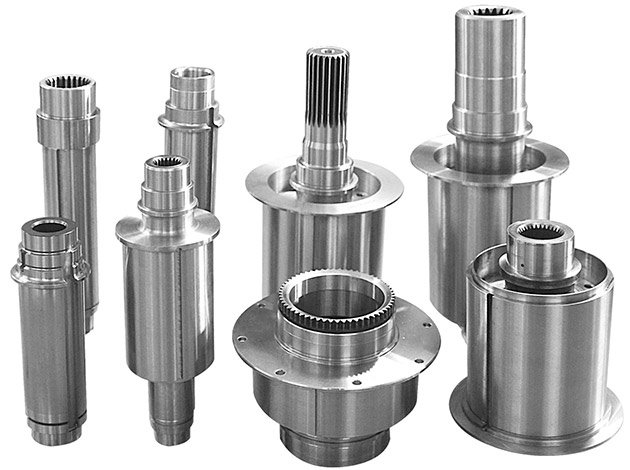
2026 Trends in 5-Axis CNC Machining for Aerospace Components
Aerospace manufacturers are entering 2026 with a more demanding definition of machining performance. Precision, repeatability, and surface quality remain essential, but they now operate alongside shorter qualification cycles, tighter material controls, greater digital visibility, and stronger pressure to reduce total supply chain risk. For global OEMs and Tier 1 suppliers, 5-axis CNC machining is becoming a strategic production capability rather than simply a machine-tool selection.
1. Executive Summary
The aerospace sector is increasing its use of 5-axis CNC machining for titanium aircraft parts, aluminum structural components, nickel-based alloy hardware, complex brackets, housings, frames, and fluid-control components. The primary reason is geometric freedom: simultaneous movement across multiple axes allows manufacturers to reach complex surfaces in fewer setups, reducing datum transfer errors and improving positional accuracy.
In 2026, the most important trend will be the integration of machining technology with engineering data, inspection, production planning, and supplier management. Aerospace buyers will increasingly evaluate suppliers on their ability to manage the complete product lifecycle, from design-for-manufacturing review and material traceability through process validation, inspection, documentation, and repeat production. A capable supplier must therefore provide more than CNC capacity. It must offer a controlled manufacturing system that supports program stability at scale.
Key developments include greater use of automation for workholding and tool management, closed-loop inspection, digital twins, adaptive cutting strategies, improved thermal control, hybrid manufacturing workflows, and more transparent ERP-based production tracking. Sustainability will also influence sourcing decisions, particularly where suppliers can reduce setup time, scrap, energy consumption, and unnecessary transportation.
For aerospace procurement teams, the practical conclusion is clear: supplier selection should focus on repeatable process control and supply chain integration. Dixin Technology, operating through IndustryApex CNC, supports this model by combining precision manufacturing, engineering coordination, and supply chain execution for demanding industrial customers.
2. Technical Deep Dive
Why 5-axis machining is increasingly important
Aerospace components frequently combine thin walls, deep pockets, compound angles, blended radii, sculpted aerodynamic surfaces, and strict weight-reduction requirements. Conventional 3-axis machining can produce many of these features, but it often requires multiple fixtures and manual repositioning. Every additional setup introduces opportunities for tolerance accumulation, surface mismatch, operator variation, and longer lead times.
5-axis machining addresses these constraints by moving the cutting tool and workpiece through coordinated linear and rotary axes. The tool can maintain a more favorable orientation to the surface, improving cutting conditions and reducing excessive tool loading. This is particularly valuable for titanium, where poor chip evacuation, heat concentration, and tool deflection can quickly affect dimensional stability and tool life.
In 2026, manufacturers will continue to refine toolpath strategies that use controlled lead and lean angles. These strategies help maintain consistent engagement, protect cutting edges, and produce more uniform surface finishes on contoured components. High-feed milling, trochoidal strategies, and optimized roughing are expected to remain important for material removal, while precision finishing will depend increasingly on machine calibration, probing, tool measurement, and stable temperature conditions.
Process control for titanium and advanced alloys
Titanium remains central to aerospace production because of its strength-to-weight ratio, corrosion resistance, and performance at elevated temperatures. However, its machinability requires disciplined process engineering. Suppliers must manage cutting speed, feed rate, radial engagement, coolant delivery, vibration, tool wear, and workholding rigidity as a connected system.
Nickel-based superalloys and hardened steels create additional challenges. They generate high cutting forces and can accelerate tool wear, making process qualification and tool-life monitoring essential. A supplier with broad experience across 3- to 5-axis CNC, EDM, precision grinding, and complementary processes can select the appropriate method for each feature rather than forcing every requirement into one operation.
EDM is particularly useful for intricate slots, small internal features, and difficult-to-machine conductive materials. Precision grinding can establish critical datums, tight surface finishes, and controlled geometry after milling. These process combinations support aerospace parts where a single machining operation cannot reliably deliver the complete specification.
Automation, inspection, and digital continuity
Automation in aerospace machining is moving beyond basic pallet changing. Automated probing, tool presetter integration, in-process measurement, robotic loading, and centralized tool management are becoming practical methods for improving consistency. The objective is not merely to run machines unattended. It is to create a repeatable production environment in which deviations are identified early and corrective actions are documented.
Closed-loop inspection will become more influential in 2026. Coordinate measuring machines, on-machine probing, laser measurement, and scanning technologies can connect inspection results with machining offsets and process records. This reduces the delay between production and quality feedback. For high-value titanium parts, early detection can prevent a late-stage nonconformance after substantial material and machining time have already been invested.
Digital twins and simulation tools will also be used more extensively to verify tool access, detect collision risks, estimate cycle times, and evaluate fixture concepts before cutting begins. The best results come when these tools are connected to accurate machine, tooling, material, and inspection data. Digital modeling without disciplined shop-floor data can create false confidence, so aerospace buyers should examine how suppliers validate and maintain their digital process information.
3. The ODM & Supply Chain Advantage
For global OEMs and Tier 1 suppliers, the commercial value of a 5-axis machining partner depends on more than equipment specifications. The supplier must help control engineering risk, production continuity, documentation, and communication across the complete order lifecycle. This is where an ODM and supply chain integrator can provide a meaningful advantage.
Dixin Technology’s core identity is as a supply chain integrator and ODM solution provider. This means the engagement can begin before production, with design-for-manufacturing feedback, material recommendations, tolerance review, feature accessibility analysis, and process planning. Early collaboration can identify expensive or unstable requirements while the design is still flexible. It can also clarify which features should be milled, EDM processed, ground, or produced through another controlled method.
The manufacturing edge is a fully controlled precision manufacturing system supported by ERP and more than 30 years of manufacturing experience. ERP-based management improves visibility across quotations, engineering releases, material purchasing, work orders, inspection status, and shipment planning. For aerospace programs, this visibility supports more reliable capacity planning and makes it easier to communicate realistic dates when demand changes.
Supplier consolidation is another important consideration. Working with an organization that coordinates multiple precision capabilities can reduce handoffs between unrelated vendors. Fewer handoffs can simplify nonconformance responsibility, technical communication, documentation control, and scheduling. It may also reduce transportation between processes and improve the continuity of material and batch traceability.
Dixin Technology’s technology capabilities include 3- to 5-axis CNC machining, EDM, precision grinding, and industrial ceramics. This combination is relevant to aerospace assemblies that contain both structural metal components and specialized wear-resistant, insulating, or high-temperature parts. A broader process portfolio can support prototypes, qualification parts, replacement components, and repeat production under one coordinated manufacturing framework.
In 2026, buyers should assess an ODM partner using practical questions. Can the supplier preserve revision control from quotation through shipment? Can it provide documented material traceability? Does it have a clear first-article and in-process inspection workflow? How are tool wear, machine calibration, and process changes controlled? Can it support engineering changes without losing production visibility? Can it coordinate capacity when a program moves from prototype to serial production?
A supplier that answers these questions with documented systems is better positioned to support aerospace growth than one that only presents a machine list. Dixin Technology is structured to serve global OEM and Tier 1 customers that require technical coordination, controlled production, and dependable delivery across international supply chains.

4. Industry Applications
5-axis CNC machining will continue to expand across several aerospace application groups in 2026.
Aircraft structural components
Structural brackets, wing fittings, seat-track components, frames, ribs, and aircraft interior support parts often require lightweight geometries with complex pockets and angled interfaces. 5-axis machining can reduce the number of setups and support smoother transitions between thin walls and load-bearing features. For more information about titanium and complex aircraft components, visit the aerospace CNC machining and aircraft parts resource.
Engine and propulsion hardware
Engine components and propulsion-related hardware may involve heat-resistant alloys, tight concentricity requirements, complex blade or vane surfaces, and demanding inspection criteria. Toolpath stability and thermal management are essential, while EDM and precision grinding may complete features that are difficult to achieve through milling alone.
Fluid-control and hydraulic systems
Aircraft hydraulic manifolds, valve bodies, pump components, and fluid-control fittings require accurate ports, intersecting passages, sealing surfaces, and controlled internal geometry. A coordinated manufacturing system can combine CNC machining with specialized inspection and finishing. The same process discipline is relevant to hydraulic pump parts and other high-reliability fluid-control products.
Avionics, thermal management, and equipment housings
Avionics housings and thermal-management components increasingly use lightweight materials and intricate internal structures. Machining suppliers must balance wall thickness, heat dissipation, connector interfaces, shielding requirements, and cosmetic quality. Digital simulation and inspection are useful for verifying both manufacturability and assembly fit.
Cross-industry precision manufacturing
Aerospace process controls often transfer effectively to medical, energy, and industrial equipment applications. The same attention to material traceability, clean documentation, tight tolerances, and validated processes supports medical components such as titanium implants and surgical instruments. Dixin Technology also provides information on ISO-certified CNC machining for medical components.
5. Call to Action
The 2026 aerospace machining market will reward suppliers that combine technical depth with supply chain discipline. 5-axis equipment is important, but it is only one part of a successful production system. Buyers should look for engineering support, stable process control, reliable inspection, ERP visibility, material accountability, and the ability to coordinate multiple manufacturing technologies as a program evolves.
Dixin Technology and IndustryApex CNC help global OEMs and Tier 1 suppliers develop and manufacture complex aerospace components through an integrated ODM and precision manufacturing model. Share your drawings, 3D models, material requirements, annual volumes, and quality expectations with the engineering team to evaluate manufacturability, process selection, and production planning. Start the discussion through the Contact Us page.