- Shaft
- Molds&Tools
- Hydraulics And Pump
- Hair transplant needle
- Hydraulics And Pump
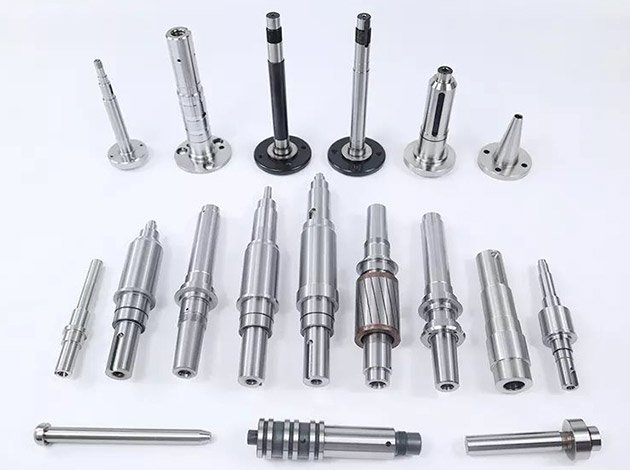
- Precision CNC Shaft Machining Manufacturer for High Performance Applications
- Energy Industry CNC Machining Parts Supplier
- Aerospace CNC Machining Parts Manufacturer
- Aerospace CNC Machining Parts Manufacturer
- Automotive & EV CNC Machining Parts Supplier for OEM and Tier 1
- Medical CNC Machining Parts Supplier for Precision Medical Devices
The Role of Supply Chain Integrators in Agile Manufacturing

The Role of Supply Chain Integrators in Agile Manufacturing
Agile manufacturing depends on more than flexible machines and short production cycles. It requires a coordinated supply chain that can translate changing customer requirements into qualified designs, stable processes, reliable production, and predictable delivery. For global OEMs and Tier 1 suppliers, supply chain integrators provide this coordination by connecting engineering, sourcing, manufacturing, quality, logistics, and supplier management within one controlled operating model.
Executive Summary
Manufacturers face a supply environment defined by demand volatility, shorter product lifecycles, complex compliance requirements, and increasing pressure to control total cost. Traditional sourcing models, in which engineering, machining, finishing, inspection, and logistics are managed through separate vendors, can create delays and increase the risk of inconsistent quality. A supply chain integrator reduces these risks by managing multiple capabilities through a unified technical and commercial interface.
In precision manufacturing, the integrator’s role extends beyond purchasing. It includes design-for-manufacturing review, process planning, material control, production scheduling, inspection, documentation, supplier coordination, and delivery execution. This approach allows customers to respond faster to engineering changes, low-volume production requirements, new product introductions, and unexpected capacity constraints.
Dixin Technology, operating through IndustryApex CNC, serves as a supply chain integrator and ODM solution provider for global OEM and Tier 1 customers. With more than 30 years of manufacturing experience, an ERP-controlled operating system, and in-house capabilities spanning 3-5 axis CNC machining, EDM, precision grinding, and industrial ceramics, the company supports agile production from concept through repeat supply. Customers can explore the company’s precision manufacturing services through the IndustryApex CNC homepage.
Technical Deep Dive
Agile manufacturing is often described as the ability to change production quickly. In practice, agility is a system-level property. A machine may be capable of rapid changeovers, but the factory can still be slow if material approvals, drawings, tooling, inspection plans, and subcontracted processes are not synchronized. Supply chain integrators address this coordination problem by creating a single flow of technical information and accountability.
The first requirement is engineering alignment. Before production begins, the integrator reviews drawings, 3D models, tolerances, surface finishes, material specifications, and inspection requirements. This review identifies potential manufacturing constraints, such as inaccessible features, excessive tolerances, difficult-to-source materials, or sequences that create unnecessary handling. Early design-for-manufacturing feedback can reduce rework and prevent late-stage changes after tooling or fixtures have already been released.
The second requirement is process integration. A complex precision component may require several operations: sawing or forging preparation, CNC milling and turning, EDM, heat treatment, grinding, coating, cleaning, and final inspection. When these processes are split between disconnected suppliers, each handoff creates a risk of dimensional drift, documentation gaps, and schedule variation. An integrator manages the routing, confirms process ownership, and maintains a consolidated production status for the customer.
ERP systems are central to this model. An effective ERP structure links customer requirements to bills of material, manufacturing routings, purchase orders, work orders, inspection records, inventory, and shipment data. This provides greater visibility into material availability, work-in-progress, capacity, and delivery risk. It also gives engineering and purchasing teams a common source of information when specifications or quantities change.
Quality management must be integrated with production rather than treated as a final checkpoint. For precision components, this includes material certification, first article inspection, in-process measurement, statistical review where appropriate, and final dimensional reports. The integrator can also coordinate special-process certifications and ensure that records are collected in the format required by the customer’s quality system. This is especially important for regulated sectors where traceability and configuration control are contractual requirements.
Agile supply chains also depend on controlled communication. Engineering revisions, deviation requests, approved substitutions, and delivery changes must be visible to everyone affected. A supply chain integrator establishes defined communication channels and approval points so that production does not proceed from obsolete data. This reduces the chance of building conforming parts to an outdated revision, one of the most expensive forms of manufacturing error.
Capacity management is another major advantage. An integrator can balance work across multiple machines and qualified processes while maintaining responsibility for the overall result. For example, a demanding milling operation may be scheduled on a 5-axis platform, while EDM or grinding is assigned according to feature requirements and available capacity. The customer receives a coordinated manufacturing plan instead of having to manage separate capacity negotiations with multiple vendors.
Finally, integration improves resilience. When material shortages, equipment downtime, or transportation disruptions occur, the integrator can assess alternatives across the complete process chain. Options may include resequencing work, using an approved material source, shifting operations, holding strategic inventory, or adjusting shipment priorities. These decisions are more effective when one organization understands the technical and commercial consequences of each option.
The ODM & Supply Chain Advantage
The distinction between a conventional contract manufacturer and an ODM-oriented supply chain integrator is important. A conventional supplier generally produces parts from customer-supplied information. An ODM solution provider contributes engineering judgment, process development, manufacturing execution, and supply chain coordination to help turn a product requirement into a repeatable production solution.
Dixin Technology’s core identity is built around this integrated role. As a supply chain integrator and ODM solution provider, the company supports customers that need more than individual machining operations. The objective is to provide a controlled path from design intent to production-ready component, with technical decisions connected to cost, quality, lead time, and supply continuity.
The manufacturing edge comes from a fully controlled precision manufacturing system supported by ERP and more than 30 years of experience. This combination matters because digital visibility is most valuable when it is supported by practical knowledge of materials, tooling, machine behavior, inspection, and production risk. ERP can show the status of an order, but experienced manufacturing teams determine which process changes will preserve tolerance, finish, and delivery performance.
Dixin Technology’s technical capabilities include 3-5 axis CNC machining, electrical discharge machining, precision grinding, and industrial ceramics. These technologies support parts with complex geometries, tight dimensional requirements, difficult materials, and demanding surface specifications. The ability to coordinate these capabilities within one manufacturing system can simplify sourcing for customers and reduce the number of technical interfaces that must be managed.
For global OEM and Tier 1 suppliers, the value of integration is measured in operating outcomes. One coordinated supplier can reduce purchase-order complexity, shorten engineering feedback loops, improve documentation consistency, and make production status easier to monitor. It can also support supplier rationalization without sacrificing access to specialized processes. This is particularly useful when a component requires a combination of machining and secondary operations that are difficult to manage through a fragmented vendor network.
ODM involvement also creates opportunities for cost improvement. Design reviews may identify ways to reduce setups, standardize tooling, improve material utilization, or adjust tolerances that do not contribute to product performance. These recommendations should always be validated against the functional requirements, but they can reduce manufacturing cost while improving repeatability. The result is a sourcing relationship based on technical collaboration rather than price negotiation alone.
Integration does not eliminate the need for customer control. Instead, it clarifies responsibility. The customer retains authority over specifications, performance requirements, and approvals, while the integrator assumes responsibility for coordinating the manufacturing system used to meet those requirements. Defined review gates, documented changes, and transparent quality records preserve control while allowing execution to remain efficient.
Industry Applications
Supply chain integration is valuable wherever components combine high technical risk with strict delivery or compliance requirements. In aerospace, manufacturers must manage lightweight alloys, complex structural geometries, traceability, and rigorous inspection. A coordinated machining and quality system can support structural components, aircraft parts, and titanium programs that require stable process control. Dixin Technology’s aerospace CNC machining capabilities address these requirements through precision production and controlled documentation.
Medical device manufacturers face similar challenges, with additional emphasis on biocompatible materials, cleanliness, repeatability, and configuration control. Titanium implants, surgical instruments, and high-precision device parts may involve tight tolerances and specialized finishing or inspection requirements. An integrated supplier can coordinate these activities while maintaining the records needed for customer qualification and regulatory review. More information is available through the company’s page for ISO-certified CNC machining for medical components.
Hydraulic and fluid-control applications depend on accurate fits, controlled clearances, reliable surface finishes, and consistent material behavior. Valve spools, sleeves, pump components, and manifolds must perform under pressure and repeated operating cycles. Integrating turning, milling, grinding, inspection, and material control can improve functional consistency across production batches. Dixin Technology supports this market through its hydraulic pump parts manufacturing services.
Industrial equipment, energy systems, automation, semiconductor machinery, and advanced tooling also benefit from the same model. These sectors frequently require low-to-medium volumes, engineering changes, complex materials, and a mix of machining and specialized processes. A supply chain integrator can support prototype development, pilot production, design revisions, and series manufacturing without forcing the customer to rebuild its supplier network at every stage.
The most effective application is usually one in which the component’s total supply chain is more complex than its individual machining operation. If a part requires several coordinated processes, special documentation, or frequent engineering interaction, integration can produce measurable improvements in lead time, quality stability, and management effort.
Call to Action
Agile manufacturing requires a partner that understands both the component and the supply chain behind it. Dixin Technology combines ODM support, ERP-controlled production, more than three decades of experience, and precision capabilities across CNC machining, EDM, grinding, and industrial ceramics to help global OEMs and Tier 1 suppliers build responsive and reliable sourcing programs.
Share your drawings, material requirements, annual volumes, inspection expectations, and delivery targets with the IndustryApex CNC team. Dixin Technology can review the manufacturing approach, identify integration opportunities, and recommend a practical path from prototype or redesign to repeat production. Contact Dixin Technology to discuss your next precision component or supply chain program.