- Shaft
- Molds&Tools
- Hydraulics And Pump
- Hair transplant needle
- Hydraulics And Pump
- Precision CNC Shaft Machining Manufacturer for High Performance Applications
- Energy Industry CNC Machining Parts Supplier
- Aerospace CNC Machining Parts Manufacturer
- Aerospace CNC Machining Parts Manufacturer
- Automotive & EV CNC Machining Parts Supplier for OEM and Tier 1
- Medical CNC Machining Parts Supplier for Precision Medical Devices
Large-Scale Machining Analysis: Gantry Milling and Crankshaft Grinding for Global OEM Supply Chains

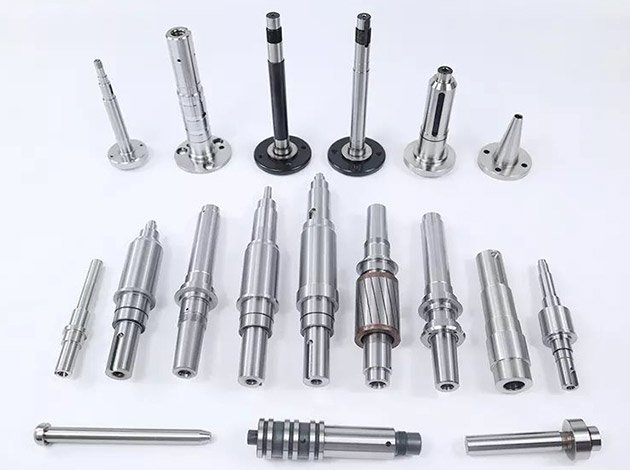
Dixin Technology (IndustryApex CNC) supports global OEMs and Tier 1 suppliers with large-scale machining, precision component manufacturing, and integrated ODM supply chain services. Two capabilities are particularly important for heavy industrial production: gantry milling for oversized structural components and crankshaft grinding for rotating equipment, engines, compressors, pumps, and drivetrain systems. Together, these processes address the dimensional, geometric, material, and delivery requirements that standard machine-shop models often struggle to control.
Large-Scale Machining: Gantry Milling and Crankshaft Grinding
1. Executive Summary
Large-scale machining is a supply chain discipline as much as it is a machining discipline. Components such as engine beds, machine frames, hydraulic bodies, turbine housings, crankshafts, eccentric shafts, and large tooling bases must satisfy strict requirements for dimensional accuracy, positional relationships, surface finish, balance, and repeatability. Their physical size increases handling complexity, setup time, thermal sensitivity, inspection difficulty, and the commercial impact of any nonconformance.
Gantry milling and crankshaft grinding solve different but complementary manufacturing problems. Gantry mills remove substantial volumes of material from large workpieces while maintaining the relationship between multiple machined faces, bores, pockets, and mounting surfaces. Crankshaft grinding refines journals and crankpin geometries to achieve the correct diameter, roundness, taper, stroke, phase relationship, and surface condition required for reliable bearing performance.
For procurement and manufacturing teams, the critical question is not simply whether a supplier owns a large machine. The stronger question is whether the supplier controls the entire process: engineering review, material sourcing, workholding, machining, heat treatment coordination, grinding, inspection, documentation, packaging, and delivery. A vertically coordinated partner reduces handoffs, improves traceability, and provides a clearer response when design changes or production risks arise.
Dixin Technology combines more than 30 years of manufacturing experience with an ERP-controlled production system and a broad precision manufacturing portfolio. This enables OEM customers to source complex parts through one accountable partner while retaining the technical depth needed for low-volume prototypes, repeat production, and demanding global programs. Explore the company’s broader capabilities through the IndustryApex CNC manufacturing home page.
2. Technical Deep Dive
Gantry milling uses a bridge-type machine structure in which the cutting head travels across a large work envelope. The architecture provides the rigidity and access required for long, wide, or tall workpieces. Depending on the machine configuration, the process can include three-, four-, or five-axis interpolation, enabling complex contours, angled surfaces, deep pockets, and compound features to be produced with fewer setups.
For large structural components, setup strategy is fundamental. The workpiece may be cast, forged, welded, or fabricated, and its initial condition can contain residual stress or uneven stock. Engineers must establish datum surfaces, support locations, clamping forces, and a machining sequence that avoids distortion. Roughing often removes material in balanced stages, allowing the part to stabilize before semi-finishing and finishing. Critical interfaces are then machined from controlled datums so that hole patterns, guideways, bearing seats, and mounting faces remain aligned.
Tool selection also influences both productivity and quality. High-feed cutters can remove bulk material efficiently, while indexable shoulder mills, solid carbide tools, and specialized long-reach cutters support different feature requirements. Cutting parameters must account for material grade, stock condition, tool overhang, coolant access, chip evacuation, and the stiffness of the fixture. On large components, excessive tool deflection may create errors that are not visible until assembly. A controlled process therefore combines machine probing, tool-life monitoring, staged inspection, and documented parameter management.
Gantry milling is commonly used for machine bases, structural frames, mold plates, die components, energy equipment, construction machinery parts, and large hydraulic bodies. When the part includes intersecting bores or accurately located interfaces, milling may be integrated with boring, drilling, tapping, and probing operations. This reduces the risk of transferring the workpiece between machines and losing the established coordinate relationship.
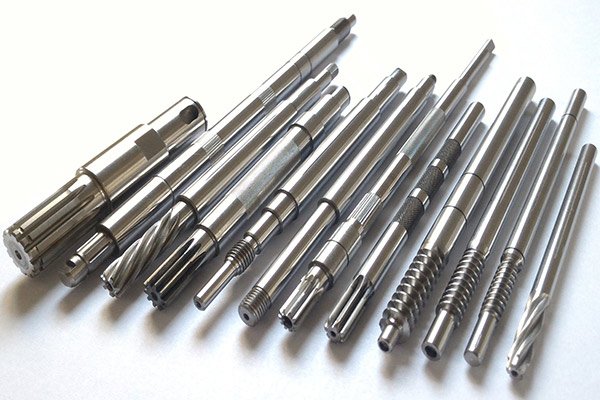
Crankshaft grinding presents a different technical challenge. A crankshaft contains main journals, crankpins, fillets, oil passages, counterweights, and sometimes complex timing or flange features. The grinding process must preserve the crankshaft’s centerline and angular indexing while controlling each journal’s diameter, roundness, taper, cylindricity, and surface roughness. Crankpin grinding is especially sensitive because the pin is offset from the main axis and must be positioned at the correct stroke and phase angle.
Before grinding, the crankshaft may require straightening, heat treatment, stress relief, machining allowance verification, or localized repair. The grinding wheel specification is selected according to the material, hardness, stock removal, and required finish. Wheel dressing maintains cutting performance and profile accuracy. Coolant management is essential because thermal damage, grinding burns, and residual tensile stresses can shorten fatigue life or cause premature bearing failure.
Inspection typically combines micrometers, air gauging, roundness measurement, surface roughness testing, coordinate measurement, and magnetic particle or other nondestructive examination where applicable. Journal transitions and fillet radii deserve particular attention because stress concentration at these regions directly affects crankshaft fatigue performance. For high-value components, the inspection plan should define measurement locations, equipment calibration, acceptance criteria, and complete dimensional reporting before production begins.
The practical advantage of combining gantry milling, precision grinding, and related processes under one manufacturing system is process continuity. Engineering teams can evaluate the complete component rather than treating each operation as an isolated purchase. This is valuable when a large milled housing must align with a ground shaft, or when a crankshaft includes flanges, keyways, splines, or balance features requiring additional CNC operations.
3. The ODM & Supply Chain Advantage
For global OEM and Tier 1 suppliers, the primary value of an ODM partner is controlled technical ownership. Dixin Technology’s core identity is that of a supply chain integrator and ODM solution provider. This means the engagement can begin with drawing review, manufacturability analysis, material recommendations, tolerance evaluation, and production planning rather than starting only when a purchase order is issued.
Large-scale components often carry hidden supply chain risks. Raw material may require long lead times, oversized transportation, certification packages, or special handling. Heat treatment and surface treatment can introduce additional scheduling dependencies. A part may also require several subcontracted operations, each creating a separate communication and quality interface. A capable integrator maps these dependencies early, assigns clear process ownership, and uses production data to monitor progress against the customer’s delivery requirements.
Dixin Technology’s manufacturing edge comes from a fully controlled precision manufacturing system supported by ERP and more than 30 years of experience. ERP integration helps connect purchasing, production scheduling, work orders, inspection records, inventory, and shipment status. For customers managing multi-site production, this provides better visibility into order progress and makes repeat orders easier to reproduce. It also supports traceability for materials, revisions, inspection results, and corrective actions.
The technical platform includes three- to five-axis CNC machining, EDM, precision grinding, and industrial ceramics. This range matters because large assemblies frequently combine conventional metal parts with hardened features, intricate cavities, wear-resistant components, or ceramic elements. EDM can address difficult conductive materials and fine features, while precision grinding provides the control required for journals, shafts, seals, and hardened interfaces. Industrial ceramics extend the available solution set for applications involving heat, electrical insulation, abrasion, corrosion, or dimensional stability.
ODM collaboration also improves design feedback. A supplier that understands tooling, fixturing, cutting access, inspection, and production economics can identify a tolerance that is unnecessarily restrictive, a datum that is difficult to reproduce, or a feature that could be consolidated. Such feedback should preserve functional intent while reducing manufacturing risk. The result may be a more robust design, lower total cost, shorter lead time, and improved long-term availability.
Supplier qualification should evaluate more than equipment lists. Procurement teams should review capacity, machine travel, maximum workpiece weight, spindle and grinding capability, inspection resources, calibration systems, operator expertise, ERP traceability, and contingency planning. It is also important to confirm how the supplier handles nonconforming material, engineering changes, first article inspection, process validation, and packaging for oversized precision parts.
For programs involving aircraft structures or titanium components, customers can review Dixin Technology’s aerospace CNC machining and titanium aircraft parts capabilities. Medical OEMs can evaluate the company’s ISO-certified machining for medical components, implants, surgical instruments, and precision device parts. These adjacent capabilities demonstrate the value of a manufacturing system designed around process control and regulated quality expectations.
4. Industry Applications
In power generation and energy equipment, gantry milling supports the production of large frames, housings, baseplates, and structural interfaces. Crankshaft grinding is relevant to engines, compressors, generator sets, and rotating machinery where journal geometry and fatigue resistance affect uptime. Stable processes and complete inspection records help operators manage maintenance intervals and reduce the risk of unplanned shutdowns.
Construction and agricultural machinery manufacturers use large machined components in excavators, loaders, drilling equipment, tractors, and harvesting systems. Hydraulic valve bodies, pump housings, cylinder components, and large mounting structures require accurate bores, flatness, and positional tolerances. Dixin Technology’s hydraulic pump parts manufacturing service is relevant to programs where fluid-control performance depends on precise internal geometry and reliable sealing surfaces.
Automotive and commercial vehicle suppliers require crankshafts with consistent journal dimensions, correct fillet profiles, and controlled balance characteristics. The same grinding discipline applies to industrial diesel engines, marine propulsion systems, rail equipment, and specialty drivetrain assemblies. Where production volumes vary, an ODM partner can support prototype development, process validation, replacement parts, and repeat orders without forcing the customer to manage multiple specialist suppliers.
Machine tool, mold, and automation builders depend on gantry-milled bases, mold plates, guide structures, and precision mounting surfaces. These components must retain geometric accuracy over large distances because small angular or flatness errors can propagate through the complete machine. Combining roughing, stabilization, finishing, and inspection in a planned sequence is essential for reliable assembly.
Aerospace and defense applications place additional emphasis on material certification, configuration control, traceability, and inspection documentation. Large structural components may require five-axis access, titanium machining expertise, or specialized finishing. Medical and chemical equipment may require corrosion-resistant alloys, clean handling, biocompatible materials, or high-precision interfaces. Across these sectors, the best supply chain decisions connect technical requirements to measurable process controls rather than relying solely on a supplier’s stated capacity.
The commercial result is a more resilient sourcing model. Customers gain one engineering interface, one coordinated production schedule, and a clearer corrective-action path. This can be especially valuable when the component is oversized, difficult to inspect, expensive to transport, or critical to the performance of a larger assembly.
5. Call to Action
Large-scale machining should be evaluated as an integrated manufacturing and supply chain program. Gantry milling provides the rigidity and access needed for oversized structural parts, while crankshaft grinding delivers the journal accuracy and surface integrity required by high-load rotating systems. The strongest results come from a partner that can connect design review, material control, CNC machining, grinding, inspection, documentation, and logistics.
Dixin Technology (IndustryApex CNC) works with global OEMs and Tier 1 suppliers to develop and manufacture demanding precision components through a controlled ODM and supply chain model. Share your drawings, specifications, target volumes, material requirements, and delivery schedule through the Contact Us page to request a technical review and sourcing assessment.