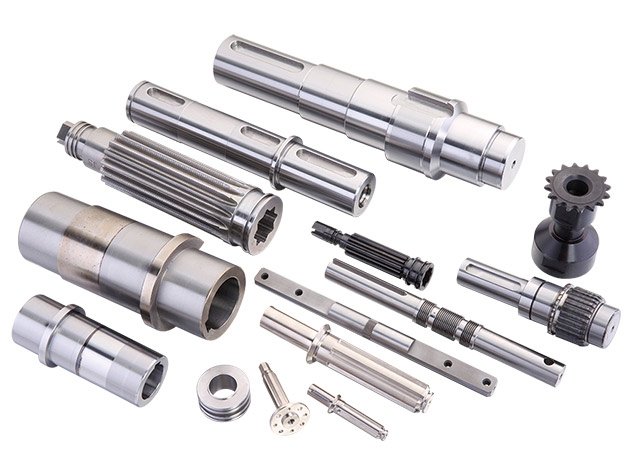
- Shaft
- Molds&Tools
- Hydraulics And Pump
- Hair transplant needle
- Hydraulics And Pump
- Precision CNC Shaft Machining Manufacturer for High Performance Applications
- Energy Industry CNC Machining Parts Supplier
- Aerospace CNC Machining Parts Manufacturer
- Aerospace CNC Machining Parts Manufacturer
- Automotive & EV CNC Machining Parts Supplier for OEM and Tier 1
- Medical CNC Machining Parts Supplier for Precision Medical Devices
Advanced EDM and Wire Cutting for Hard and Brittle Materials: An Engineering and Supply Chain Guide

IndustryApex CNC | Dixin Technology
Advanced EDM and Wire Cutting for Hard and Brittle Materials
For global OEMs and Tier 1 suppliers, machining hard and brittle materials is a combined engineering, quality, and supply chain challenge. Advanced electrical discharge machining (EDM), wire cutting, precision grinding, and industrial ceramic processing provide reliable methods for producing complex components that conventional cutting tools cannot manufacture efficiently.
1. Executive Summary
Hard and brittle materials such as tungsten carbide, industrial ceramics, sapphire, ruby, hardened tool steel, graphite, and selected superalloys are increasingly important in aerospace, medical, semiconductor, fluid control, energy, and tooling applications. These materials deliver high wear resistance, thermal stability, chemical resistance, or dimensional performance, but their properties also create significant manufacturing risk. Traditional milling and turning can generate excessive tool wear, chipping, residual stress, heat-affected damage, or unpredictable fracture.
EDM and wire EDM address these problems by removing conductive material through controlled electrical discharges rather than direct mechanical contact. This enables manufacturers to produce narrow slots, sharp internal corners, intricate profiles, small apertures, and high-precision features in hardened materials after heat treatment. For nonconductive ceramics and sapphire, complementary processes such as laser machining, ultrasonic machining, diamond grinding, and specialized ceramic finishing may be required. The best production strategy is therefore not a single machine process but a coordinated manufacturing system.
Dixin Technology, operating through the IndustryApex CNC platform, combines more than 30 years of precision manufacturing experience with CNC machining, EDM, precision grinding, industrial ceramics, process engineering, and ERP-controlled production management. This integrated model helps OEM procurement teams reduce supplier fragmentation, improve documentation, and develop manufacturable parts with stable quality and predictable delivery.
For an overview of the company’s capabilities, visit the IndustryApex CNC home page. The key objective is to convert difficult material specifications into a repeatable production route that meets tolerance, surface finish, traceability, and total cost requirements.
2. Technical Deep Dive
How EDM removes hard materials
EDM uses a controlled spark between an electrode and a workpiece submerged in dielectric fluid. The workpiece must be electrically conductive, and the machine controls voltage, pulse duration, current, flushing pressure, and electrode movement to remove small volumes of material. Each discharge creates a localized thermal event, while the dielectric fluid removes debris and controls the machining gap.
Because the electrode does not apply cutting force, EDM is particularly valuable for slender features and hardened parts that might deflect or crack under conventional machining. The process can be applied after heat treatment, allowing manufacturers to retain the finished material hardness during final feature production. EDM is also useful for deep ribs, narrow channels, complex cavities, and profiles that would be difficult to reach with rotary tools.
Wire EDM uses a continuously moving, electrically conductive wire as the electrode. The wire follows a programmed contour through the workpiece, making it suitable for precision blanks, punches, dies, inserts, gears, medical components, and complex structural profiles. Multiple skim passes can improve dimensional accuracy and surface finish after the initial rough cut. Tapered cuts are also possible when the machine and programming strategy support independent control of the upper and lower wire guides.
Material-specific process control
Tungsten carbide is highly wear resistant and difficult to machine mechanically, making wire EDM and sinker EDM attractive for dies, punches, wear inserts, and precision tooling. However, EDM parameters must be controlled carefully to limit microcracks, recast layers, and changes in the functional surface. A roughing pass followed by controlled finishing passes, appropriate flushing, and post-process inspection can reduce these risks.
Hardened steels used in mold components and cold heading dies can also be wire cut after heat treatment. This reduces the risk of distortion caused by machining hardened material before heat treatment and then attempting to correct the geometry afterward. In production, engineers should define the datum strategy, heat-treatment sequence, stock allowance, wire entry and exit locations, and inspection method before releasing the part for manufacture.
Industrial ceramics require a different technical approach because most ceramics are electrically nonconductive. Conductive ceramic grades, ceramic-metal composites, or parts with suitable conductive coatings may be compatible with EDM in specific conditions. For nonconductive alumina, zirconia, silicon nitride, sapphire, and ruby, Dixin Technology can evaluate complementary processes including diamond grinding, ultrasonic machining, precision lapping, and specialized ceramic production methods. The manufacturing route must account for brittleness, grain structure, porosity, thermal shock, edge integrity, and the risk of subsurface damage.
Engineering variables that affect quality
Part geometry is one of the first variables to review. Small internal radii, thin walls, narrow slots, deep cavities, and interrupted profiles influence flushing and discharge stability. A design that appears straightforward in CAD may require different entry points, support tabs, multiple setups, or sacrificial material to maintain positional accuracy.
Surface integrity is equally important. A visually acceptable EDM surface may still contain a recast layer or microcracking that affects fatigue life, sealing performance, wear behavior, or coating adhesion. For critical components, the drawing and purchase specification should define surface roughness, edge condition, allowable recast layer, inspection method, and any required polishing or grinding operation. Dimensional inspection may include coordinate measuring machine verification, optical measurement, profilometry, microscopy, and material or hardness certification.
Thermal management and flushing are central to stable production. Poor debris removal can cause unstable sparking, wire breakage, taper variation, short circuits, or localized damage. Machine condition, dielectric filtration, wire quality, electrode wear, and ambient stability all influence repeatability. A mature supplier maintains preventive maintenance records and process monitoring rather than treating EDM as an isolated machine operation.
Design for manufacturability
Early design review can reduce both cycle time and quality risk. Engineers should identify minimum wall thickness, corner radii, allowable taper, datum references, clamping zones, and inspection access. Where a component is used in a fluid system, the specification should distinguish between dimensional tolerance, sealing surface finish, burr requirements, and pressure-test expectations. Where a component is used in an assembly, mating features and functional datums should take priority over unnecessarily tight general tolerances.
For brittle materials, edge design is especially important. Sharp unsupported corners can chip during machining, cleaning, assembly, or service. A controlled chamfer, edge radius, or protected handling feature may improve yield without compromising function. These decisions are most effective when the manufacturer participates before tooling and production documentation are finalized.
3. The ODM & Supply Chain Advantage
Advanced EDM is most valuable when it is connected to a broader engineering and supply chain system. Dixin Technology’s core identity is that of a supply chain integrator and ODM solution provider. For global OEM and Tier 1 suppliers, this means the supplier can contribute to design review, process selection, prototype development, production validation, quality documentation, and ongoing delivery management.
The manufacturing edge is a fully controlled precision manufacturing system supported by ERP and more than 30 years of manufacturing experience. ERP coordination improves visibility across engineering release, material purchasing, production scheduling, inspection, packaging, and shipment. It also supports lot traceability and helps procurement teams manage changes across multiple part numbers and production stages.
The technology platform includes 3-axis to 5-axis CNC machining, EDM, wire cutting, precision grinding, and industrial ceramics. This breadth matters because hard and brittle material components often require several processes. A tungsten carbide insert may need rough preparation, wire EDM, grinding, edge finishing, inspection, and coating coordination. A ceramic component may require green machining, sintering, diamond finishing, dimensional inspection, and careful packaging. Keeping these activities under an integrated manufacturing framework reduces handoff risk and makes engineering responsibility clearer.
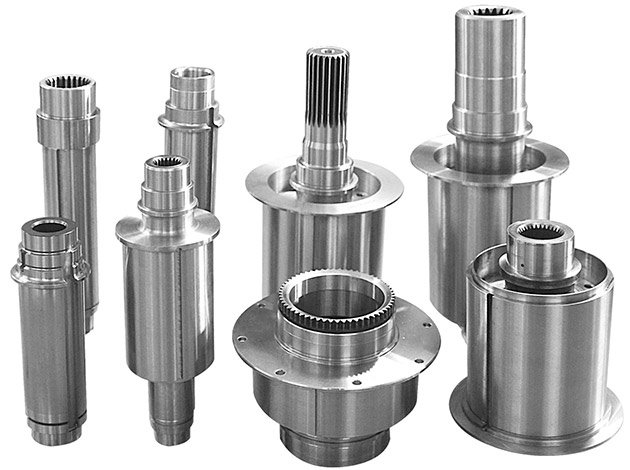
An ODM relationship also creates opportunities to improve the part before production begins. Dixin Technology can review tolerances, material grades, surface requirements, and assembly interfaces to identify unnecessary cost drivers. The supplier can recommend a more appropriate material condition, revise a feature that creates wire breakage risk, combine operations, or establish a process sequence that reduces distortion. These changes should remain aligned with the OEM’s functional requirements and validation obligations.
Supply chain resilience depends on more than having available machine capacity. It requires qualified materials, documented process controls, backup planning, inspection capability, and reliable communication. For customers serving regulated markets, supplier performance must also include consistent records, controlled revisions, nonconformance response, and packaging appropriate to sensitive surfaces. A single accountable manufacturing partner can simplify this governance model while retaining the technical specialization required for difficult materials.
Supplier selection should therefore consider total landed cost rather than piece price alone. Relevant factors include first-pass yield, engineering response time, tooling life, scrap exposure, inspection burden, lead-time stability, minimum order quantities, and the cost of coordinating multiple subcontractors. A technically capable ODM partner can lower these hidden costs by combining processes and taking responsibility for the complete component route.
4. Industry Applications
Aerospace and defense
Aerospace components frequently combine demanding materials with strict traceability and high functional consequences. Wire EDM can produce profiles, slots, and precision features in hardened tool steels, nickel alloys, titanium-related tooling, and carbide components. EDM and grinding are also useful for manufacturing fixtures, turbine-related tooling, wear parts, and complex structural component details. Dixin Technology supports customers requiring aerospace CNC machining and aircraft structural components, with process planning focused on repeatability and inspection evidence.
Medical and life sciences
Medical instruments, implant tooling, surgical components, and high-precision device parts often require corrosion resistance, biocompatibility, tight tolerances, and carefully controlled surface conditions. EDM supports intricate stainless steel, titanium, and hardened alloy features, while precision grinding and ceramic processing can address wear-resistant or electrically insulating components. Buyers can review Dixin Technology’s capabilities for ISO-certified CNC machining for medical components.
Hydraulics and fluid control
Hydraulic valve spools, sleeves, pump parts, nozzles, and metering components depend on accurate roundness, cylindricity, surface finish, and controlled clearances. EDM may be used for difficult slots and hardened features, while grinding establishes the final functional geometry. Process control is essential because a small surface defect can affect leakage, response time, contamination tolerance, or service life. Dixin Technology provides dedicated information on hydraulic pump parts and fluid-control manufacturing.
Tooling, molds, and cold forming
Cold heading dies, carbide molds, mold inserts, and wear components benefit from EDM because the process can create detailed cavities after hardening. This supports longer tool life and more stable geometry in high-volume forming operations. For mold and die makers, the ability to coordinate wire EDM, sinker EDM, grinding, and inspection is important when tolerances extend across several related components.
Semiconductor, optics, and energy
Semiconductor equipment, optical assemblies, energy systems, and specialized industrial machinery use materials selected for thermal stability, wear resistance, electrical insulation, or dimensional stability. Ceramic parts, sapphire components, carbide wear parts, and precision fixtures can require tightly controlled machining and handling. The correct process depends on conductivity, geometry, tolerance, surface finish, and the customer’s cleanliness requirements. An engineering-led supplier can evaluate the material and intended function before confirming the production route.
5. Call to Action
Hard and brittle materials should not be treated as ordinary CNC work with a different cutting tool. Their successful manufacture depends on material knowledge, EDM parameter control, precision finishing, edge protection, inspection planning, and supply chain coordination. Dixin Technology’s IndustryApex CNC team combines EDM and wire cutting with 3-axis to 5-axis CNC machining, precision grinding, industrial ceramics, ERP-controlled production, and ODM engineering support.
When requesting a quotation, provide the 2D drawing, 3D model, material specification, heat-treatment condition, annual volume, critical tolerances, surface requirements, inspection standards, and target delivery schedule. This information allows the manufacturing team to recommend an appropriate process sequence and identify cost or risk drivers early.
For prototype development, production transfer, or a multi-part sourcing program, contact Dixin Technology through IndustryApex CNC. The team can assess manufacturability, propose a controlled production route, and support the transition from difficult material requirements to reliable OEM supply.