- Shaft
- Molds&Tools
- Hydraulics And Pump
- Hair transplant needle
- Hydraulics And Pump
- Precision CNC Shaft Machining Manufacturer for High Performance Applications
- Energy Industry CNC Machining Parts Supplier
- Aerospace CNC Machining Parts Manufacturer
- Aerospace CNC Machining Parts Manufacturer
- Automotive & EV CNC Machining Parts Supplier for OEM and Tier 1
- Medical CNC Machining Parts Supplier for Precision Medical Devices
2026 Trends in 5-Axis CNC Machining for Aerospace Components: Engineering and Supply Chain Implications

2026 Trends in 5-Axis CNC Machining for Aerospace Components
As aerospace manufacturers prepare for higher production rates, tighter certification requirements, and more resilient global supply chains, 5-axis CNC machining is becoming a strategic capability rather than simply a production method. In 2026, the strongest suppliers will combine advanced machine tools with process intelligence, material expertise, digital traceability, and integrated manufacturing services.
1. Executive Summary
The aerospace industry is entering 2026 with simultaneous pressure to increase output, reduce weight, control costs, and protect delivery schedules. These demands are accelerating the adoption of 5-axis CNC machining for titanium aircraft parts, aluminum structural components, nickel-alloy engine components, and complex fluid-control hardware.
Five-axis machining enables a cutting tool to approach multiple surfaces in a single setup. This reduces fixture changes, improves positional accuracy, limits setup-related variation, and supports the production of contoured components that are difficult or uneconomical to manufacture with conventional 3-axis methods. For aerospace OEMs and Tier 1 suppliers, the value extends beyond geometry. A well-controlled 5-axis process can simplify inspection, reduce work-in-process inventory, and improve manufacturing repeatability across distributed production programs.
The leading 2026 trends are the wider use of digital process monitoring, greater automation of toolpath and fixture planning, increased demand for qualified titanium machining, more rigorous documentation of material and process history, and a shift toward suppliers that can provide complete ODM and supply chain support. Aerospace buyers are increasingly evaluating machining partners based on total program performance rather than hourly machine rates.
2. Technical Deep Dive
Five-axis CNC machining combines three linear axes with two rotary or tilting axes. The additional degrees of freedom allow the cutting tool to maintain a more favorable orientation relative to the workpiece. This is particularly important for thin-wall structures, deep pockets, curved aerodynamic surfaces, impellers, brackets, and parts with multiple intersecting features.
In aerospace production, tool orientation directly affects surface finish, cutting forces, tool life, and dimensional stability. A continuously controlled tool axis can reduce sudden changes in engagement and avoid excessive tool extension. It can also support shorter, more rigid tools that reduce deflection during the machining of titanium and high-strength alloys. The result is improved consistency on features such as blended radii, angled bores, compound curves, and structural webs.
One major 2026 trend is the use of simulation-driven programming. Modern CAM workflows increasingly verify machine kinematics, fixture clearances, tool reach, material removal, and potential collisions before the first component is cut. Digital simulation is becoming more important as aerospace parts grow more complex and machines operate at higher levels of automation. A validated virtual process reduces prove-out time and helps manufacturers transfer qualified programs between machines with less disruption.
Adaptive machining is also expanding. By using spindle load, vibration, tool-condition, or in-process measurement data, a control system can adjust feed rates and cutting conditions in response to actual material behavior. This is valuable when machining titanium forgings with variable stock, interrupted cuts, or difficult-to-predict heat accumulation. Adaptive control does not replace engineering judgment, but it can help stabilize production and protect expensive tools and workpieces.
Thermal management remains a central technical issue. Titanium has low thermal conductivity, so heat tends to remain concentrated near the cutting zone. Aerospace manufacturers are responding with optimized coolant delivery, high-pressure through-tool systems, carefully selected cutting geometries, and strategies that control chip thickness. For nickel-based superalloys, the challenge includes work hardening, high cutting forces, and rapid tool wear. Process parameters must be developed around the specific material condition, feature geometry, and required surface integrity.
Surface integrity is receiving increased attention in qualification and supplier audits. Aerospace components may require limits on residual stress, burr formation, microcracks, recast layers, or heat-affected conditions, depending on the material and application. Five-axis capability can improve access and reduce secondary operations, but it must be supported by documented tool management, inspection plans, and process controls. High-precision machining is therefore becoming a connected system involving programming, fixturing, cutting tools, coolant, measurement, and quality engineering.
Automation is another defining trend. Robotic loading, pallet pools, automatic probing, tool presetting, and unattended machining are being deployed selectively for repeatable aerospace families. The business case is strongest when automation is designed around stable part mix, reliable fixturing, and clear digital work instructions. Automation can increase spindle utilization and reduce non-value-added handling, but it must be accompanied by effective exception management and maintenance planning.
For a detailed view of complex titanium and structural work, review Dixin Technology’s aerospace CNC machining and aircraft component capabilities.
3. The ODM & Supply Chain Advantage
In 2026, aerospace procurement teams are placing greater value on supply chain integration. A machining supplier that only accepts released drawings may fulfill a purchase order, but an ODM solution provider can contribute earlier by reviewing manufacturability, material selection, tolerances, inspection requirements, and production risks during product development.
Dixin Technology’s core identity is that of a supply chain integrator and ODM solution provider. This position is important for global OEMs and Tier 1 suppliers managing complex programs across multiple countries, materials, and qualification requirements. Early engineering collaboration can identify unnecessary tolerances, inaccessible features, inefficient datum structures, and design details that create avoidable cost or lead-time exposure.
The manufacturing edge is based on a fully controlled precision manufacturing system supported by ERP and more than 30 years of experience. ERP integration helps connect purchasing, production planning, inventory, work orders, quality records, and shipment status. For aerospace customers, this creates stronger visibility into material availability, production progress, capacity constraints, and delivery risk. It also supports more disciplined revision control and production traceability.
A resilient supplier network must manage both capacity and process depth. Dixin Technology’s technology capabilities include 3-axis to 5-axis CNC machining, EDM, precision grinding, and industrial ceramics. This range allows projects to be routed according to geometry, tolerance, material, and surface requirements rather than forced into a single process. EDM can address intricate or difficult-to-cut features, precision grinding can support critical fits and surface conditions, and industrial ceramics can serve demanding wear, thermal, or electrical applications.
For OEM and Tier 1 customers, this integrated model can reduce the number of external handoffs. Fewer handoffs may simplify communication, reduce transportation between operations, and make nonconformance investigation more efficient. It can also support coordinated sourcing of raw material, near-net-shape blanks, secondary processing, inspection, and packaging.
Supply chain performance still depends on disciplined fundamentals. Aerospace suppliers should maintain approved vendor controls, documented incoming inspection, calibrated measurement systems, controlled nonconforming material procedures, and clear change-management practices. A capable ODM partner should be able to explain how engineering decisions move into production documentation and how production data is retained for future audits or repeat orders.
Cost analysis is changing as well. Buyers are increasingly evaluating total cost of ownership, including tooling, scrap, inspection time, inventory, engineering changes, logistics, and the consequences of late delivery. A supplier with strong process engineering may quote a slightly higher machining rate while delivering lower overall program cost through fewer setups, shorter lead times, improved first-pass yield, and more predictable replenishment.
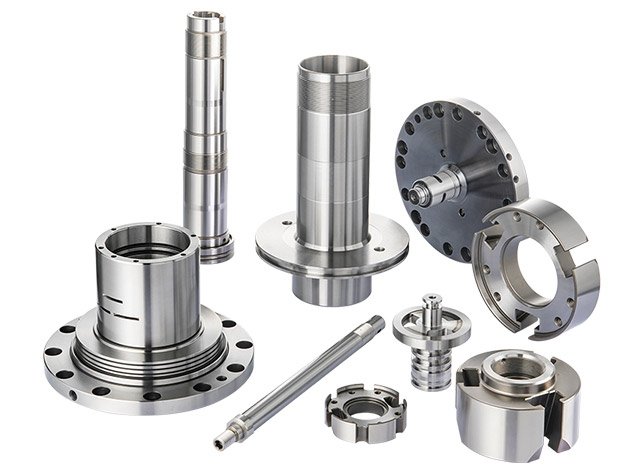
4. Industry Applications
The most visible application for 5-axis CNC machining remains aircraft structural components. Wing ribs, spars, frames, brackets, seat-track components, and other lightweight structures often combine thin walls, deep pockets, curved surfaces, and strict weight targets. Five-axis strategies can reduce the number of setups while maintaining access to complex surfaces. Careful fixturing and distortion control are essential when removing large amounts of material from forged or plate stock.
Engine and propulsion programs use 5-axis machining for blisks, blades, casings, brackets, and other components with aerodynamic or thermal requirements. These parts demand stable cutting conditions, controlled surface finish, and accurate blending. Depending on geometry and material, manufacturers may combine CNC machining with EDM, grinding, inspection, and specialized finishing operations.
Landing gear and actuation systems create another important application area. Titanium and high-strength steel components may include intersecting bores, bearing seats, spline features, and complex load-bearing transitions. Process planning must account for stiffness, datum strategy, distortion, and inspection access. The ability to machine multiple features in fewer setups can support positional accuracy, but critical interfaces still require rigorous measurement and verification.
Fluid-control systems for aircraft use valves, manifolds, pump bodies, and fittings that may contain internal passages and closely controlled sealing surfaces. The same manufacturing principles apply to hydraulic pump parts and fluid-control components, where dimensional consistency and surface condition influence leakage, efficiency, and service life.
Electronics and avionics enclosures increasingly require lightweight, thermally efficient, and precisely machined housings. Five-axis machining can support angled interfaces, cable-routing features, cooling channels, and compact assemblies. As aircraft systems become more integrated, mechanical components must often satisfy multiple requirements involving electromagnetic shielding, thermal transfer, weight, and assembly alignment.
There are also transferable lessons from other regulated industries. Medical components, including titanium implants and surgical instruments, require tight process control, traceability, and repeatability. Dixin Technology’s ISO-certified medical machining services demonstrate how precision manufacturing systems can support demanding quality environments beyond aerospace.
Across these applications, the supplier selection criteria are converging. Customers want evidence of technical capability, documented quality systems, reliable communication, material and process traceability, and scalable capacity. The most competitive 5-axis machining partner will connect engineering decisions to production outcomes and supply chain commitments.
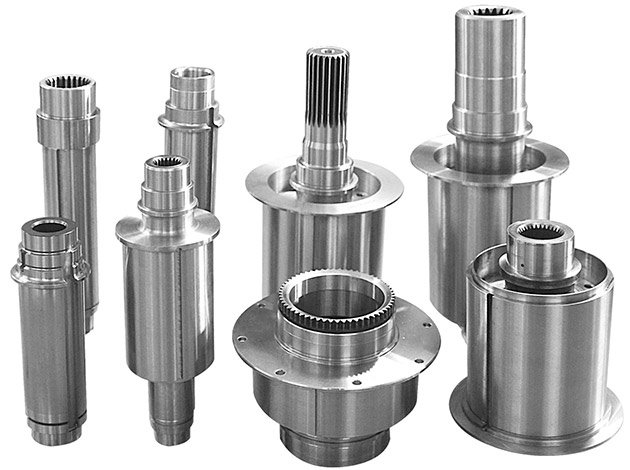
5. Call to Action
For aerospace manufacturers, 2026 is an appropriate time to reassess how 5-axis machining fits into product development, qualification, and supply chain strategy. The right partner can help evaluate part geometry, material selection, datum structures, fixture concepts, machining sequences, inspection requirements, and production scalability before a program reaches full-rate manufacturing.
Dixin Technology supports global OEMs and Tier 1 suppliers with integrated ODM and precision manufacturing services. With more than 30 years of experience, ERP-supported production control, 3-axis to 5-axis CNC machining, EDM, precision grinding, and industrial ceramics, the company is equipped to support complex aerospace component programs from development through repeat production.
Share your drawings, specifications, material requirements, or sourcing objectives through the Dixin Technology contact page. For an overview of the broader manufacturing platform, visit the IndustryApex CNC homepage.