- Shaft
- Molds&Tools
- Hydraulics And Pump
- Hair transplant needle
- Hydraulics And Pump
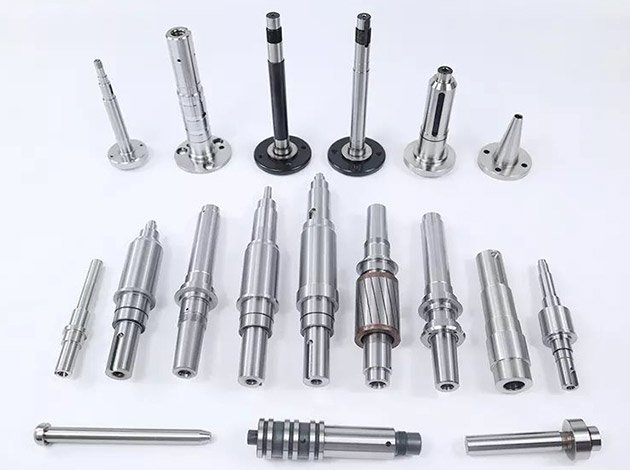
- Precision CNC Shaft Machining Manufacturer for High Performance Applications
- Energy Industry CNC Machining Parts Supplier
- Aerospace CNC Machining Parts Manufacturer
- Aerospace CNC Machining Parts Manufacturer
- Automotive & EV CNC Machining Parts Supplier for OEM and Tier 1
- Medical CNC Machining Parts Supplier for Precision Medical Devices
Advanced EDM and Wire Cutting for Hard and Brittle Materials: The B2B Supply Chain Advantage

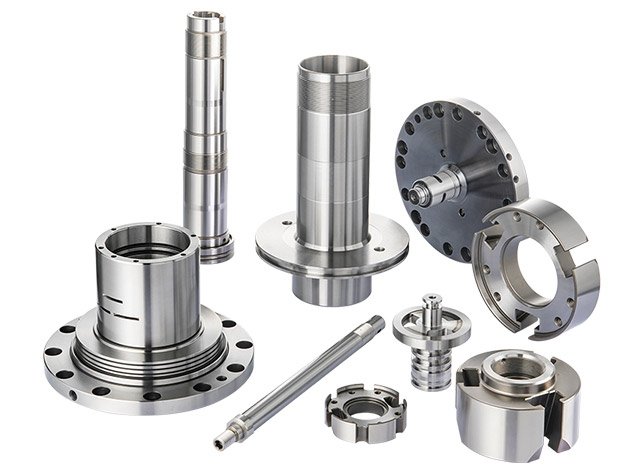
Executive Summary
As global OEMs and Tier 1 suppliers push the boundaries of material science, the demand for precision machining of hard and brittle materials — tungsten carbide, advanced ceramics, sapphire, silicon carbide, and hardened tool steels — has reached an inflection point. Conventional subtractive machining fails these materials: cutting forces induce micro-fractures, tool wear is prohibitive, and dimensional tolerances collapse under thermal stress.
Electrical Discharge Machining (EDM) and wire EDM have emerged as the definitive manufacturing solution for this class of materials. At IndustryApex Technology (IndustryApex CNC), we have spent over 30 years engineering precision components for the world’s most demanding industries. This analysis examines the technical mechanics of EDM for hard and brittle substrates, the supply chain architecture required to deliver consistent quality at scale, and the strategic value of partnering with a fully integrated ODM manufacturer.
Technical Deep Dive: EDM and Wire Cutting Mechanics for Hard and Brittle Materials
Why Conventional Machining Fails
Hard and brittle materials share a critical mechanical characteristic: low fracture toughness relative to hardness. When a carbide end mill contacts a tungsten carbide workpiece or an alumina ceramic blank, the contact stress at the cutting edge exceeds the material’s fracture toughness before plastic deformation can occur. The result is chipping, subsurface cracking, and catastrophic dimensional deviation — none of which are acceptable in aerospace structural components, medical implants, or semiconductor tooling.
Hardened tool steels above 60 HRC present a different but equally severe challenge: tool wear rates become economically unviable, and thermal gradients during cutting introduce residual stresses that compromise fatigue life in service.
The EDM Principle: Contact-Free Material Removal
EDM removes material through controlled electrical discharge — spark erosion — between a shaped electrode and the workpiece, separated by a dielectric fluid. Because there is zero mechanical contact, cutting forces are eliminated entirely. The material removal mechanism is purely thermal: each discharge vaporizes and melts a microscopic volume of workpiece material, which is flushed away by the dielectric.
This contact-free principle is transformative for hard and brittle materials for three reasons:
- No fracture initiation: Without mechanical contact stress, the fracture toughness limitation is bypassed completely.
- Hardness-independent removal rate: EDM efficiency correlates with electrical conductivity and thermal properties, not mechanical hardness. Tungsten carbide machines at comparable rates to hardened steel.
- Achievable tolerances: Modern die-sink EDM and wire EDM systems routinely achieve ±0.002 mm dimensional tolerances with surface finishes below Ra 0.2 µm — parameters impossible to reach with grinding on complex 3D geometries.
Wire EDM: Precision Profiling of Conductive Hard Materials
Wire EDM uses a continuously fed brass or coated wire electrode (typically 0.1–0.3 mm diameter) to cut 2D profiles and tapered geometries through electrically conductive workpieces. For tungsten carbide mold components, carbide punches and dies, and hardened steel tooling, wire EDM delivers:
- Contour accuracy to ±0.001 mm on production runs
- Taper cutting up to 30° for draft angles in mold components
- No burr formation, eliminating secondary deburring operations
- Ability to machine fully hardened blanks, removing the distortion risk of post-heat-treatment grinding
EDM for Industrial Ceramics: The Conductivity Requirement
Standard EDM requires electrical conductivity in the workpiece. This creates a material-specific constraint: alumina (Al₂O₃) and zirconia (ZrO₂) in their pure forms are insulators and cannot be EDM-machined directly. However, several engineering ceramics are sufficiently conductive for EDM processing:
- Silicon carbide (SiC): Resistivity 1–100 Ω·cm, fully EDM-compatible
- Titanium diboride (TiB₂): Excellent conductivity, used in semiconductor and aerospace tooling
- Tungsten carbide / cobalt composites: The cobalt binder provides conductivity; WC-Co is the most widely EDM-machined hard material globally
- Conductive ceramic composites: Al₂O₃-TiC and ZrO₂-TiN composites engineered specifically for EDM machinability
For non-conductive ceramics requiring complex geometries, our engineering team applies hybrid approaches: ultrasonic-assisted grinding for bulk material removal combined with EDM finishing on conductive composite inserts, or laser pre-processing to create conductive surface layers.
Process Parameters and Quality Control
EDM of hard materials demands precise parameter control to avoid recast layer formation and heat-affected zone (HAZ) depth — both of which degrade fatigue performance in service. Our process engineering protocols specify:
- Discharge energy (µJ) calibrated to workpiece conductivity and required surface integrity
- Pulse-on/pulse-off timing optimized to minimize HAZ depth below 5 µm for critical aerospace and medical applications
- Dielectric flushing pressure and flow rate matched to cavity geometry to prevent debris re-deposition
- Multi-pass finishing cuts to achieve final dimensional and surface specifications
The ODM and Supply Chain Advantage: Why Integration Matters
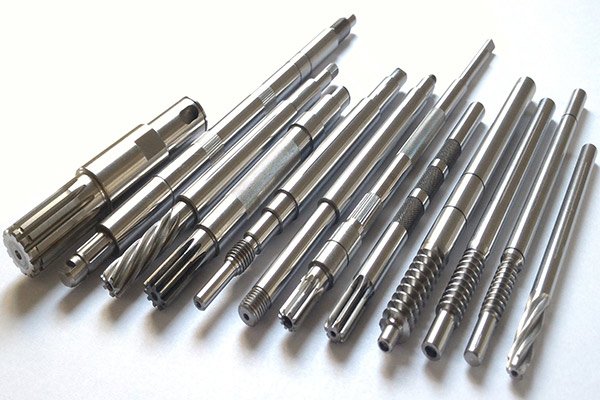
Technical capability alone does not define a reliable supply chain partner. Global OEMs and Tier 1 suppliers sourcing hard-material EDM components face a structural problem: most precision EDM shops are process specialists, not supply chain integrators. They machine to print but cannot manage material procurement, secondary operations, quality certification, or logistics under a single commercial relationship.
This fragmentation creates lead time risk, quality handoff failures, and cost opacity — all of which erode the total value of outsourced precision manufacturing.
IndustryApex Technology as a Supply Chain Integrator
IndustryApex Technology operates as a fully controlled precision manufacturing system, not a job shop. Our ODM model means we own the entire value chain from raw material qualification through finished component delivery:
- ERP-driven production management: Every order is tracked through our enterprise resource planning system, providing real-time visibility into material status, machine scheduling, inspection queue, and shipping readiness. OEM procurement teams receive structured status data, not phone calls.
- In-house material expertise: We maintain qualified supplier relationships for tungsten carbide grades, engineering ceramics, and specialty tool steels. Material certifications are captured at intake and linked to job travelers — traceability is automatic, not retrospective.
- Integrated secondary operations: EDM-machined components frequently require precision grinding for final dimensional control, surface treatment, or assembly-ready finishing. Our facility combines 3–5 axis CNC machining, EDM (die-sink and wire), precision grinding, and industrial ceramic processing under one roof. No inter-supplier handoffs, no tolerance stack-up from multiple setups.
- 30+ years of application engineering: Our engineering team has accumulated process knowledge across semiconductor tooling, aerospace structural components, medical device parts, and hydraulic and pump components. When a customer presents a challenging geometry in a difficult material, we bring documented process history, not trial-and-error.
The ODM Value Proposition for Hard-Material Components
For OEMs developing new products incorporating hard or brittle material components, the ODM relationship delivers compounding value. Rather than providing a finished drawing and requesting a quote, customers engage our engineering team during the design phase. We contribute:
- Material selection guidance — identifying the optimal hard material grade for the application’s wear, thermal, and dimensional requirements
- Design for manufacturability (DFM) review — identifying features that drive EDM cost or risk and proposing geometry modifications that preserve function while improving process reliability
- Prototype-to-production continuity — the same process parameters, tooling, and quality plan used for prototype approval are locked and replicated for production, eliminating the qualification gap that plagues multi-supplier models
Industry Applications: Where Hard-Material EDM Delivers Critical Value
Semiconductor and Electronics Manufacturing Equipment
Wafer handling components, precision nozzles, and guide elements in semiconductor fabrication equipment demand extreme dimensional stability and wear resistance. Silicon carbide and tungsten carbide components machined by EDM provide the sub-micron geometric accuracy and surface integrity required for contamination-free semiconductor environments. Our ceramic parts manufacturing capability directly serves this segment.
Aerospace and Defense
Fuel system components, actuator parts, and structural inserts in aerospace applications increasingly specify hardened materials to meet weight-to-strength and corrosion resistance requirements. Wire EDM enables the complex profiles and tight tolerances required for aerospace-grade components in hardened titanium alloys and tool steels, with full material traceability for AS9100 compliance.
Medical Devices and Surgical Instruments
Surgical cutting instruments, implant trial components, and precision guide tools require burr-free edges, biocompatible surface finishes, and dimensional repeatability across production lots. EDM’s contact-free material removal produces the clean, stress-free edges that medical device OEMs require, supporting ISO 13485-compliant production of medical components.
Hydraulic and Fluid Control Systems
Valve seats, metering orifices, and pump components in high-pressure hydraulic systems require hardened materials to resist erosion and maintain sealing geometry over service life. EDM machining of hardened valve bodies and carbide orifice inserts delivers the surface finish and dimensional precision that determines system efficiency and service interval. Our hydraulic pump parts manufacturing capability is built on this foundation.
Tooling and Mold Manufacturing
Cold heading dies, carbide punches, and precision mold inserts represent the highest-volume application for hard-material EDM globally. Wire EDM profiling of fully hardened carbide die components eliminates the distortion risk of conventional machining followed by heat treatment, and die-sink EDM produces the complex cavity geometries that define part quality in cold forging and stamping operations.
Partner with IndustryApex Technology for Hard-Material EDM Solutions
If your engineering or procurement team is evaluating suppliers for EDM-machined components in tungsten carbide, engineering ceramics, hardened tool steels, or specialty alloys, the critical question is not whether a supplier can machine the part — it is whether they can deliver consistent quality, documented traceability, and supply chain reliability at production volumes.
IndustryApex Technology brings 30+ years of precision manufacturing experience, a fully integrated production system, and proven ODM capability to every customer engagement. We work with global OEMs and Tier 1 suppliers across aerospace, medical, semiconductor, hydraulic, and industrial tooling sectors.
Contact our engineering team to discuss your hard-material component requirements. Provide your drawing, material specification, and annual volume — we will respond with a technical assessment and commercial proposal within 48 hours.