- Shaft
- Molds&Tools
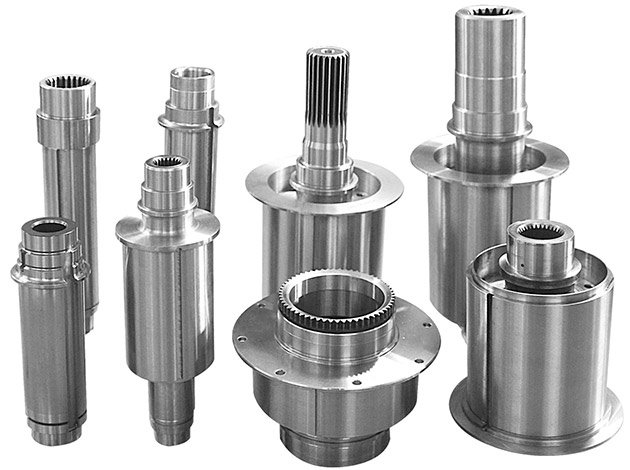
- Hydraulics And Pump
- Hair transplant needle
- Hydraulics And Pump
- Precision CNC Shaft Machining Manufacturer for High Performance Applications
- Energy Industry CNC Machining Parts Supplier
- Aerospace CNC Machining Parts Manufacturer
- Aerospace CNC Machining Parts Manufacturer
- Automotive & EV CNC Machining Parts Supplier for OEM and Tier 1
- Medical CNC Machining Parts Supplier for Precision Medical Devices
Hydraulic Pump Parts: Ensuring Reliability through Precision Grinding | IndustryApex Technology

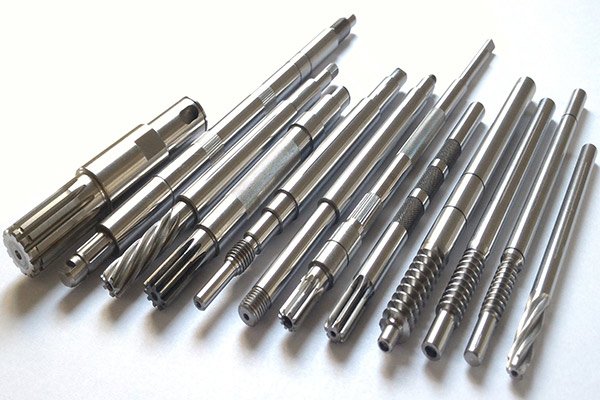
Hydraulic Pump Parts: Ensuring Reliability through Precision Grinding
Executive Summary
In high-pressure hydraulic systems, component failure is not merely a maintenance inconvenience — it is a costly operational event that cascades across production lines, construction fleets, and industrial machinery. For global OEM manufacturers and Tier 1 suppliers, the reliability of hydraulic pump parts is directly tied to the dimensional accuracy and surface integrity achieved during manufacturing. Precision grinding stands at the center of this reliability equation.
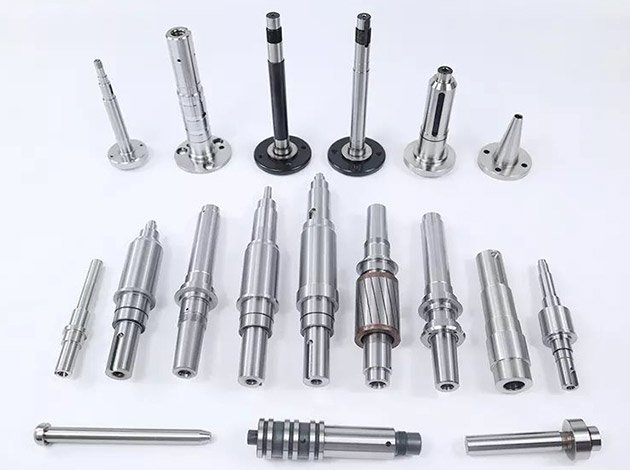
At IndustryApex Technology (IndustryApex CNC), we engineer hydraulic pump components — valve spools, sleeves, pistons, cylinder blocks, and port plates — to tolerances measured in microns. With over 30 years of precision manufacturing experience and a fully integrated supply chain, we deliver the dimensional consistency and surface finish quality that hydraulic system designers demand. This article examines the engineering rationale behind precision grinding for hydraulic pump parts, the supply chain advantages of working with a vertically integrated ODM partner, and the industries where these standards are non-negotiable.
Technical Deep Dive: Why Precision Grinding Defines Hydraulic Pump Performance
Hydraulic pumps operate on a fundamental principle: controlled volumetric displacement of fluid under pressure. Whether the design is axial piston, radial piston, gear, or vane type, every pump relies on mating surfaces that must seal against pressures routinely exceeding 300 bar — and in advanced systems, approaching 700 bar. At these operating conditions, a surface deviation of even a few micrometers translates directly into internal leakage, volumetric inefficiency, and accelerated wear.
The Geometry-Leakage Relationship
Internal leakage in a hydraulic pump is governed by the clearance between mating components. For a valve spool and its bore, the diametral clearance is typically specified between 5 and 15 micrometers. Achieving this consistently across a production run requires grinding processes capable of holding cylindricity within 1–2 µm and surface roughness (Ra) values below 0.2 µm. Conventional turning or milling cannot achieve these parameters reliably. Precision cylindrical grinding, honing, and lapping are the manufacturing processes that close this gap.
The cylinder block of an axial piston pump presents an even more demanding challenge. The port plate interface — a lapped flat surface — must achieve flatness within 1 µm across its entire face to prevent high-pressure fluid bypass between the high and low pressure ports. Any deviation creates a pressure differential path that reduces pump efficiency and generates heat, accelerating seal and fluid degradation.
Surface Integrity Beyond Roughness
Surface finish in hydraulic components is not simply a roughness number. Grinding process parameters — wheel specification, dressing frequency, coolant delivery, and workpiece speed — determine the subsurface residual stress state, the presence or absence of grinding burns, and the micro-geometry of the surface texture. A ground surface with compressive residual stress resists fatigue crack initiation under cyclic hydraulic loading. A surface with tensile residual stress from aggressive grinding is a fatigue failure waiting to occur.
At IndustryApex Technology, our precision grinding operations employ in-process gauging with real-time feedback to maintain dimensional targets throughout the grinding cycle. Post-process inspection using coordinate measuring machines (CMM) and surface profilometers validates every critical dimension before components advance to assembly or shipment.
Material Considerations in Hydraulic Pump Grinding
Hydraulic pump components are manufactured from a range of materials selected for their tribological properties, fatigue strength, and corrosion resistance. Hardened steel alloys (52100, 8620 carburized, 4140 nitrided) dominate piston and spool applications. Bronze and brass alloys serve in bushing and port plate applications. Advanced designs increasingly incorporate ceramic components — particularly silicon nitride and alumina — for their superior hardness, low thermal expansion, and resistance to adhesive wear in water-glycol and phosphate ester fluid environments.
Each material class demands a tailored grinding approach. Hardened steel requires CBN (cubic boron nitride) grinding wheels to maintain wheel form and avoid thermal damage. Ceramics require diamond grinding wheels with carefully controlled infeed rates to prevent subsurface cracking. Our engineering team selects wheel specifications, dressing parameters, and grinding cycles based on material properties and the specific functional requirements of each component.
Tolerance Stack-Up and Assembly Fit
Individual component precision is necessary but not sufficient. Hydraulic pump reliability depends on how tolerances accumulate across an assembly. A pump housing bore, a cylinder block spigot, a port plate, and a drive shaft bearing must all be manufactured to tolerances that, when combined, keep the assembly within its functional clearance budget. This requires not only tight individual tolerances but a systematic approach to tolerance analysis during the design phase — a capability that distinguishes a true ODM partner from a simple contract machining shop.
The ODM & Supply Chain Advantage: Integrated Manufacturing for Hydraulic Components
For OEM procurement engineers and supply chain managers sourcing hydraulic pump components globally, the fragmented supplier landscape presents a persistent challenge. A typical hydraulic pump assembly may require turned blanks from one supplier, heat treatment from a second, precision grinding from a third, and surface coating from a fourth. Each handoff introduces lead time, logistics cost, quality risk, and communication overhead. When a dimensional non-conformance is discovered at final inspection, identifying root cause across a multi-supplier chain is time-consuming and commercially contentious.
Vertical Integration as a Risk Mitigation Strategy
IndustryApex Technology’s manufacturing model is built on vertical integration. Our facility consolidates turning, milling (3-axis through 5-axis CNC), EDM (wire and sinker), precision grinding, industrial ceramic processing, and quality inspection under a single roof, managed through an enterprise ERP system that provides real-time visibility into production status, material traceability, and inspection records.
This integration eliminates inter-supplier handoffs for the majority of hydraulic pump component manufacturing sequences. A valve spool can move from raw bar stock through rough turning, heat treatment coordination, precision cylindrical grinding, and final CMM inspection within a single controlled environment. The ERP system maintains a complete digital traveler for each part number, linking material certifications, process parameters, and inspection data to every production lot.
ODM Capability: From Drawing to Production-Ready Component
Beyond contract manufacturing to customer drawings, IndustryApex Technology offers full ODM (Original Design Manufacturing) services for hydraulic pump component development. Our engineering team works with OEM customers during the design phase to optimize component geometry for manufacturability, select appropriate materials and surface treatments, and establish tolerance specifications that balance functional performance with production cost. This design-for-manufacturing engagement reduces the iteration cycles between design release and production qualification — compressing time-to-market for new hydraulic system programs.
Our 30-plus years of precision manufacturing experience spans hydraulic components for mobile equipment, industrial machinery, aerospace ground support, and energy sector applications. This cross-industry exposure informs our engineering recommendations with application-specific knowledge that a generalist machining supplier cannot provide. Global OEM and Tier 1 suppliers working with us gain access to this accumulated application knowledge as part of the partnership.
Quality System and Certification Infrastructure
Hydraulic pump components supplied to OEM customers must meet documented quality system requirements. Our quality management system supports customer-specific quality plans, first article inspection (FAI) reports to AS9102 format where required, statistical process control (SPC) for critical dimensions, and full material and process traceability. For customers in regulated industries, our quality documentation infrastructure reduces the supplier qualification burden and accelerates approved vendor list (AVL) entry.
Customers requiring components for aerospace-adjacent hydraulic applications can also reference our aerospace precision machining capabilities, where the same grinding and inspection disciplines applied to flight-critical components are brought to bear on demanding hydraulic applications.
Industry Applications: Where Precision-Ground Hydraulic Parts Are Non-Negotiable
Construction and Mobile Equipment
Excavators, wheel loaders, and crane systems rely on hydraulic circuits operating at high cycle rates under variable load conditions. The pump components in these systems must maintain volumetric efficiency across wide temperature ranges — from cold-start conditions at -20°C to sustained operation at 90°C fluid temperature. Precision-ground cylinder blocks and valve spools maintain their functional clearances across this thermal range because their dimensional accuracy is achieved through controlled grinding rather than the thermally variable processes of turning and boring alone.
Industrial Automation and Press Systems
Hydraulic press systems in metal forming, plastics processing, and composite manufacturing demand precise pressure control and repeatable positioning. Servo-hydraulic systems in these applications use proportional and servo valves whose spool-to-bore fit directly determines control bandwidth and positioning accuracy. The grinding tolerances on these spools — often specified to ±1 µm on diameter — are achievable only through dedicated precision cylindrical grinding with in-process gauging.
Energy Sector: Wind, Oil & Gas, and Power Generation
Hydraulic pitch control systems in wind turbines, blowout preventer actuators in subsea oil and gas applications, and governor systems in power generation turbines all operate in environments where maintenance access is difficult and component replacement is extremely costly. The reliability premium on hydraulic pump components in these applications justifies the investment in precision-ground parts with documented process control and full material traceability.
Medical and Pharmaceutical Equipment
Hydraulic and fluid control components in medical imaging equipment, surgical robotics, and pharmaceutical manufacturing systems must meet cleanliness standards and dimensional requirements that parallel those of implantable medical devices. Our ISO-certified medical component manufacturing capabilities extend to fluid control components where biocompatibility, cleanliness, and dimensional precision converge.
Agricultural Machinery
Modern precision agriculture equipment — variable-rate applicators, GPS-guided tillage systems, and harvester header controls — depends on electrohydraulic systems with the same precision requirements as industrial automation. The duty cycles in agricultural applications are severe: high operating hours per season, exposure to contaminated fluid conditions, and wide ambient temperature swings. Precision-ground pump components with appropriate surface hardness and finish provide the wear resistance needed to sustain performance across these demanding duty cycles.
Partner with IndustryApex Technology for Precision Hydraulic Pump Components
Hydraulic system reliability begins at the manufacturing level. The dimensional accuracy, surface integrity, and material quality of pump components determine whether a hydraulic system meets its performance specification at commissioning — and continues to meet it across its service life. Precision grinding is not a finishing step; it is the manufacturing process that defines the functional capability of critical hydraulic components.
IndustryApex Technology brings over 30 years of precision manufacturing experience, a fully integrated production system, and genuine ODM engineering capability to hydraulic pump component supply. Whether you are qualifying a new supplier for an existing component, developing a next-generation pump design, or consolidating a fragmented supply chain, we have the technical depth and production infrastructure to support your program.
We serve global OEM manufacturers and Tier 1 suppliers across construction equipment, industrial automation, energy, medical, and agricultural sectors. Our engineering team is ready to review your component drawings, discuss your tolerance and quality requirements, and provide a detailed manufacturing assessment.
Contact our engineering team today to discuss your hydraulic pump component requirements and discover how precision grinding and integrated supply chain management can reduce your total cost of ownership while raising your system reliability standards.