
- Shaft
- Molds&Tools
- Hydraulics And Pump
- Hair transplant needle
- Hydraulics And Pump
- Precision CNC Shaft Machining Manufacturer for High Performance Applications
- Energy Industry CNC Machining Parts Supplier
- Aerospace Structural Components for OEM Programs
- Aerospace Structural Components for OEM Programs
- Automotive & EV CNC Machining Parts Supplier for OEM and Tier 1
- Medical Device CNC Machining Services
Automated CNC Production Cost: The Variables Behind a Reliable Quote


When sourcing automated CNC production for high-volume orders, procurement teams need quotes that reflect true manufacturing economics, not simplified unit pricing. Automated CNC production cost depends on interrelated technical variables—material selection, batch size, tolerance requirements, tooling strategy, inspection protocols, and process capability—that together determine both feasibility and total landed cost.
Key answer: Automated CNC production cost is shaped by part complexity, tolerance bands, material machinability, batch volume, tooling amortization, cycle time optimization, and quality verification methods. A reliable quote accounts for setup allocation across volume, tool life per batch, inspection sampling plans, and process stability. Suppliers with ERP-controlled manufacturing systems can model these variables accurately, reducing cost uncertainty in mass production.
Material Selection and Machinability Impact on Automated CNC Production Cost
Material choice drives tool wear rates, cutting speeds, and cycle time. Aluminum alloys typically machine at higher feed rates with longer tool life than hardened steels or titanium, directly lowering per-part cost in high-volume runs. Exotic materials—ceramics, Inconel, or carbide—require specialized tooling, slower speeds, and more frequent tool changes, increasing both cycle time and consumable costs.
Material cost itself varies with market availability, but machinability determines how efficiently automation can process it. A material that machines quickly with standard carbide tools spreads setup and programming costs over more parts per hour. Difficult-to-machine materials reduce throughput and raise the cost floor, even in automated cells.
Tolerance Requirements and Process Capability
Tighter tolerances require more capable machines, longer cycle times, and stricter inspection. A dimension held to ±0.05 mm can often be achieved in a single roughing-finishing sequence on a standard three-axis mill. A dimension held to ±0.01 mm may require intermediate inspection, temperature-controlled environments, and multi-pass finishing, adding cost at every stage.
Process capability indices (Cpk) matter in mass production. A supplier with demonstrated 1.67 Cpk on critical features produces fewer rejects and requires less statistical sampling, lowering scrap and inspection costs. Suppliers unable to demonstrate stable process capability often quote lower unit prices but deliver higher total cost through rework and delayed batches.
Batch Volume and Tooling Amortization
Automated CNC production achieves cost efficiency by amortizing setup, programming, fixturing, and tooling costs across large batches. Setup time—including work holding design, tool path verification, and first-article inspection—remains nearly constant whether producing 100 or 10,000 parts. In high-volume orders, setup cost per part becomes negligible. In smaller batches, it dominates the quote.
Tooling strategy depends on expected volume. Standard tooling serves prototypes and short runs. Dedicated fixtures, custom cutting tools, and automated pallet systems require upfront investment but reduce cycle time and improve repeatability in mass production. A supplier quoting for 50,000 parts will include tooling amortization; a supplier quoting for 500 parts will not.
Cycle Time Optimization in Automated Cells
Cycle time determines hourly throughput and machine utilization. Automated production minimizes non-cutting time through pallet changers, robotic loading, and multi-axis simultaneous machining. A part that requires 12 minutes of spindle time may have a total cycle time of 14 minutes with manual loading, or 12.5 minutes with automation, significantly affecting cost at volume.
Optimized tool paths, adaptive feed rates, and high-speed machining strategies reduce cycle time without sacrificing quality. Suppliers with advanced CAM systems and process engineers can model multiple strategies and select the lowest-cost approach for a given batch size.
Quality Control and Inspection Protocols
Inspection frequency and methods directly affect cost. Automated production typically uses statistical process control with periodic sampling rather than 100% inspection. A sampling plan of one part per 50, measured on a CMM, costs less than inspecting every tenth part. The appropriate plan depends on process capability, tolerance criticality, and end-use risk.
First-article inspection, in-process checks, and final verification each add cost. Mass production quality control systems integrate real-time monitoring, tool wear compensation, and automated gaging to maintain dimensional stability without manual intervention. Suppliers without these systems rely on higher inspection frequency, raising labor costs and cycle time.
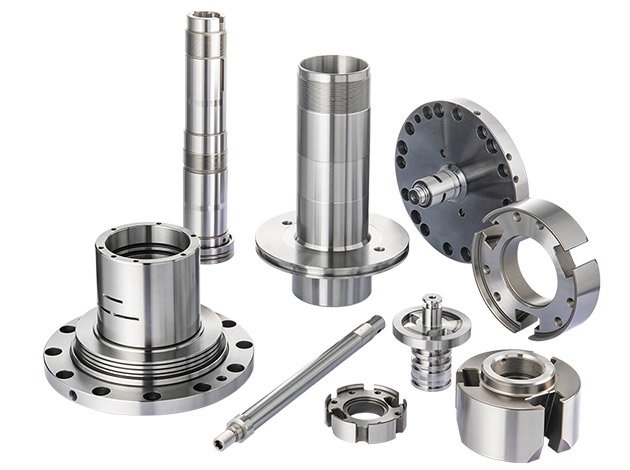
Cost Variables Comparison
| Cost Driver | Impact on Unit Cost | Scales with Volume |
|---|---|---|
| Material machinability | High—affects tool life and cycle time | Linear |
| Tolerance band | Moderate to high—tighter tolerances require slower feeds and more inspection | Linear |
| Setup and programming | High in small batches, negligible in high volume | Inverse |
| Tooling investment | Amortized over batch—high initial, low per-part at volume | Inverse |
| Inspection sampling | Moderate—depends on Cpk and criticality | Sub-linear |
| Cycle time optimization | High—determines throughput and machine utilization | Linear |
How to Request an Accurate Automated CNC Production Cost Quote
A useful quote requires complete technical input. Drawings with GD&T callouts, material specifications, surface finish requirements, and expected annual volume allow suppliers to model true manufacturing cost. Incomplete specifications force suppliers to add contingency, inflating quotes or creating disputes during production.
Specify acceptance criteria and inspection plans. If certain features require 100% inspection or certified measurement reports, state that upfront. If statistical sampling is acceptable, communicate Cpk expectations. Suppliers with ERP-integrated quality systems can model inspection costs accurately when requirements are clear.
Pre-Quote Checklist
- Provide complete 3D models or dimensioned drawings with GD&T
- Specify material grade, heat treatment, and hardness requirements
- Define tolerance bands, surface finish, and critical features
- State expected batch sizes and annual volume
- Clarify inspection requirements and acceptance sampling plans
- Identify any secondary operations—anodizing, plating, assembly—needed
- Request Cpk data or process capability documentation from supplier
- Ask for tooling cost breakdown and amortization schedule
Evaluating Cost vs. Quality Trade-Offs
The lowest quoted price rarely delivers the lowest total cost. Suppliers unable to demonstrate stable process capability may quote aggressively but deliver high reject rates, rework delays, and quality escapes. A slightly higher unit price from a supplier with proven Cpk, documented inspection protocols, and controlled manufacturing systems typically results in lower total program cost.
Request first-article inspection reports, process capability studies, and evidence of dimensional stability over previous batches. Suppliers experienced in medical or aerospace machining can provide this documentation routinely. Suppliers without it are quoting on assumptions, not validated capability.
Frequently Asked Questions
What is the biggest cost driver in automated CNC production?
Material machinability and cycle time are the largest recurring cost drivers. Materials that machine quickly with long tool life reduce both consumable costs and machine time per part. In high-volume production, cycle time directly determines throughput and utilization, making process optimization critical. Setup and tooling costs matter most in smaller batches, but become negligible per part at volumes above several thousand.
How does batch size affect automated CNC production cost?
Setup costs—including programming, fixturing, and first-article inspection—remain nearly constant regardless of batch size, so unit cost drops sharply as volume increases. At low volumes, setup dominates the quote. At high volumes, material, cycle time, and tooling wear become the primary cost components. Suppliers can justify dedicated tooling and process optimization investments only when volume supports amortization over thousands of parts.
Why do tighter tolerances increase automated CNC production cost?
Tighter tolerances require slower cutting speeds, more finishing passes, intermediate inspections, and temperature-controlled environments to maintain dimensional stability. Machines with higher process capability (Cpk) can hold tighter tolerances with fewer rejects, but require more frequent calibration and statistical monitoring. Inspection costs also rise because tighter tolerances demand more precise measurement equipment and longer inspection cycles per part.
Should I request process capability data when comparing quotes?
Yes. Process capability indices (Cpk) indicate whether a supplier can consistently meet your tolerances without excessive scrap or rework. A supplier with documented 1.67 Cpk on similar features demonstrates stable, controlled processes and will likely deliver lower total cost than a supplier quoting lower prices without capability evidence. Request capability studies, control charts, or first-article inspection reports before committing to high-volume orders.
What information do I need to get an accurate automated CNC production cost quote?
Provide complete technical drawings with GD&T, material specifications, surface finish requirements, annual volume projections, and inspection acceptance criteria. Include details on secondary operations like heat treatment or finishing. Specify which features are critical and require tighter statistical control. The more complete your technical package, the more accurately suppliers can model tooling costs, cycle time, and inspection requirements, reducing contingency padding in quotes.
How do suppliers price tooling and fixtures in high-volume quotes?
Tooling costs are typically amortized over the expected production volume. Custom fixtures, dedicated cutting tools, and automation integration require upfront investment but reduce per-part cycle time in mass production. Suppliers may quote tooling as a separate line item or build amortization into unit price. Always request a breakdown showing tooling cost, expected tool life, and amortization schedule so you can evaluate total program cost accurately.
Conclusion
Automated CNC production cost reflects the interplay of material properties, tolerance requirements, batch volume, tooling strategy, cycle time efficiency, and quality verification methods. Reliable quotes require complete technical specifications and suppliers with demonstrated process capability. Procurement teams evaluating quotes should prioritize evidence of stable manufacturing processes, documented Cpk, and transparent cost modeling over lowest unit price alone. For detailed technical review of your production requirements, submit your drawings for a comprehensive cost breakdown.
Sources
- Protolabs: Online CNC Machining Service and Automated Quoting – https://www.protolabs.com/services/cnc-machining/
- Xometry: The Complete Guide to CNC Machining – https://xometry.pro/en-uk/articles/complete-guide-to-cnc/