
- Shaft
- Molds&Tools
- Hydraulics And Pump
- Hair transplant needle
- Hydraulics And Pump
- Precision CNC Shaft Machining Manufacturer for High Performance Applications
- Energy Industry CNC Machining Parts Supplier
- Aerospace Structural Components for OEM Programs
- Aerospace Structural Components for OEM Programs
- Automotive & EV CNC Machining Parts Supplier for OEM and Tier 1
- Medical Device CNC Machining Services
How ERP Systems Ensure Quality Control in CNC Mass Production

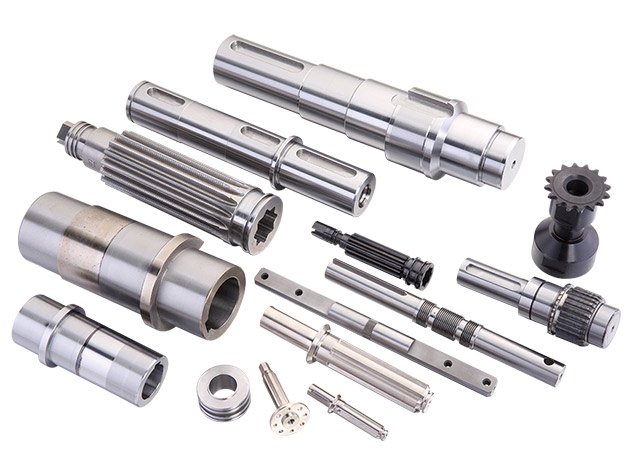
How ERP Systems Ensure Quality Control in CNC Mass Production
For global OEMs and Tier 1 suppliers, quality control in CNC mass production is no longer limited to inspecting finished components. Consistent quality depends on how effectively a manufacturer connects engineering data, production planning, machining, inspection, supplier management, and logistics. An enterprise resource planning system, or ERP, provides the digital structure required to control these activities as one traceable process.
At IndustryApex Technology, operating through the IndustryApex CNC platform, ERP is part of a fully controlled precision manufacturing system developed through more than 30 years of manufacturing experience. It helps transform customer specifications into repeatable production workflows for demanding parts used in aerospace, medical equipment, hydraulics, automotive systems, industrial machinery, and other mission-critical applications.
1. Executive Summary
CNC mass production creates a quality challenge: thousands or millions of components must meet the same dimensional, material, surface, and functional requirements across multiple machines, shifts, batches, and suppliers. Without connected data, small deviations can remain hidden until they cause scrap, delayed delivery, assembly problems, or field failures.
ERP systems reduce this risk by establishing a single source of truth for part revisions, bills of materials, routings, work instructions, inspection plans, tooling requirements, material certificates, nonconformance records, and shipment status. When integrated with manufacturing execution and quality processes, the ERP system creates a digital chain of custody from purchase order to finished product.
The most important quality benefits include controlled document revisions, approved supplier management, lot and batch traceability, real-time production visibility, inspection scheduling, statistical process control, corrective action management, and auditable records. These capabilities allow manufacturers to move from reactive inspection to preventive quality management.
For supply chain leaders, ERP also improves delivery reliability. It links demand forecasts and customer schedules with available capacity, raw material inventory, machine loading, inspection resources, and logistics planning. The result is not merely a more organized factory. It is a more predictable manufacturing and supply chain system.
2. Technical Deep Dive
Quality begins with controlled engineering data
In CNC production, the released drawing, three-dimensional model, tolerance table, material specification, surface finish requirement, and special process instruction must remain synchronized. An ERP system controls these records through revision management. Only approved versions can be attached to production orders, while obsolete files are removed from active workflows or clearly marked as superseded.
This is essential when a customer changes a bore tolerance, alloy grade, coating requirement, or inspection characteristic. The ERP system can define an effective date or production lot from which the new revision applies. Production planners, machinists, inspectors, and purchasing teams therefore work from the same approved information.
Routing and process control
A CNC component is usually created through a sequence of operations rather than a single machining cycle. The routing may include material preparation, turning, milling, five-axis machining, EDM, deburring, heat treatment, precision grinding, cleaning, surface treatment, final inspection, and packaging. ERP records the approved sequence and identifies the resources required at each stage.
Each operation can include setup instructions, machine requirements, cutting tool information, fixture identification, inspection frequency, and acceptance criteria. This standardization reduces dependence on informal knowledge and makes production more repeatable across machines and shifts. It also helps engineering teams compare the planned process with actual performance and identify where variation is introduced.
For complex work, the ERP environment can connect with CAD/CAM, shop-floor data collection, quality software, and machine monitoring platforms. This integration allows released CNC programs and inspection documents to be associated with the correct work order, part number, and revision.
Material and lot traceability
Material control is a foundational quality requirement. ERP systems record supplier, material grade, heat number, certificate of conformity, receiving inspection results, and inventory location. When material is issued to a production order, the system can associate the raw stock with the finished component lot.
This traceability is particularly valuable for aerospace and medical applications, where customers may require evidence of material origin and process history. It also supports rapid containment. If a material certificate, supplier batch, or incoming inspection result is later questioned, the manufacturer can identify affected work orders and shipments without placing unrelated inventory on hold.
Inspection planning and SPC
ERP-based quality control connects inspection requirements to the production routing. First-article inspection, in-process measurement, final inspection, and sampling plans can be scheduled according to part criticality and customer requirements. Inspectors record measurements against the correct specification, while the system stores results with operator, equipment, date, lot, and work-order information.
When measurement data is connected to statistical process control, manufacturers can monitor trends before a dimension exceeds its tolerance. Control charts, capability indices, and alert thresholds help teams detect tool wear, thermal drift, fixture movement, or machine alignment issues. This enables preventive action, such as offset adjustment or tool replacement, before a large quantity of nonconforming parts is produced.
Nonconformance and corrective action
Quality control is incomplete without a disciplined response to defects. An ERP system can create a nonconformance record when an inspection result falls outside specification. The record can identify the affected quantity, operation, machine, operator, material lot, and customer order. Disposition options may include rework, repair, use-as-is approval, return to supplier, or scrap.
Corrective and preventive action workflows then help determine the root cause. Teams can use structured methods such as five-whys analysis, fishbone diagrams, process capability review, and failure mode analysis. Actions are assigned to responsible owners with due dates and effectiveness checks. This prevents repeated defects from being treated as isolated events.
Capacity, maintenance, and calibration
Production quality is influenced by equipment condition. ERP systems connect preventive maintenance schedules with machine availability and production planning. Maintenance teams can track service history, replacement components, alarms, and downtime. Calibration records for coordinate measuring machines, gauges, torque tools, and other inspection equipment can be controlled in the same environment.
This matters because a measurement is only reliable when the instrument is suitable, calibrated, and used correctly. The system can alert teams before calibration expires and restrict the use of equipment that is out of status. Linking machine maintenance and gauge calibration to production records improves audit readiness and strengthens confidence in inspection results.
3. The ODM & Supply Chain Advantage
IndustryApex Technology’s core identity is that of a supply chain integrator and ODM solution provider. For global OEM and Tier 1 customers, this means more than producing parts to a drawing. It means coordinating engineering interpretation, process development, sourcing, manufacturing, inspection, packaging, and delivery through a controlled operating model.
The manufacturing edge is a fully controlled precision manufacturing system supported by ERP and more than 30 years of experience. This structure allows customer requirements to move through a defined workflow instead of relying on disconnected spreadsheets, emails, or manually maintained production records. ERP data gives commercial, engineering, purchasing, manufacturing, and quality teams a common view of order status and risk.
Supply chain integration is especially important for programs that include multiple processes or specialized materials. IndustryApex Technology combines 3-5 axis CNC machining with EDM, precision grinding, and industrial ceramics capabilities. ERP-based planning helps coordinate these processes, whether they are completed internally or managed through approved partners. It provides visibility into operation completion, outside processing, inspection status, and shipment readiness.
For an ODM project, ERP also supports early manufacturability decisions. Historical routing times, material usage, tooling demand, scrap trends, and process capability data can inform design reviews and cost models. Engineers can recommend tolerance adjustments, datum improvements, material substitutions, or process changes that preserve function while improving yield and supply stability.
Supplier quality is another major advantage. Approved supplier lists, purchase specifications, delivery performance, incoming inspection results, and corrective actions can be analyzed by supplier and commodity. This supports risk-based sourcing rather than price-only purchasing. A supplier with consistent certificates, stable lead times, and strong quality performance may provide greater total value than a lower-cost but less predictable source.
ERP also improves customer communication. Production milestones, inspection completion, material status, and logistics information can be consolidated into accurate updates. When an issue occurs, teams can communicate its scope, containment action, expected recovery, and revised delivery plan using verified data. This transparency is valuable for OEM and Tier 1 procurement teams managing their own customer commitments.
For high-volume programs, the system supports continuous improvement through performance metrics. Useful indicators include first-pass yield, on-time delivery, scrap cost, rework hours, supplier defects, customer complaints, machine utilization, and process capability. These metrics help management prioritize investments in tooling, automation, training, inspection technology, and capacity.
4. Industry Applications
Aerospace and defense
Aerospace parts require rigorous configuration control, material traceability, process documentation, and inspection evidence. ERP helps manage revision-sensitive production for structural components, titanium parts, engine-related hardware, and five-axis machined geometries. Customers evaluating aerospace CNC machining and titanium aircraft parts benefit from a manufacturing partner that can connect technical records with production and quality history.
Medical components
Medical manufacturing depends on controlled materials, validated processes, clean handling, traceable inspection records, and strict change management. ERP supports these controls by linking purchase records, work instructions, inspection data, and release documentation to each lot. For programs involving implants, surgical instruments, and precision device parts, manufacturers can explore ISO-certified CNC machining for medical components.
Hydraulics and fluid control
Hydraulic valves, pump components, sleeves, spools, manifolds, and precision sealing surfaces often require tight dimensional control and reliable surface finishes. ERP connects material lots, machining operations, cleaning requirements, inspection characteristics, and pressure or functional testing. Customers sourcing hydraulic pump parts can use this integrated approach to reduce variation and improve assembly compatibility.
Automotive and industrial equipment
Automotive and industrial programs combine high volumes with aggressive delivery schedules. ERP supports repeatable routings, line-side material planning, tool-life management, capacity balancing, and rapid response to engineering changes. It also helps manufacturers compare quality performance across machines, plants, shifts, and production lots.
Across all these industries, the value of ERP depends on disciplined implementation. Data must be accurate, responsibilities must be defined, and shop-floor users must follow standardized procedures. Technology does not replace manufacturing expertise; it makes that expertise visible, repeatable, and measurable.
5. Call to Action
Quality control in CNC mass production is strongest when engineering, manufacturing, inspection, and supply chain decisions are connected. ERP systems provide the foundation for revision control, traceability, process monitoring, supplier management, corrective action, and on-time delivery. For OEMs and Tier 1 suppliers, this translates into lower quality risk, more predictable production, and stronger evidence of compliance.
IndustryApex Technology combines ERP-supported production control, more than 30 years of precision manufacturing experience, and capabilities in 3-5 axis CNC machining, EDM, precision grinding, and industrial ceramics. Whether the requirement involves a stable production release, an ODM development program, or a complex multi-process supply chain, IndustryApex CNC is positioned to support the complete manufacturing workflow.
Visit the IndustryApex CNC home page to review manufacturing capabilities, or contact IndustryApex Technology with your drawings, material requirements, annual volume, inspection standards, and delivery targets. A structured engineering and supply chain review can identify the right process route, quality controls, and production strategy for your next CNC program.