- Shaft
- Molds&Tools
- Hydraulics And Pump
- Hair transplant needle
- Hydraulics And Pump
- Precision CNC Shaft Machining Manufacturer for High Performance Applications
- Energy Industry CNC Machining Parts Supplier
- Aerospace CNC Machining Parts Manufacturer
- Aerospace CNC Machining Parts Manufacturer
- Automotive & EV CNC Machining Parts Supplier for OEM and Tier 1
- Medical CNC Machining Parts Supplier for Precision Medical Devices

Custom Gear Manufacturing: From Prototyping to Mass Production

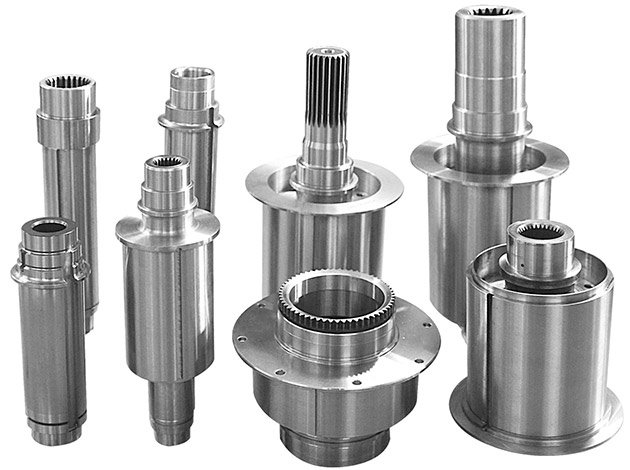
Custom Gear Manufacturing: From Prototyping to Mass Production
For OEMs and Tier 1 suppliers, a custom gear is rarely an isolated component. It is a performance-critical element within a drivetrain, actuator, pump, transmission, positioning system, or automated production asset. Its geometry, material, heat treatment, surface finish, and inspection strategy directly affect torque capacity, noise, backlash, efficiency, service life, and assembly reliability. Dixin Technology, operating through IndustryApex CNC, supports customers with an integrated route from engineering prototype through stable serial production.
1. Executive Summary
Custom gear manufacturing requires disciplined control over the entire product realization process, not simply the ability to machine teeth. A successful program begins with application requirements: transmitted torque, speed, duty cycle, target life, load spectrum, lubrication, temperature, noise limits, installation envelope, and mating-part conditions. Those requirements determine the appropriate gear type, including spur, helical, bevel, worm, splined, internal, or specialty transmission geometries. They also influence material selection, blank design, machining process, heat-treatment route, finishing method, and quality plan.
The transition from prototype to mass production is where many sourcing programs encounter avoidable risk. Early prototypes may demonstrate form and fit while failing to replicate production material condition, heat-treatment distortion, tooth-contact behavior, or cost structure. Conversely, a mass-production process developed without enough prototype learning can introduce late-stage revisions, qualification delays, and costly containment actions. The most reliable approach is a phased engineering strategy that validates product performance and manufacturing capability together.
Dixin Technology combines precision manufacturing expertise with supply-chain integration for global OEM and Tier 1 programs. The organization supports complex gear and transmission-component development through controlled manufacturing processes, engineering collaboration, ERP-based planning, and more than 30 years of precision-production experience. The objective is not only to deliver conforming gears, but also to establish a repeatable, traceable, and scalable supply program that protects launch timing and long-term operating performance.
2. Technical Deep Dive
Gear development should begin with a functional design review. The review confirms the gear ratio, module or diametral pitch, pressure angle, helix angle where applicable, face width, tooth profile modification, root geometry, backlash range, bore and hub interfaces, and mounting datum scheme. In demanding applications, nominal tooth geometry alone is insufficient. Lead crowning, profile relief, flank modifications, and runout control may be necessary to maintain a stable contact pattern under torque, thermal expansion, housing deflection, and normal manufacturing variation.
Material selection must align with both the required mechanical properties and the intended process route. Carbon and alloy steels are common for heavily loaded gears because they can be carburized, nitrided, induction hardened, or through-hardened depending on the operating condition. Carburized alloy steels are often selected for high contact-fatigue resistance and a durable wear surface with a tougher core. Nitrided steels can provide controlled case properties with relatively low distortion. Stainless steels, aluminum alloys, bronze, engineering polymers, and specialty materials may be appropriate where corrosion resistance, weight reduction, non-magnetic behavior, chemical exposure, or low-noise operation takes priority.
Prototype manufacturing serves several purposes. First, it verifies that the design can be produced within the specified envelope. Second, it allows engineering teams to evaluate assembly fit, backlash, mesh quality, torque behavior, and acoustic performance. Third, it provides parts for validation testing before committing to permanent production tooling or a high-volume process. Prototype quantities should be built using production-intent materials and critical process conditions whenever practical. A prototype made from substitute material or without representative heat treatment can give false confidence, particularly when gear distortion, tooth hardness, or fatigue life are key risks.
The production route usually starts with a controlled gear blank. Blank concentricity, bore location, datum surfaces, and stock allowance strongly influence final tooth accuracy. CNC turning and milling can establish these references efficiently, while 3-axis, 4-axis, and 5-axis CNC machining supports complex hubs, integrated flanges, angled features, and difficult access conditions. Gear teeth may then be generated by hobbing, shaping, milling, broaching, skiving, or other suitable methods based on the gear design, lot size, tolerance class, and equipment availability.
Heat treatment is a major engineering control point rather than an afterthought. Carburizing and quenching can increase surface hardness and contact-fatigue strength but may create dimensional change and tooth distortion. Nitriding can reduce distortion but requires material and process compatibility. Induction hardening can target selected tooth regions and may be useful for specific sizes and loading conditions. The manufacturing plan must include machining allowances, fixturing strategy, heat-treatment controls, and post-heat-treatment finishing requirements from the start.
Precision grinding is often used after hardening when the application demands accurate involute form, lead, pitch, bore relation, and surface condition. Grinding can correct controlled heat-treatment variation and improve tooth-contact consistency. EDM provides additional capability for intricate profiles, internal features, hard materials, and precision tooling applications where conventional cutting is limited. The correct process sequence balances required gear quality against throughput, cost, and production robustness.
Inspection must connect directly to function. Typical checks include tooth profile, lead, pitch, runout, total composite error, tooth thickness, helix angle, bore position, concentricity, hardness, effective case depth, surface roughness, and visual condition. For meshing gearsets, contact-pattern and rolling tests may be essential. A capability-focused quality plan uses first-article inspection, in-process checks, calibrated measuring equipment, lot traceability, and statistical monitoring for characteristics that affect assembly and performance.
Design for manufacturability is what converts a technically possible gear into an economically repeatable component. Practical reviews identify features that create unstable cycle times, difficult fixturing, excess tool wear, avoidable secondary operations, or inconsistent inspection. They can also reveal opportunities to standardize material sizes, optimize blank geometry, consolidate features, adjust tolerances to functional need, and select a finishing route suited to annual volume. These decisions should be made early, while revisions are inexpensive and before qualification schedules are fixed.
3. The ODM & Supply Chain Advantage
Global OEM and Tier 1 procurement teams need more than a shop that can quote a drawing. They need a supplier that can convert technical requirements into a managed production system. Dixin Technology acts as a supply-chain integrator and ODM solution provider, coordinating the engineering, manufacturing, inspection, packaging, and delivery activities required to move custom gear programs from concept to sustained supply.
This model is especially valuable when a gear program combines several specialized disciplines. A typical component may require CNC-machined blank features, generated teeth, controlled heat treatment, precision grinding, inspection of complex geometry, protective finishing, and export-ready packaging. Managing each stage separately can create handoff risk, incomplete traceability, inconsistent revisions, and unclear ownership when problems occur. A controlled manufacturing system provides a single operational framework for material planning, process documentation, production scheduling, quality records, and shipment coordination.
Dixin Technology’s manufacturing edge is built on a fully controlled precision manufacturing system supported by ERP management and more than 30 years of experience. ERP-based control improves visibility across purchase orders, materials, work orders, production status, inspection records, and delivery commitments. For OEM sourcing teams, this contributes to clearer communication, better planning accuracy, and faster response when demand, engineering, or logistics requirements change.
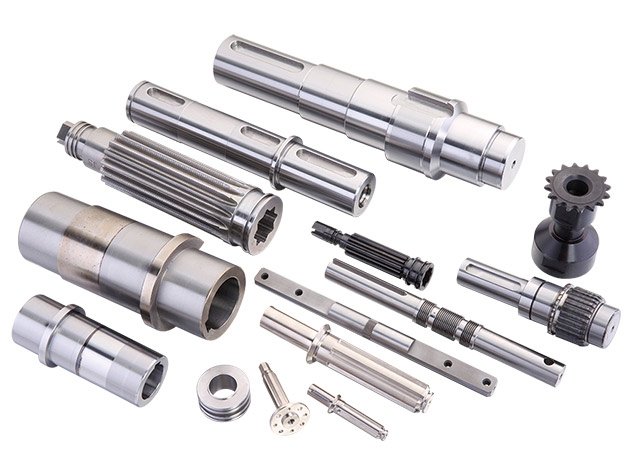
Its technology capabilities include 3-axis through 5-axis CNC machining, EDM, precision grinding, and industrial ceramics. This range matters because custom gear assemblies frequently include more than toothed parts. They may involve shafts, sleeves, bearing seats, housings, carriers, valve interfaces, ceramic wear elements, or precision mating components. Coordinating these parts under one engineering and supply framework reduces interface risk and makes it easier to protect critical relationships such as coaxiality, runout, sealing locations, and assembly stack-up.
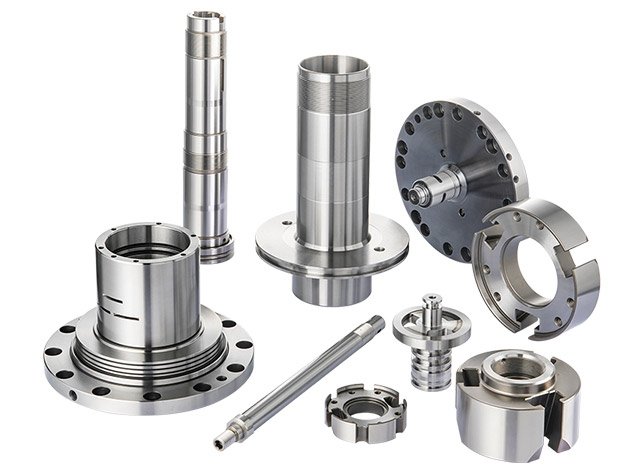
The ODM advantage begins before production. Dixin Technology can support design-for-manufacturability discussion, material and process recommendation, tolerance review, prototype planning, and inspection definition. During ramp-up, the focus shifts toward repeatable fixturing, process validation, first-article approval, capacity alignment, quality control, and logistics planning. In mature production, the focus becomes ongoing capability, traceability, inventory coordination, controlled engineering changes, and cost optimization without compromising the validated functional requirements.
For international programs, supplier selection should also account for communication discipline and documentation quality. Clear revision control, drawings, inspection reports, certificates, packing standards, labeling requirements, and agreed corrective-action methods are as important as machining capability. A dependable partner creates a transparent operating model in which engineering, quality, procurement, and logistics stakeholders can make decisions using current, consistent information.
4. Industry Applications
Custom gears and transmission components support diverse industrial systems, but each sector emphasizes different risks. In aerospace systems, weight, fatigue resistance, precision, material traceability, and controlled manufacturing documentation are central requirements. Components used in aerospace equipment may include actuation gears, drive mechanisms, positioning assemblies, and structural transmission interfaces. Learn more about Dixin Technology’s aerospace CNC machining and precision aircraft parts capabilities.
Medical and laboratory equipment often requires compact, quiet, corrosion-resistant transmission solutions. Precision gears can be used in surgical devices, diagnostic instruments, automation systems, and controlled-motion assemblies. Requirements may include fine surface finish, cleanability, material certification, and tight control over burrs and particulate generation. For related precision-component needs, review the ISO-certified CNC machining services for medical components.
Fluid-power equipment relies on accurately matched rotating and linear components. Gear-driven pumps, hydraulic actuators, valve systems, and industrial power units depend on dimensional stability, controlled surface finish, pressure-compatible material selection, and dependable sealing interfaces. Dixin Technology also provides support for hydraulic pump parts and precision fluid-control components, enabling more integrated sourcing for equipment builders.
Other common applications include automotive and commercial-vehicle transmissions, robotics, industrial automation, construction machinery, agricultural equipment, energy systems, packaging machinery, semiconductor equipment, and heavy-duty gearboxes. Across these sectors, the technical priorities differ, but the sourcing objective is consistent: receive parts that meet functional requirements, arrive reliably, and remain stable through the full production lifecycle.
5. Call to Action
Whether you are validating a new transmission design, qualifying a second source, resolving a quality issue, or preparing a gear program for serial production, Dixin Technology can help define a practical manufacturing path. Share your drawing, 3D model, material requirement, annual volume, quality documentation needs, and application conditions so the engineering team can evaluate the appropriate process route.
Contact Dixin Technology / IndustryApex CNC to discuss custom gear manufacturing, precision transmission components, prototype builds, and scalable OEM supply solutions.