- Shaft
- Molds&Tools
- Hydraulics And Pump
- Hair transplant needle
- Hydraulics And Pump
- Precision CNC Shaft Machining Manufacturer for High Performance Applications
- Energy Industry CNC Machining Parts Supplier
- Aerospace CNC Machining Parts Manufacturer
- Aerospace CNC Machining Parts Manufacturer
- Automotive & EV CNC Machining Parts Supplier for OEM and Tier 1
- Medical CNC Machining Parts Supplier for Precision Medical Devices
Industrial Ceramics Machining: Zirconia and Alumina Applications for OEM Supply Chains

Industrial Ceramics Machining: Zirconia and Alumina Applications for OEM Supply Chains
1. Executive Summary
Industrial ceramics have become critical engineered materials for OEMs and Tier 1 suppliers operating where conventional metals reach their performance limits. Zirconia and alumina components provide combinations of hardness, wear resistance, corrosion resistance, electrical insulation, thermal stability, and dimensional durability that are difficult to achieve with steel, aluminum, titanium, or engineering polymers alone. Their value is especially clear in semiconductor equipment, fluid-control assemblies, medical devices, aerospace subsystems, automation, chemical processing, and precision instrumentation.
However, the material advantages of ceramics create a manufacturing challenge. Their hardness and brittleness demand specialized process control from material selection through sintering, diamond grinding, inspection, packing, and shipment. A ceramic component that appears simple in a drawing can require tightly coordinated decisions on green machining, sintered-state machining, tolerance allocation, surface finish, feature geometry, edge treatment, and metrology. Improper process planning can create microcracks, chipped edges, excessive lead times, poor yield, or a part that meets dimensional requirements but fails under service loading.
Dixin Technology, operating through IndustryApex CNC, supports global manufacturing programs with industrial ceramics machining and integrated precision production. By combining CNC machining, EDM, precision grinding, controlled quality systems, and supply-chain coordination, Dixin Technology helps customers specify and source ceramic parts that are engineered for repeatable production rather than one-off feasibility. This article explains how zirconia and alumina differ, where each material is most effective, and how an ODM-oriented supply partner can reduce technical and commercial risk across the procurement cycle.
2. Technical Deep Dive
Zirconia and alumina are both advanced oxide ceramics, but they solve different engineering problems. Material selection should begin with the operating environment and the functional failure mode, not simply the highest advertised hardness or strength value. Designers should evaluate mechanical loading, contact stress, thermal cycling, media exposure, electrical requirements, cleanliness standards, allowable mass, joining method, and inspection criteria before selecting a ceramic grade.
Zirconia: Toughness for Demanding Mechanical Contact
Zirconia, commonly supplied as yttria-stabilized zirconia or Y-TZP, is valued for unusually high fracture toughness relative to other engineering ceramics. Transformation toughening can help resist crack propagation, making zirconia a strong candidate for components exposed to impact, intermittent contact, high bearing loads, and cyclic mechanical stress. It also offers excellent wear resistance, low thermal conductivity, corrosion resistance, and a smooth, dense surface after proper grinding and polishing.
Typical zirconia applications include valve seats, plunger elements, pump components, guide pins, rollers, cutting tools, wear sleeves, sealing faces, insulating parts, and medical components. Its strength and toughness make it particularly useful where a brittle ceramic failure would be unacceptable. Nevertheless, zirconia is not a universal substitute for metal. It has a higher density than alumina, may require careful consideration in elevated-temperature or steam-aging environments depending on grade, and requires feature design that respects ceramic stress concentration behavior.
Alumina: Hardness, Insulation, and Cost-Effective Stability
Alumina is one of the most widely used industrial ceramics because it balances high hardness, excellent electrical insulation, corrosion resistance, thermal stability, and commercially practical material availability. Grades commonly range from approximately 90% to 99.8% alumina, with purity affecting density, wear performance, electrical characteristics, thermal behavior, and cost. High-purity alumina is frequently used where contamination control, dielectric performance, and stable high-temperature behavior are primary requirements.
Compared with zirconia, alumina is generally harder and more rigid but less fracture-tough. It performs well in wear pads, nozzles, insulating fixtures, semiconductor handling components, metering elements, ceramic substrates, pump liners, guide parts, and chemical-process equipment. For high-volume production, alumina can offer a favorable cost-to-performance ratio when its lower tolerance for shock and tensile stress is accommodated in the component design.
Machining and Tolerance Strategy
Machining ceramics is fundamentally different from milling ductile metals. Finished ceramic material is typically processed using diamond wheels, diamond tools, lapping, polishing, ultrasonic methods, or specialized grinding operations. Material removal must be controlled to limit localized heat, subsurface damage, chipping, and residual stress. Complex geometry may be partially created before sintering, when the ceramic body is softer, followed by precision grinding after sintering. The tradeoff is shrinkage management: sintered dimensions depend on carefully controlled material batches and process data.
Design for manufacturability is therefore essential. Internal corners should be relieved where functionally possible, sharp edges should receive defined chamfers or radii, and ultra-thin walls should be validated against handling and service loads. Critical dimensions should be identified based on assembly function rather than applied indiscriminately across a drawing. Diameter, concentricity, flatness, parallelism, surface roughness, and sealing contact requirements must be linked to the intended manufacturing process and inspection method. A supplier should also confirm whether dimensions apply in the green state, sintered state, or final ground state.
For dynamic sealing and fluid systems, surface finish can be as important as nominal size. A ceramic plunger or valve seat may need a controlled roughness profile to achieve predictable leakage, friction, and wear performance against the mating material. For electrical insulation, porosity, cleanliness, and metallization compatibility may be more important than an extremely tight geometric tolerance. These distinctions reinforce why ceramic sourcing requires engineering engagement early in the design cycle.
3. The ODM & Supply Chain Advantage
For global OEMs and Tier 1 suppliers, industrial ceramic sourcing is not only a material-selection exercise. It is a supply-chain control problem involving technical interpretation, supplier qualification, production visibility, quality documentation, logistics reliability, and lifecycle support. Dixin Technology serves as a supply-chain integrator and ODM solution provider, aligning ceramic production with the broader mechanical system instead of treating the ceramic part as an isolated purchase order.
With more than 30 years of manufacturing experience, Dixin Technology operates a fully controlled precision manufacturing system supported by ERP-driven planning and traceability. This structure supports material and process coordination, capacity planning, order tracking, inspection control, and responsive communication across prototype, pilot, and production stages. It is particularly valuable for customers managing multi-part assemblies where ceramic components interface with machined metals, elastomers, coatings, or purchased hardware.
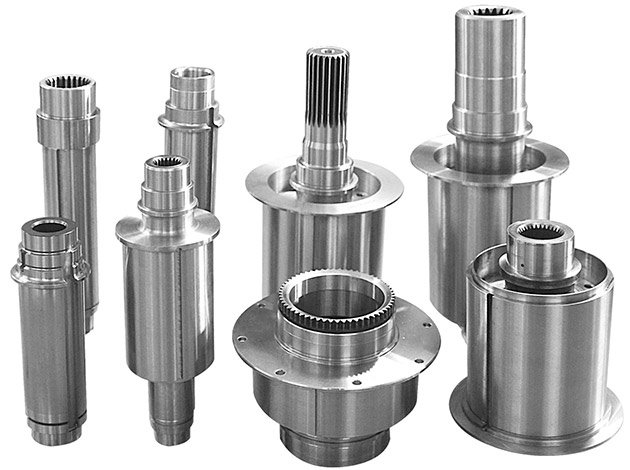
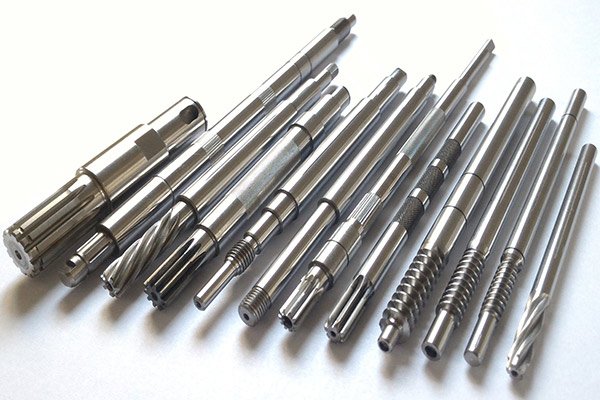
The manufacturing platform includes 3-axis through 5-axis CNC machining, EDM, precision grinding, and industrial ceramics capabilities. This breadth allows Dixin Technology to assess the complete part family and recommend a practical manufacturing route. Ceramic wear elements may require precision grinding, while mating housings, shafts, retainers, or structural interfaces may be produced through CNC machining and EDM. Consolidating these requirements through an experienced partner reduces interface risk, avoids duplicated technical communication, and improves accountability for assembly-critical dimensions.
ODM support is especially valuable when a customer has a performance target but needs assistance refining geometry, material grade, tolerances, surface specifications, and process documentation. The objective is not unnecessary redesign. It is to identify changes that improve yield, inspection repeatability, lead time, and service life while preserving functional requirements. For example, a revised edge break, a more realistic flatness callout, or a better-defined mating surface can materially improve ceramic manufacturability.
Procurement teams also benefit from a supplier model that connects engineering decisions to commercial outcomes. Ceramic manufacturing can involve longer raw-material preparation, sintering cycles, specialized tooling, and higher scrap sensitivity than conventional machining. Early supplier involvement enables clearer lead-time planning, economically appropriate lot sizing, packaging specifications that protect brittle components, and quality plans matched to risk. Dixin Technology can help customers establish a stable transition from engineering samples to recurring supply, including documentation expectations, change control, and incoming-quality alignment.
4. Industry Applications
Semiconductor and electronics: Alumina is frequently selected for insulating fixtures, wafer-processing supports, high-purity handling parts, nozzles, and electrical isolation elements. Zirconia may be used in wear-intensive guides and precision motion interfaces. In these environments, material purity, particulate control, surface condition, and repeatability can be as critical as dimensional accuracy.
Fluid control, hydraulics, and pumps: Zirconia and alumina are effective in corrosive, abrasive, or low-lubricity media. Ceramic plungers, valve seats, balls, sleeves, liners, nozzles, and metering parts can extend service life by resisting erosion and adhesive wear. Dixin Technology’s experience with hydraulic pump parts supports integrated sourcing where ceramic sealing or wear components must work with precision-machined metallic housings and shafts.
Medical and laboratory equipment: Zirconia provides strength, biocompatibility, corrosion resistance, and a polished surface suitable for selected medical and laboratory applications. Alumina offers stable insulation and wear properties for specialized devices. For controlled manufacturing programs, customers can review Dixin Technology’s capabilities for ISO-certified medical CNC machining alongside ceramic part requirements.
Aerospace and advanced systems: Ceramic components can serve in high-temperature, electrically insulating, wear-resistant, or corrosion-exposed positions within aerospace-adjacent equipment and advanced mechanical systems. Qualification requirements are typically stringent, making material traceability, dimensional control, inspection records, and controlled change management indispensable. Dixin Technology also supports precision programs involving aerospace CNC-machined parts where ceramic and metal components may be sourced as coordinated assemblies.
Automation, chemical processing, and general machinery: Ceramic guide rails, bushings, rollers, wear pads, dosing components, textile guides, cutting elements, and insulating parts improve reliability in repetitive, abrasive, or chemically aggressive operating conditions. The right ceramic grade can reduce maintenance frequency, stabilize process output, and lower total cost of ownership even when the initial component cost exceeds that of a conventional metal part.
5. Call to Action
Industrial ceramics deliver their greatest value when material selection, component geometry, finishing process, inspection criteria, and supply planning are developed together. Dixin Technology helps OEMs and Tier 1 suppliers turn zirconia and alumina requirements into repeatable, production-ready components supported by precision manufacturing and coordinated global supply.
For a technical review of your ceramic drawings, application conditions, tolerance stack, material options, or production forecast, contact Dixin Technology. Our team can assess the manufacturability of individual ceramic parts or integrated assemblies involving CNC-machined metals, precision grinding, and specialized industrial ceramic processes.