- Shaft
- Molds&Tools
- Hydraulics And Pump
- Hair transplant needle
- Hydraulics And Pump
- Precision CNC Shaft Machining Manufacturer for High Performance Applications
- Energy Industry CNC Machining Parts Supplier
- Aerospace CNC Machining Parts Manufacturer
- Aerospace CNC Machining Parts Manufacturer
- Automotive & EV CNC Machining Parts Supplier for OEM and Tier 1
- Medical CNC Machining Parts Supplier for Precision Medical Devices

Cold Heading Tooling vs. CNC Machining: Choosing the Right Process for High-Volume Precision Parts

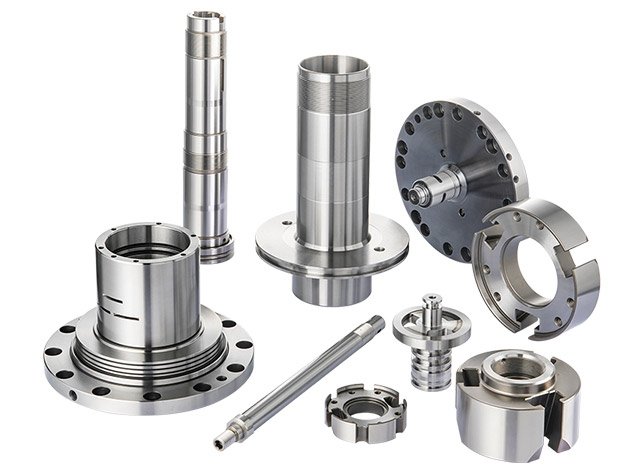
Cold Heading Tooling vs. CNC Machining: Which Is Right for Your Project?
For OEMs and Tier 1 suppliers, selecting between cold heading tooling and CNC machining is a manufacturing decision with direct consequences for unit cost, lead time, mechanical performance, tooling investment, and supply chain resilience. Both processes can produce high-quality precision components, but they solve different production problems. Cold heading is highly efficient for large volumes of relatively standardized fasteners and rotational parts, while CNC machining offers exceptional flexibility for complex geometries, tight tolerances, prototypes, and lower-volume production.
Dixin Technology, operating through IndustryApex CNC, helps global customers evaluate these trade-offs as part of a broader ODM and supply chain strategy. The right answer is rarely based on machine capability alone. It depends on part geometry, annual demand, material behavior, dimensional requirements, secondary operations, qualification needs, and the total cost of ownership over the product life cycle.
1. Executive Summary
Cold heading forms metal wire or bar stock through controlled plastic deformation inside precision dies. Because the process shapes material rather than removing it, it can deliver excellent material utilization, high production rates, and favorable grain flow. These advantages make it suitable for high-volume screws, rivets, pins, sleeves, bolts, and other parts with repeatable profiles. However, cold heading requires dedicated tooling, careful material selection, and sufficient production volume to justify the initial engineering and die costs.
CNC machining removes material using computer-controlled cutting tools. It supports a wide range of metals, engineering plastics, and specialty materials, and can produce internal features, complex contours, threads, slots, pockets, and precision interfaces without the need for forming dies. CNC is therefore a strong option for prototypes, low-to-medium volumes, frequent design changes, and components with geometries that are difficult to form.
As a practical rule, cold heading is often the better choice when demand is high, the design is stable, and the geometry is compatible with progressive forming. CNC machining is generally preferable when flexibility, dimensional control, short development cycles, or geometric complexity is more important than maximum throughput. Hybrid production can also be effective: a near-net-shape cold-headed blank may be followed by CNC turning, milling, grinding, or thread finishing to achieve final specifications.
Project teams should compare both processes using a complete cost and risk model. The analysis should include raw material yield, tooling amortization, cycle time, inspection, scrap, secondary operations, inventory requirements, supplier capacity, and future engineering changes.
2. Technical Deep Dive
How cold heading works
Cold heading, also called cold forming or cold forging, uses a series of dies and punches to reshape a cut slug or wire segment at room temperature. The material is forced into the die cavity through upsetting, extrusion, pointing, heading, or other forming actions. Progressive stations can create multiple features in sequence, allowing a complete component to be produced in a fraction of a second for some applications.
The process is particularly effective with ductile materials such as low-carbon steel, stainless steel, aluminum, copper alloys, and selected nickel-based materials. The workpiece must have suitable elongation, yield behavior, surface quality, and metallurgical consistency. Lubrication is also critical because friction affects forming load, die life, surface finish, and dimensional stability.
A primary technical benefit is material efficiency. The process can achieve near-net-shape production with limited chips or scrap. In addition, deformation can improve grain orientation and work hardening in selected regions, potentially improving fatigue resistance and strength. These benefits are valuable for safety-critical fasteners, load-bearing pins, and high-volume automotive or industrial components.
Cold heading tooling considerations
Cold heading performance depends heavily on die design and tool material. Dies must withstand repeated compressive loads, impact, friction, and thermal effects generated during continuous operation. Tungsten carbide inserts, hardened tool steels, coatings, and carefully engineered backing systems are commonly used to balance wear resistance and toughness.
Tooling development requires more upfront engineering than standard CNC programming. Engineers must evaluate billet volume, reduction ratios, forming sequence, fill behavior, flashing, springback, stress concentration, and ejection. Poorly designed tooling can cause laps, cracks, underfill, dimensional drift, premature die failure, or difficult downstream processing. For this reason, process simulation, trial runs, and first-article validation are important before full-rate production.
Cold heading can achieve tight and repeatable dimensions, but not every final feature should be formed directly. Critical bearing surfaces, precision bores, complex threads, and demanding concentricity requirements may require secondary turning, grinding, rolling, or inspection operations. The actual manufacturing route should therefore be evaluated as a complete process chain rather than as a single forming step.
How CNC machining works
CNC machining uses digital programs to control cutting tools across one or more axes. Turning is efficient for cylindrical parts, while milling supports prismatic features, angled surfaces, pockets, slots, and complex three-dimensional contours. Multi-axis machining can reduce setups and improve positional accuracy between features. CNC turning centers with live tooling can combine operations that would otherwise require separate equipment.
The major advantage of CNC machining is design freedom. A component can be produced directly from a CAD model without manufacturing a dedicated forming die. This shortens the path from design release to prototype and makes CNC practical for engineering validation, customization, spare parts, and products with uncertain demand. Tooling changes are also generally simpler because programs, fixtures, cutting tools, and workholding methods can be adjusted without redesigning an entire die set.
CNC does have limitations. Material is removed rather than redistributed, so chip generation and raw material waste can be significant for parts machined from oversized bar, billet, or plate. Cycle times may also increase with deep cavities, difficult materials, tight surface-finish requirements, or extensive inspection. For very high annual volumes, the recurring labor, machine time, and consumable costs may exceed those of a properly designed cold heading process.
Comparing cost, volume, and risk
Cold heading normally has higher non-recurring costs because dies, punches, process trials, and forming validation are required. Once production is stable, however, the unit cost can be very low. CNC usually has lower initial tooling cost but higher variable cost per part. The break-even point depends on part complexity, material price, annual demand, machine utilization, secondary operations, and the expected production life.
Lead time must be considered in two stages. CNC often provides the fastest route for prototypes and early production because programming and fixturing can begin quickly. Cold heading may require additional development time initially, but it can deliver much shorter cycle times after qualification. If a product is expected to remain unchanged for several years, this initial investment may be justified.
Dimensional requirements also influence the decision. CNC machining is well suited to close tolerances, controlled surface finishes, and features requiring direct interpolation. Cold heading can be highly accurate and consistent, but accuracy depends on material condition, die wear, forming loads, temperature, and the stability of the complete line. A hybrid process may provide the strongest balance when the basic shape can be formed economically and only selected interfaces require precision machining.
3. The ODM & Supply Chain Advantage
Process selection becomes more valuable when it is connected to design engineering, tooling, production control, and supply chain management. Dixin Technology operates as a supply chain integrator and ODM solution provider for global OEMs and Tier 1 suppliers. This role allows manufacturing decisions to be evaluated against the complete product requirement rather than against an isolated operation.
Dixin Technology maintains a fully controlled precision manufacturing system supported by ERP-based production management and more than 30 years of manufacturing experience. ERP visibility helps coordinate material planning, tooling status, work orders, quality records, inventory, and delivery commitments. For customers managing multiple part numbers or global programs, this integrated structure can reduce communication gaps and improve schedule predictability.
The manufacturing edge includes 3-axis, 4-axis, and 5-axis CNC machining, EDM, precision grinding, and industrial ceramics. These capabilities support both direct CNC production and secondary operations after cold heading. For example, a cold-formed blank can be machined to final dimensions, ground for a critical fit, or processed by EDM when a specialized geometry requires controlled electrical discharge machining. Industrial ceramic capability also expands material and application options beyond conventional metallic components.
An ODM partner should contribute during design review, not only after drawings are released. Engineers can assess whether a feature should be formed, machined, ground, or redesigned for manufacturability. They can identify unnecessary tolerances, reduce setups, improve datum structures, select more efficient stock sizes, and recommend a production route that remains stable as volumes increase. This early involvement is especially important for parts that will require qualification, traceability, or long-term repeatability.
Supply chain resilience is another key advantage. A controlled manufacturing network can coordinate tooling fabrication, raw material purchasing, in-process inspection, final inspection, packaging, and shipment under one accountable system. That reduces the risk of fragmented ownership between separate tooling, machining, and finishing suppliers. It also makes engineering changes easier to manage because revisions can be reflected across drawings, process plans, inspection documents, and production records.
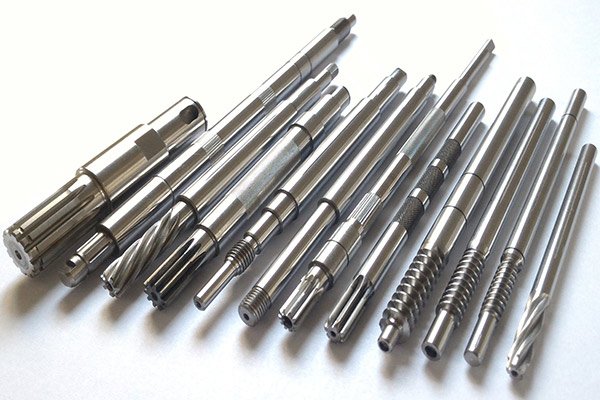
For procurement teams, the relevant comparison is total landed cost and program risk, not simply the quoted price per piece. A reliable evaluation should ask whether the supplier can support prototype quantities, pilot builds, production ramp-up, recurring orders, emergency replenishment, and end-of-life service. It should also confirm inspection equipment, material certifications, process capability data, tool maintenance plans, and corrective-action procedures.
4. Industry Applications
Automotive and drivetrain
Automotive programs often provide the volume needed to justify cold heading tooling. Fasteners, pins, shafts, sleeves, and selected drivetrain components can benefit from high throughput, strong material utilization, and consistent forming. CNC machining remains important for prototypes, complex housings, precision interfaces, and low-volume service parts. A combined route can form the basic profile and machine the features that control assembly alignment or sealing performance.
Aerospace
Aerospace components typically place greater emphasis on traceability, material certification, inspection, lightweight design, and complex geometry. CNC machining is frequently selected for structural parts, titanium components, brackets, fittings, and other features that are difficult to form. Dixin Technology supports customers requiring [a href=”https://cnccomponents.industryapex.com/aerospace-cnc-machining-titanium-aircraft-parts-5-axis-aerospace-parts-aircraft-structural-components/”]aerospace CNC machining and titanium aircraft parts[/a], including 5-axis production and precision structural components.
Medical and laboratory equipment
Medical parts often require high precision, controlled surface conditions, biocompatible materials, and comprehensive documentation. CNC machining is suitable for titanium implants, surgical instruments, housings, and high-precision device parts where geometry and finish are critical. More information is available through Dixin Technology’s [a href=”https://cnccomponents.industryapex.com/iso-certified-cnc-machining-for-medical-components-including-titanium-implants-surgical-instruments-and-high-precision-device-parts/”]ISO-certified CNC machining for medical components[/a].
Hydraulics and fluid control
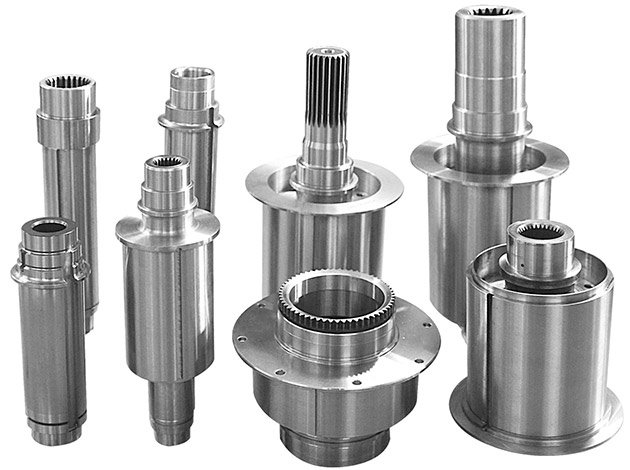
Hydraulic valves, pump components, sleeves, spools, fittings, and other fluid-control parts depend on concentricity, bore quality, sealing surfaces, and repeatable fits. Cold heading may be practical for high-volume basic blanks, while CNC turning and precision grinding are often required for final bores and sealing interfaces. Dixin Technology provides dedicated support for [a href=”https://cnccomponents.industryapex.com/hydraulic-pump-parts/”]hydraulic pump parts[/a] and related precision components.
Industrial machinery and energy
Industrial automation, construction machinery, energy systems, and agricultural equipment use a mixture of standardized and engineered components. Stable high-volume parts can benefit from forming economics, whereas custom shafts, impellers, housings, ceramic elements, and replacement parts are often better suited to CNC machining, EDM, grinding, or a multi-process solution.
A practical selection checklist
- Estimate annual volume, expected growth, and product life.
- Classify the geometry as form-friendly, machining-intensive, or hybrid.
- Review material ductility, work hardening, heat treatment, and surface requirements.
- Identify critical tolerances, datums, threads, bores, and sealing features.
- Compare tooling investment with recurring machining and inspection costs.
- Include scrap, secondary operations, maintenance, inventory, and logistics in the cost model.
- Confirm supplier capacity, quality systems, traceability, and engineering-change support.
5. Call to Action
The choice between cold heading tooling and CNC machining should be based on the full manufacturing route, not a single unit-price comparison. Cold heading is compelling for stable, high-volume parts that can be formed efficiently. CNC machining is the stronger option for complex, low-volume, prototype, and high-mix requirements. In many programs, the best answer is a hybrid process that combines forming productivity with CNC precision.
Dixin Technology can review your drawings, 3D models, material specifications, annual demand, tolerance requirements, and delivery targets to recommend a practical ODM and supply chain solution. Visit the IndustryApex CNC home page to review manufacturing capabilities, or contact the engineering team to discuss tooling, prototype development, production ramp-up, and long-term supply requirements.