- Shaft
- Molds&Tools
- Hydraulics And Pump
- Hair transplant needle
- Hydraulics And Pump
- Precision CNC Shaft Machining Manufacturer for High Performance Applications
- Energy Industry CNC Machining Parts Supplier
- Aerospace CNC Machining Parts Manufacturer
- Aerospace CNC Machining Parts Manufacturer
- Automotive & EV CNC Machining Parts Supplier for OEM and Tier 1
- Medical CNC Machining Parts Supplier for Precision Medical Devices

Precision CNC Machining for EV Motor Housings: Tight Tolerances Explained

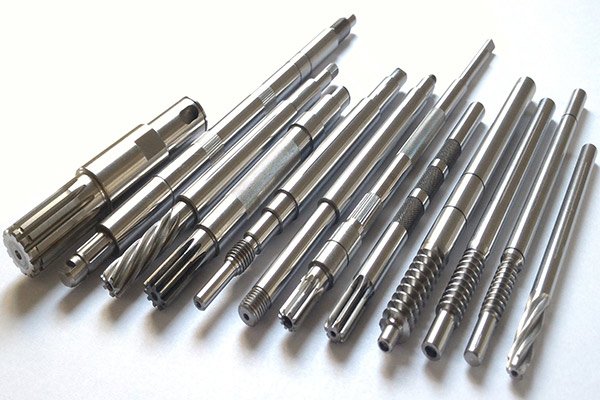
Precision CNC Machining for EV Motor Housings: Tight Tolerances Explained
Electric vehicle motor housings are structural, thermal, and geometric control components. They support the stator, locate bearings, protect electrical assemblies, contain cooling channels, and maintain alignment throughout the operating life of the vehicle. Because an EV traction motor may operate at high rotational speed, temperature cycling, and continuous vibration, small dimensional errors can create noise, vibration, heat generation, efficiency losses, or premature bearing failure.
1. Executive Summary
Precision CNC machining is central to the production of EV motor housings because the housing must hold several critical features within tightly controlled dimensional and geometric limits. These features commonly include the stator bore, bearing seats, rotor axis references, mounting faces, sealing grooves, bolt patterns, cooling passages, and interfaces with the reduction gearbox or vehicle chassis.
In practical manufacturing, “tight tolerance” does not mean applying the smallest possible tolerance to every dimension. It means identifying the features that control motor performance, assigning tolerances according to functional requirements, and building a process capable of holding them consistently. This approach reduces scrap, simplifies inspection, protects production capacity, and supports predictable assembly at global OEM and Tier 1 facilities.
For engineering and procurement teams, the supplier’s value extends beyond machining. Material traceability, fixture design, process capability, coolant and chip control, measurement systems, surface treatment coordination, packaging, and delivery planning all influence the delivered cost and launch risk. Dixin Technology, operating through IndustryApex CNC, supports this broader requirement as a precision manufacturing and ODM partner for demanding industrial components.
2. Technical Deep Dive
Functional Features That Drive Tolerance Requirements
The stator bore is typically one of the most important features in an EV motor housing. It establishes the position of the stator relative to the rotor and influences the designed air gap. Excessive bore variation, roundness error, or coaxiality deviation can produce uneven magnetic performance and localized heating. The correct specification therefore considers diameter, cylindricity, surface finish, and relationship to the bearing seats rather than diameter alone.
Bearing seats require equally careful control. A bearing bore that is too loose may allow movement under torque and thermal expansion; a bore that is too tight can generate excessive installation force or reduce bearing clearance. The fit must be selected according to the bearing type, housing material, operating temperature, load, and assembly method. CNC machining should then control the bore size and its position relative to the motor datum structure.
Mounting faces and gearbox interfaces also affect system alignment. Flatness and parallelism errors can transfer into the rotor axis, gear mesh, or sealing system. Bolt-hole position must be controlled through a stable coordinate system so that fasteners do not force the housing into distortion during assembly. For complex housings, geometric dimensioning and tolerancing is more useful than isolated plus-or-minus dimensions because it communicates how each feature relates to functional datums.
Cooling channels introduce another layer of engineering risk. Water jackets, oil passages, and internal galleries must provide adequate flow area while maintaining wall thickness and pressure integrity. Machining strategy must account for intersecting features, burr formation, residual chips, and the ability to clean and inspect internal passages. Where the design requires sealed covers or plugs, groove geometry and sealing surfaces must be compatible with the selected gasket or O-ring system.
Material and Machining Considerations
Many EV motor housings are manufactured from aluminum alloys because they combine low mass, thermal conductivity, and corrosion resistance. Aluminum is productive to machine, but thin walls and large asymmetric pockets can create distortion when residual stress is released. The process may require controlled roughing, an intermediate stabilization step, and a final finishing operation after the main material removal is complete.
Castings can contain variable stock, porosity, inclusions, or localized hardness changes. Before production approval, the supplier should review casting quality, machining allowance, datum availability, and the effect of heat treatment. A housing designed for billet, die casting, or low-pressure casting may need different fixture concepts and cutting parameters. Engineering teams should also define which surfaces are cosmetic, which are sealing-critical, and which are performance-critical.
Tool selection and cutting conditions influence both accuracy and economics. Stable carbide tooling, appropriate edge preparation, controlled tool wear limits, and optimized coolant delivery help maintain surface quality. High-speed machining can reduce cycle time, but it must be balanced against vibration, thin-wall deflection, and thermal growth. On larger housings, the machine, fixture, tool, and workpiece form one system; accuracy depends on controlling that system as a whole.
Inspection and Process Capability
Inspection planning should begin with the drawing and product risk assessment. Coordinate measuring machines can verify bore locations, datums, hole patterns, flatness, and profile relationships. In-process probing can identify stock conditions, establish work offsets, and detect machining drift before the part reaches final inspection. Air gauges, bore gauges, height gauges, and dedicated functional fixtures can provide faster checks for high-volume features.
Capability studies are especially valuable for critical bores and axis relationships. A process that produces one conforming sample is not necessarily a robust process. Production teams should evaluate variation over time, multiple tools, different shifts, and representative material batches. Control plans, first-article inspection, statistical process control, and documented reaction plans create the evidence required by automotive quality systems and customer audits.
Cleanliness is often underestimated. Chips or abrasive particles left in an oil passage, bearing seat, or sealing groove can damage downstream components. A complete manufacturing route may therefore include deburring, washing, drying, visual inspection, pressure testing, leak testing, and protected packaging. These operations are part of the functional quality of the housing, not optional finishing activities.
3. The ODM & Supply Chain Advantage
EV motor housing programs frequently involve design changes, platform variants, regional sourcing requirements, and demanding launch schedules. A supplier that only quotes a machine cycle may not address the broader program risk. Dixin Technology’s core identity is that of a supply chain integrator and ODM solution provider. This means the engagement can cover manufacturability review, process development, material coordination, machining, inspection, finishing, packaging, and delivery management within one controlled program.
The manufacturing edge is a fully controlled precision manufacturing system supported by ERP and more than 30 years of manufacturing experience. ERP-based production control improves visibility across purchasing, scheduling, inventory, work orders, inspection records, and shipment status. For OEM and Tier 1 procurement teams, this can reduce communication gaps and make capacity, lead time, and change management easier to govern.
Dixin Technology combines 3-axis, 4-axis, and 5-axis CNC machining with EDM, precision grinding, and industrial ceramics capabilities. This range matters when an EV program includes more than one housing variant or requires complementary precision components, tooling, wear parts, insulation elements, or difficult-to-machine interfaces. The same engineering organization can evaluate which process is appropriate for each feature instead of forcing every requirement into a single machining method.
ODM participation is most effective early in the design cycle. A supplier can review wall thickness, corner radii, tool access, datum selection, casting allowance, clamping surfaces, chip evacuation, inspection access, and finishing requirements before the design is frozen. Early design-for-manufacturing decisions can reduce the number of setups, prevent inaccessible tolerances, improve yield, and shorten the time between prototype approval and serial production.
For customers managing multiple technical supply chains, Dixin Technology also brings experience from adjacent precision sectors. Its capabilities for aerospace CNC machining, medical precision components, and hydraulic pump parts reflect established methods for traceability, difficult materials, geometric control, and inspection discipline.
Managing Cost, Capacity, and Continuity
A supply chain analysis should assess total landed cost rather than machining price alone. Relevant factors include material utilization, fixture amortization, tool consumption, inspection time, rework exposure, packaging, freight, inventory policy, and the cost of line stoppage. A supplier with integrated planning can help compare prototype, low-volume, and serial-production routes without losing sight of the final production model.
Business continuity also depends on controlled documentation and repeatable process knowledge. Approved programs should include revision-controlled drawings, inspection standards, tool lists, fixture records, material certificates, nonconformance procedures, and shipment specifications. These controls make it easier to transfer production between machines, support engineering changes, and maintain consistent output as demand grows.
4. Industry Applications
Precision-machined EV motor housings serve several vehicle and industrial applications. In passenger EVs, the housing supports compact traction motors where low mass, low acoustic noise, and high power density are priorities. Tight control of the stator and bearing interfaces helps maintain the air gap and rotor alignment across acceleration, regenerative braking, and temperature changes.
Commercial vehicles and electric buses place greater emphasis on durability, thermal management, and service life. Their motors may operate for long periods under high load, increasing the importance of cooling-jacket integrity, mounting stability, corrosion protection, and consistent bearing fits. Machining and pressure-testing processes must be designed around the expected duty cycle rather than static dimensional compliance.
Electric motorcycles, utility vehicles, and specialty machines often require compact housings with complex interfaces and short development cycles. Five-axis machining can support angled ports, integrated mounting features, and reduced setup counts. For prototype and pilot production, CNC-machined billet housings can also provide a practical bridge before a high-volume casting tool is justified.
Industrial electric drives, robotics, and automated material-handling systems use similar principles even when the housing is not installed in a road vehicle. These applications may require high repeatability, low vibration, compact packaging, and compatibility with gear reducers or servo assemblies. The same datum strategy, inspection logic, and cleanliness controls can be adapted to these products.
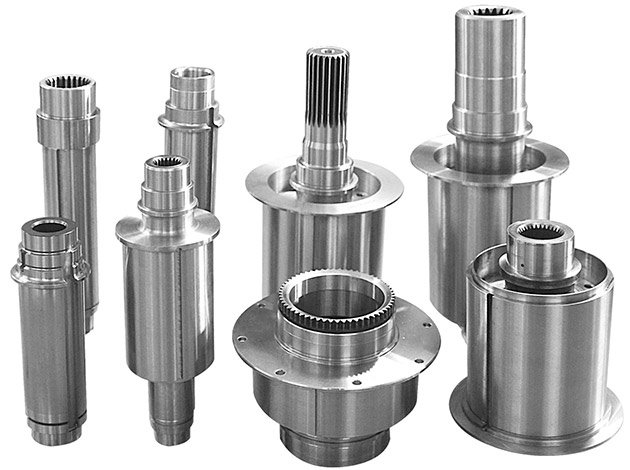
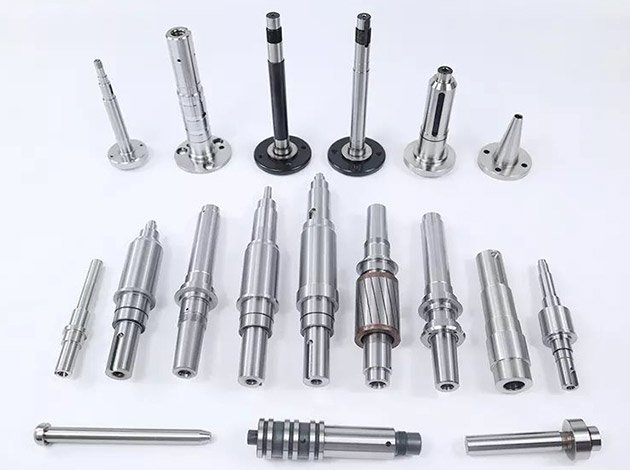
Motor housings may also be produced alongside shafts, covers, flanges, pump elements, and transmission components. Coordinating these parts through one qualified manufacturing partner can simplify assembly validation and reduce interface disputes. It also allows engineering teams to evaluate tolerance stack-up across the complete rotating assembly instead of treating each component as an isolated purchase.
5. Call to Action
Successful EV motor housing production begins with a clear understanding of functional tolerances, material behavior, inspection requirements, and supply chain expectations. Dixin Technology helps global OEMs and Tier 1 suppliers convert complex housing designs into controlled, scalable manufacturing programs supported by CNC machining, EDM, precision grinding, industrial ceramics, ERP visibility, and more than 30 years of experience.
Share your drawings, 3D models, target volumes, material requirements, tolerance standards, and launch schedule with the IndustryApex CNC team. For engineering review, manufacturability feedback, prototype planning, or serial-production sourcing, contact Dixin Technology. Learn more about the company’s precision manufacturing capabilities at the IndustryApex CNC home page.