- Shaft
- Molds&Tools
- Hydraulics And Pump
- Hair transplant needle
- Hydraulics And Pump
- Precision CNC Shaft Machining Manufacturer for High Performance Applications
- Energy Industry CNC Machining Parts Supplier
- Aerospace CNC Machining Parts Manufacturer
- Aerospace CNC Machining Parts Manufacturer
- Automotive & EV CNC Machining Parts Supplier for OEM and Tier 1
- Medical CNC Machining Parts Supplier for Precision Medical Devices
Hydraulic Pump Parts: Ensuring Reliability Through Precision Grinding for OEM Supply Chains

Executive Summary
Hydraulic pump parts operate in one of the most demanding environments in industrial manufacturing. Pressure spikes, heat, contamination, and cyclic loading all work against long service life, so reliability depends on more than material selection alone. It depends on dimensional stability, surface integrity, and the repeatability of every critical machining step. For OEMs and Tier 1 suppliers, that is where precision grinding becomes a decisive process, especially for components that must hold tight tolerances, preserve fluid efficiency, and run with low wear over long duty cycles.
IndustryApex Technology, operating under the IndustryApex CNC platform, approaches hydraulic pump parts as both a manufacturing challenge and a supply chain problem. As a supply chain integrator and ODM solution provider, the company combines fully controlled precision manufacturing, ERP-driven traceability, and more than 30 years of experience to support stable delivery for global programs. Its capabilities span 3-5 axis CNC machining, EDM, precision grinding, and industrial ceramics, which allows it to handle complex component families and the supporting process chain around them.
This article examines why precision grinding matters in hydraulic pump parts, how it protects performance at the component level, and how a controlled ODM model helps industrial buyers reduce risk across sourcing, qualification, and production ramps. For companies evaluating long-term supply partners, the question is not only who can machine the part, but who can sustain consistency across scale, change control, and lifecycle support. For more context on the manufacturing platform, see IndustryApex CNC and the dedicated Hydraulics & Pump capability page.
Technical Deep Dive
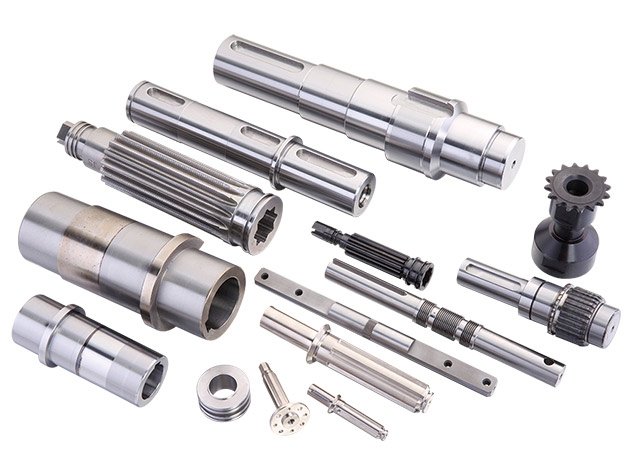
Hydraulic pumps convert mechanical energy into pressurized fluid flow, and every internal interface influences volumetric efficiency, pressure stability, noise, and wear. In practical terms, a pump does not fail because one dimension drifts in isolation; it fails because multiple small deviations combine to increase internal leakage, surface fatigue, friction, or contamination sensitivity. This is why precision grinding is central to the manufacturing of hydraulic pump parts such as shafts, sleeves, spools, pistons, valves, bushings, and mating surfaces.
Grinding is used when conventional turning or milling cannot reliably achieve the required geometry, surface finish, and roundness. Pump components often require tight coaxiality, low runout, and surface finishes that reduce frictional losses while maintaining lubricant film integrity. A ground shaft surface, for example, can improve bearing behavior and sealing performance, while a ground valve or sleeve surface helps control internal leakage paths. In high-pressure systems, even a minor surface defect can accelerate local wear, which then creates particle generation, seal damage, and further abrasion throughout the circuit.
Precision grinding also improves the stability of fit relationships between paired parts. Many hydraulic assemblies rely on close-clearance interfaces where the actual operating behavior is determined by the combined tolerances of two or more components. If a spool, sleeve, and housing are not held consistently, the final assembly may exhibit drift in response time, internal leakage, or uneven wear. The purpose of grinding is not simply to make surfaces smoother; it is to control the functional geometry that the pump depends on under load.
Process control matters as much as machine capability. Hardness variation, residual stress, and thermal distortion can all affect final geometry if the process route is not sequenced correctly. For pump parts made from alloy steels or wear-resistant materials, the typical flow may include rough machining, heat treatment, stress relief, semi-finishing, precision grinding, inspection, and final validation. Each step influences the next. If an OEM expects stable field performance, the supplier must understand where the critical features are located and how to protect them through the full process chain.
Measurement is part of the manufacturing process, not a separate afterthought. Roundness, cylindricity, parallelism, and surface roughness are only meaningful if they are controlled with a documented method and a repeatable gauge strategy. This is especially important in hydraulics because the tolerances are functional, not cosmetic. A part may look acceptable and still fail to deliver pressure consistency if its surface finish or geometry falls outside the real operating window. In a production environment, this means in-process inspection, controlled tooling wear, and disciplined SPC are essential to the reliability target.
Material choice also affects grinding behavior and long-term pump performance. Hardened steels are common for shafts and rotating elements because they offer strength and wear resistance. In more specialized applications, industrial ceramics may be used where extreme wear resistance, corrosion resistance, or low mass are required. The correct choice depends on pressure level, fluid chemistry, operating speed, and lifecycle expectation. IndustryApex Technology’s ability to combine precision grinding with industrial ceramics broadens the solution space for customers that need performance beyond standard metallic components.
The same manufacturing discipline applies across related industries. Aerospace and medical components also rely on surface integrity, process traceability, and controlled dimensional outcomes. For buyers assessing a supplier’s maturity, it is useful to review adjacent capability areas such as Aerospace Parts and Medical Parts. Those sectors impose similar expectations for process control, documentation, and repeatability.
The ODM & Supply Chain Advantage
For hydraulic pump parts, technical capability alone is not enough. OEMs and Tier 1 suppliers need a partner that can manage engineering change, capacity planning, quality gates, and delivery stability across the product lifecycle. That is where an ODM-focused manufacturing model creates value. IndustryApex Technology operates as a supply chain integrator and ODM solution provider, which means it is structured to convert engineering requirements into repeatable production outcomes rather than simply quoting isolated machining jobs.
The manufacturing edge is built on a fully controlled precision manufacturing system supported by ERP. That matters because hydraulic programs often involve multiple part numbers, staggered launch schedules, and recurring design revisions. ERP-linked control helps tie material lots, process steps, inspection records, and shipment status into one accountable system. For industrial buyers, that traceability reduces ambiguity during audits, PPAP-style reviews, and corrective action cycles. It also helps protect ramp-up schedules when demand shifts or customer-specific changes are introduced.
With more than 30 years of experience, the company has built process knowledge that is especially relevant in high-precision supply chains. Long experience does not replace modern equipment, but it does improve decision-making around fixture design, process sequencing, and defect prevention. Combined with 3-5 axis CNC machining, EDM, precision grinding, and industrial ceramics, the platform can support complex geometries, tight tolerances, and durability requirements across a wide range of hydraulic pump components.
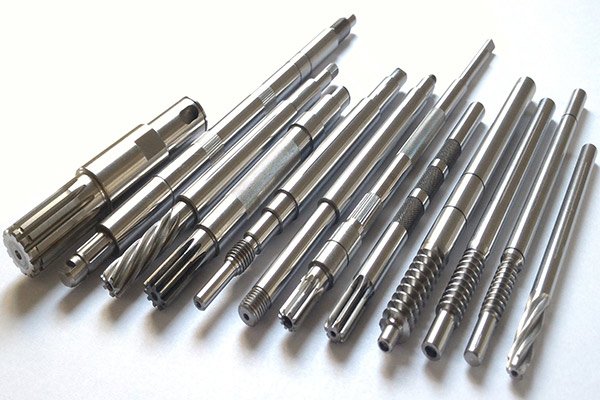
For global OEMs and Tier 1 suppliers, the practical advantage is reduced sourcing fragmentation. Instead of splitting responsibility across multiple vendors for rough machining, heat treatment coordination, grinding, inspection, and final assembly preparation, buyers can work with a partner that integrates these stages within one controlled system. That lowers logistical friction, shortens qualification loops, and improves accountability when performance issues need root-cause analysis.
There is also a strategic supply chain benefit. Hydraulic systems are often embedded in long-life equipment, which means service continuity matters years after initial launch. A supplier that understands the program at the manufacturing and ODM level can support spare-part continuity, revision management, and controlled substitutions when raw material availability changes. That is particularly valuable for industrial customers managing export programs, multinational platform variants, or legacy equipment support.
In this context, precision grinding is not just a finishing method; it is a supply chain quality control tool. It enables the supplier to convert machine capability into field reliability, and it gives the buyer a more predictable cost of ownership. For companies planning new hydraulic platforms or redesigning legacy components, early supplier involvement can prevent later issues in fitting, wear life, and leak performance. The right partner helps close the gap between print and production, which is where many hydraulic programs succeed or fail.
Industry Applications
Hydraulic pump parts are used wherever controlled force and dependable motion are required. In construction machinery, pumps power booms, arms, steering systems, and attachment controls. In agricultural equipment, they support load handling, implement movement, and auxiliary functions under dusty, high-cycle conditions. In industrial automation, hydraulics continue to provide high-force actuation where electric alternatives do not yet match the required load profile. In each case, component reliability is shaped by surface finish, fit consistency, and wear resistance.
The most demanding applications are often those that combine vibration, contamination exposure, and extended duty cycles. Off-highway machinery, material handling platforms, and industrial presses all rely on pump parts that can maintain efficiency over time. When the internal surfaces are not controlled correctly, the result is not only efficiency loss but also noise, temperature rise, and accelerated maintenance intervals. Precision-ground components help reduce these risks by stabilizing the fluid path and limiting wear-induced leakage.
There is also growing overlap between hydraulic systems and adjacent engineering sectors. Aerospace production uses similar process discipline when manufacturing structural and motion-control components, while medical manufacturing requires the same level of traceability and consistency in high-precision device parts. IndustryApex Technology’s broader manufacturing base allows customers to draw on that adjacent expertise when programs require unusual materials, tighter inspection requirements, or more complex geometries.
For buyers reviewing sourcing options, the main decision is whether the supplier can support both the part and the program. Hydraulic pump parts must be designed for actual operating conditions, but they also must fit a supply chain that can sustain volume, documentation, and revision control. A technically competent partner with ODM capability can reduce launch risk and support platform continuity across years of use. That matters just as much as the individual machining tolerances.
Call to Action
If your program depends on hydraulic pump parts with stable dimensional control, durable surface finish, and repeatable delivery, IndustryApex Technology can support evaluation, development, and production through a controlled ODM model. The combination of precision grinding, CNC machining, EDM, and integrated manufacturing control is built for OEM and Tier 1 requirements where reliability is measured in field performance, not just inspection reports.
To discuss specifications, process routes, or supply chain requirements, visit the Hydraulics & Pump page or Contact Us to start a technical review. For broader manufacturing capabilities and related part families, you can also return to the IndustryApex CNC homepage.