
- Shaft
- Molds&Tools
- Hydraulics And Pump
- Hair transplant needle
- Hydraulics And Pump
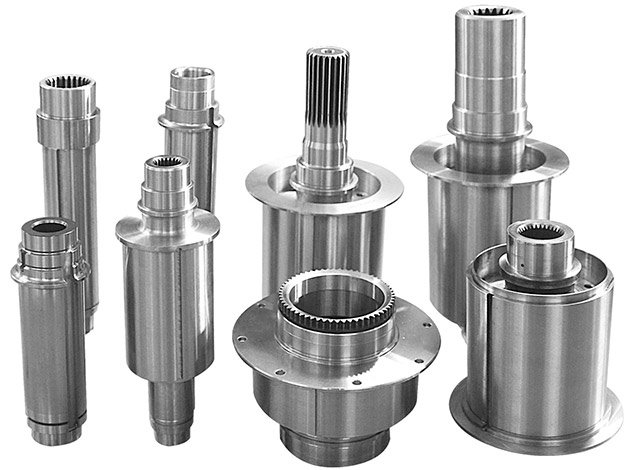
- Precision CNC Shaft Machining Manufacturer for High Performance Applications
- Energy Industry CNC Machining Parts Supplier
- Aerospace Structural Components for OEM Programs
- Aerospace Structural Components for OEM Programs
- Automotive & EV CNC Machining Parts Supplier for OEM and Tier 1
- Medical Device CNC Machining Services
How ERP Systems Ensure Quality Control in CNC Mass Production

How ERP Systems Ensure Quality Control in CNC Mass Production
By IndustryApex Technology | IndustryApex CNC
Executive Summary
For global OEMs and Tier 1 suppliers, CNC mass production quality is not secured by final inspection alone. It depends on controlling the complete path from customer drawing and raw-material receipt to machining, measurement, packing, shipment, and corrective action. Enterprise Resource Planning (ERP) systems provide the operational framework that connects these activities into one controlled manufacturing record.
In a high-volume CNC environment, small process variations can generate costly defects, delivery disruptions, traceability gaps, and supplier-risk exposure. ERP helps manufacturers prevent these issues by standardizing part revisions, routing work orders, allocating approved materials, enforcing inspection plans, recording nonconformities, and maintaining lot-level traceability. When integrated with production scheduling, quality management, purchasing, and inventory control, ERP turns quality from a downstream sorting activity into a managed production discipline.
At IndustryApex Technology’s IndustryApex CNC platform, ERP-supported process control helps align precision manufacturing with ODM and supply chain requirements. The result is a more reliable system for repeatable CNC components, whether the application involves aerospace structures, medical devices, hydraulic systems, industrial machinery, or other high-specification assemblies.
Technical Deep Dive
ERP systems support CNC quality control by establishing a single source of truth for manufacturing data. Instead of relying on disconnected spreadsheets, handwritten travelers, informal machine notes, and isolated inspection records, the ERP platform links the controlled part definition to every production transaction. This is especially important in mass production, where many machines, operators, shifts, suppliers, and inspection stations may contribute to the same customer program.
Revision and Document Control
A CNC part can only be produced correctly when the shop floor uses the current engineering definition. ERP-controlled document management associates the approved drawing revision, CAD/CAM data, bill of materials, manufacturing route, work instructions, inspection requirements, and customer-specific specifications with the part number. When an engineering change order is released, the system can prevent obsolete revisions from being issued to production.
This control reduces a common production risk: machining conforming parts to a superseded drawing. It also provides an auditable record of when a revision became effective, which work orders were affected, and whether existing inventory or work-in-process material requires disposition. For OEM programs with strict configuration-management requirements, this link between engineering and execution is essential.
Controlled Routing and Process Parameters
ERP converts the approved manufacturing plan into a defined sequence of operations. A route may specify material preparation, rough machining, stress relief, semi-finishing, 3-axis or 5-axis CNC machining, EDM, precision grinding, washing, inspection, marking, and packaging. Each operation can be assigned to qualified work centers, with planned cycle times, setup requirements, tooling references, and quality checkpoints.
For repeat CNC production, controlled routing limits process drift. Operators receive the appropriate operation sequence rather than relying on individual interpretation. Production supervisors can see whether lots are waiting at a bottleneck, moving ahead of required inspection, or being processed at an unapproved resource. This provides a practical foundation for maintaining process consistency across shifts and production batches.
Material Traceability and Inventory Status
Material quality begins before a CNC machine starts cutting. ERP systems record purchase orders, approved supplier information, receiving inspections, material certificates, heat numbers, lot numbers, and stock locations. Materials can be assigned quality statuses such as pending inspection, accepted, quarantined, or rejected. Only accepted inventory should be available for issue to a production order.
Once material is issued, ERP traceability can connect the incoming material lot to the finished CNC batch. This creates a genealogy record that supports customer documentation, containment actions, warranty analysis, and regulatory compliance. If a supplier certificate, material property, or plating issue is later identified, the manufacturer can locate affected work orders and shipments quickly rather than launching a broad and expensive recall search.
In-Process Inspection and Statistical Control
Effective quality control requires verification at the point where variation can still be corrected. ERP quality modules can trigger first-article, first-piece, in-process, and final inspection activities based on part number, routing step, batch size, customer requirement, or risk classification. Inspection plans define the characteristics to measure, measurement frequency, sampling level, tolerance limits, gages, and acceptance criteria.
Measured results can be recorded against the production lot, operator, machine, shift, and inspection operation. This information allows quality teams to identify recurring dimensional trends, machine-specific variation, tooling wear, fixture issues, and unstable processes. Statistical process control data becomes more useful when it is connected to actual production context. A diameter trending toward its upper tolerance limit, for example, can be linked to a specific tool life stage or machining center before nonconforming output escalates.
Nonconformance, MRB, and CAPA Workflows
ERP provides a structured method for handling defects. When an inspector identifies a nonconforming condition, the system can place the affected quantity on hold, record the defect code, identify the relevant specification, and initiate a material review board workflow. Authorized personnel can then determine whether the material should be reworked, repaired, used under concession, returned to a supplier, or scrapped.
The value is not merely administrative. A linked nonconformance record prevents suspect material from being accidentally consumed or shipped. It also creates data for corrective and preventive action (CAPA). Quality engineers can use defect history to investigate root causes through methods such as 5 Why analysis, fishbone diagrams, process capability review, and verification of corrective action effectiveness. Over time, ERP data helps management prioritize the quality problems that create the greatest cost, risk, or delivery impact.
Equipment, Calibration, and Production Readiness
Precision CNC output depends on capable equipment and valid measurement systems. ERP-supported maintenance and calibration records help ensure that machining centers, EDM equipment, grinding machines, CMMs, micrometers, bore gages, and specialty fixtures are available and suitable for use. Calibration status can be checked before an inspection is completed, while preventive maintenance scheduling helps reduce unplanned downtime and process instability.
Production readiness also includes operator qualifications, approved tools, fixture verification, and first-off approval. By treating these items as controlled manufacturing requirements rather than informal checks, ERP strengthens repeatability at scale.
The ODM & Supply Chain Advantage
IndustryApex Technology operates as a supply chain integrator and ODM solution provider, not only as a machine shop. This distinction matters because component quality is influenced by the full supply network: engineering interpretation, raw-material sourcing, specialized process coordination, capacity planning, documentation, logistics, and final delivery performance.
With over 30 years of manufacturing experience and a fully controlled precision manufacturing system supported by ERP, IndustryApex Technology can coordinate technical and commercial requirements across a complex component lifecycle. The manufacturing capability includes 3-axis to 5-axis CNC machining, EDM, precision grinding, and industrial ceramics. These processes can be planned as connected operations, with quality and traceability data retained throughout the production flow.
One Integrated Record Across the Supply Chain
For global OEM and Tier 1 programs, an ERP-centered model enables clearer supplier coordination. Approved vendors, incoming quality requirements, lead times, purchase orders, certificate requirements, subcontracted processes, and delivery commitments can be managed against the same production demand. This is particularly valuable when a component requires specialized material, heat treatment, coating, ceramic processing, or precision finishing from qualified external partners.
ERP visibility allows procurement and production teams to identify material shortages early, confirm the status of outside processing, and protect the manufacturing schedule from avoidable disruptions. Quality teams can require supporting documentation before receiving material into usable inventory. The system also improves accountability because every transaction has an owner, timestamp, and traceable relationship to the relevant order or lot.
ODM Support for Design-to-Production Transfer
ODM projects frequently require a disciplined transition from concept or customer drawing to stable serial production. During this phase, IndustryApex Technology can use ERP-controlled workflows to establish manufacturable bills of materials, approved routes, sourcing plans, inspection criteria, packaging standards, and delivery schedules. Engineering feedback can be incorporated before production volume increases, reducing the risk of late-stage redesign, repeated setup changes, or inconsistent supplier interpretation.
The supply chain advantage is therefore operational as well as technical. A controlled system helps ensure that the component delivered in the thousandth batch is built to the same approved definition as the component delivered in the first qualification batch.
Industry Applications
ERP-driven quality control is applicable wherever CNC parts must meet consistent dimensional, material, functional, and documentation requirements. The approach is particularly relevant in industries where a single defective component can affect safety, equipment uptime, certification, or customer confidence.
Aerospace Manufacturing
Aerospace parts demand strict revision control, material traceability, process documentation, and inspection discipline. ERP helps manage these requirements for titanium aircraft parts, 5-axis machined components, and structural assemblies. Learn more about IndustryApex Technology’s aerospace CNC machining and aircraft structural component capabilities.
Medical Components
Medical manufacturing requires controlled documentation, repeatable precision, and careful material handling. ERP quality workflows can support inspection records, lot traceability, supplier control, and change management for titanium implants, surgical instruments, and high-precision device components. Review the company’s ISO-certified CNC machining for medical components.
Hydraulic and Fluid-Control Systems
Hydraulic pumps, valves, spools, sleeves, and fluid-control components often depend on precise bores, surface finishes, sealing interfaces, and material consistency. ERP-supported routing and inspection control help maintain the repeatability needed for these high-cycle operating environments. Explore hydraulic pump part manufacturing solutions for relevant applications.
Industrial Equipment and Automation
Construction equipment, automation systems, energy equipment, transmission assemblies, molds, and semiconductor-support hardware all benefit from integrated production data. ERP gives manufacturers the ability to manage numerous part numbers, customer-specific specifications, changing demand signals, and quality records without losing control of the individual production lot.
Call to Action
Quality in CNC mass production is achieved through disciplined process control, not inspection at the end of the line. An ERP-supported manufacturing system connects engineering, procurement, production, quality, and logistics so that every batch is produced from an approved definition and supported by traceable evidence.
IndustryApex Technology combines more than 30 years of precision manufacturing experience with ERP-controlled operations, ODM support, and integrated supply chain management for global OEMs and Tier 1 suppliers. For a review of your CNC component, production ramp, quality documentation, or supply chain requirements, contact IndustryApex Technology.