
- Shaft
- Molds&Tools
- Hydraulics And Pump
- Hair transplant needle
- Hydraulics And Pump
- Precision CNC Shaft Machining Manufacturer for High Performance Applications
- Energy Industry CNC Machining Parts Supplier
- Aerospace Structural Components for OEM Programs
- Aerospace Structural Components for OEM Programs
- Automotive & EV CNC Machining Parts Supplier for OEM and Tier 1
- Medical Device CNC Machining Services
Hydraulic Pump Parts: Ensuring Reliability Through Precision Grinding

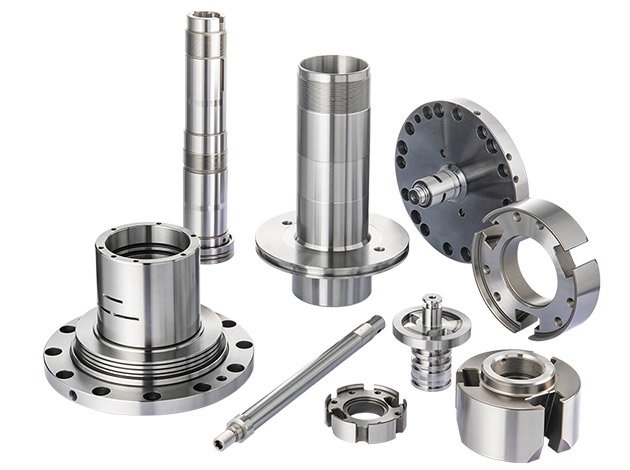
Hydraulic Pump Parts: Ensuring Reliability Through Precision Grinding
Hydraulic systems convert mechanical power into controlled fluid movement, and the reliability of that conversion depends on the accuracy, surface condition, and consistency of every critical component. In pumps operating under high pressure, small dimensional errors can increase internal leakage, accelerate wear, reduce volumetric efficiency, and create premature failures. Precision grinding is therefore more than a finishing operation. It is a controlled manufacturing discipline that directly affects pump performance, service life, and total cost of ownership.
For global OEMs and Tier 1 suppliers, selecting a manufacturing partner for hydraulic pump parts requires more than the ability to produce a drawing-compliant component. The supplier must understand functional tolerances, material behavior, process capability, traceability, inspection, and supply continuity. IndustryApex Technology, operating through IndustryApex CNC, supports these requirements with integrated precision manufacturing and ODM supply chain capabilities for demanding fluid-control applications.
1. Executive Summary
Hydraulic pump parts such as pistons, cylinders, valve plates, shafts, sleeves, gears, bushings, bearing surfaces, and pressure-control elements operate in environments where high loads, fluctuating temperatures, contaminated fluids, and repeated motion are normal. Their performance depends on coordinated geometric relationships, including roundness, cylindricity, flatness, concentricity, profile accuracy, and surface roughness.
Precision grinding provides the final level of control needed for many of these relationships. Compared with conventional turning or milling alone, grinding can achieve tighter dimensional control and a more uniform surface finish on hardened steels, tool steels, stainless alloys, carbide, and selected ceramic materials. When correctly engineered, the process supports stable clearances, lower friction, improved sealing, and predictable wear behavior.
However, grinding reliability is determined by the complete process chain. Material selection, heat treatment, datum strategy, grinding-wheel specification, coolant management, in-process measurement, and final inspection must work together. A supplier that treats grinding as an isolated operation may meet a single inspection report while still producing inconsistent long-term performance. A controlled manufacturing system connects design intent to production data, validates process capability, and preserves traceability from raw material through shipment.
IndustryApex Technology combines more than 30 years of manufacturing experience with ERP-managed production, 3-5 axis CNC machining, EDM, precision grinding, and industrial ceramic processing. This structure allows customers to source engineered hydraulic pump components through a coordinated ODM and supply chain partner rather than managing disconnected process suppliers.
2. Technical Deep Dive
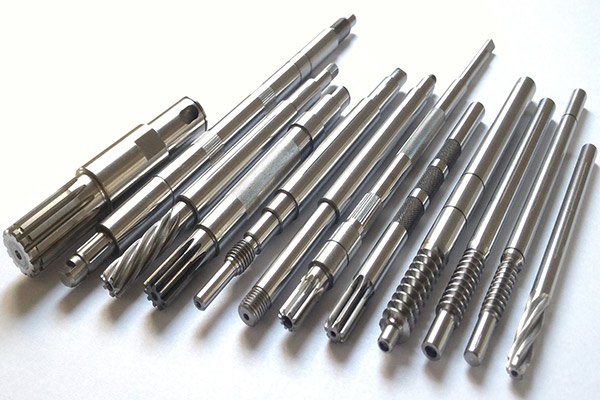
Hydraulic pumps typically rely on close-fitting moving and stationary parts to maintain pressure while minimizing leakage. In axial piston pumps, for example, piston-to-bore clearance, cylinder-block geometry, valve-plate flatness, and rotating-group alignment all influence efficiency. In gear pumps, gear profile accuracy, shaft runout, side-plate flatness, and housing alignment affect pressure stability and noise. In vane pumps, rotor, vane, cam-ring, and plate relationships must remain stable across repeated cycles.
Precision grinding is often selected when a component requires a combination of tight tolerances, hardened material, and a controlled surface texture. Cylindrical grinding can refine piston diameters, shafts, sleeves, and bearing journals. Internal grinding can finish bores and precision cavities. Surface grinding can establish flatness and parallelism on valve plates, thrust washers, and sealing faces. Centerless grinding is useful for high-volume cylindrical parts when stable support and repeatable throughput are required.
The first engineering consideration is the functional datum structure. A drawing may specify diameter, roundness, and concentricity, but these features only have meaning relative to the surfaces that locate the part in the hydraulic assembly. If the grinding process references an unstable or nonfunctional datum, the component can pass isolated dimensional checks and still create misalignment during assembly. IndustryApex Technology evaluates the part’s functional interfaces before defining machining, heat-treatment, grinding, and inspection sequences.
Material and heat treatment are equally important. Hydraulic pump parts may use bearing steels, alloy steels, stainless steels, tool steels, ductile iron, bronze, carbide, or engineered ceramics depending on pressure, speed, fluid compatibility, and wear requirements. Heat treatment can improve hardness and fatigue resistance, but it can also introduce distortion, residual stress, or dimensional movement. Grinding allowances must account for these effects. Removing too much stock can waste time and generate heat; removing too little can leave hardened distortion or decarburized material in the finished zone.
Grinding burn is a major risk in high-performance hydraulic components. Excessive heat at the contact zone can alter the material’s microstructure, create tensile residual stress, or reduce fatigue resistance even when the final dimensions appear correct. Process controls therefore include wheel selection, dressing intervals, feed rate, depth of cut, work speed, coolant delivery, filtration, and thermal monitoring. A properly maintained coolant system is particularly important because contaminated or overheated coolant can degrade both surface quality and process stability.
Surface roughness must be specified according to function rather than reduced indiscriminately. A sealing surface may require a fine and consistent finish, while a lubricated sliding interface may need a texture that supports oil retention. Directional grinding marks can also influence leakage and wear. For this reason, inspection should consider not only average roughness values such as Ra, but also waviness, lay direction, edge condition, and the relationship between the finished surface and its mating part.
Geometric accuracy is another decisive factor. Roundness variation in a piston or sleeve can create localized contact and uneven wear. Taper in a bore can alter leakage along the stroke. Poor flatness on a valve plate can cause pressure loss or unstable sealing. Shaft runout can amplify vibration and reduce bearing life. These characteristics require appropriate metrology, which may include roundness measurement, form analysis, air gauging, profilometry, coordinate measurement, and dedicated functional gauges.
Grinding should also be integrated with upstream CNC machining. Rough machining establishes stable stock conditions, while semi-finishing prepares surfaces for heat treatment and final grinding. EDM may be necessary for intricate hardened features, narrow slots, or difficult-to-machine profiles. Where wear resistance, thermal stability, or electrical insulation is required, industrial ceramics and carbide components can complement metal hydraulic assemblies. The correct process route depends on the part’s operating conditions and production volume.
Quality planning must extend beyond first-article approval. Critical dimensions should be monitored through statistical process controls or equivalent capability studies, with measurement systems validated for resolution and repeatability. Batch traceability should connect material certificates, heat-treatment records, machine programs, inspection results, and nonconformance actions. This approach gives OEM engineering and quality teams evidence that the process remains stable over time, not merely that one sample met the drawing.
Reliable hydraulic pump parts ultimately result from a balanced specification. Overly loose tolerances can reduce efficiency and life, while unnecessarily tight tolerances can raise cost without improving function. A capable manufacturing partner helps distinguish critical-to-function characteristics from nominal features, then builds a practical process around the actual operating requirements.
3. The ODM & Supply Chain Advantage
Hydraulic pump programs frequently involve multiple part numbers, material grades, revision levels, and production locations. Managing each operation independently can create communication gaps between design engineering, machining, heat treatment, grinding, inspection, packaging, and logistics. The result may be inconsistent documentation, duplicated quality checks, extended lead times, or difficulty identifying the source of a field issue.
IndustryApex Technology’s core identity is that of a supply chain integrator and ODM solution provider. The company works with global OEMs and Tier 1 suppliers to translate performance requirements into manufacturable component designs, validated process routes, inspection plans, and repeatable production. This model is especially valuable when the customer needs engineering input during development or wants to consolidate several precision manufacturing processes under one accountable partner.
The manufacturing edge is a fully controlled precision manufacturing system supported by ERP and more than 30 years of experience. ERP coordination improves visibility into material status, work orders, capacity, inspection records, and delivery planning. It also supports disciplined revision control, which is essential when hydraulic pump designs evolve through testing or platform updates. Production data can be connected to part numbers and lots, giving customers a clearer view of supply performance and quality history.
Technical capability includes 3-5 axis CNC machining, EDM, precision grinding, and industrial ceramics. This combination allows IndustryApex Technology to manage both complex geometries and high-accuracy functional surfaces. CNC machining can produce housings, shafts, blocks, and pre-ground forms. EDM can address hardened or intricate features. Precision grinding can establish final dimensions and surface conditions. Industrial ceramic capability can support specialized wear, insulation, or corrosion requirements where conventional metals are not sufficient.
ODM engagement can begin with drawing review, tolerance analysis, material evaluation, and manufacturability assessment. For new hydraulic pump parts, the supplier may recommend changes to datum locations, grinding allowances, edge breaks, inspection points, or material and coating combinations. These recommendations should remain tied to the application, because a change that improves machinability must not compromise pressure containment, fatigue life, lubrication, or compatibility with the working fluid.
Supply chain resilience also depends on realistic production planning. A qualified partner should evaluate forecast patterns, minimum order quantities, safety stock, tooling requirements, capacity constraints, and packaging needs before production begins. For critical spare parts, dual-process planning or controlled inventory may be appropriate. For new programs, pilot lots and staged qualification can reduce launch risk while preserving a clear path to volume production.
Quality communication is part of the supply chain service. Clear inspection reports, material documentation, nonconformance response, corrective actions, and change notifications allow the customer’s engineering and purchasing teams to make decisions quickly. IndustryApex Technology’s integrated structure is designed to reduce the number of handoffs and provide a more coherent path from product concept to repeat shipment.
4. Industry Applications
Precision-ground hydraulic pump parts support a broad range of industrial systems where controlled fluid power is required. In construction equipment, excavators, loaders, cranes, and drilling machines operate in dusty environments with high shock loads. Pump pistons, cylinders, valve components, drive shafts, and wear plates must maintain performance despite pressure cycling and contamination risk. Consistent grinding quality helps control internal leakage and preserve machine productivity.
Agricultural machinery presents a different combination of requirements. Tractors, harvesters, sprayers, and planting equipment may operate seasonally, experience long storage periods, and work across changing temperatures. Dimensional stability, corrosion resistance, and dependable startup performance matter as much as peak pressure capability. Carefully controlled surface finishes and protective packaging can reduce the risk of sticking, scoring, and premature wear.
Industrial automation and material-handling equipment use hydraulic power for clamping, lifting, forming, and positioning. In these applications, repeatability and response are central. Hydraulic pump parts with inconsistent clearances can contribute to pressure fluctuations, actuator drift, or cycle-time variation. Ground shafts, sleeves, valve elements, and bearing surfaces help support predictable motion over high duty cycles.
Mobile and stationary energy systems also depend on precision fluid-control components. Hydraulic power units, wind-turbine service equipment, power-generation machinery, and heavy process equipment may require components that remain reliable under continuous operation and difficult maintenance conditions. Material selection, surface engineering, and traceable inspection become particularly important when downtime carries a high operational cost.
Related precision manufacturing requirements appear in aerospace and medical supply chains, although those sectors impose their own validation and compliance expectations. IndustryApex Technology’s experience with [aerospace CNC machining and titanium aircraft parts](https://cnccomponents.industryapex.com/aerospace-cnc-machining-titanium-aircraft-parts-5-axis-aerospace-parts-aircraft-structural-components/) demonstrates the value of controlled machining for critical structural and high-performance components. Its work in [ISO-certified CNC machining for medical components](https://cnccomponents.industryapex.com/iso-certified-cnc-machining-for-medical-components-including-titanium-implants-surgical-instruments-and-high-precision-device-parts/) reflects the importance of documentation, process discipline, and high-precision inspection.
For fluid-power buyers, the relevant lesson is that supplier capability should be assessed by process control and engineering depth, not by equipment lists alone. A reliable supplier understands how the part functions inside the assembly, how manufacturing variables affect that function, and how to sustain the result across production batches.
5. Call to Action
Hydraulic pump reliability begins with the details that are often least visible after assembly: the geometry of a bore, the flatness of a sealing face, the texture of a sliding surface, and the stability of a hardened material after grinding. These details influence pressure retention, efficiency, noise, wear, maintenance intervals, and customer satisfaction.
IndustryApex Technology helps global OEMs and Tier 1 suppliers develop and source hydraulic pump parts through a controlled ODM and supply chain model. From drawing review and material selection to CNC machining, EDM, precision grinding, industrial ceramics, inspection, and delivery planning, the team can support both prototype development and repeat production.
Review the [Hydraulics & Pump](https://cnccomponents.industryapex.com/hydraulic-pump-parts/) capabilities to evaluate potential manufacturing routes and component solutions. For broader precision manufacturing information, visit the [IndustryApex CNC home page](https://cnccomponents.industryapex.com/). To discuss drawings, volumes, tolerances, materials, or qualification requirements, [contact IndustryApex Technology](https://cnccomponents.industryapex.com/contact-us/) with your application details.