- Shaft
- Molds&Tools
- Hydraulics And Pump
- Hair transplant needle
- Hydraulics And Pump
- Precision CNC Shaft Machining Manufacturer for High Performance Applications
- Energy Industry CNC Machining Parts Supplier
- Aerospace CNC Machining Parts Manufacturer
- Aerospace CNC Machining Parts Manufacturer
- Automotive & EV CNC Machining Parts Supplier for OEM and Tier 1
- Medical CNC Machining Parts Supplier for Precision Medical Devices
How ERP Systems Ensure Quality Control in CNC Mass Production

How ERP Systems Ensure Quality Control in CNC Mass Production
For global OEMs and Tier 1 suppliers, CNC mass production quality is not confirmed by a final inspection alone. It is engineered through controlled data, material traceability, disciplined process execution, and rapid response when variation appears. Enterprise resource planning (ERP) provides the operating framework that connects these requirements across sourcing, machining, quality, warehousing, and delivery.
1. Executive Summary
In CNC mass production, a part can meet dimensional requirements in one batch and still create substantial supply-chain risk if its material origin, machine settings, inspection records, revision status, or shipment lot cannot be verified. ERP systems reduce this risk by creating a single operational record for every production order. They connect customer specifications to bills of materials, approved suppliers, routing instructions, quality plans, inspection checkpoints, nonconformance records, and final shipment documentation.
For buyers of precision components, the practical benefit is consistency at scale. ERP-driven manufacturing turns quality from a department-level activity into a cross-functional control system. Procurement receives approved-material requirements. Production receives the correct routing and latest drawing revision. Quality teams receive inspection criteria and lot-level traceability. Logistics receives release status before goods are packed and shipped. Management receives live visibility into yield, scrap, corrective actions, capacity, and delivery performance.
At Dixin Technology, IndustryApex CNC, ERP is used as a core part of a fully controlled precision manufacturing system. It supports the repeatability required for high-volume and complex CNC programs while helping customers manage qualification, change control, supplier accountability, and delivery confidence across international supply chains.
2. Technical Deep Dive
ERP improves CNC quality control because it organizes the manufacturing process around controlled master data. The system establishes the approved part number, revision, material grade, purchased or manufactured components, operation sequence, inspection requirements, packaging instructions, and customer-specific documentation. When these records are governed properly, operators and inspectors work from the same released information rather than isolated spreadsheets, printed drawings, or informal handoffs.
Revision Control and Production Routing
Mass production failures often begin with an uncontrolled engineering change. A revised tolerance, thread callout, surface treatment, or measurement method can affect every downstream operation. ERP links engineering revisions to production orders and prevents outdated routings from being released. A controlled routing can specify stock preparation, rough machining, finish machining, deburring, washing, heat treatment coordination, grinding, inspection, and final packing. This is especially important where a part moves between multiple machines or specialized processes.
For a CNC program, routing data can identify the required machine capability, setup instructions, approved fixtures, tooling family, expected cycle time, and in-process inspection point. The ERP record does not replace detailed CNC programming or metrology software; it ensures that the right controlled documents, resources, and approval steps are present when production begins.
Material Traceability From Receipt to Shipment
Material traceability is fundamental when producing safety-critical, regulated, or high-load parts. ERP assigns lot or heat numbers when raw material is received and associates them with certificates, supplier records, incoming inspection results, and storage locations. As material is issued to a production order, the system maintains the connection between the raw-material lot and the work-in-process batch.
This traceability supports both prevention and containment. If incoming inspection identifies a material concern, the affected inventory can be quarantined before machining. If an issue is discovered after delivery, the manufacturer can identify the affected production lots, inspection records, and shipments quickly. For OEM procurement and supplier-quality teams, this capability shortens root-cause investigations and reduces the scope of corrective action.
In-Process Quality Gates
Reliable quality control happens at planned decision points, not only at the end of the line. ERP quality modules can define gates for first-article approval, setup verification, first-off inspection, patrol inspection, final inspection, and packaging release. Each gate can require specific characteristics, sample sizes, acceptance criteria, measurement equipment, and approval authority before the job progresses.
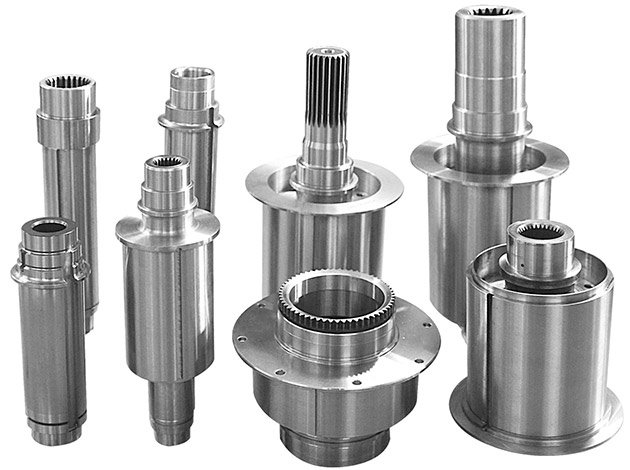
For example, a high-precision shaft may require verification of datum features after rough machining, concentricity and runout after finish turning, dimensional checks after grinding, and final visual and packaging confirmation. Recording results against the production order gives quality teams an auditable history and makes it easier to compare performance between shifts, machines, tools, and material lots.
Nonconformance Control and CAPA Discipline
ERP also provides structure when a result falls outside specification. A nonconformance record can place affected material on hold, identify the operation where the issue occurred, document disposition, and prevent accidental release of suspect stock. Linked corrective and preventive action workflows help teams move beyond sorting defects toward identifying root causes such as tool wear, fixture instability, programming error, material variation, handling damage, or inadequate inspection frequency.
Over time, this data supports statistical improvement. Manufacturers can evaluate scrap by operation, recurring defect types, rework hours, supplier-related material issues, and first-pass yield. The result is a more factual basis for process capability improvement, supplier development, preventive maintenance, and investment decisions.
Inventory Accuracy and Quality Release
ERP separates inventory by status, such as received, awaiting inspection, approved, work in process, quarantined, rejected, and ready to ship. This prevents a common operational failure: physically available material being mistaken for approved material. Finished goods can be blocked from shipment until required inspection, documentation, and customer release conditions are complete. In a high-mix, high-volume CNC environment, status control is as important as physical inventory counting.
3. The ODM & Supply Chain Advantage
Dixin Technology operates as a supply chain integrator and ODM solution provider, not simply as a machine shop. This distinction matters when an OEM needs repeatable production, coordinated secondary processes, controlled documentation, and one accountable manufacturing partner. The objective is to convert a design requirement into a stable, scalable supply program with defined technical and commercial controls.
With more than 30 years of manufacturing experience, Dixin Technology combines ERP-based process management with a fully controlled precision manufacturing system. ERP creates visibility across order planning, material sourcing, production scheduling, inspection status, work-in-process movement, subcontract coordination, and shipment release. This integrated view helps reduce information gaps that can otherwise appear between engineering, purchasing, manufacturing, quality, and logistics.
Our manufacturing capabilities include 3-axis, 4-axis, and 5-axis CNC machining, EDM, precision grinding, and industrial ceramics. These capabilities enable coordinated production planning for parts requiring complex geometries, close tolerances, difficult materials, fine surface finishes, or multiple precision operations. Rather than treating each process as an isolated transaction, the ERP-controlled routing establishes responsibility and traceability across the complete manufacturing path.
For global OEM and Tier 1 sourcing teams, the advantage is practical: fewer supplier interfaces, clearer accountability, faster response to engineering changes, more reliable quality documentation, and improved ability to manage demand fluctuations. ERP data also supports more informed production planning by aligning material availability, machine capacity, tooling requirements, inspection resources, and committed delivery dates.
From Design for Manufacturability to Series Production
The ODM value begins before the first production order. During design-for-manufacturability review, engineering teams can assess tolerances, datums, material selection, machining access, feature sequencing, inspection feasibility, and likely production constraints. Once a manufacturing approach is agreed, its requirements are converted into controlled ERP master data. This provides continuity between quotation, prototype, first article, pilot production, and mass production.
That continuity is essential because a successful prototype does not automatically prove a process is ready for scale. Series production requires stable tooling, repeatable setup methods, realistic cycle times, approved inspection plans, material replenishment rules, defined packaging, and clear escalation paths. ERP helps standardize these controls and makes deviations visible before they become delivery or quality failures.
4. Industry Applications
ERP-enabled quality control is valuable wherever component failure, traceability gaps, or delivery instability create high commercial or operational consequences. The exact quality plan changes by application, but the underlying need for controlled data and lot-level visibility remains consistent.
Aerospace and Structural Components
Aerospace programs demand disciplined material control, revision management, process traceability, and documentation retention. Complex titanium and aluminum components often require multi-axis machining, specialized fixtures, close-tolerance inspection, and rigorous handling procedures. Learn more about Dixin Technology’s aerospace CNC machining and aircraft structural components capabilities.
Medical Devices and Precision Instruments
Medical machining requires reliable control of material identity, process cleanliness, dimensional verification, and product documentation. ERP supports route-specific quality gates for titanium implants, surgical instruments, and precision device components. See our approach to ISO-certified CNC machining for medical components.
Hydraulics, Pumps, and Fluid Control
Hydraulic and pump components depend on precise fits, surface finishes, concentricity, sealing performance, and contamination control. ERP-based inspection plans can track critical features across turning, milling, grinding, deburring, cleaning, and final release. Explore Dixin Technology’s hydraulic pump parts manufacturing capabilities.
Industrial Automation, Energy, and General Equipment
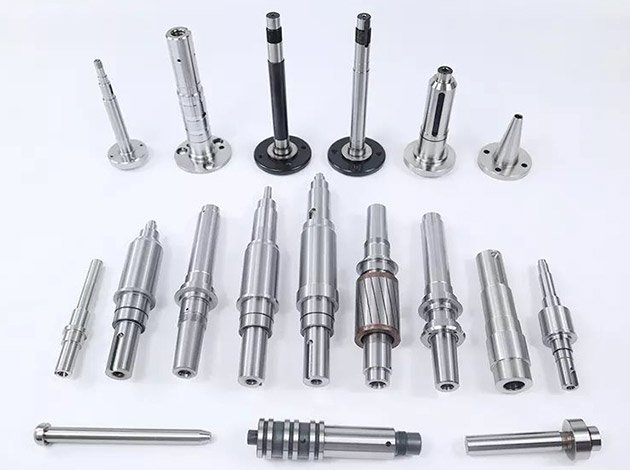
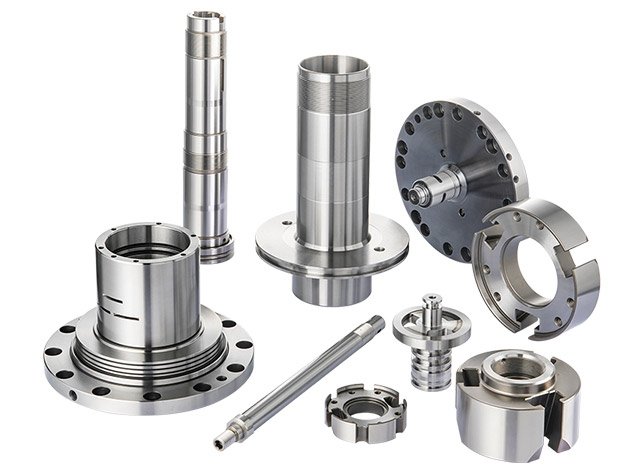
Industrial equipment programs frequently combine recurring production demand with varying configurations, service-part requirements, and tight delivery commitments. ERP supports demand planning, controlled inventory, batch traceability, and work-order scheduling, helping manufacturers maintain both quality consistency and supply continuity. The system is particularly effective for shafts, housings, gears, fixtures, mold components, ceramic parts, and other precision parts produced across multiple process steps.
5. Call to Action
When evaluating a CNC manufacturing partner, ask how engineering revisions, raw-material lots, in-process inspections, nonconformances, finished-goods release, and shipment records are connected. A supplier that can demonstrate an ERP-controlled quality system is better positioned to support stable mass production, transparent issue resolution, and dependable global delivery.
Dixin Technology combines precision manufacturing experience, integrated ODM support, and ERP-driven operational control to help OEMs and Tier 1 suppliers build reliable component supply programs. Contact Dixin Technology to discuss your drawings, quality requirements, target volumes, and supply-chain objectives.