- Shaft
- Molds&Tools
- Hydraulics And Pump
- Hair transplant needle
- Hydraulics And Pump
- Precision CNC Shaft Machining Manufacturer for High Performance Applications
- Energy Industry CNC Machining Parts Supplier
- Aerospace CNC Machining Parts Manufacturer
- Aerospace CNC Machining Parts Manufacturer
- Automotive & EV CNC Machining Parts Supplier for OEM and Tier 1
- Medical CNC Machining Parts Supplier for Precision Medical Devices

2026 Trends in 5-Axis CNC Machining for Aerospace Components: Engineering and Supply Chain Analysis

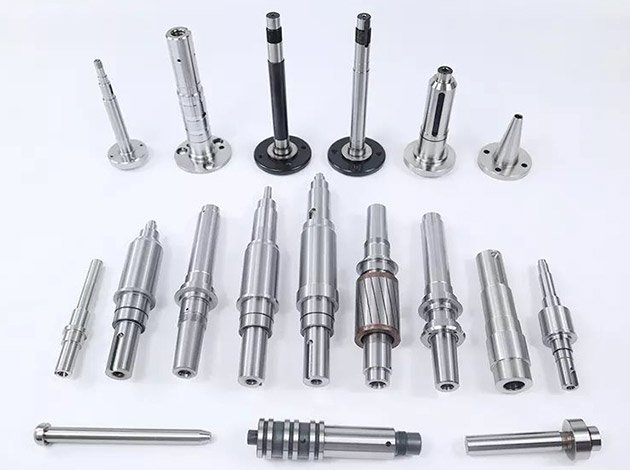
2026 Trends in 5-Axis CNC Machining for Aerospace Components
For aerospace OEMs and Tier 1 suppliers, 2026 will be defined by a sharper focus on qualified capacity, material efficiency, traceability, and repeatable geometric accuracy. Five-axis CNC machining remains central to this shift because it enables complex airframe, engine, actuation, and flight-control components to be produced with fewer setups and stronger process control. Dixin Technology, operating through IndustryApex CNC, supports global programs that require precision machining to align with practical supply-chain execution.
1. Executive Summary
Aerospace manufacturing is entering 2026 under sustained pressure from rising production rates, fleet modernization, engine-platform demand, defense procurement, and continued supply-chain volatility. These conditions are increasing the value of machining partners that can manufacture difficult components while also managing inspection records, material traceability, lead-time risk, and engineering changes. For complex parts, five-axis CNC machining is no longer simply a capability listed on a supplier profile; it is a foundational process for reducing setup-dependent variation and supporting robust production planning.
The most important trend is the integration of machining decisions with program-level supply-chain decisions. Aerospace buyers are looking beyond piece-price comparisons. They need suppliers that can advise on manufacturability, select workable process routes, consolidate multiple operations, manage qualified raw material, and maintain reliable communication through prototype, pre-production, and serial supply phases. The strongest sourcing strategies pair advanced machine capability with disciplined quality planning and transparent operational control.
In 2026, the use of five-axis machining will continue to expand for titanium structural parts, aluminum aerospace housings, complex brackets, impellers, blisks, actuator components, and intricate fluid-control hardware. The business case is driven by fewer fixtures, more complete machining in a single clamping, improved access to compound surfaces, and lower handling risk. However, benefits are realized only when CAD/CAM programming, workholding, cutting tools, inspection, and shop-floor execution are coordinated as one controlled system.
2. Technical Deep Dive
Five-axis CNC machining uses coordinated linear and rotary axes to orient the cutting tool or workpiece relative to complex geometry. In aerospace applications, this supports machining of multiple faces, angled holes, freeform contours, deep pockets, thin-wall structures, and compound radii without repeatedly removing and re-fixturing the part. The reduced number of setups can improve positional relationships between features and limit cumulative datum-transfer errors.
In 2026, simultaneous five-axis machining will become increasingly important for components where conventional three-axis approaches introduce excessive fixture complexity or cycle time. Typical examples include turbine-related geometries, curved structural members, complex hinge components, impeller profiles, and engine-system housings. Five-axis tool orientation allows manufacturers to maintain more favorable cutter engagement, access difficult surfaces, and reduce the use of extended tools that can create vibration and compromise surface finish.
Titanium remains a core aerospace machining material because of its high strength-to-weight ratio, corrosion resistance, and performance at elevated temperatures. Yet titanium machining requires carefully selected strategies to manage heat concentration, tool wear, deflection, and chip evacuation. Adaptive roughing, high-pressure coolant where appropriate, stable toolpaths, controlled radial engagement, and realistic cutting parameter development are becoming standard requirements. The goal is not simply to remove material faster. It is to establish a repeatable process window that protects both part integrity and delivery performance.
Aluminum aerospace components present a different challenge. Large monolithic structures may involve high material-removal ratios and thin remaining walls. Residual stress, vibration, distortion, and clamping deformation must be managed through informed stock selection, roughing sequences, intermediate stress relief where required, stable fixturing, and measured finishing passes. A five-axis platform helps reach features efficiently, but the process plan must account for how the component moves as material is removed.
Digital process validation is another major 2026 trend. CAM simulation, machine kinematic verification, collision detection, toolpath optimization, and digital work instructions can reduce avoidable risk before a program reaches the machine. In a qualified aerospace workflow, simulation does not replace first-article inspection or in-process verification. It strengthens the process by identifying potential interference, axis-limit, gouge, and fixture-clearance issues earlier in the engineering cycle.
Inspection requirements are also advancing. Aerospace customers increasingly expect dimensional evidence to be tied to defined datums, revision-controlled drawings, and material or batch records. Coordinate measuring machines, in-process probing, calibrated gauges, and documented inspection plans support this need. For critical characteristics, manufacturers must define how measurements are captured, how results are reviewed, and how nonconforming conditions are contained. The machining center, measurement system, and quality documentation must work together rather than as disconnected activities.
The practical outcome is a shift from machine-centric sourcing to process-centric sourcing. Buyers should evaluate whether a supplier can explain its intended datum strategy, workholding concept, material-control method, tool-access approach, inspection sequence, and contingency plan. These details determine whether a complex aerospace component can move from quotation to repeatable production without unexpected delays or quality escapes.
3. The ODM & Supply Chain Advantage
Dixin Technology is positioned as a supply-chain integrator and ODM solution provider for customers that need more than isolated machining capacity. For global OEM and Tier 1 supply programs, this model provides a practical route to consolidate engineering communication, manufacturing execution, specialized processes, quality coordination, and delivery management. It reduces the administrative burden of managing fragmented suppliers while preserving the technical attention required by complex parts.
The manufacturing edge is a fully controlled precision manufacturing system supported by ERP discipline and more than 30 years of manufacturing experience. ERP-supported control helps connect customer orders, material requirements, production scheduling, process status, inspection activities, and shipment coordination. For aerospace programs, visibility across these functions is essential because a missed material release, revision mismatch, or delayed external process can affect downstream assembly schedules.
Dixin Technology’s technical capabilities span three- to five-axis CNC machining, EDM, precision grinding, and industrial ceramics. This breadth supports more informed process routing. A component may require five-axis milling for complex external surfaces, EDM for fine internal profiles or hard-to-access features, and grinding for precision diameter, flatness, or surface-finish requirements. Rather than treating these operations as unrelated services, an integrated manufacturing approach considers feature function, tolerance stack-up, material behavior, and inspection requirements from the beginning.
ODM support is particularly valuable when an aerospace customer has performance requirements and a preliminary design but needs manufacturing insight before releasing a production configuration. Early technical review can identify tolerances that are unnecessarily restrictive, inaccessible features, excessive material waste, avoidable secondary operations, or inspection conditions that are difficult to verify consistently. The objective is not to dilute engineering requirements; it is to preserve functional intent while improving manufacturability, cost control, and production repeatability.
Supply-chain resilience will remain a differentiator in 2026. Buyers should ask how suppliers manage approved material sources, lot identification, incoming verification, subcontractor coordination, capacity planning, and engineering-change control. A responsive partner should provide clear answers about lead times and risks rather than relying on broad estimates. For multi-process aerospace parts, a single accountable integrator can help prevent gaps between machining, finishing, inspection, packing, and delivery.
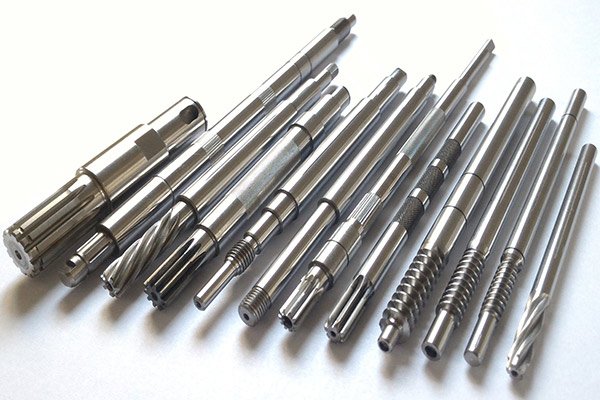
The same integrated approach also benefits adjacent precision markets. Customers sourcing regulated medical CNC components often require material discipline, tight tolerance control, and documented quality processes similar to those used for demanding aerospace work. Likewise, complex hydraulic pump parts rely on accurate bores, sealing interfaces, controlled surface finish, and repeatable feature relationships. Cross-industry precision experience strengthens process knowledge while requirements remain controlled to the needs of each application.
4. Industry Applications
Five-axis CNC machining supports a wide range of aerospace applications in 2026. Airframe structures include machined brackets, frames, ribs, fittings, bulkhead elements, landing-gear-related components, and lightweight aluminum or titanium assemblies. These parts frequently combine complex contours with tightly controlled interfaces, making setup reduction and datum integrity essential.
Propulsion applications include impellers, bladed components, housings, compressor-related hardware, fuel-system bodies, and high-temperature alloy features. These components can require challenging tool access, controlled surface finish, and rigorous dimensional verification. Five-axis motion can improve access to blade passages and compound surfaces while enabling tool orientations that support a more stable cutting condition.
Flight-control and actuation systems require precision-machined housings, clevises, linkage components, valve bodies, servo assemblies, and sensor mounts. Here, functional accuracy depends on the relationship between bores, sealing surfaces, threaded ports, and mounting faces. A well-designed five-axis process can machine many critical references in one orientation, helping protect positional accuracy and reduce handling variation.
Uncrewed aerial systems, advanced air mobility platforms, and defense aerospace programs are also driving demand for flexible production of complex low- to medium-volume components. These programs often require fast engineering response, controlled configuration management, and the ability to scale after validation. A supplier with ODM capability and integrated manufacturing control can support this transition from prototype parts to repeatable production.

For aerospace buyers, the ideal component strategy begins with an early review of geometry, material, tolerance, annual volume, inspection needs, and delivery schedule. This allows the manufacturing team to select the correct machine platform, workholding method, process sequence, and quality plan before production urgency narrows the available options. The result is a more predictable path to qualified supply.
5. Call to Action
As aerospace production requirements become more complex in 2026, sourcing decisions should prioritize proven process control, five-axis capability, multi-process integration, and transparent program management. Dixin Technology helps global OEMs and Tier 1 suppliers evaluate complex precision components for manufacturability, cost, quality, and supply continuity.
Explore Dixin Technology’s aerospace CNC machining capabilities or contact the engineering team to discuss your next aerospace component program, including prototype development, production planning, and integrated supply-chain requirements.