- Shaft
- Molds&Tools
- Hydraulics And Pump
- Hair transplant needle
- Hydraulics And Pump
- Precision CNC Shaft Machining Manufacturer for High Performance Applications
- Energy Industry CNC Machining Parts Supplier
- Aerospace CNC Machining Parts Manufacturer
- Aerospace CNC Machining Parts Manufacturer
- Automotive & EV CNC Machining Parts Supplier for OEM and Tier 1
- Medical CNC Machining Parts Supplier for Precision Medical Devices
Hydraulic Pump Parts: Ensuring Reliability Through Precision Grinding

Hydraulic Pump Parts: Ensuring Reliability Through Precision Grinding
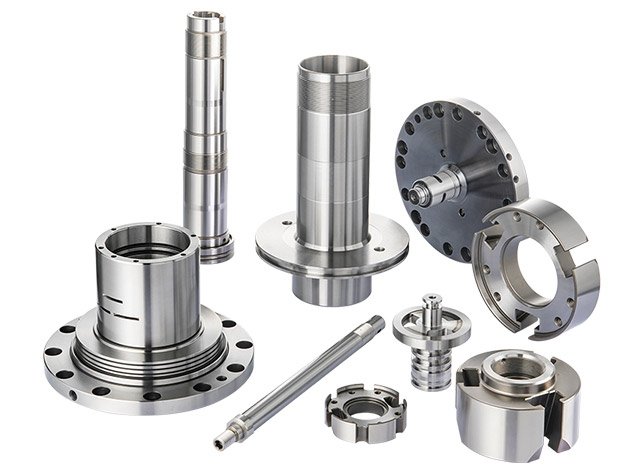
Hydraulic systems operate under demanding conditions. High pressure, fluctuating loads, contaminated fluids, temperature changes, and continuous duty cycles place exceptional requirements on every component. Within a hydraulic pump, small variations in geometry or surface finish can cause leakage, friction, vibration, premature wear, and declining volumetric efficiency. For this reason, the reliability of hydraulic pump parts depends not only on material selection and CNC machining, but also on the final precision grinding process.
For global original equipment manufacturers (OEMs) and Tier 1 suppliers, precision grinding is a manufacturing control point that directly influences pump performance and service life. Dixin Technology, operating through IndustryApex CNC, combines controlled machining, precision grinding, engineering support, and supply chain coordination to produce hydraulic pump components for demanding industrial applications.
1. Executive Summary
Hydraulic pump parts such as valve spools, sleeves, pistons, cylinder blocks, shafts, bearing surfaces, gear elements, and sealing interfaces must work together with highly controlled clearances. These clearances are often measured in microns, making dimensional accuracy and surface integrity essential to reliable operation. A component can meet a nominal drawing dimension and still fail in service if grinding introduces thermal damage, residual stress, taper, waviness, or an unsuitable surface texture.
Precision grinding provides the final level of control needed for critical hydraulic interfaces. It can improve roundness, cylindricity, straightness, diameter consistency, and surface roughness after turning, milling, heat treatment, or coating. When integrated with inspection and process traceability, grinding helps reduce internal leakage, improve pressure stability, extend seal life, and maintain predictable performance across production batches.
The most effective sourcing strategy is broader than selecting a machine shop for one operation. OEMs benefit from a manufacturing partner that can coordinate material purchasing, CNC production, heat treatment, grinding, finishing, inspection, documentation, packaging, and delivery. This integrated model reduces handoff risk and gives engineering and procurement teams a clearer path from design intent to production results.
2. Technical Deep Dive
Why precision matters in hydraulic pump parts
A hydraulic pump converts mechanical energy into fluid flow and pressure. The pump’s internal parts must maintain controlled movement and sealing while exposed to high loads and repeated contact. In axial piston pumps, for example, piston-to-bore relationships, valve plate interfaces, cylinder block faces, and drive shaft bearing surfaces all affect efficiency. In gear pumps, gear profiles, side plates, bushings, shafts, and housing bores determine leakage and noise characteristics. Vane pumps require accurate rotor, vane, cam ring, and plate interfaces.
Clearance that is too large can permit excessive fluid bypass, reducing volumetric efficiency and increasing heat generation. Clearance that is too small can produce seizure, scuffing, or sensitivity to thermal expansion and fluid contamination. The target is not simply the smallest possible gap. It is a stable, engineered relationship between dimensions, materials, operating temperature, lubricant properties, pressure, and expected duty cycle.
What grinding contributes after CNC machining
CNC turning and milling establish the primary geometry of a hydraulic component, but grinding is often required where functional surfaces demand tighter control. Grinding can correct dimensional variation left by previous operations and refine surfaces that interact with seals, bearings, sleeves, pistons, valves, or other sliding elements. Depending on the component, processes may include cylindrical grinding, internal grinding, surface grinding, centerless grinding, and specialized form grinding.
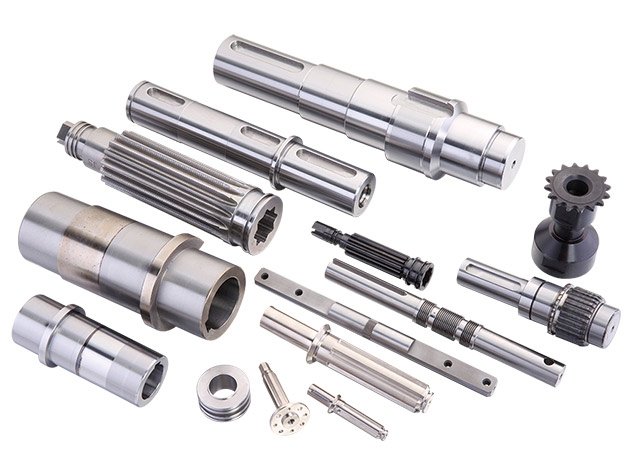
For a valve spool, consistent diameter and roundness are critical because the spool must move smoothly inside its sleeve while limiting leakage between hydraulic chambers. For a sleeve or precision bore, internal grinding can produce a controlled diameter, low taper, and suitable surface texture. For shafts, grinding can stabilize bearing journals and sealing lands. For pump plates and blocks, surface grinding can improve flatness and parallelism at interfaces that must retain pressure.
Surface finish is a functional parameter
Surface roughness is not merely a cosmetic specification. The grinding pattern influences lubricant retention, friction, seal behavior, and wear. A surface that is too rough may damage a seal or increase friction. A surface that is excessively smooth may retain insufficient lubricant in some sliding applications. Engineers should therefore specify the appropriate roughness parameters and lay direction based on the mating component and operating conditions rather than relying on a generic finish callout.
Grinding quality also depends on wheel selection, dressing strategy, coolant control, feed rate, workholding, and process sequence. Inadequate coolant delivery or excessive grinding energy can create localized heat and alter the metallurgy of a hardened surface. Even when the part remains within dimensional tolerance, grinding burn or tensile residual stress can reduce fatigue strength and accelerate failure. Process monitoring and inspection are therefore essential for safety-critical or high-duty hydraulic components.
Materials, heat treatment, and finishing
Hydraulic pump parts may be manufactured from alloy steels, stainless steels, tool steels, cast iron, aluminum alloys, bronze, or engineered materials selected for wear, corrosion resistance, weight, and compatibility with the working fluid. The correct grinding process depends on the material condition and heat treatment. Hardened steel, for example, may require controlled grinding parameters to prevent thermal damage. Stainless materials can present challenges related to work hardening and heat generation. Nonferrous materials may require different wheel specifications and loading controls.
Coatings and surface treatments also affect the production route. Plating, nitriding, hardening, polishing, and other finishing operations can change dimensions and surface properties. A robust process plan accounts for stock allowance before treatment, final grinding requirements, inspection datums, and the possibility of post-treatment correction. This prevents dimensional drift from being discovered only during final assembly or functional testing.
Inspection and process validation
Reliable hydraulic components require inspection methods that match the risk of the application. Typical controls may include coordinate measuring machines, roundness and cylindricity measurement, surface roughness testing, air gauging, bore measurement, hardness testing, visual inspection, and material certification. Statistical process control can identify gradual wheel wear or machine drift before components fall outside specification.
Inspection should be connected to engineering requirements. Measuring diameter alone may not reveal a problem with taper, lobing, waviness, or alignment. Likewise, a surface roughness value without verification of surface lay may not fully describe a sealing interface. Dixin Technology supports a controlled production approach in which machining, grinding, inspection, and documentation are treated as connected stages of one manufacturing system.
3. The ODM & Supply Chain Advantage
Hydraulic pump programs frequently involve multiple part numbers, revision levels, materials, treatments, and delivery schedules. Managing each operation through separate vendors can create inconsistent quality, unclear accountability, and delays when a drawing changes. A supply chain integrator and ODM solution provider gives OEM and Tier 1 teams a single engineering and manufacturing interface across the product lifecycle.
Dixin Technology’s core identity is built around supply chain integration and ODM support. The objective is not limited to producing parts from a finished drawing. The manufacturing team can participate earlier in the process by reviewing tolerances, identifying grinding risks, evaluating material and treatment choices, improving manufacturability, and coordinating production planning. This involvement helps convert design requirements into a stable and scalable manufacturing route.
A fully controlled precision manufacturing system
With more than 30 years of experience and an ERP-supported operating structure, Dixin Technology provides control across production planning, purchasing, process routing, quality records, and delivery coordination. ERP visibility is especially valuable for hydraulic components because customers often require traceability by lot, material heat, treatment batch, inspection result, and shipment.
The company’s technical capabilities include 3-axis to 5-axis CNC machining, electrical discharge machining, precision grinding, and industrial ceramics. This combination supports both conventional metal pump components and specialized parts requiring complex geometry, tight positional relationships, wear resistance, or electrical insulation. Keeping these capabilities within a coordinated manufacturing system can reduce unnecessary transportation, repeated setup, and communication gaps between suppliers.
Design-for-manufacturing support
ODM collaboration can improve reliability before production begins. Engineers may review whether a tolerance is functionally necessary, whether a datum scheme supports repeatable grinding, whether a bore can be inspected efficiently, or whether a geometry change would improve tool access and reduce setup risk. These reviews protect the critical features while avoiding avoidable cost and lead-time increases.
For procurement teams, an integrated source can also simplify supplier qualification and program management. Instead of coordinating separate machining, heat treatment, grinding, inspection, and packaging providers, the OEM can work with one accountable partner that manages the complete route. This is particularly useful for new pump platforms, replacement parts, aftermarket programs, and production transfers between regions.
More information about the company’s manufacturing scope is available through the IndustryApex CNC manufacturing platform. Customers developing components for other demanding sectors can also review the company’s aerospace CNC machining capabilities and medical component manufacturing experience.
4. Industry Applications
Mobile and construction equipment
Excavators, loaders, cranes, drilling equipment, and other mobile machines depend on hydraulic pumps that operate under shock loads, vibration, dust, and changing ambient temperatures. Precision-ground valve spools, sleeves, shafts, and wear surfaces help maintain responsive control and stable pressure. Consistent parts also support repairability by making replacement components more predictable during field service.
Agricultural machinery
Tractors, harvesters, sprayers, and planting equipment use hydraulic systems for steering, lifting, transmission control, and implement actuation. These applications often require long seasonal operating periods and dependable performance in environments where maintenance windows are limited. Controlled grinding and thorough inspection help reduce leakage and unplanned downtime during peak agricultural operations.
Industrial hydraulics and automation
Presses, injection molding equipment, factory automation systems, material handling machinery, and production lines rely on hydraulic power for repeatable motion and force control. In these systems, pump efficiency affects energy consumption and cycle consistency. Precision components with stable geometry and surface finish can contribute to predictable response, lower internal losses, and longer service intervals.
Energy and specialized equipment
Hydraulic systems are also used in energy equipment, marine systems, test rigs, and specialized industrial machinery. These applications may involve corrosive environments, high duty cycles, or strict documentation requirements. Material certificates, process records, inspection data, and controlled packaging become as important as the component itself. An experienced manufacturing partner can align these requirements with production and supply chain planning.
Hydraulic pump parts are part of a broader fluid-control ecosystem. For component sourcing, design support, and production coordination, customers can review the dedicated hydraulic pump parts resource. The right manufacturing approach is determined by the pump architecture, pressure class, fluid, operating temperature, mating materials, expected duty cycle, and required validation level.
5. Call to Action
Reliable hydraulic pump parts begin with a manufacturing strategy that connects engineering intent to measurable production controls. Precision grinding provides the dimensional and surface accuracy required for demanding hydraulic interfaces, while integrated CNC machining, heat treatment coordination, inspection, and ERP traceability create a more dependable supply chain.
Dixin Technology and IndustryApex CNC support global OEMs and Tier 1 suppliers with ODM development, precision machining, grinding, industrial ceramics, quality coordination, and production management. Share your drawings, 3D models, material requirements, annual volumes, inspection standards, and delivery targets with the engineering team to evaluate the most effective manufacturing route.
To discuss a new hydraulic pump component, replacement program, or qualified production source, contact Dixin Technology for an engineering and supply chain consultation.