- Shaft
- Molds&Tools
- Hydraulics And Pump
- Hair transplant needle
- Hydraulics And Pump
- Precision CNC Shaft Machining Manufacturer for High Performance Applications
- Energy Industry CNC Machining Parts Supplier
- Aerospace CNC Machining Parts Manufacturer
- Aerospace CNC Machining Parts Manufacturer
- Automotive & EV CNC Machining Parts Supplier for OEM and Tier 1
- Medical CNC Machining Parts Supplier for Precision Medical Devices

Hydraulic Pump Parts: Ensuring Reliability through Precision Grinding

Executive Summary
Hydraulic pump parts operate in one of the most unforgiving environments in modern machinery: high pressure, cyclic loading, abrasive contamination risk, thermal variation, and continuous fluid-film dependence. For global OEMs and Tier 1 suppliers, the reliability of components such as valve plates, pistons, cylinder blocks, shafts, slippers, sleeves, gears, plungers, and sealing interfaces directly determines pump efficiency, service life, leakage control, and warranty exposure. Precision grinding is not simply a finishing process in this context; it is a reliability engineering discipline that converts material capability and CNC geometry into stable hydraulic performance.
At IndustryApex Technology, operating under IndustryApex CNC, hydraulic pump component manufacturing is approached as a controlled system: process planning, material selection, CNC machining, EDM, heat treatment coordination, precision grinding, inspection, and supply chain integration. This matters because hydraulic components rarely fail due to a single dimensional error. They fail when accumulated variation, surface damage, waviness, residual stress, roundness error, or poor process control disrupts the fluid film that separates moving surfaces.
This article examines why precision grinding is critical for hydraulic pump parts, how it influences performance parameters such as volumetric efficiency and wear resistance, and why an ODM-oriented manufacturing partner can help OEMs reduce supply chain risk. For purchasing, engineering, and supplier quality teams evaluating hydraulic pump parts, the central question is no longer whether a supplier can machine metal. It is whether the supplier can consistently manufacture functional surfaces at production scale while maintaining traceability, repeatability, and long-term cost control.
Technical Deep Dive
Hydraulic pumps rely on precisely controlled clearances. In axial piston pumps, vane pumps, gear pumps, and plunger systems, microscopic surface conditions influence macroscopic system behavior. A valve plate that is flat but has poor surface texture may cause leakage, heat generation, or noise. A piston with acceptable diameter but poor roundness may accelerate seal wear. A shaft with excessive runout may overload bearings and reduce pump life. Precision grinding addresses these risks by controlling geometry, surface integrity, and dimensional stability beyond what general machining can typically achieve.
The most important grinding-related attributes for hydraulic pump parts include flatness, parallelism, cylindricity, concentricity, surface roughness, waviness, edge quality, and thermal damage control. In many pump components, the target is not merely a low Ra value. Engineers must also consider Rz, bearing area ratio, directional lay, plateau characteristics, and the ability of the surface to retain or reject oil depending on the function. For example, a sealing face may require controlled smoothness to reduce internal leakage, while a sliding interface may need a balanced texture that supports lubrication without generating excessive friction.
Flat grinding is frequently used for valve plates, port plates, wear plates, and sealing faces. These components must maintain extremely stable contact patterns under pressure. Even small deviations in flatness or parallelism can create uneven pressure distribution, localized heating, and premature scoring. Double-disc grinding, surface grinding, and lapping-compatible grinding strategies may be combined depending on the component geometry and production volume. The goal is to produce a functional surface that supports predictable oil-film behavior across the full operating range.
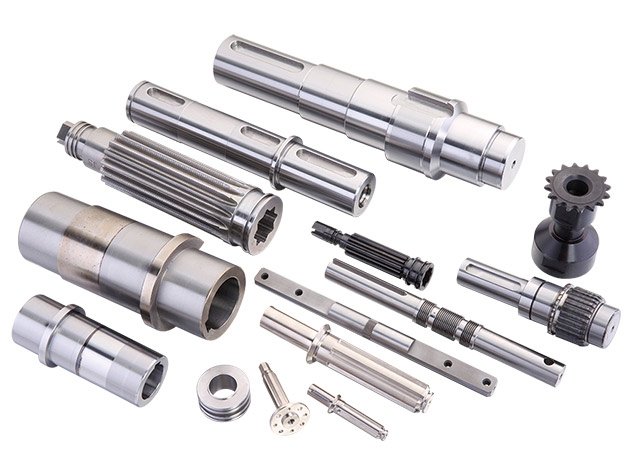
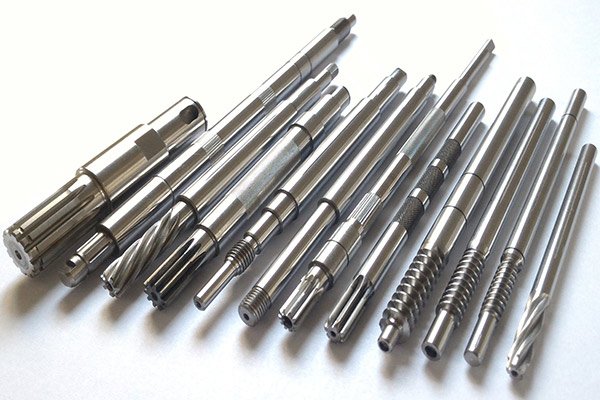
Cylindrical grinding is critical for shafts, pistons, plungers, sleeves, and rotating elements. For these parts, roundness and concentricity are as important as nominal diameter. A piston or plunger that appears acceptable in a simple two-point measurement may still have lobing or form error that creates leakage paths or uneven contact. Precision cylindrical grinding, combined with proper inspection using roundness testers, CMMs, air gauges, and surface profilometers, helps ensure that the component performs as designed rather than merely passing a basic dimensional check.
Centerless grinding is often valuable for high-volume hydraulic components where diameter consistency and throughput are both required. However, centerless processes must be carefully engineered to avoid triangularity, chatter marks, and inconsistent support conditions. Process parameters such as grinding wheel specification, regulating wheel speed, blade height, coolant delivery, dressing frequency, and in-feed control all influence final quality. In hydraulic manufacturing, high productivity is only beneficial if it does not compromise sealing and sliding performance.
Material selection also shapes the grinding strategy. Common hydraulic pump materials include alloy steels, bearing steels, stainless steels, tool steels, cast irons, bronze alloys, and, in some high-wear or corrosive applications, advanced ceramics or carbide-based materials. Heat treatment improves hardness and fatigue resistance, but it also introduces distortion and potential grinding burn risk. A capable supplier must understand how to leave the right machining allowance before heat treatment, how to stabilize the part afterward, and how to grind without compromising the hardened layer.
Grinding burn is a hidden reliability threat. Excessive heat can create tensile residual stress, re-tempered zones, microcracks, or soft spots that may not be visible to the naked eye. In hydraulic pump parts, such damage can initiate fatigue failure, spalling, or surface scoring during operation. Effective prevention requires correct wheel selection, dressing discipline, coolant concentration control, coolant targeting, feed-rate management, and, when needed, verification through hardness testing, metallographic review, or non-destructive evaluation. Precision grinding is therefore both a machining process and a metallurgical control process.
Another technical factor is burr and edge control. Hydraulic components often contain ports, grooves, cross-holes, slots, and precision oil passages. Burrs can break loose and contaminate the hydraulic system, damaging downstream valves, seals, and bearings. Overly sharp edges can initiate cracks or damage mating surfaces, while excessive edge rounding may alter flow behavior or sealing geometry. The best results come from integrating grinding with deburring, micro-edge finishing, ultrasonic cleaning, and controlled packaging so that the component arrives ready for assembly.
Inspection strategy must match functional risk. For hydraulic pump parts, quality control should not stop at standard caliper checks. Critical features may require CMM inspection, form measurement, air gauging, optical measurement, surface roughness testing, hardness verification, runout measurement, and leak-related functional evaluation. Statistical process control can identify drift before nonconforming batches are produced. When paired with ERP-driven traceability, inspection data becomes a supply chain asset rather than a paperwork exercise.
The ODM & Supply Chain Advantage
For global OEM and Tier 1 customers, the challenge is not only designing a hydraulic pump component; it is industrializing that component across cost, quality, lead time, and risk. This is where IndustryApex Technology’s identity as a supply chain integrator and ODM solution provider becomes important. Instead of treating machining, grinding, heat treatment, inspection, and sourcing as disconnected steps, IndustryApex Technology coordinates them as a controlled manufacturing ecosystem.

With more than 30 years of manufacturing experience and an ERP-supported precision manufacturing system, IndustryApex Technology helps customers move from drawings and prototypes to stable production. The company’s manufacturing edge is built on process ownership and integration. Capabilities include 3-axis, 4-axis, and 5-axis CNC machining, EDM, precision grinding, and industrial ceramics processing. This breadth allows engineering teams to choose the most efficient and reliable route for each part instead of forcing every component into a single manufacturing method.
For example, a hydraulic pump shaft may require CNC turning, milling of oil grooves, heat treatment, cylindrical grinding, keyway finishing, and final runout inspection. A valve plate may require CNC milling, EDM features, stress-relief planning, surface grinding, lapping preparation, and detailed flatness measurement. A ceramic or carbide wear component may require a specialized approach to grinding wheel selection, fixturing, and crack prevention. By integrating these processes under a disciplined system, IndustryApex Technology reduces handoff risk and supports better control of tolerances and delivery schedules.
ODM support is especially valuable when customers need design-for-manufacturability input. A small change in datum structure, grinding allowance, corner radius, relief groove, or material specification can significantly improve manufacturability and reduce cost without compromising performance. IndustryApex Technology works with OEM engineering teams to evaluate tolerance stack-ups, functional surfaces, surface finish requirements, and inspection methods. The goal is to manufacture parts that meet the real engineering intent, not simply parts that copy a drawing line by line.
Supply chain resilience is another core advantage. Hydraulic pump manufacturers often face fluctuating demand, urgent replacement part requirements, and strict quality expectations. A supplier that only offers one process may create bottlenecks. A supply chain integrator can manage machining, grinding, special processes, finishing, cleaning, inspection, and logistics through a more coordinated structure. ERP visibility supports production planning, lot tracking, documentation, and schedule discipline, which are essential for international procurement teams.
IndustryApex Technology’s experience across demanding sectors also strengthens hydraulic manufacturing discipline. The same mindset used for aerospace CNC machining and aircraft structural components applies to traceability, process control, and high-value risk management. The precision expectations found in medical component machining reinforce cleanliness, documentation, and fine-feature accuracy. For hydraulic pump customers, this cross-industry capability translates into a more mature manufacturing culture.
Cost control should also be viewed through the lens of total cost of ownership. A cheaper part that causes leakage, noise, scoring, rework, assembly delays, or field failures is not low cost. Precision grinding can add process expense, but it often reduces warranty exposure, energy loss, and service downtime. IndustryApex Technology helps customers balance tolerance requirements with manufacturing economics, identifying which surfaces truly need ultra-precision and which can be optimized for cost-efficient production.
Industry Applications
Hydraulic pump parts manufactured with precision grinding are used across mobile machinery, industrial equipment, energy systems, automotive applications, marine machinery, agricultural equipment, construction machinery, and high-pressure fluid control platforms. Each market has different performance priorities, but all depend on stable hydraulic efficiency and long component life.
In construction and mining equipment, hydraulic pumps operate under shock loads, contamination exposure, and long duty cycles. Components such as pistons, cylinder blocks, valve plates, and drive shafts must resist wear while maintaining pressure stability. Precision grinding improves surface consistency and helps reduce internal leakage, which is critical for lifting, steering, digging, and propulsion functions.
In agricultural machinery, reliability and maintainability are key. Equipment may work in dusty, wet, and abrasive environments where hydraulic systems power steering, harvesting, lifting, and implement control. A pump failure during peak season can create significant economic loss. Ground surfaces with correct finish and geometry help extend service intervals and reduce sensitivity to operating variation.
Industrial automation and machine tools require hydraulic pumps with low noise, stable flow, and accurate pressure response. Here, vibration, runout, and surface waviness can affect system stability. Precision-ground shafts, plates, plungers, and sleeves support smoother operation and reduce the chance of stick-slip behavior or pressure pulsation.
Energy and power generation applications often require hydraulic systems for lubrication, control, actuation, and safety-critical functions. Reliability expectations are high because downtime can be extremely expensive. Precision grinding supports predictable wear behavior and dimensional stability in demanding environments where failure is not acceptable.
Transportation and specialty vehicle systems also benefit from reliable pump components. Whether used in commercial vehicles, lifting platforms, steering systems, or auxiliary hydraulic units, pump efficiency directly affects energy consumption and thermal performance. Reduced leakage and lower friction can help improve system efficiency while supporting longer component life.
For advanced fluid control assemblies, IndustryApex Technology also manufactures related precision components such as spools, sleeves, shafts, seats, plungers, and custom wear parts. These parts may require combinations of CNC machining, EDM, precision grinding, ceramic processing, and high-level inspection. Customers can explore more about IndustryApex Technology’s hydraulic manufacturing capabilities through the dedicated Hydraulics & Pump components page.
Call to Action
Hydraulic pump reliability begins at the component level. Precision grinding transforms critical surfaces into functional interfaces capable of carrying pressure, controlling leakage, reducing wear, and supporting long-term efficiency. For OEMs and Tier 1 suppliers, selecting the right manufacturing partner can reduce engineering risk, stabilize production, and improve total cost of ownership.
IndustryApex Technology combines more than 30 years of precision manufacturing experience with ERP-controlled operations, 3-5 axis CNC machining, EDM, precision grinding, and industrial ceramics capabilities. As an ODM solution provider and supply chain integrator, IndustryApex Technology supports global customers from prototype development through production supply.
If your team is developing hydraulic pump parts, upgrading an existing supplier base, or seeking a reliable partner for precision-ground fluid control components, connect with IndustryApex Technology today. Visit the Contact Us page to share drawings, technical requirements, target volumes, and quality expectations. Our engineering and supply chain teams are ready to help convert demanding hydraulic designs into dependable production components.