- Shaft
- Molds&Tools
- Hydraulics And Pump
- Hair transplant needle
- Hydraulics And Pump
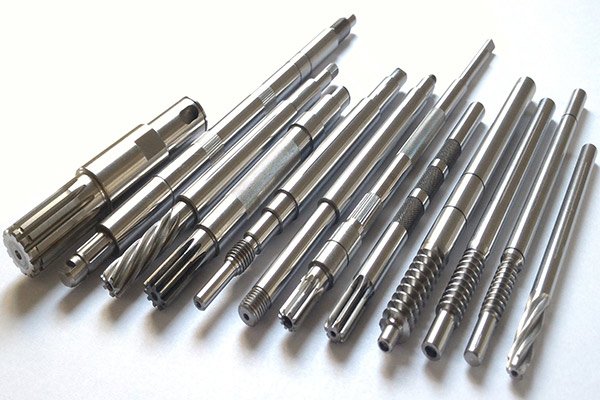
- Precision CNC Shaft Machining Manufacturer for High Performance Applications
- Energy Industry CNC Machining Parts Supplier
- Aerospace CNC Machining Parts Manufacturer
- Aerospace CNC Machining Parts Manufacturer
- Automotive & EV CNC Machining Parts Supplier for OEM and Tier 1
- Medical CNC Machining Parts Supplier for Precision Medical Devices

Cold Heading Tooling vs. CNC Machining: Which Manufacturing Route Is Right for Your Project?

Executive Summary
For OEM engineering, sourcing, and manufacturing teams, the choice between cold heading tooling and CNC machining is rarely a simple question of unit price. It is a strategic decision involving part geometry, material behavior, annual volume, tolerance requirements, lead time, capital exposure, supplier capability, and downstream quality risk. Cold heading can deliver exceptional productivity and material efficiency for high-volume formed components such as fasteners, pins, rivets, blanks, and near-net-shape parts. CNC machining, by contrast, offers unmatched flexibility, precision, and design adaptability for complex components, lower-volume programs, development builds, and critical parts requiring tight geometric control.
The correct process depends on where your project sits in its lifecycle. During prototype and pre-production phases, CNC machining is often the fastest and lowest-risk method because it does not require dedicated heading dies or long tooling qualification cycles. Once the design is mature and demand is stable, cold heading may become economically attractive for suitable geometries, particularly where material savings and cycle speed outweigh tooling investment. In many industrial programs, the best answer is not one process replacing the other, but a hybrid route: cold heading for near-net forming, followed by CNC machining, grinding, EDM, or finishing operations to achieve final precision features.
At IndustryApex Technology, operating through IndustryApex CNC, we approach this decision from both an engineering and supply chain perspective. Our role is not limited to quoting a drawing. As a precision manufacturing partner and ODM solution provider, we help global OEM and Tier 1 suppliers evaluate manufacturability, cost structure, process capability, and production scalability before the process route is locked. Whether your project involves high-strength mechanical hardware, aerospace structural components, hydraulic parts, medical devices, drivetrain components, or custom industrial assemblies, the right manufacturing strategy can determine whether your program launches smoothly or becomes trapped in recurring cost, quality, and delivery issues.
Technical Deep Dive
Cold heading is a metal forming process in which wire or bar stock is cut and plastically deformed at room temperature inside a sequence of dies and punches. Instead of removing material, cold heading redistributes it. This is why the process is widely used for screws, bolts, rivets, pins, shafts, and high-volume fastener-style components. The main technical advantage is material utilization. Because the part is formed close to its final shape, scrap can be dramatically lower than subtractive machining. Cold heading also improves grain flow, which can enhance mechanical strength in certain directions compared with a fully machined part from bar stock.
However, cold heading is constrained by material ductility, forming ratio, geometry, and tooling life. The process works best when the component can be produced through axial forming steps without excessive undercuts, deep complex cavities, thin unsupported walls, or multi-face precision features that cannot be formed directly. Materials must withstand deformation without cracking, folding, or developing internal defects. Stainless steels, carbon steels, alloy steels, copper alloys, aluminum alloys, and some specialty metals can be cold headed, but each requires careful assessment of hardness, work hardening rate, lubrication, annealing condition, and die stress.
CNC machining is a subtractive process that removes material using controlled cutting tools. Modern 3-axis, 4-axis, and 5-axis machining centers can produce complex profiles, pockets, grooves, threaded features, sealing faces, precision bores, and freeform surfaces with high repeatability. CNC machining is well suited to parts where geometry is too complex for cold forming, where tolerances are very tight, where material is difficult to deform, or where design changes are expected. It is also a practical route for low to medium volumes because the process requires fixtures, programs, tools, and inspection plans, but not necessarily expensive dedicated forming dies.
The economic comparison changes as production volume increases. CNC machining has lower initial tooling cost but higher variable cost per piece because machine time, tool wear, material removal, and labor supervision remain significant. Cold heading requires investment in dies, punches, process development, and validation, but once stable, it can produce parts at very high speed with low material waste. For a part that will run in millions of pieces annually, cold heading may deliver a strong cost advantage. For a part that will run in hundreds or thousands of pieces, or that may change during qualification, CNC machining is usually more flexible and commercially safer.
Tolerance strategy is another key factor. Cold heading can achieve excellent repeatability for formed dimensions, but secondary operations are often needed for critical features such as precision threads, ground diameters, bearing surfaces, sealing lands, slots, cross holes, or complex datum structures. CNC machining can directly produce these features with tighter dimensional and geometric control, especially when paired with precision grinding, EDM, or controlled inspection. For high-reliability sectors such as aerospace, medical, and fluid control, this difference matters because the engineering drawing may include true position, cylindricity, surface roughness, concentricity, and other GD&T requirements that cannot be judged by nominal dimensions alone.
From a design-for-manufacturing perspective, cold heading should be considered early if the part has rotational symmetry, large production volume, favorable material behavior, and a geometry that can be formed without excessive die complexity. CNC machining should be prioritized when the part has complex multi-axis features, low production volume, frequent revisions, difficult material, tight precision requirements, or a short launch schedule. Hybrid manufacturing becomes attractive when the part has a simple bulk shape that can be formed economically but still needs high-precision machined interfaces. In this case, the near-net blank reduces material waste, while CNC machining delivers final functional accuracy.
The ODM & Supply Chain Advantage
A manufacturing process decision is also a supply chain decision. A project may look inexpensive on paper if the unit price is optimized in isolation, but hidden costs appear when tooling lead time, die maintenance, dimensional drift, quality documentation, supplier coordination, material traceability, and engineering change control are ignored. This is why global OEMs and Tier 1 suppliers increasingly prefer partners who can integrate engineering, manufacturing, inspection, and supply chain execution under one controlled system.
IndustryApex Technology positions IndustryApex CNC as a supply chain integrator and ODM solution provider, not merely a machine shop. Our value begins at process planning. We review drawings, functional requirements, annual usage, material specifications, tolerance stacks, assembly conditions, and qualification needs to determine whether CNC machining, cold heading support, precision grinding, EDM, ceramic processing, or a combined production route is most appropriate. This front-end analysis helps customers avoid locking into a process that becomes expensive or unstable after tooling investment has already been made.
Our manufacturing edge is built on a fully controlled precision manufacturing system supported by ERP management and more than 30 years of manufacturing experience. ERP control matters because complex B2B programs require more than cutting metal. They require material planning, lot control, production scheduling, outside process coordination, inspection records, delivery tracking, and revision discipline. When these elements are fragmented across disconnected vendors, engineering teams lose visibility and purchasing teams inherit delivery risk. With an integrated system, project data, production status, and quality expectations are managed as part of one operating structure.
Technically, our capabilities include 3-axis to 5-axis CNC machining, EDM, precision grinding, and industrial ceramics. These capabilities are important because many engineered components do not fit neatly into one process category. A hydraulic valve spool may require turning, grinding, lapping, and tight surface finish control. An aerospace bracket may require 5-axis machining, titanium expertise, and rigorous inspection. A medical device component may require biocompatible material handling and micron-level consistency. A wear component may require tungsten carbide, ceramic, or specialty grinding expertise rather than standard milling alone.
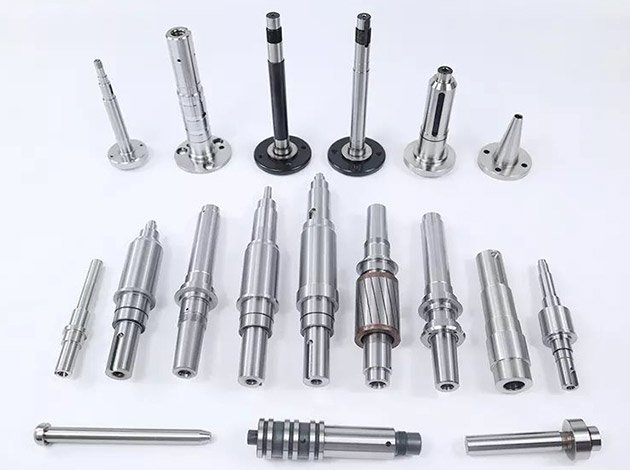
For customers evaluating cold heading versus CNC machining, this integrated capability creates practical options. We can help assess whether a machined prototype should later transition to a formed blank. We can identify which features must remain machined even if the main body is cold headed. We can advise whether tolerance requirements should be adjusted to reduce cost without compromising function. We can also support production ramp-up by aligning prototype validation, pilot manufacturing, process documentation, inspection methods, and supplier coordination. For global OEMs and Tier 1 suppliers, that engineering continuity reduces handoff risk from development to production.
This approach is especially valuable when sourcing teams are under pressure to reduce cost without increasing risk. A pure price comparison between cold heading and CNC machining can be misleading if it ignores reject rates, tooling maintenance, engineering changes, material yield, inspection burden, and inventory exposure. The better question is: which route gives the lowest total landed cost at the required quality level over the full program lifecycle? That is the level at which IndustryApex Technology supports decision-making.
Industry Applications
In aerospace, the decision between forming and machining is driven by strength, weight, traceability, and qualification requirements. Many aircraft fasteners and pins benefit from forming because grain flow and material efficiency are valuable. However, complex brackets, housings, titanium structures, and high-precision interfaces usually require CNC machining, often with 5-axis capability. For programs involving titanium aircraft parts or structural components, our aerospace CNC machining capabilities support demanding geometries, tight tolerances, and controlled documentation expectations.
In medical manufacturing, CNC machining is frequently preferred for implants, surgical instruments, diagnostic device parts, and precision housings because tolerances, surface finish, material certification, and clean production discipline are critical. Cold forming may be suitable for certain pins, small blanks, or simple high-volume hardware, but many medical components require precision machining after any forming operation. For customers developing titanium implants, surgical instruments, and high-precision medical device parts, our medical component machining solutions are aligned with the need for consistency, traceability, and process control.
Hydraulic and pump components present another strong example of process selection. A simple plug, pin, or fastener may be economically formed, but valve spools, sleeves, pump shafts, sealing components, and fluid control parts often require turning, milling, grinding, honing, or lapping. Surface finish, roundness, concentricity, and fit are central to leakage control and service life. Our hydraulic and pump parts manufacturing supports these precision requirements, especially where machining and grinding must be managed together rather than sourced separately.
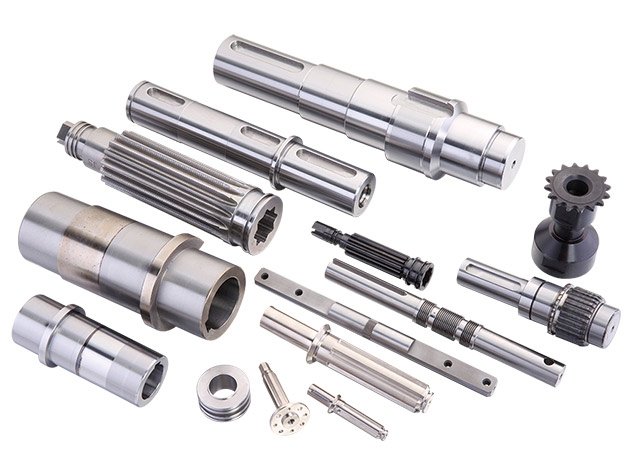
Automotive, drivetrain, construction machinery, and industrial automation programs often use both process families. High-volume fasteners, collars, bushings, and near-net blanks may favor cold heading or cold forging. Gears, splined shafts, housings, eccentric shafts, and precision transmission components often require machining and finishing operations. The same logic applies in energy, semiconductor equipment, optics, food packaging machinery, and custom industrial systems: the process should follow the functional requirement, not the other way around.
For early-stage product development, CNC machining provides speed and flexibility. Engineers can validate fit, function, material choice, and design assumptions before committing to tooling. For mature, high-volume components with stable geometry, cold heading can reduce cost and improve productivity. For critical parts where both cost and precision matter, a combined route may provide the strongest balance. The best supplier is one that can evaluate these tradeoffs objectively and then execute the selected route with reliable process control.
Call to Action
If your team is deciding between cold heading tooling, CNC machining, or a hybrid manufacturing route, involve your manufacturing partner before the design is frozen. Early engineering review can prevent unnecessary tooling cost, reduce machining time, improve material utilization, and avoid tolerance strategies that are expensive but not functionally required. IndustryApex Technology helps OEM and Tier 1 teams analyze the full production path from prototype to ramp-up, including manufacturability, cost drivers, inspection planning, and supply chain execution.
Visit IndustryApex CNC to learn more about our precision manufacturing capabilities, or contact us with your drawing, material requirement, annual volume, and target application. Our engineering team can help determine whether cold heading, CNC machining, precision grinding, EDM, ceramics, or an integrated ODM supply chain solution is the right path for your project.