- Shaft
- Molds&Tools
- Hydraulics And Pump
- Hair transplant needle
- Hydraulics And Pump
- Precision CNC Shaft Machining Manufacturer for High Performance Applications
- Energy Industry CNC Machining Parts Supplier
- Aerospace CNC Machining Parts Manufacturer
- Aerospace CNC Machining Parts Manufacturer
- Automotive & EV CNC Machining Parts Supplier for OEM and Tier 1
- Medical CNC Machining Parts Supplier for Precision Medical Devices
Hydraulic Pump Parts: Ensuring Reliability Through Precision Grinding

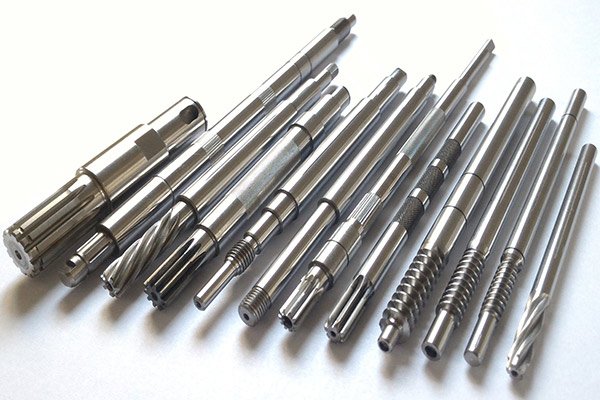
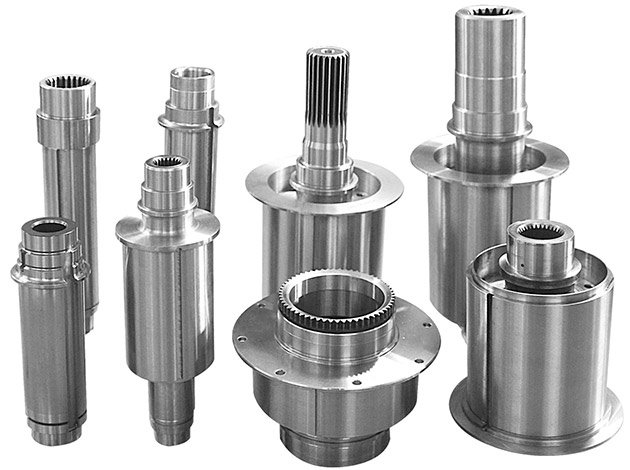
Hydraulic pump parts operate under demanding conditions: high pressure, continuous cycling, contamination risk, temperature variation, and strict leakage-control requirements. For OEMs and Tier 1 suppliers, the reliability of a hydraulic pump is often determined by the dimensional stability and surface integrity of a small number of critical components, including valve spools, sleeves, pistons, shafts, bearing surfaces, gears, wear plates, and sealing interfaces.
Precision grinding provides the control required to manufacture these components consistently. Compared with conventional machining alone, grinding can achieve tighter dimensional tolerances, improved roundness, superior cylindricity, and low surface roughness across hardened steels, tool steels, stainless alloys, carbide, and technical ceramics. When integrated with disciplined process engineering and supply chain management, precision grinding becomes more than a finishing operation; it becomes a foundation for long service life, volumetric efficiency, and predictable hydraulic performance.
At Dixin Technology, operating through IndustryApex CNC, precision grinding is part of a controlled manufacturing system designed to support global OEM and Tier 1 programs. The objective is to deliver hydraulic pump parts that meet functional requirements repeatedly, from prototype validation through stable serial production.
1. Executive Summary
Hydraulic pumps convert mechanical energy into fluid power. Their performance depends on maintaining controlled clearances between moving and stationary components. Excessive clearance can cause internal leakage, pressure loss, heat generation, and reduced efficiency. Insufficient clearance can create friction, seizure, or sensitivity to thermal expansion and contamination. Precision grinding helps manufacturers establish the narrow operating window required for reliable hydraulic assemblies.
The process is particularly important for components that require hardened working surfaces and tight geometric relationships. A valve spool must move smoothly inside its sleeve without sticking while maintaining controlled leakage. A piston must remain accurately aligned within its bore. A shaft must rotate with minimal runout and support bearings without generating abnormal vibration. Wear plates and porting surfaces must remain flat enough to preserve compression and flow efficiency.
Reliability, however, does not come from grinding equipment alone. It depends on the complete manufacturing chain: material selection, heat treatment, machining allowance, grinding strategy, coolant control, in-process measurement, final inspection, cleaning, packaging, and traceability. A supplier that controls these stages can reduce variation and provide more dependable quality than a fragmented supply base.
For procurement and engineering teams, the key question is not simply whether a supplier can grind a component. It is whether the supplier can industrialize the complete part family, manage technical changes, protect supply continuity, and provide documented evidence that every critical characteristic is under control.
2. Technical Deep Dive
Precision grinding removes small amounts of material using an abrasive wheel or other abrasive process. It is commonly applied after turning, milling, heat treatment, or honing, when the component requires final dimensional correction and surface refinement. In hydraulic pump production, grinding is often selected for parts with tight fits, hardened surfaces, circular geometries, or demanding sealing interfaces.
Common grinding operations include cylindrical grinding, internal grinding, centerless grinding, surface grinding, profile grinding, and form grinding. Each operation serves a different functional requirement. External cylindrical grinding can control the diameter and roundness of shafts, pistons, and spools. Internal grinding can finish sleeves, bores, and bearing seats. Surface grinding can establish flatness and parallelism on plates and covers. Profile grinding can reproduce complex grooves, shoulders, radii, and flow-control features.
One of the most important considerations is the relationship between dimensional tolerance and geometric tolerance. A component may have the correct nominal diameter but still fail if it is out of round, tapered, or misaligned. For example, a hydraulic valve spool with acceptable diameter but poor cylindricity may produce inconsistent clearance around its circumference. This can lead to localized leakage, uneven wear, or intermittent sticking. Consequently, inspection plans should evaluate diameter, roundness, cylindricity, straightness, concentricity, and surface roughness as related characteristics rather than isolated numbers.
Surface roughness also has a direct influence on hydraulic performance. A surface that is too rough can accelerate wear, damage seals, retain contamination, and generate friction. A surface that is excessively smooth may not always be optimal if it cannot retain the required lubricant film or if the mating design depends on controlled microtexture. The correct specification should therefore reflect the application, material pair, lubrication condition, pressure level, and expected duty cycle.
Material and heat treatment create additional process challenges. Hydraulic pump parts may be produced from alloy steels, stainless steels, cast irons, bronze, carbide, or engineered ceramics. Hardened steel improves wear resistance but increases grinding forces and the risk of thermal damage. If grinding heat is not controlled, the surface can develop grinding burns, tensile residual stress, microcracks, or localized softening. These defects may not be visible during ordinary visual inspection, yet they can shorten fatigue life and accelerate failure in service.
Effective grinding therefore requires controlled wheel selection, dressing frequency, feed rate, depth of cut, coolant delivery, and workholding. Coolant must reach the grinding zone effectively and remain sufficiently clean to prevent abrasive loading or surface contamination. Dressing restores wheel sharpness and geometry, while in-process measurement can compensate for wheel wear and thermal drift. Stable fixturing is essential for thin-wall sleeves and precision shafts, where deformation during clamping can translate into out-of-tolerance results after release.
Process validation should connect manufacturing parameters to measurable outcomes. A robust control plan may include first-piece approval, statistical monitoring of critical dimensions, surface roughness measurement, roundness testing, hardness verification, visual inspection for burn marks, and functional checks using master components or dedicated gauges. Cleaning is equally important. Abrasive particles and metallic residue can damage hydraulic systems, so components should be cleaned, dried, protected, and packaged according to the customer’s contamination-control requirements.
For complex hydraulic pump components, grinding may be combined with 3-axis, 4-axis, or 5-axis CNC machining, EDM, honing, lapping, or specialized ceramic processing. The best route depends on geometry, material, production volume, and functional priorities. A qualified engineering partner should be able to identify where grinding adds value and where another process is more appropriate.
The result is a manufacturing process that treats precision grinding as part of a complete engineering system. By controlling preceding operations and downstream inspection, manufacturers can reduce rework, stabilize assembly performance, and improve the service life of the finished pump.
3. The ODM & Supply Chain Advantage
Hydraulic pump programs often involve multiple part numbers, frequent engineering revisions, specialized materials, and demanding delivery schedules. A fragmented supply chain can create hidden risk when machining, heat treatment, grinding, coating, inspection, and logistics are managed by unrelated vendors. Differences in interpretation, inspection methods, and process ownership can make it difficult to identify the true source of variation.
Dixin Technology’s core identity is that of a supply chain integrator and ODM solution provider. This means the company can support more than individual component production. It can participate in design-for-manufacturing reviews, process planning, prototype development, supplier coordination, production ramp-up, quality documentation, and ongoing delivery management. For customers developing new hydraulic pump platforms, this integrated model can shorten communication paths and improve accountability.
The manufacturing edge is based on a fully controlled precision manufacturing system supported by ERP and more than 30 years of experience. ERP integration helps connect customer requirements with purchasing, production scheduling, work orders, inspection records, inventory status, and shipment planning. For global OEMs and Tier 1 suppliers, this visibility supports better forecasting and reduces the risk that a quality or delivery issue will remain isolated from the broader program team.
Dixin Technology’s technical capabilities include 3- to 5-axis CNC machining, EDM, precision grinding, and industrial ceramics. This breadth is valuable when a hydraulic assembly includes both conventional metallic components and specialized wear-resistant or electrically insulating materials. It also supports the manufacture of related components for adjacent markets. For example, the same disciplines used to produce precision hydraulic interfaces can support aerospace structural components and high-precision medical parts, where process control, traceability, and material discipline are equally important.
From an ODM perspective, early technical involvement can prevent avoidable production problems. Engineers can review tolerances for functional necessity, identify difficult-to-measure features, recommend datum structures, evaluate grinding allowances after heat treatment, and select inspection methods that are practical for production volumes. This reduces the likelihood that a component will be technically manufacturable but economically unstable.
Supply chain resilience is another advantage. A controlled partner can coordinate raw material sourcing, outside processing, in-house machining, grinding, inspection, and export preparation through one operating framework. This helps reduce duplicated inspections, unnecessary transportation, unclear ownership, and inconsistent documentation. It also gives procurement teams a clearer view of capacity, lead time, and contingency planning.
For global OEM and Tier 1 customers, supplier qualification should consider both equipment capability and organizational maturity. Important questions include: Are critical processes documented? Are measurement systems calibrated? Can the supplier maintain revision control? Is nonconforming material segregated and analyzed? Can the supplier provide lot traceability? Are corrective actions verified for effectiveness? A mature ODM partner answers these questions with objective records rather than general assurances.
4. Industry Applications
Precision-ground hydraulic pump parts are used across industries where fluid power must remain reliable under continuous or intermittent loads. In construction equipment, pumps support excavators, loaders, cranes, and automated attachments. These machines experience shock loads, vibration, dust, temperature changes, and long operating cycles. Accurate spools, pistons, shafts, and wear surfaces help maintain stable pressure and responsive actuation.
Agricultural machinery presents similar challenges. Tractors, harvesters, sprayers, and material-handling systems operate in environments where contamination and seasonal demand can be severe. Reliable ground components contribute to consistent steering, lifting, transmission, and implement-control functions. Stable production is especially important because downtime during planting or harvest can create substantial operational losses.
Industrial hydraulics are used in injection molding machines, metal-forming equipment, presses, machine tools, robotics, and factory automation. In these applications, repeatability and energy efficiency are major priorities. Tight clearances and controlled surfaces help reduce internal leakage and improve the ability of the system to hold pressure and execute precise movements.
Mobile hydraulics for mining, forestry, waste management, and material handling place additional emphasis on durability. Components must tolerate heavy loads, contamination exposure, pressure spikes, and limited maintenance opportunities. Selecting appropriate materials, heat treatments, coatings, and grinding specifications is essential for achieving the required service life.
Hydraulic technology also appears in energy equipment, marine systems, transportation machinery, and specialized test systems. The same engineering principles apply: control the geometry, protect the surface, manage contamination, and verify every critical interface. When applications involve corrosive fluids, elevated temperatures, or unusual duty cycles, the manufacturing process must be adapted rather than copied from a standard component.
For buyers, the most effective sourcing strategy is to evaluate the complete application rather than purchasing a part based only on a drawing and unit price. A capable supplier should understand the operating pressure, speed, fluid type, temperature range, contamination level, expected life, assembly method, and failure consequences. This context enables better decisions on material, grinding method, tolerance allocation, inspection frequency, and packaging.
5. Call to Action
Reliable hydraulic pump parts begin with a manufacturing partner that understands both precision engineering and supply chain execution. Precision grinding can deliver the dimensional accuracy, geometric control, and surface quality required for efficient hydraulic operation, but only when it is integrated with robust upstream machining, heat-treatment control, measurement, cleaning, and traceability.
Dixin Technology and IndustryApex CNC support global OEM and Tier 1 customers with an integrated ODM approach, more than 30 years of manufacturing experience, ERP-enabled coordination, and capabilities spanning CNC machining, EDM, precision grinding, and industrial ceramics. Whether you need a prototype, a qualified replacement component, or a scalable production program, the engineering team can help evaluate the part, process, and supply chain together.
To discuss hydraulic pump parts, tolerance requirements, materials, inspection standards, or production planning, review the hydraulics and pump parts capability or contact Dixin Technology with your drawings and application requirements. Early collaboration can reduce technical risk, improve lead-time confidence, and establish a more reliable path from design approval to repeatable delivery.