- Shaft
- Molds&Tools
- Hydraulics And Pump
- Hair transplant needle
- Hydraulics And Pump
- Precision CNC Shaft Machining Manufacturer for High Performance Applications
- Energy Industry CNC Machining Parts Supplier
- Aerospace CNC Machining Parts Manufacturer
- Aerospace CNC Machining Parts Manufacturer
- Automotive & EV CNC Machining Parts Supplier for OEM and Tier 1
- Medical CNC Machining Parts Supplier for Precision Medical Devices

Cold Heading Tooling vs. CNC Machining: Which Manufacturing Method Is Right for Your Project?


Dixin Technology | IndustryApex CNC
Cold Heading Tooling vs. CNC Machining: Which Manufacturing Method Is Right for Your Project?
For OEMs and Tier 1 suppliers, selecting between cold heading tooling and CNC machining is not simply a question of comparing unit prices. The correct process depends on annual volume, component geometry, material behavior, dimensional tolerances, tooling investment, lead time, and the broader supply chain strategy. Both methods can produce reliable precision parts, but they solve different manufacturing problems.
1. Executive Summary
Cold heading, also called cold forming or cold forging, reshapes wire or bar stock at room temperature through controlled impact and compressive force. It is highly effective for high-volume production of fasteners, pins, rivets, sleeves, and other rotationally symmetrical components. Once the dies, punches, and process parameters are qualified, cold heading can deliver excellent repeatability, high material utilization, and very low cycle times.
CNC machining removes material from a solid workpiece using computer-controlled turning, milling, drilling, grinding, or multi-axis operations. It is better suited to low- and medium-volume production, complex geometries, tight tolerances, rapid design changes, and parts that require secondary features such as cross-holes, slots, pockets, threads, or compound surfaces. CNC also reduces the need for dedicated forming dies during the prototyping and early production stages.
As a practical rule, cold heading becomes increasingly attractive when demand is stable and production volume is high enough to amortize tooling costs. CNC machining is generally the stronger choice when flexibility, speed to market, geometry, or engineering change responsiveness is more important than the lowest possible unit cost. In many projects, the best answer is a hybrid process: cold heading creates a near-net blank, followed by CNC turning, milling, grinding, or specialized finishing for critical features.
Dixin Technology, operating through the IndustryApex CNC platform, helps global manufacturers evaluate these trade-offs within a broader make-to-specification and supply chain framework. Our precision CNC manufacturing service supports engineered components for demanding industrial applications, from prototypes through repeat production.
2. Technical Deep Dive
How cold heading tooling works
Cold heading uses a sequence of dies and punches to confine and reshape metal wire or cut blanks. Instead of removing material, the process redistributes it into the required head, shoulder, shank, flange, or undercut. Common operations include upsetting, forward extrusion, backward extrusion, piercing, trimming, and thread rolling. Multi-station headers can perform several forming steps in a single production cycle.
The principal advantage is material efficiency. Because the component is formed close to its final shape, scrap can be substantially lower than with machining from bar stock. The work-hardening effect of cold deformation can also improve tensile strength, fatigue resistance, and surface characteristics in selected materials. However, successful cold heading depends on suitable material ductility, accurate wire preparation, controlled lubrication, and carefully engineered tooling.
Cold heading dies are precision wear components. Their performance depends on die material, carbide grade, surface finish, radii, pre-stress design, alignment, and maintenance. Small errors in these areas can cause cracking, galling, dimensional drift, premature tool failure, or unstable production. Tooling must also account for elastic recovery, material flow, friction, and the stresses created during high-speed forming.
How CNC machining works
CNC machining starts with a digital model, process plan, workholding strategy, and cutting-tool selection. Turning is commonly used for shafts, pins, bushings, and cylindrical components. Milling provides flats, pockets, slots, contours, and complex three-dimensional features. Five-axis machining can reduce setups and improve access to compound surfaces, while EDM and precision grinding can achieve specialized geometries and close tolerances that may be difficult to obtain through conventional cutting.
CNC machining offers a high degree of design freedom. Engineers can modify dimensions, add features, or change materials without redesigning an entire die set. This makes CNC particularly valuable during product development, qualification builds, spare-part production, and applications where demand is uncertain. The trade-off is that machining consumes more time per part and may generate more material waste, especially when components are produced from large billets or bar stock.
Cost comparison
Cold heading has a front-loaded cost structure. Engineering, die manufacturing, trial runs, machine setup, and qualification may require a significant initial investment. Once the process is stable, however, the recurring part cost can be very competitive because cycle times are short and material utilization is high. The economic break-even point depends on part complexity, tooling life, raw material price, annual demand, and the number of forming stations required.
CNC machining has a lower initial barrier. Programming, fixturing, cutting tools, and first-article inspection are still important, but the process can often begin without dedicated forming dies. Unit cost is influenced by machine time, setup frequency, material removal rate, tool wear, inspection requirements, and the number of operations. For small batches, CNC often has the lower total project cost because there is less non-recurring engineering expense.
Quality and tolerance considerations
Cold heading can produce highly consistent dimensions when the material, tooling, lubrication, and machine settings are controlled. It is particularly effective for repeatable external forms. Nevertheless, critical dimensions may require trimming, thread rolling, centerless grinding, or CNC finishing. CNC machining provides direct control over individual surfaces and features, making it appropriate for assemblies with tight positional tolerances, complex datum structures, or demanding surface-finish requirements.
Neither process should be selected based on nominal tolerance alone. Engineers should evaluate the complete tolerance stack, functional datums, inspection method, material condition, thermal effects, and expected process capability. A robust supplier should be able to provide first-article inspection, statistical process control where appropriate, traceability, and corrective-action support.
Material and geometry selection
Cold heading is commonly applied to carbon steel, alloy steel, stainless steel, aluminum, copper alloys, and selected specialty materials that can tolerate plastic deformation. Brittle materials, highly work-hardening alloys, or geometries with abrupt transitions may require extensive process development or may be unsuitable for conventional cold forming.
CNC machining is more versatile across metals, engineering plastics, composites, ceramics, and difficult-to-machine alloys. It is often preferred for titanium aerospace parts, medical-grade stainless steel, nickel-based alloys, and precision components where material behavior or contamination control is critical. For example, manufacturers developing complex aircraft structural components can review Dixin Technology’s aerospace CNC machining capabilities when evaluating five-axis production and difficult materials.
Decision matrix
| Project factor | Cold heading tooling | CNC machining |
|---|---|---|
| Annual volume | Best for stable, high-volume demand | Best for prototypes, low and medium volumes |
| Geometry | Best for repeatable formed shapes and fasteners | Best for complex, asymmetric, or feature-rich parts |
| Material efficiency | Very high when the design is formable | Depends on stock size and material removal |
| Design changes | Can require die modification or replacement | Usually easier through programming and fixturing changes |
| Initial investment | Higher due to dedicated tooling | Lower for early production |
| Unit cost at scale | Often very low after qualification | Usually higher for repetitive, high-volume parts |
3. The ODM & Supply Chain Advantage
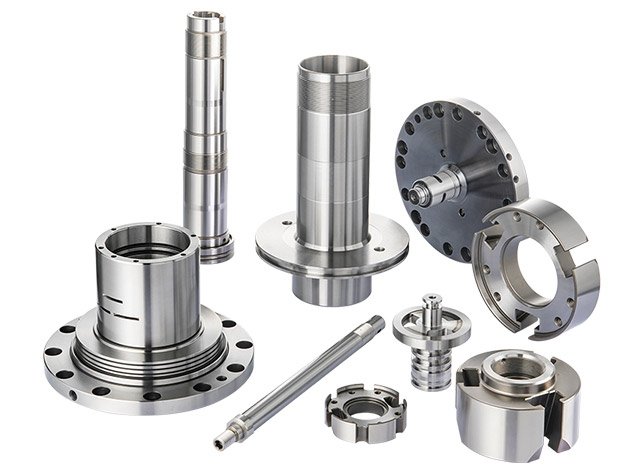
Process selection becomes more reliable when it is managed as part of an integrated engineering and supply chain program rather than as an isolated quotation exercise. Dixin Technology’s core identity is that of a supply chain integrator and ODM solution provider. We work with global OEM and Tier 1 suppliers to connect design intent, manufacturability, production planning, inspection, and delivery execution.
Our manufacturing edge is a fully controlled precision manufacturing system supported by ERP and more than 30 years of manufacturing experience. This structure improves visibility across material purchasing, production scheduling, work-in-process status, quality documentation, packaging, and shipment coordination. It also allows engineering decisions to be evaluated against real capacity, tooling resources, lead times, and cost drivers.
For a project that may transition from CNC machining to cold heading, this integrated approach is especially important. A prototype can be machined while the design is being validated. Once demand is confirmed, Dixin Technology can assess near-net forming, cold heading die requirements, secondary machining, heat treatment, surface finishing, and inspection strategy. The result may be a phased manufacturing plan instead of a forced single-process decision.
Our technology capabilities include 3- to 5-axis CNC machining, EDM, precision grinding, and industrial ceramics. These processes complement cold forming by enabling the production of precision dies, punches, inserts, gauges, fixtures, and finished components. EDM can support intricate die features, precision grinding can control critical dimensions and surface finish, and industrial ceramics can address specialized wear, insulation, or high-temperature requirements.
For OEM procurement teams, the advantage is fewer disconnected suppliers and clearer technical accountability. A qualified partner can review drawings, 3D models, material specifications, annual usage, forecast stability, tolerance requirements, and target cost before recommending a process route. This reduces the risk of choosing tooling-intensive production before the product is fully stable or continuing with high-cost machining after demand has justified a forming solution.
The same approach applies to regulated and high-performance sectors. Medical manufacturers can explore our ISO-certified CNC machining for medical components, while fluid-power designers can review our hydraulic pump parts manufacturing capabilities. In each case, process choice must be connected to traceability, functional performance, inspection, and long-term supply continuity.
4. Industry Applications
Automotive and drivetrain
Automotive programs often have the volume profile that makes cold heading attractive. Fasteners, studs, pins, sleeves, and certain transmission components can benefit from high-speed forming and reduced material waste. CNC machining remains essential for prototype builds, complex drivetrain features, low-volume service parts, and secondary operations that require precise bores, splines, grooves, or threads.
Aerospace and defense
Aerospace projects typically prioritize lightweight design, traceability, difficult materials, and demanding dimensional control over the lowest unit cost. CNC machining, particularly five-axis machining, is frequently selected for structural components, brackets, housings, and titanium parts. Cold heading may still be appropriate for qualified fasteners and repeatable small components, provided the material and forming process meet applicable specifications.
Medical equipment
Medical components may require small batch sizes, complex miniaturized geometries, biocompatible materials, and documented inspection. CNC machining is often preferred for implants, surgical instruments, precision device parts, and custom components because it accommodates frequent design iterations and stringent feature control. Cold forming can be considered for high-volume, stable products after extensive validation and process qualification.
Hydraulics, pumps, and fluid control
Hydraulic valves, pump components, spools, sleeves, shafts, and fittings depend on surface finish, roundness, concentricity, and controlled clearances. CNC turning, grinding, honing, and inspection are commonly used for functional sealing surfaces. Cold heading may produce efficient blanks for selected fittings, pins, or sleeves, with CNC finishing used where sealing performance requires tighter control.
Industrial automation and construction machinery
Automation equipment and construction machinery combine standard hardware with custom, low-to-medium volume parts. CNC machining offers flexibility for brackets, robotic interfaces, shafts, bushings, housings, and replacement components. When a design becomes standardized and annual demand grows, cold heading or another forming process may reduce cost and improve production throughput.
Recommended project strategy
Begin with a manufacturability review that identifies the functional features, material, forecast, tolerance zones, inspection requirements, and expected product life. Use CNC machining for rapid prototypes and early validation when the design is still changing. Consider cold heading when the component has stable geometry, suitable material ductility, repeatable demand, and enough volume to justify tooling. For many programs, a hybrid route provides the best balance: form the basic shape efficiently, then machine or grind the critical features.
5. Call to Action
Choosing between cold heading tooling and CNC machining requires more than comparing quoted piece prices. The right decision balances tooling amortization, material utilization, design flexibility, capability, quality risk, forecast confidence, and long-term supply continuity.
Dixin Technology and IndustryApex CNC can help your engineering and procurement teams evaluate the complete production route. Share your drawing, 3D model, material specification, annual volume, tolerance requirements, and target delivery schedule with our team. We can review whether CNC machining, cold heading, precision grinding, EDM, or a hybrid ODM solution is the most effective path for your project.
Contact Dixin Technology to request a technical consultation, manufacturability review, and production quotation for your next precision component program.