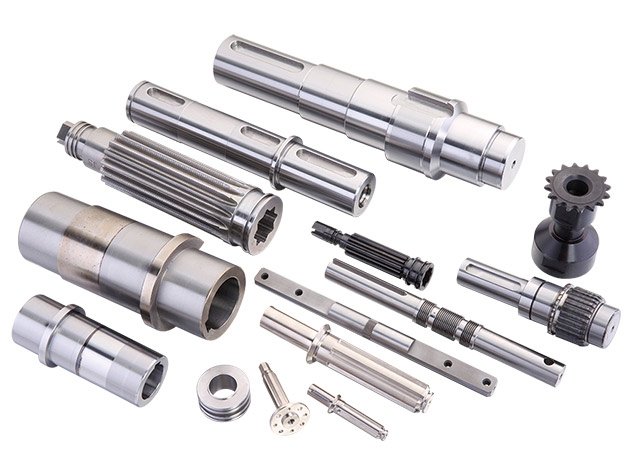
- Shaft
- Molds&Tools
- Hydraulics And Pump
- Hair transplant needle
- Hydraulics And Pump
- Precision CNC Shaft Machining Manufacturer for High Performance Applications
- Energy Industry CNC Machining Parts Supplier
- Aerospace CNC Machining Parts Manufacturer
- Aerospace CNC Machining Parts Manufacturer
- Automotive & EV CNC Machining Parts Supplier for OEM and Tier 1
- Medical CNC Machining Parts Supplier for Precision Medical Devices

Large-Scale Machining for OEM Supply Chains: Gantry Milling and Crankshaft Grinding

Executive Summary
Large-scale machining sits at the point where engineering ambition meets supply chain reality. When an OEM or Tier 1 supplier needs oversized structural frames, powertrain shafts, pump housings, machine bases, or energy equipment components, the manufacturing challenge is not only cutting metal. It is controlling geometry across long spans, maintaining surface integrity under heavy loads, coordinating heat treatment and inspection, and delivering repeatable quality within a global procurement schedule.
Gantry milling and crankshaft grinding are two of the most demanding processes in this category. Gantry milling enables precision machining of large plates, frames, weldments, castings, and long-bed components that cannot be handled efficiently on standard vertical machining centers. Crankshaft grinding, meanwhile, is a high-precision cylindrical and orbital grinding discipline used to control journal roundness, concentricity, surface finish, oil film behavior, and fatigue life. Together, they represent the manufacturing backbone behind engines, compressors, hydraulic systems, construction equipment, marine systems, and heavy industrial machinery.
For procurement teams, the commercial risk is clear: oversized components are expensive to rework, difficult to transport, and often tied to critical program milestones. A late or nonconforming large part can stop an assembly line, delay field commissioning, or force engineering concessions. For engineering teams, the risk is equally serious: a few microns of journal error, a slight twist in a long structural beam, or poor stress relief after rough machining can reduce service life and introduce hidden reliability problems.
IndustryApex Technology, operating through IndustryApex CNC, approaches large-scale machining as both a manufacturing and supply chain integration problem. From custom CNC components to precision shafts, hydraulic assemblies, aerospace structural parts, and medical-grade machined devices, the same principle applies: process control must be designed before the first chip is made. This article examines the technical logic behind gantry milling and crankshaft grinding, then explains why an ODM-capable manufacturing partner can reduce risk for global OEM and Tier 1 buyers.
Technical Deep Dive
Gantry milling is designed for workpieces that require rigidity, travel length, and dimensional control beyond the reach of conventional machining centers. A gantry machine uses a bridge structure supported by columns, allowing the spindle to move over a large work envelope while the workpiece remains fixed or travels on a long table. This architecture is especially valuable for large aluminum plates, cast iron frames, steel weldments, die bases, rail components, and equipment structures where flatness, parallelism, hole position, and mating-surface accuracy must be controlled across hundreds or thousands of millimeters.
The first engineering issue in gantry milling is stability. Large workpieces often carry internal stress from casting, forging, welding, or previous rough machining. If the process removes too much material from one side or clamps the workpiece incorrectly, the part may move during machining or distort after release. A mature process normally includes stress-relief heat treatment, staged roughing and finishing, controlled fixturing, and intermediate inspection. In high-value programs, engineers may also specify stock allowance strategies that balance material removal across surfaces to reduce distortion.
Machine rigidity and thermal behavior matter just as much as cutting parameters. Long-axis positioning error, spindle growth, table deflection, tool runout, and ambient temperature variation can all appear in the finished part. Effective gantry milling therefore depends on calibrated machine geometry, stable tooling assemblies, probing cycles, fixture repeatability, and inspection feedback. For large structural components, a supplier must understand not only nominal tolerances but also functional datum strategy: which surfaces locate the part, which bores control assembly alignment, and which features are cosmetic versus performance-critical.
Crankshaft grinding brings a different set of constraints. A crankshaft is not a simple rotating shaft. Main journals, rod journals, thrust faces, fillets, oil holes, counterweights, and eccentric throws must work together under cyclic bending and torsional load. Grinding defines the final bearing surfaces, and those surfaces determine oil film formation, wear behavior, noise, vibration, and fatigue resistance. The process must control diameter, taper, roundness, cylindricity, surface roughness, and the transition radius at journal fillets.
Modern crankshaft grinding may involve CNC-controlled orbital grinding for eccentric rod journals, CBN wheels for high productivity, in-process gauging for diameter control, and superfinishing for improved surface texture. The grinding wheel specification, dressing method, coolant delivery, and spark-out cycle all influence the final result. A surface that looks visually smooth can still have grinding burn, tensile residual stress, or poor lay direction if the process is not controlled. For high-load engine, compressor, or pump applications, metallurgical integrity is as important as dimensional conformity.
Inspection is not a final formality; it is part of the manufacturing system. Large milled structures may require coordinate measuring machine inspection, laser tracker verification, height gauge checks, straightness measurement, and surface plate validation. Crankshafts may require roundness testing, runout measurement, magnetic particle inspection, hardness verification, surface roughness measurement, and oil-hole deburring checks. The supplier’s ability to interpret inspection data and feed it back into process improvement is what separates true production capability from one-time machining success.
The ODM & Supply Chain Advantage
For global OEMs and Tier 1 suppliers, large-scale machining is rarely a standalone purchase. It is usually part of a larger program involving raw material sourcing, forging or casting qualification, heat treatment, rough machining, finishing, grinding, surface treatment, assembly, documentation, export packaging, and logistics. This is where IndustryApex Technology’s role as a supply chain integrator and ODM solution provider becomes strategically important.
An ODM-oriented manufacturing partner does more than quote from a drawing. It helps identify manufacturability risks, tolerance conflicts, datum issues, process bottlenecks, and cost drivers before production begins. For example, a gantry-milled structural frame may appear straightforward until the team studies clamping access, casting draft, machining allowance, inspection datum transfer, and shipment constraints. A crankshaft may meet the drawing dimensionally but still require better fillet design, oil-hole edge control, heat treatment sequencing, or grinding stock planning to support long service life.
IndustryApex Technology’s manufacturing edge is built around a fully controlled precision manufacturing system supported by ERP-driven production management and more than 30 years of experience. ERP coordination matters because complex machined parts depend on sequence discipline. Material certificates, work orders, machining operations, outside processes, inspection reports, nonconformance handling, and delivery milestones must be visible and traceable. When a buyer is managing international production, that level of control reduces communication gaps and protects launch timing.

The technical capability base also matters. IndustryApex Technology supports 3-axis to 5-axis CNC machining, EDM, precision grinding, and industrial ceramics. This breadth allows the engineering team to choose the appropriate manufacturing route rather than forcing every component into one process. A hydraulic valve sleeve may need precision internal grinding and lapping; a pump housing may need multi-face CNC machining and pressure-critical sealing surfaces; a ceramic component may need grinding expertise rather than conventional milling logic. Buyers sourcing hydraulic and pump parts benefit from this integrated process knowledge because flow control components often combine tight fits, surface finish requirements, and difficult materials.
Supply chain integration also improves cost control. The lowest unit price is often not the lowest program cost if it creates high inspection burden, inconsistent quality, engineering rework, or late shipments. A qualified ODM partner can recommend near-net-shape blanks, optimized machining allowances, modular fixturing, alternative materials, or revised tolerances that preserve function while improving manufacturability. For global OEMs, this is especially valuable when scaling from prototype to batch production or transferring a mature part to a more resilient supply base.
Documentation is another advantage. Large-scale machined components often require material traceability, dimensional reports, heat treatment records, coating certificates, PPAP-style documentation, or application-specific inspection packages. IndustryApex Technology’s engineering and quality teams can align documentation with customer expectations for industrial, automotive, aerospace, medical, and energy markets. The result is not simply a machined part; it is a controlled deliverable that can move through receiving inspection, assembly, and customer audits with fewer surprises.
Industry Applications
Gantry milling and crankshaft grinding support a wide range of industries because large, precise, load-bearing components appear in many product architectures. In drivetrain and engine programs, crankshafts, eccentric shafts, balance shafts, gear housings, and transmission structures require a mix of turning, milling, heat treatment, grinding, and final inspection. Journal geometry and surface integrity directly affect bearing life, friction, vibration, and power efficiency.
In aerospace manufacturing, large structural components require lightweight materials, tight positional tolerances, and rigorous documentation. Titanium and aluminum aircraft parts may involve 5-axis machining, pocket milling, thin-wall control, and complex inspection planning. IndustryApex Technology supports related requirements through its experience with aerospace CNC machining and aircraft structural components, where process stability and traceability are essential to program confidence.
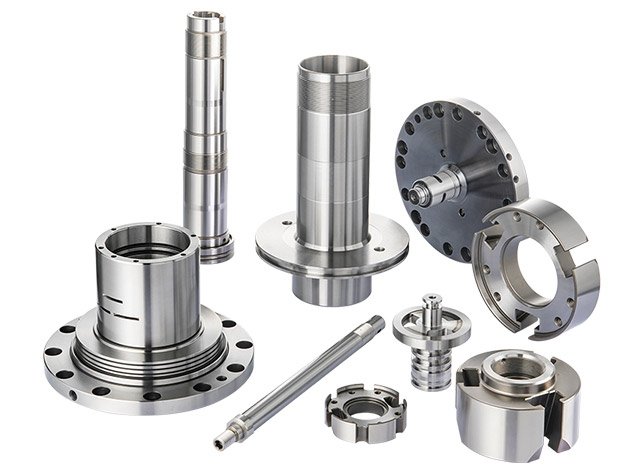
Construction machinery and agricultural equipment also depend on large-scale machining. Frames, arms, axle housings, hydraulic blocks, pump components, pivot structures, and drive shafts must tolerate shock loads, contamination, and long operating hours. Gantry milling provides the capacity for oversized weldments and castings, while grinding processes support shafts, bushings, spools, and bearing interfaces. The business requirement in these sectors is durability at scale: parts must be robust, repeatable, and commercially viable across production volumes.
Energy and industrial equipment applications add another layer of complexity. Compressors, turbines, generators, wind power systems, marine engines, and heavy pumps often use long rotating components and large housings. Misalignment or poor surface finish can lead to vibration, leakage, premature bearing wear, or field failure. For these industries, the supplier must understand not only machining tolerance but also operating environment, lubrication, thermal growth, and assembly conditions.
Medical and analytical equipment may seem far removed from gantry milling and crankshaft grinding, but the same precision culture applies. IndustryApex Technology’s capabilities in ISO-certified CNC machining for medical components demonstrate the importance of cleanliness, documentation, material control, and fine surface finishing. Whether the product is a titanium implant, a surgical instrument, a high-precision device part, or an industrial shaft, the engineering discipline is built on controlled processes and measurable results.
For semiconductor, optics, fluid control, mold manufacturing, and advanced materials sectors, large-scale precision machining often intersects with EDM, ceramic grinding, precision bores, sealing surfaces, and ultra-stable component geometry. This is why buyers increasingly prefer suppliers with a broad manufacturing platform rather than single-process shops. A supplier that can connect milling, grinding, EDM, materials engineering, and quality systems is better positioned to support complex programs over the full product lifecycle.
Call to Action
Large-scale machining is a strategic sourcing decision. Gantry milling and crankshaft grinding demand equipment capacity, process engineering, inspection discipline, and supply chain control. When these elements are aligned, OEMs receive components that assemble correctly, perform reliably, and arrive with the documentation needed for global production.
IndustryApex Technology, through IndustryApex CNC, supports global OEM and Tier 1 suppliers with integrated precision manufacturing, ODM engineering support, and a controlled supply chain built on more than 30 years of experience. If your team is developing large structural parts, crankshafts, eccentric shafts, hydraulic components, pump assemblies, aerospace structures, or other high-value machined components, our engineering team can review your drawings, materials, tolerance requirements, and production goals.
To discuss a current program or request a manufacturing assessment, visit Contact Us. Early engineering collaboration can reduce machining risk, shorten qualification cycles, and create a more resilient supply chain for demanding industrial components.