- Shaft
- Molds&Tools
- Hydraulics And Pump
- Hair transplant needle
- Hydraulics And Pump
- Precision CNC Shaft Machining Manufacturer for High Performance Applications
- Energy Industry CNC Machining Parts Supplier
- Aerospace CNC Machining Parts Manufacturer
- Aerospace CNC Machining Parts Manufacturer
- Automotive & EV CNC Machining Parts Supplier for OEM and Tier 1
- Medical CNC Machining Parts Supplier for Precision Medical Devices

Hybrid Manufacturing Mastery: Integrating 3D Printing with CNC Machining to Accelerate B2B Rapid Prototyping

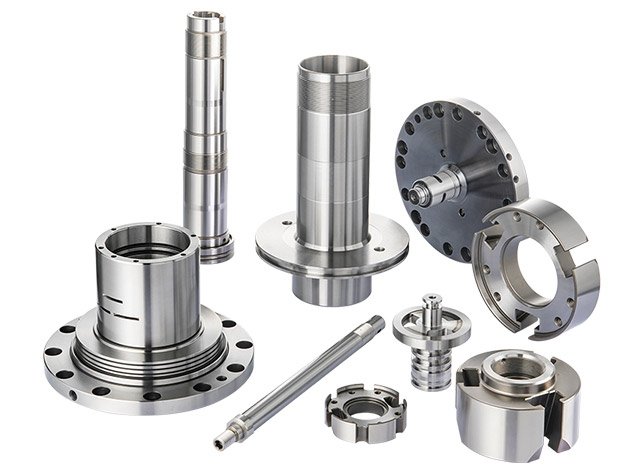
Hybrid Manufacturing Mastery: Integrating 3D Printing with CNC Machining to Accelerate B2B Rapid Prototyping
Executive Summary
The manufacturing landscape for global OEMs and Tier 1 suppliers is undergoing a fundamental transformation. Traditionally, bringing a new component from design intent to validated prototype demanded weeks of lead time, expensive hard tooling, and iterative machining cycles that consumed both capital and engineering bandwidth. Today, the convergence of additive manufacturing (AM) with precision CNC machining is reshaping that timeline—compressing prototype cycles from weeks to days while preserving the dimensional accuracy and material integrity that aerospace, medical, and hydraulic applications demand.
For procurement engineers and product development teams sourcing precision components globally, understanding how these two technologies complement each other is no longer optional—it is a competitive requirement. This analysis examines the technical mechanics of hybrid manufacturing workflows, the supply chain advantages conferred by vertically integrated ODM partners, and the downstream impact on time-to-market across critical industrial sectors.
At IndustryApex CNC, operated by IndustryApex Technology, our manufacturing infrastructure is built around exactly this convergence—combining over 30 years of precision machining expertise with modern additive and hybrid capabilities to deliver faster, more cost-effective prototyping solutions for global OEM customers.
Technical Deep Dive: How Additive and Subtractive Processes Work in Concert
At its core, integrating additive manufacturing with CNC is not about replacing one process with the other—it is about deploying each technology at the stage of the production cycle where it delivers maximum value.
Additive Manufacturing as a Geometric Foundation
Metal AM technologies—primarily Direct Metal Laser Sintering (DMLS) and Selective Laser Melting (SLM)—excel at producing complex geometries that would be prohibitively expensive or structurally impossible to achieve through subtractive methods alone. Internal lattice structures, conformal cooling channels in mold tooling, and near-net-shape blanks with minimal material waste all fall within the capability envelope of modern metal AM systems. For development programs requiring complex internal passages or organic load-path geometries, AM removes the design constraints imposed by traditional machining access.
However, as-printed surface finishes—Ra values typically ranging from 6 to 25 µm—and dimensional tolerances of ±0.1 to ±0.3 mm fall well short of the requirements for functional prototypes in flight-critical, implant-grade, or high-pressure fluid control systems. This is precisely where CNC post-processing becomes not supplementary but essential.
CNC Machining as the Precision Finishing Layer
3-axis to 5-axis CNC machining applied to AM-produced near-net-shape blanks unlocks tolerances in the ±0.005 mm range and surface finishes below Ra 0.4 µm—meeting or exceeding aerospace AS9100, medical ISO 13485, and hydraulic system requirements simultaneously. EDM (Electrical Discharge Machining) extends this capability further for features with extreme aspect ratios or hardened material grades, while precision grinding achieves the flatness and parallelism specifications critical to bearing seats, valve spools, and precision sealing surfaces.
Workflow Integration and Digital Continuity
The efficiency advantage of this hybrid approach materializes only when digital continuity is maintained across both processes. A single CAD/CAM model drives both the AM build parameters and the subsequent CNC toolpath generation, eliminating manual re-programming steps and reducing the opportunity for dimensional discrepancies to propagate between manufacturing stages. ERP-integrated scheduling ensures that the handoff from additive to subtractive is coordinated without idle time—a workflow discipline that is central to our operational model.
For engineering teams evaluating material selection, titanium alloys (Ti-6Al-4V)—used extensively in aerospace structural components and aircraft structural assemblies—respond particularly well to this hybrid approach. AM builds the complex near-net shape, dramatically reducing expensive titanium buy-to-fly ratios; 5-axis CNC then delivers the final precision surfaces with the geometric accuracy required for structural assembly validation and certification.
The ODM and Supply Chain Advantage: Why Vertical Integration Changes Everything
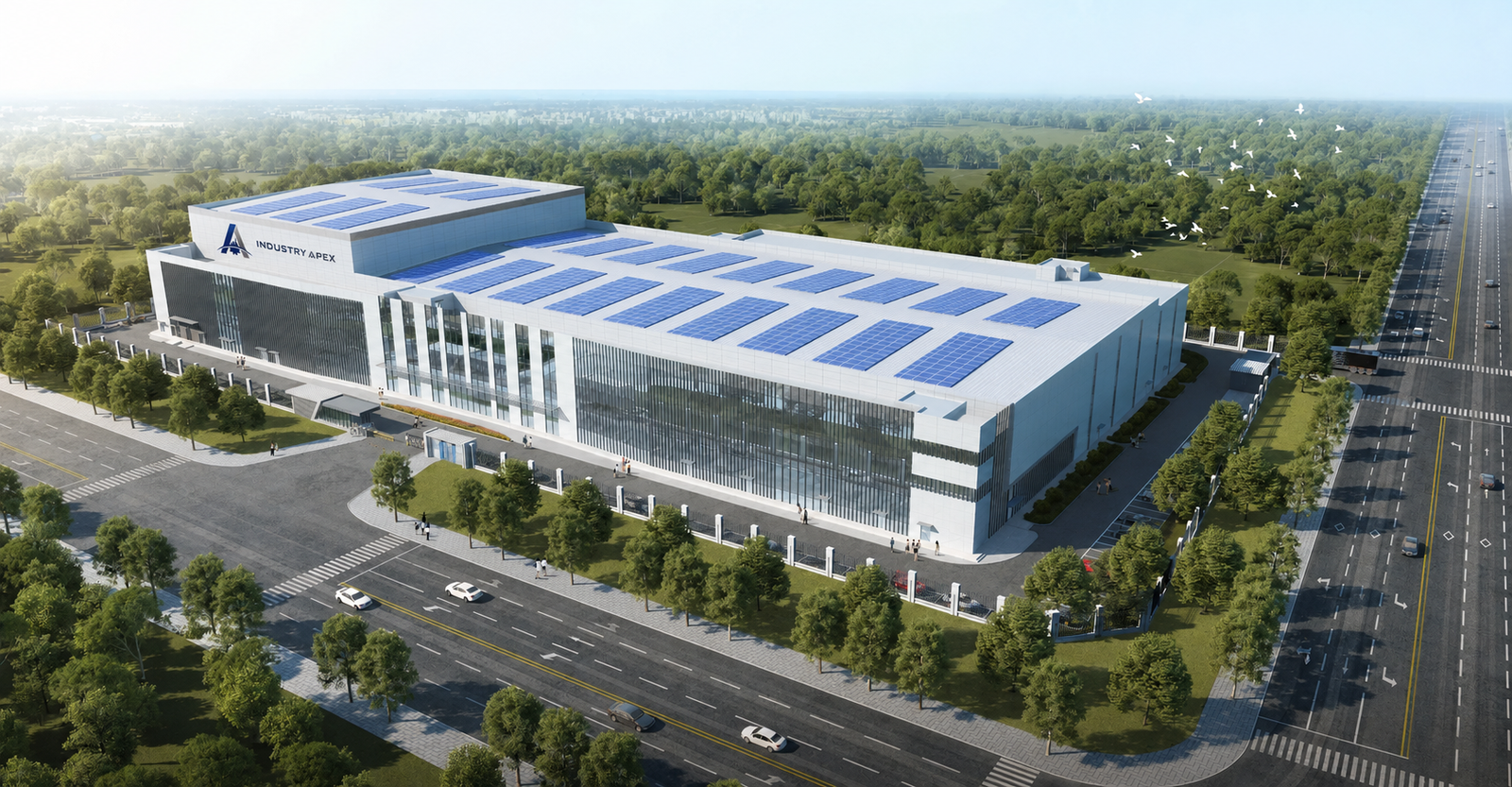
The ability to execute a hybrid AM+CNC workflow in-house represents a significant operational capability threshold. Many contract manufacturers operate additive and subtractive cells as separate departments with independent scheduling systems, quality checkpoints, and supplier relationships. The result is handoff latency, accountability gaps, and prototype iteration cycles that are only marginally faster than traditional single-process methods.
The differentiated value of a true ODM supply chain integrator lies in vertical control. At IndustryApex Technology’s IndustryApex CNC operation, our manufacturing system is fully managed under a single ERP environment spanning design consultation, AM build scheduling, multi-axis CNC finishing, EDM, precision grinding, and industrial ceramics—all under one roof and one quality management system. This is not an organizational detail; it is the operational architecture that enables the three compounding advantages global OEM and Tier 1 customers depend on.
1. Cycle Time Compression
When AM and CNC operations share a unified scheduling and data management system, the prototype iteration cycle shrinks dramatically. Engineering change requests propagate through both process layers simultaneously rather than serially. For development programs where time-to-market is the dominant competitive variable, this compression is a direct revenue enabler—not an incremental improvement but a structural acceleration of the product development timeline.
2. End-to-End Quality Traceability
A single integrated supplier means a single quality record covering the full part history—from raw material certification through final dimensional inspection. This non-negotiable requirement for customers in regulated industries is a core competency of our operation. Our ISO-certified CNC machining for medical components, including titanium implants and high-precision surgical instruments, exemplifies this end-to-end quality ownership across every process step.
3. Predictable Cost Structure and DFM Integration
Hybrid prototype programs sourced from a single vertically integrated ODM carry predictable cost structures. There are no inter-supplier margin stacks, no freight cycles between additive and CNC vendors, and no duplicate NRE charges. Customers receive consolidated quotations with full Design for Manufacturability (DFM) feedback at the design stage—reducing expensive late-cycle engineering changes that account for a disproportionate share of prototype program cost overruns. With over 30 years of precision manufacturing experience, our engineering team can identify hybrid process optimization opportunities that generalist AM bureaus or CNC-only shops simply cannot surface.
For global sourcing teams managing complex development programs, this integrated model represents a fundamental shift from transactional procurement toward strategic supply partnership. Our hydraulic pump parts and fluid control components benefit from the same ERP-integrated precision manufacturing system that serves our aerospace and medical customers—the same disciplines, the same quality infrastructure, applied across every vertical we serve.
Industry Applications: Where Hybrid Manufacturing Delivers Measurable Impact
The hybrid AM+CNC workflow has demonstrated measurable engineering and commercial impact across several high-value industrial verticals. The following applications illustrate where this integration produces the most compelling outcomes for OEM development programs.
Aerospace Structural and Flight-Critical Components
In aerospace product development, prototype lead times directly affect program schedules and certification timelines. Titanium structural brackets, hydraulic manifolds, and actuation system housings are among the component families where hybrid prototyping delivers the greatest cycle time advantage. Near-net-shape AM blanks reduce titanium material waste by 40–60% versus conventional billet stock, while 5-axis CNC finishing delivers the tight-tolerance interfaces required for structural assembly validation. For customers developing aircraft structural components and flight-critical titanium parts, our aerospace CNC capabilities provide a complete hybrid manufacturing pathway from design intent to validated prototype.
Medical Devices and Implantable Components
The intersection of complex geometry requirements and biocompatibility standards makes medical device prototyping one of the most demanding applications for hybrid manufacturing. Patient-specific implant profiles, porous scaffold geometries designed for osseointegration, and miniaturized instrument housings all benefit from AM’s geometric freedom combined with CNC’s surface precision and dimensional repeatability. Our medical device manufacturing operation holds the ISO certifications and material traceability standards required to take these prototypes through regulatory submission packages, reducing the documentation burden on OEM development teams.
Hydraulic and Fluid Control Systems
Hydraulic valve bodies, pump housings, and manifold assemblies present a unique engineering challenge: complex internal flow geometries combined with precision sealing surfaces that demand sub-micron finish quality. AM enables conformal internal channels that optimize flow performance and reduce pressure drop; CNC then delivers the valve seat and spool bore tolerances that determine system leakage class. This combination is precisely what our hydraulic pump parts and fluid system component manufacturing operation is configured to support at production-grade precision levels.
Industrial Tooling and Mold Components
Conformal cooling channels in injection mold tooling—a geometry type uniquely accessible through metal AM—can reduce production cycle times by 20–40% compared to conventionally drilled straight-line cooling circuits. CNC finishing of parting surfaces, gate inserts, and ejector pin bores returns the tool to production-grade precision. For customers in high-volume manufacturing who need validated tooling prototypes before committing to full production tooling investment, this hybrid approach offers a clear and quantifiable ROI pathway with predictable lead times.
Partner with a Manufacturing Integrator Built for Hybrid Prototyping
The convergence of additive manufacturing and precision CNC machining is not a future capability—it is an operational reality for OEM and Tier 1 customers who choose the right supply chain partner today. The difference between a manufacturer who offers both technologies in isolation and one who integrates them under a single ERP, quality system, and engineering organization is the difference between incremental improvement and transformational competitive advantage in product development speed.
IndustryApex Technology’s IndustryApex CNC platform is built for exactly this level of integration. With over 30 years of precision manufacturing experience, a fully controlled production environment spanning 3-to-5-axis CNC, EDM, precision grinding, and industrial ceramics, and deep application expertise across aerospace, medical, and hydraulic sectors, we are positioned to be the ODM supply chain partner that accelerates your development programs—from first prototype to production-ready validation.
Contact our engineering team today to discuss your rapid prototyping requirements and receive a DFM-informed quotation. Let us show you what a fully integrated hybrid manufacturing partner can do for your next development program.