- Shaft
- Molds&Tools
- Hydraulics And Pump
- Hair transplant needle
- Hydraulics And Pump
- Precision CNC Shaft Machining Manufacturer for High Performance Applications
- Energy Industry CNC Machining Parts Supplier
- Aerospace CNC Machining Parts Manufacturer
- Aerospace CNC Machining Parts Manufacturer
- Automotive & EV CNC Machining Parts Supplier for OEM and Tier 1
- Medical CNC Machining Parts Supplier for Precision Medical Devices

Integrating 3D Printing with CNC Machining for Faster, Lower-Risk Rapid Prototyping

Executive Summary
Rapid prototyping has moved beyond the old debate of additive manufacturing versus subtractive machining. For global OEMs and Tier 1 suppliers, the real competitive advantage now comes from integrating 3D printing with traditional CNC machining in one coordinated engineering and supply chain workflow. Additive manufacturing delivers speed, design freedom, lightweight geometries, and fast iteration. CNC machining delivers dimensional accuracy, material reliability, surface finish, tight tolerances, and production-representative performance. When combined correctly, the result is a faster, lower-risk, and more cost-controlled path from concept validation to pilot production.
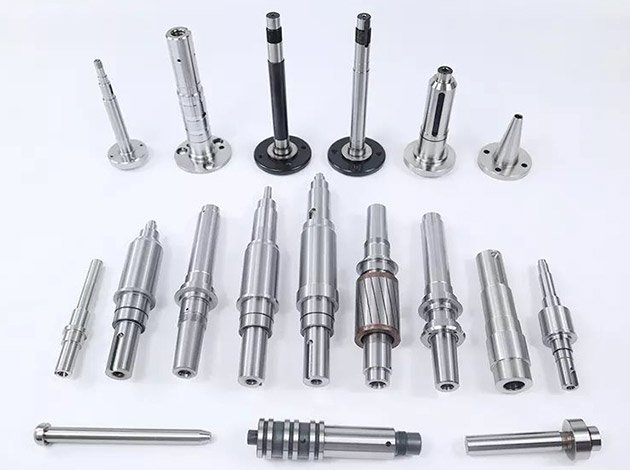
At IndustryApex Technology, operating under the IndustryApex CNC platform, we view hybrid rapid prototyping as a manufacturing strategy rather than a single process choice. A prototype is not valuable simply because it is produced quickly. It is valuable when it helps engineering, purchasing, quality, and production teams make better decisions earlier. A 3D printed concept model may prove form and assembly. A CNC-machined metal prototype may prove strength, fatigue behavior, sealing performance, bearing fit, thermal stability, or medical-grade surface requirements. A hybrid prototype can do both: print near-net geometry, then machine functional interfaces to production-level precision.
This approach is especially important in industries where components have complex geometry but cannot compromise on accuracy, reliability, or traceability. Aerospace brackets, robotic housings, hydraulic valve bodies, titanium implants, pump impellers, precision fixtures, sensor mounts, and lightweight structural parts are all examples where additive and CNC workflows can be combined intelligently. Instead of waiting for hard tooling, casting development, or full production fixtures, engineering teams can validate geometry, interfaces, and materials in compressed timelines.
For procurement and supply chain teams, the integration of 3D printing and CNC machining also changes supplier evaluation. The best partner is not only the shop with machines; it is the manufacturing integrator that can determine which features should be printed, which should be machined, which tolerances are truly functional, how inspection should be structured, and how the prototype will transition into serial manufacturing. IndustryApex Technology supports this role through controlled precision manufacturing, ERP-enabled order management, advanced CNC capability, EDM, grinding, ceramics expertise, and more than 30 years of manufacturing experience.
Technical Deep Dive
3D printing and CNC machining solve different engineering problems. Additive manufacturing builds parts layer by layer, making it well suited for organic shapes, internal channels, lattice structures, topology-optimized brackets, conformal cooling passages, and low-volume design iterations. CNC machining removes material from billet, forging, casting, or printed blanks, making it ideal for flatness, cylindricity, concentricity, thread quality, bearing bores, sealing faces, and high-precision datum structures. The strongest rapid prototyping programs use each process where it adds the most value.
In a hybrid workflow, the engineering team usually begins by identifying functional requirements. These include load path, pressure rating, heat exposure, mating components, tolerance stack-up, surface roughness, material grade, inspection method, and target production process. Once these requirements are clear, the part can be separated into critical and non-critical features. Non-critical mass, complex external geometry, ergonomic forms, or internal lightweight structures may be produced by additive manufacturing. Critical mounting surfaces, shaft bores, gasket faces, threaded ports, dowel holes, grooves, and precision reference datums are then finished by CNC machining.
One common example is a lightweight aluminum or titanium aerospace prototype. Additive manufacturing can produce an optimized ribbed structure that would be expensive or impossible to mill from solid stock. After printing and stress relief, 5-axis CNC machining can finish the interfaces that connect the component to an aircraft frame or test rig. This hybrid approach allows engineers to evaluate a near-final geometry without committing to forging dies, complex fixtures, or long casting lead times. For programs involving aerospace CNC machining and titanium aircraft parts, the ability to combine design freedom with reliable machined interfaces is particularly valuable.
Material selection is another technical factor. Additive materials may not always match wrought material properties, especially in fatigue-critical applications. Printed metals can show anisotropy, porosity risk, residual stress, and surface roughness that differ from bar-stock or forged materials. CNC machining can remove rough external layers, open critical holes, improve surface finish, and create repeatable datums, but it cannot fully compensate for an unsuitable material or printing process. Therefore, the decision must be made early: is the prototype for form, fit, function, certification preparation, or production-process simulation?
For polymer prototypes, the same logic applies. 3D printing can rapidly generate housings, covers, ducts, grippers, medical device shells, and assembly models. CNC machining can then create precision insert pockets, sealing surfaces, optical windows, or threaded metal insert locations. In many projects, machined engineering plastics such as PEEK, PTFE, PPS, POM, or Ultem may be preferred for functional testing because they provide more predictable mechanical and thermal properties than printed polymers. The right choice depends on the testing objective.
Tolerance planning is where hybrid prototyping succeeds or fails. 3D printed parts may have larger dimensional variation due to shrinkage, build orientation, support removal, and post-processing. CNC machining depends on stable workholding, clear datums, sufficient stock allowance, and predictable material behavior. For printed blanks that will be machined, engineers must include machining allowance on all precision surfaces. They must also define datum structures that can be located after printing. Without this planning, the CNC team may have difficulty aligning the printed geometry to the CAD model, leading to inconsistent wall thickness, overcut risk, or cosmetic mismatch.
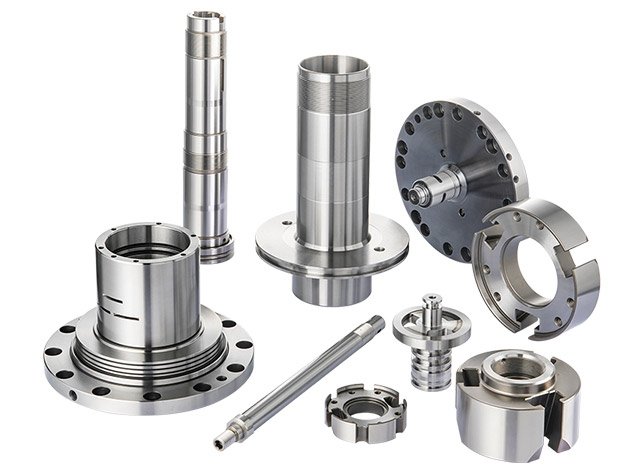
Surface finish is another reason CNC remains essential. Additive surfaces can be rough, porous, or stair-stepped. For fluid flow, sealing, sliding, sterilization, fatigue resistance, or optical assembly, this is often unacceptable. CNC milling, turning, grinding, lapping, honing, and polishing can transform a printed or rough blank into a functional prototype. For example, hydraulic spool lands, pump shaft fits, and valve sealing features require controlled geometry and finish that additive manufacturing alone generally cannot provide.
Inspection must also be integrated. Coordinate measuring machines, optical inspection, surface roughness testing, thread gauges, material certificates, hardness testing, and leak testing may all be necessary depending on the component. For prototypes intended to support design decisions, inspection data is as important as the part itself. A prototype without reliable measurement can create false confidence. IndustryApex Technology emphasizes manufacturing feedback, dimensional reporting, and process documentation so customers can understand not only whether a part was made, but how it behaves against its engineering requirements.
The ODM & Supply Chain Advantage
Hybrid rapid prototyping is not just a technical process; it is a supply chain strategy. Many companies lose weeks because design, printing, machining, finishing, inspection, and purchasing are handled by disconnected vendors. Each handoff creates risk: missing material data, incomplete drawings, incompatible tolerances, unclear datum schemes, packaging damage, and slow engineering feedback. As a supply chain integrator and ODM solution provider, IndustryApex Technology helps customers reduce these gaps by connecting engineering review, process selection, CNC production, secondary operations, inspection, and delivery under a controlled workflow.
Our manufacturing edge is built on a fully controlled precision manufacturing system supported by ERP management and more than 30 years of experience. ERP visibility helps coordinate quotations, material purchasing, routing, machine scheduling, inspection requirements, revisions, and delivery commitments. For OEM and Tier 1 customers managing multiple prototype revisions, this control is critical. A single engineering change can affect stock allowance, machining sequence, surface treatment, inspection plan, and packaging. Without disciplined management, fast prototyping can quickly become uncontrolled prototyping.
IndustryApex Technology’s technical capabilities include 3-axis, 4-axis, and 5-axis CNC machining, EDM, precision grinding, and industrial ceramics manufacturing. This range matters because rapid prototypes often require more than milling. EDM may be needed for sharp internal corners, hard materials, deep slots, or difficult conductive geometries. Precision grinding may be required for tight flatness, roundness, or surface finish. Industrial ceramics may be selected for wear resistance, insulation, thermal stability, or chemical resistance. When these capabilities are coordinated by one manufacturing partner, customers receive a more practical design-for-manufacturing review.
For ODM projects, the value goes even further. Customers may come with a performance goal instead of a complete drawing. They may need a fixture, a precision module, a fluid control component, a medical device subassembly, or a custom mechanical part that must fit into an existing system. In these cases, the supplier must help translate requirements into manufacturable geometry, material choices, tolerance strategy, and prototype stages. The first prototype may validate packaging and assembly. The second may validate function. The third may prepare for pilot production. This phased approach prevents over-engineering early models while still protecting the path to scale.
Cost control is another major advantage. 3D printing can reduce initial cost for complex one-off shapes, but it can become expensive or inconsistent when used for features that are better machined. CNC machining can be efficient for precision features, but milling an entire complex organic shape from billet may waste time and material. A hybrid strategy reduces total cost by assigning each process to the right job. For procurement teams, the goal should not be the lowest unit price for the first prototype. The goal should be the lowest total development cost, including engineering time, revision cycles, test failures, supplier management, and transition to production.
Lead time is similarly nuanced. A printed part may be produced quickly, but post-processing, heat treatment, machining, inspection, and finishing can dominate the actual schedule. A CNC-machined prototype may be faster if the geometry is simple and material is available. IndustryApex Technology evaluates the full timeline before recommending a process. This is particularly important for global customers who must coordinate international shipping, incoming inspection, engineering test windows, and management review milestones.
As an ODM and supply chain partner, we also consider production migration. A prototype built only for speed may create problems when the design moves to machining, casting, forging, molding, or assembly. We help customers identify which prototype features should represent future production and which are temporary development choices. This reduces redesign and supports smoother supplier approval, PPAP-style documentation, or customer-specific validation processes.
Industry Applications
Hybrid additive and CNC rapid prototyping is valuable across multiple industries, but its importance increases wherever precision, reliability, and development speed must coexist. In aerospace, lightweighting and complex geometry are major drivers. Brackets, housings, ducting, sensor mounts, UAV parts, and titanium structural components may benefit from additive near-net shapes followed by 5-axis machining of critical interfaces. Aerospace engineers must validate not only geometry, but also load transfer, assembly fit, surface finish, and repeatability. A controlled hybrid workflow supports early testing without losing sight of production discipline.
In the medical sector, prototypes must support ergonomic testing, surgical usability, biocompatible material evaluation, sterilization considerations, and high-precision fit. 3D printing is useful for anatomical models, trial instruments, custom shapes, and fast design iteration. CNC machining is essential for titanium implants, surgical instruments, orthopedic tools, and precision medical device components requiring tight tolerance and controlled surface quality. IndustryApex Technology supports ISO-certified CNC machining for medical components, helping customers move from prototype concept toward reliable manufacturing.
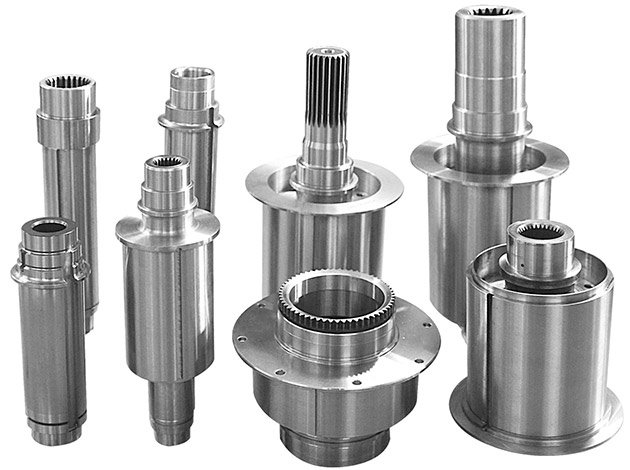
Hydraulics and pump systems are another strong application area. Additive manufacturing can help prototype internal passages, compact manifolds, impeller shapes, or lightweight housings. CNC machining, grinding, and honing remain critical for bores, sealing lands, spool fits, threaded ports, flange faces, and shaft interfaces. Fluid power components are unforgiving: small deviations can create leakage, pressure loss, vibration, or premature wear. For customers developing hydraulic pump parts, hybrid prototyping can accelerate innovation while preserving the precision required for real-world testing.
Automotive, robotics, and automation customers also benefit from integrated workflows. Electric vehicle systems, battery fixtures, thermal management components, robotic end-effectors, drivetrain prototypes, sensor brackets, and lightweight housings often require rapid iteration. Additive manufacturing enables quick geometry changes, while CNC machining provides accurate mounting points and production-grade surfaces. For automation projects, hybrid prototypes can shorten the cycle between design, machine build, debugging, and customer acceptance.
In semiconductor, optics, and precision equipment manufacturing, dimensional stability and cleanliness are often more important than speed alone. Additive methods may be used for experimental fixtures, complex vacuum-compatible structures, or cooling channels, while CNC machining and grinding define the precision interfaces. Industrial ceramics, ruby, sapphire, carbide, and advanced metals may be selected for wear, insulation, or thermal performance. The supplier’s ability to manage these materials is often more valuable than the printing process itself.
For mold manufacturing and tooling, hybrid prototyping allows engineers to validate cooling concepts, inserts, slides, electrodes, and trial cavities before full production tooling is finalized. Conformal cooling channels can be printed, while sealing faces, alignment features, and cavity surfaces can be precision machined or ground. This is especially useful when tooling lead time directly affects product launch schedules.
The common theme across all industries is risk reduction. A prototype should answer specific questions: Will it fit? Will it seal? Will it carry load? Will it survive temperature? Can it be inspected? Can it be manufactured repeatedly? Can the supply chain support it at scale? By combining additive freedom with CNC precision, companies can answer these questions earlier and with better data.
Call to Action
Integrating 3D printing with traditional CNC machining is not about replacing one process with another. It is about creating a smarter development system that balances speed, precision, material performance, and supply chain control. For OEMs and Tier 1 suppliers, the most successful rapid prototyping programs begin with clear requirements, practical tolerance planning, disciplined process selection, and a manufacturing partner that understands both engineering intent and production reality.
IndustryApex Technology, through IndustryApex CNC, supports global customers with ODM engineering support, precision CNC machining, EDM, grinding, industrial ceramics, ERP-controlled manufacturing, and decades of experience across demanding industries. Whether you are developing an aerospace structural prototype, a medical device component, a hydraulic pump part, a robotic module, or a high-precision custom assembly, our team can help you choose the right mix of additive and subtractive manufacturing for faster validation and a smoother path to production.
To discuss your next rapid prototyping or precision manufacturing project, contact IndustryApex Technology today. Share your drawings, CAD models, material requirements, target tolerances, annual volume expectations, and testing goals. Our engineering and supply chain team will help evaluate the best manufacturing route and provide a practical plan for prototype development, validation, and scalable production.