- Shaft
- Molds&Tools
- Hydraulics And Pump
- Hair transplant needle
- Hydraulics And Pump
- Precision CNC Shaft Machining Manufacturer for High Performance Applications
- Energy Industry CNC Machining Parts Supplier
- Aerospace CNC Machining Parts Manufacturer
- Aerospace CNC Machining Parts Manufacturer
- Automotive & EV CNC Machining Parts Supplier for OEM and Tier 1
- Medical CNC Machining Parts Supplier for Precision Medical Devices

2026 Trends in 5-Axis CNC Machining for Aerospace Components: Precision, Supply Chain Resilience, and ODM Advantage

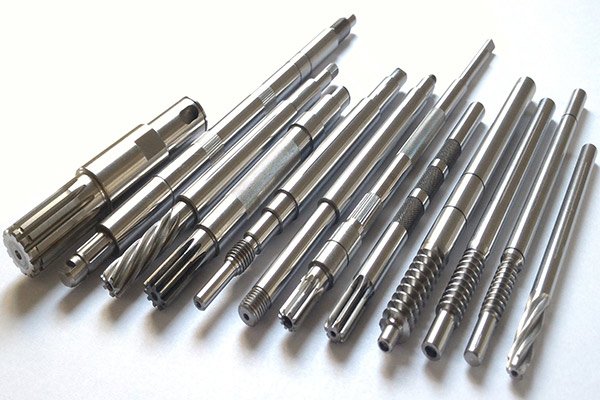
Executive Summary
By 2026, 5-axis CNC machining for aerospace components will be defined by tighter tolerances, higher spindle utilization, more complex part geometries, and deeper integration between manufacturing execution and supply chain planning. Aerospace OEMs and Tier 1 suppliers are under pressure to reduce part lead times, stabilize quality across global sourcing networks, and maintain full traceability for mission-critical assemblies. In that environment, 5-axis CNC machining is no longer just a production method. It is a strategic capability that connects design intent, material science, inspection discipline, and supply continuity.
The main trend is not simply more axes or faster machines. The real shift is toward a controlled manufacturing system that can absorb complexity without losing repeatability. Titanium structural parts, thin-wall brackets, engine-adjacent components, housings, manifolds, and other flight-critical parts demand coordinated control of geometry, surface integrity, and process capability. As aerospace programs become more modular and more globally distributed, manufacturers with integrated CNC, EDM, precision grinding, and industrial ceramics capability will have a practical advantage. IndustryApex Technology, under IndustryApex CNC, is positioned in that category as a supply chain integrator and ODM solution provider with a fully controlled precision manufacturing system, ERP-driven coordination, and more than 30 years of experience.
Technical Deep Dive
5-axis CNC machining will continue to evolve in 2026 around five technical priorities: part complexity, datum stability, process automation, metrology integration, and material-specific machining strategy. Aerospace components increasingly require a machining envelope that can access multiple faces in a single setup while maintaining tight positional accuracy across critical features. That matters because every additional setup introduces stack-up risk, handling time, and variation. For aero structures and flight hardware, the goal is not only high precision but also controlled variability at scale.
For titanium aerospace parts, 5-axis capability is especially important. Titanium alloys remain attractive because of their strength-to-weight ratio and corrosion resistance, but they are also difficult to machine due to heat concentration, tool wear, and chip evacuation challenges. In 2026, successful aerospace machining will depend on adaptive toolpath strategy, rigid fixture design, optimized coolant delivery, and high-performance tool materials. The process window is narrow, which means small deviations in feed, speed, or thermal control can affect surface finish and part life. Multi-axis machining reduces the number of re-clamps, which helps preserve geometric fidelity on complex structural components.
Another defining trend is the fusion of machining and inspection. Aerospace buyers increasingly expect in-process probing, automated offset correction, and digital inspection records tied to each work order. This is where ERP-enabled manufacturing control becomes important. A fully connected system can tie program revision, material lot, machine status, operator confirmation, inspection data, and shipment status into one traceable workflow. For aerospace supply chains, this is not administrative overhead. It is the backbone of compliance and risk management.
Surface integrity is also moving to the front of the conversation. Aerospace parts often carry highly localized stress, and machining-induced micro-defects can become failure risks. Manufacturers need stable control over burr formation, chatter, residual stress, and thermal damage. In 2026, high-end providers will increasingly pair 5-axis CNC with precision grinding and EDM when the part requires fine finishing, hardened features, or difficult internal geometries. That hybrid process approach gives engineers more ways to achieve functional surfaces without forcing every feature through the same machine method.
Automation will influence capacity, but not as a generic labor replacement story. In aerospace, automation is most valuable where it protects consistency: pallet systems, tool life monitoring, adaptive alarms, and scheduling logic that reduces idle time between critical jobs. The manufacturers that win are likely to be those that can keep utilization high while holding a disciplined process window. In practice, this requires the ability to handle short runs, repeat programs, urgent revisions, and qualified rework without disrupting the broader production plan.
The ODM & Supply Chain Advantage
For global OEM and Tier 1 suppliers, the 2026 aerospace market will reward partners who can do more than machine parts to print. The stronger position belongs to suppliers who can participate upstream in design-for-manufacturability, downstream in delivery reliability, and laterally across multiple process families. That is the logic behind IndustryApex Technology’s role as a supply chain integrator and ODM solution provider.
The manufacturing edge starts with a fully controlled precision manufacturing system supported by ERP. That combination matters because aerospace sourcing is increasingly judged on predictability, not just price. When a program spans multiple part numbers, multiple materials, and multiple qualification requirements, an ERP-connected operation can coordinate demand planning, work order release, capacity allocation, inspection checkpoints, and shipping documentation more effectively than a fragmented job-shop model. The result is better schedule stability and fewer hidden delays.
Experience matters as well. More than 30 years in precision manufacturing gives a supplier a better intuition for what breaks a program: unstable fixturing, poorly sequenced operations, inconsistent inspection standards, and ambiguous technical handoffs. Aerospace buyers do not just need equipment. They need a team that recognizes risk before it becomes a delay. That is especially relevant for programs with titanium, aluminum, stainless steel, and engineered ceramic requirements in the same supply base.
IndustryApex Technology’s technical capability set also gives it a broader problem-solving range. 3-5 axis CNC covers the majority of complex aerospace geometries. EDM is useful for sharp internal corners, fine features, and hard-to-machine details. Precision grinding supports critical finishes and tight dimensional control. Industrial ceramics capability extends the platform into applications where heat resistance, wear resistance, insulation, or stability under demanding operating conditions are required. This breadth matters because aerospace programs increasingly involve mixed-material assemblies and special functional features that cannot be solved with milling alone.
For OEMs and Tier 1 suppliers, the practical benefit is supply resilience. A broader process stack means fewer handoffs between vendors, lower transportation risk, and better accountability on quality ownership. It also reduces qualification burden when one supplier can manage multiple manufacturing steps under one control system. That is especially valuable for programs that need dual-sourcing strategies, accelerated development cycles, or rapid engineering change implementation.
In the aerospace context, the supply chain advantage is no longer separate from the manufacturing advantage. They are the same capability. A supplier that can quote accurately, engineer quickly, machine precisely, inspect rigorously, and ship reliably is better positioned to support aircraft programs with less friction. Learn more through the Aerospace Parts capability page, or review related precision programs in Medical Parts, Hydraulics & Pump, and the broader Home page.
Industry Applications
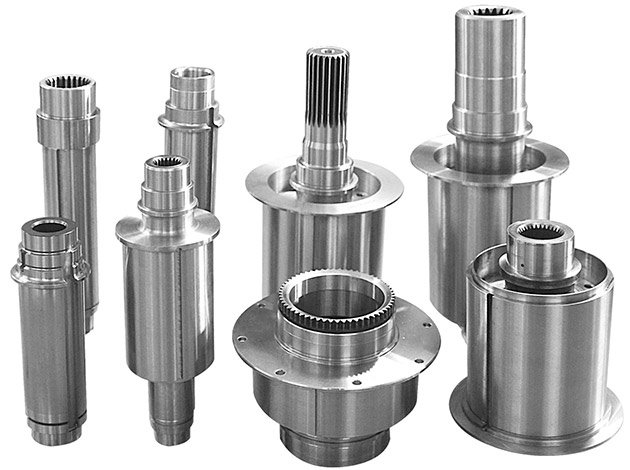
In aerospace, 5-axis CNC machining will continue to support a wide range of part families in 2026, especially where geometry and performance constraints overlap. Structural brackets, ribs, frames, housings, mounts, and connector interfaces all benefit from multi-face machining because it improves accuracy while reducing setup count. These are the kinds of parts where machining time, inspection load, and program stability all influence landed cost.
For aircraft structural components, lightweighting remains a dominant design objective. Engineers are pushing toward thinner walls, more aggressive pocketing, and more optimized material removal patterns. That increases the value of 5-axis control because it allows tool access at better attack angles while reducing the risk of deflection and burr formation. When combined with reliable process control, this helps achieve the strength-to-weight profile aerospace platforms require.
Engine-adjacent aerospace parts present a different challenge. Here, thermal cycling, vibration, and fatigue resistance become central. Components such as complex housings, support elements, and fluid-management hardware need stable machining of critical surfaces and interfaces. Precision grinding and EDM may be required to complete the tolerance stack or finish specialized features. A supplier with mixed-process capability can manage these parts more effectively than a milling-only vendor.
Fluid control and hydraulic-related aerospace hardware also remains important. Manifolds, valve bodies, and pump-adjacent parts demand internal channels, seal faces, and controlled surface quality. This is one reason the hydraulic and pump sector overlaps strongly with aerospace machining know-how. The same discipline used to make reliable flow-path components also supports aerospace systems where leakage, pressure stability, and wear resistance matter.
Industrial ceramics will gain more attention in select aerospace and defense applications where electrical insulation, wear resistance, or extreme environmental stability is needed. As platforms diversify, the ability to machine both metal and ceramic solutions under one manufacturing umbrella becomes a practical advantage. It enables better design choice, shorter supplier chains, and fewer transitions between prototype and production phases.
Across all these applications, traceability will remain non-negotiable. Aerospace buyers will increasingly evaluate suppliers based on how well they can document material origin, process history, inspection results, and change control. That means the strongest manufacturing partners will be those who combine technical depth with disciplined information flow.
Call to Action
As 2026 approaches, aerospace buyers should reassess suppliers not only on machine count, but on manufacturing control, process breadth, and supply chain reliability. The next generation of aerospace CNC sourcing will favor partners who can translate engineering requirements into stable, documented, repeatable production at scale. IndustryApex Technology, through IndustryApex CNC, is built for that environment: precision manufacturing, ODM support, ERP-backed coordination, and the technical range needed for complex aerospace component programs.
For teams evaluating new suppliers, consolidating part families, or improving program resilience, the right next step is direct technical discussion. Start with the aerospace capability overview, then align on materials, tolerances, lead times, inspection requirements, and qualification expectations. To begin a project review or request support, visit Contact Us.