- Shaft
- Molds&Tools
- Hydraulics And Pump
- Hair transplant needle
- Hydraulics And Pump
- Precision CNC Shaft Machining Manufacturer for High Performance Applications
- Energy Industry CNC Machining Parts Supplier
- Aerospace CNC Machining Parts Manufacturer
- Aerospace CNC Machining Parts Manufacturer
- Automotive & EV CNC Machining Parts Supplier for OEM and Tier 1
- Medical CNC Machining Parts Supplier for Precision Medical Devices
Precision CNC Machining for EV Motor Housings: Tight Tolerances Explained

Executive Summary
Electric vehicle motor housings sit at the intersection of thermal management, structural rigidity, electromagnetic performance, and production scalability. Unlike general automotive brackets or covers, a motor housing must hold critical datums consistently across high-volume builds while protecting the rotor, stator, bearings, seals, and cooling interfaces from distortion, leakage, and vibration-related drift. That is why precision CNC machining is central to EV motor housing manufacturing: the process delivers the dimensional control needed to maintain concentricity, flatness, bore quality, surface finish, and positional accuracy across complex aluminum, magnesium, cast iron, and hybrid housing architectures.
For OEMs and Tier 1 suppliers, the commercial challenge is not just machining to print. It is managing tolerance stack-up, validating process capability, stabilizing supply across program ramps, and reducing late-stage quality escape risk. In this context, Dixin Technology, operating under the IndustryApex CNC brand, is positioned as a supply chain integrator and ODM solution provider with a fully controlled precision manufacturing system, ERP-driven coordination, over 30 years of experience, and capabilities spanning 3-5 axis CNC, EDM, precision grinding, and industrial ceramics. Those capabilities matter because EV motor housings increasingly require integrated design-for-manufacture support, multi-process coordination, and dependable global delivery.
Technical Deep Dive
EV motor housings are typically expected to do four things at once: locate internal rotating components with high concentricity, dissipate heat efficiently, preserve sealing integrity, and survive mechanical loading over a long service life. Each of those functions creates a different tolerance demand. The bearing bores must be controlled tightly to avoid rotor runout and premature wear. The stator pocket geometry must maintain repeatable interference or transition fits where required. The cover and flange interfaces must remain flat enough to prevent fluid ingress and preserve joint loading. The cooling channels or jacket surfaces must support thermal transfer without introducing distortion during machining or subsequent assembly.
In practical manufacturing terms, the most difficult features are not always the largest ones. They are the relationships between features. A housing can pass an individual diameter check and still fail in assembly if coaxiality, perpendicularity, or face runout is outside specification. This is why EV motor housings are commonly treated as precision functional assemblies rather than simple machined castings. The machining strategy must establish primary datums early, preserve them through roughing and finishing, and account for the way material removal changes residual stress and local geometry.
Material behavior is a major variable. Aluminum housings offer weight advantages and strong thermal conductivity, but they are prone to distortion when thin walls, deep pockets, and interrupted cuts interact. Cast iron provides damping and stability, but may introduce tooling wear and surface variability. Magnesium can reduce mass further, yet it increases sensitivity to process control and safe handling requirements. Hybrid designs, including cast shells with machined bearing carriers or inserted modules, add another layer of complexity. Precision CNC machining addresses these issues through fixture design, adaptive toolpaths, controlled clamping forces, and in-process measurement.
Surface finish is another technical driver. The sealing lands for end covers, coolant passages, and bearing seats all depend on controlled roughness. A poor finish can compromise gasket compression, increase leak risk, or reduce assembly consistency. For that reason, many housing programs use a combination of high-speed milling, boring, reaming, and precision grinding where the process window demands it. In higher-complexity cases, EDM may be used for specialized features, while industrial ceramics can support wear-resistant or electrically insulating components in adjacent systems.
Tolerances in EV motor housings are best understood as a system, not a single number. A tolerance callout on a print may look isolated, but in production it interacts with tool deflection, spindle thermal growth, machine calibration, fixture repeatability, and material batch variation. Process engineers therefore focus on capability metrics such as Cp and Cpk, along with first article validation, tool life monitoring, and statistical process control. The objective is stable output at volume, not one-off compliance.
For buyers, the practical question is how much tolerance is truly necessary. The answer depends on the motor architecture, NVH targets, thermal design, and assembly method. Over-tightening every dimension can raise cost without improving performance. The better approach is selective tight tolerancing: reserve the narrowest windows for bearing interfaces, shaft-aligned features, sealing planes, and stator location geometry, while allowing broader ranges on non-critical surfaces. That strategy reduces machining burden while protecting the functions that matter most.
These requirements align with Dixin Technology’s core production model. A fully controlled precision manufacturing system supported by ERP helps synchronize material flow, machining status, inspection data, and shipment timing. For global OEM and Tier 1 programs, that means better change control, better schedule visibility, and fewer surprises when design revisions or capacity shifts occur. In high-volume EV programs, that control is often the difference between a stable launch and a disruptive quality spiral.
The ODM & Supply Chain Advantage
Precision machining capability alone is not enough for EV programs that span design validation, pilot builds, ramp-up, and long-term series production. The stronger model is an ODM-centered supply chain structure that can translate engineering intent into manufacturable hardware while also coordinating sourcing, machining, inspection, and logistics. That is where Dixin Technology’s role as a supply chain integrator becomes commercially relevant. Instead of treating the motor housing as a standalone machined part, the company can align the component with upstream material strategy, process routing, and downstream assembly needs.
The main operational advantage is control. With over 30 years of experience and a fully controlled precision manufacturing system, Dixin Technology can manage how materials enter the system, how jobs are scheduled, how inspection is staged, and how data is retained for repeat orders and engineering changes. ERP integration supports that discipline by connecting purchasing, production, quality, and shipping into one traceable workflow. For OEMs and Tier 1 suppliers, traceability is not a paperwork exercise. It is a risk-management tool that reduces ambiguity when a part has to be traced back to tooling condition, inspection records, or a material lot.
The technology stack also matters. 3-5 axis CNC machining supports complex housing contours, angled features, and multi-face operations in fewer setups. EDM extends capability where conventional milling cannot economically reach tight internal geometries or sharp-edged forms. Precision grinding closes the loop on critical mating surfaces and high-accuracy finishes. Industrial ceramics add value in adjacent applications where wear, heat, or insulation characteristics need more than conventional metal processing alone. Together, these processes allow the manufacturing system to support more than one part family and more than one industry vertical, which improves utilization and strengthens sourcing resilience.
For global customers, supply chain design is part of the engineering solution. A housing program needs reliable lead times, controlled revision handling, and the ability to scale without compromising dimensional integrity. The ODM model helps because it allows Dixin Technology to participate earlier in the product lifecycle, influence manufacturability, and reduce the back-and-forth that usually delays launch. In practice, that means fewer handoffs, fewer interpretation errors, and a clearer path from drawing to production-ready part.
As EV platforms mature, sourcing teams increasingly compare vendors not just on unit price, but on system maturity. Can the supplier hold tolerance after process drift? Can they accommodate engineering changes without restarting the entire qualification cycle? Can they keep quality stable across regions, volumes, and long-term programs? These questions are decisive for global OEMs and Tier 1 suppliers. A controlled ODM and manufacturing environment answers them more convincingly than a fragmented subcontract model.
For broader context on adjacent precision machining disciplines, see [Aerospace Parts](https://cnccomponents.industryapex.com/aerospace-cnc-machining-titanium-aircraft-parts-5-axis-aerospace-parts-aircraft-structural-components/), [Medical Parts](https://cnccomponents.industryapex.com/iso-certified-cnc-machining-for-medical-components-including-titanium-implants-surgical-instruments-and-high-precision-device-parts/), and [Hydraulics & Pump](https://cnccomponents.industryapex.com/hydraulic-pump-parts/). These categories share the same underlying requirement: dimensional discipline under real production constraints.
Industry Applications
EV motor housings are only one part of a wider precision ecosystem, but they reveal the same manufacturing logic seen across other industrial sectors. In aerospace, structural and rotating components demand extreme control over geometry, surface integrity, and traceability. In medical manufacturing, the tolerance conversation is even more unforgiving because fit, finish, and repeatability directly affect device performance and regulatory compliance. In hydraulics and pumps, housing accuracy determines leakage behavior, pressure stability, and service life under continuous load. The engineering principles are different in each sector, but the manufacturing discipline is similar.
For automotive electrification, the key application trend is integration. Housing designs increasingly combine motor support, cooling, mounting, and shielding functions into fewer parts. That reduces assembly steps and weight, but it raises the bar for machining capability. A supplier must be able to handle thin walls without chatter, maintain positional accuracy across multiple machined faces, and validate performance over serial production. Programs that fail to account for these factors often encounter assembly variation, thermal inconsistency, or bearing misalignment later in the lifecycle.
Another important application area is platform diversification. As EV architectures vary between passenger cars, commercial vehicles, and performance platforms, housing formats change accordingly. Some designs emphasize compactness and mass reduction. Others prioritize thermal management for high output motors. Still others emphasize serviceability or modularity. Each variation changes the machining strategy, fixture design, and inspection plan. That is why a flexible manufacturing partner is valuable: the supplier must adapt without sacrificing control.
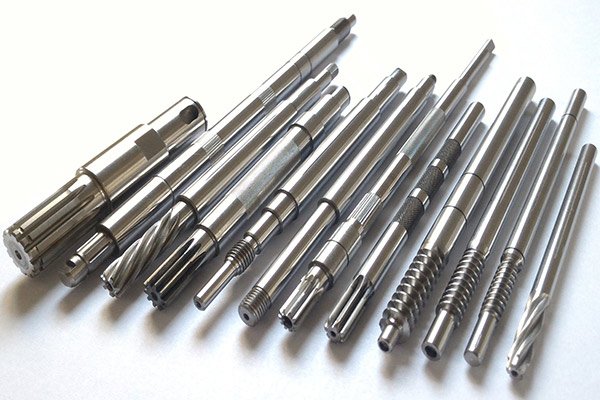
The same flexibility supports related precision components beyond EV motor housings. Machined structural parts, shafts, sleeves, and fluid-control components all benefit from a manufacturing environment that can manage complex tolerances and evolving specifications. Where repeatability is essential, the production system must be able to hold the line across multiple batches and multiple customer programs. That is the real value of a mature precision manufacturer with integrated process control.
Call to Action
If your EV motor housing program requires tighter tolerances, stronger process control, or a more integrated sourcing model, Dixin Technology can support the full path from engineering review to volume production. For global OEM and Tier 1 buyers, the combination of precision CNC machining, EDM, precision grinding, industrial ceramics, ERP-enabled execution, and ODM capability creates a practical advantage in launch stability and long-term supply continuity.
Start the conversation through Contact Us or return to the Home page for a broader view of IndustryApex CNC capabilities.