- Shaft
- Molds&Tools
- Hydraulics And Pump
- Hair transplant needle
- Hydraulics And Pump
- Precision CNC Shaft Machining Manufacturer for High Performance Applications
- Energy Industry CNC Machining Parts Supplier
- Aerospace CNC Machining Parts Manufacturer
- Aerospace CNC Machining Parts Manufacturer
- Automotive & EV CNC Machining Parts Supplier for OEM and Tier 1
- Medical CNC Machining Parts Supplier for Precision Medical Devices

Optimizing Supply Chains with Low MOQ Micro-Batch CNC Production

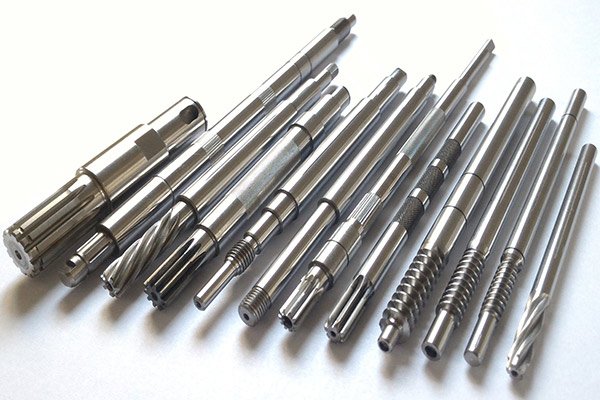
Optimizing Supply Chains with Low MOQ Micro-Batch CNC Production
For global OEMs and Tier 1 suppliers, supply-chain resilience is no longer measured only by unit cost. It is measured by how quickly an organization can validate a design change, bridge a component shortage, support a new program, and replenish critical spares without creating excessive inventory. Low minimum order quantity (MOQ) micro-batch production gives engineering, procurement, and operations teams a practical way to balance these competing requirements.
1. Executive Summary
Traditional volume purchasing models were designed for predictable demand, long product lifecycles, and stable logistics. Modern manufacturing conditions are different. Product variants are increasing, engineering changes arrive later in the development cycle, customer demand is less uniform, and inventory carrying costs remain significant. A supplier that requires large production commitments can force buyers to hold stock that may become obsolete before it is consumed.
Low MOQ micro-batch manufacturing addresses this problem by making precision parts available in controlled quantities, often from prototype scale through short-run and repeat production. Rather than treating low volumes as an exception, an effective manufacturing partner builds repeatable processes for setup, programming, inspection, traceability, material control, and logistics at smaller lot sizes. This reduces the gap between engineering intent and production availability.
For buyers of CNC-machined components, the value is not simply the ability to order fewer parts. The real advantage is supply-chain optionality. Teams can release pilot lots before committing to larger orders, use small batches to qualify alternate designs or materials, maintain service-part availability without overstocking, and respond to unplanned equipment downtime. Dixin Technology, operating through IndustryApex CNC, supports this approach as a supply-chain integrator and ODM solution provider for precision manufacturing programs.
When implemented with disciplined engineering controls, micro-batch production can improve cash flow, shorten development loops, reduce obsolescence exposure, and create a more responsive sourcing model for high-value components.
2. Technical Deep Dive
Low MOQ production is often misunderstood as small-scale machining with reduced process discipline. In precision manufacturing, the opposite should be true. Small lots require robust process definition because setup variation has a greater effect on total cost, lead time, and part consistency. The technical foundation begins with design-for-manufacturability review, a clear revision-controlled drawing package, material specifications, critical-to-quality features, inspection requirements, and packaging expectations.
For CNC components, production economics are driven by both non-recurring and recurring work. Programming, fixture design, machine setup, first-article inspection, tooling selection, and quality documentation are largely fixed costs. The machining cycle, material consumption, secondary finishing, and final inspection vary more directly with quantity. A capable supplier reduces the fixed-cost burden of small orders by standardizing workholding, maintaining proven tool libraries, preserving digital process records, and using scheduling systems that group compatible work without compromising delivery commitments.
Micro-batch quantities can range from a few qualification components to several hundred repeat parts, depending on component geometry, material, process complexity, and annual demand. The optimal quantity is not defined by a generic threshold. It should be determined using demand volatility, part criticality, lead-time risk, inventory value, shelf-life limits, engineering-change probability, and the cost of a production interruption.
For example, an OEM may use a small first production lot to verify dimensional stability after design release. The measured data from that lot can confirm capability on close-tolerance bores, threads, datum relationships, surface finishes, or complex five-axis profiles. A follow-on batch can then be released with confidence. This staged approach is particularly valuable when a part interfaces with castings, molded assemblies, seals, electronics, or externally sourced components whose variation can affect final assembly performance.
Material planning is equally important. Low MOQ does not mean accepting uncontrolled material substitutions or undocumented stock. Each lot should be tied to the required grade, condition, heat or batch traceability where applicable, and material certification requirements. For titanium, stainless steel, aluminum, tool steel, engineering plastics, industrial ceramics, and specialized alloys, material availability can determine the actual lead time more than machine capacity. Strategic material sourcing and controlled inventory enable smaller releases while protecting material integrity.
Quality planning must match the component’s function and risk. A non-critical bracket may require dimensional verification against a standard inspection plan. A flight-critical, medical, fluid-control, or high-pressure component may require first-article reporting, full dimensional records, material certificates, in-process checks, controlled inspection equipment, and lot-level traceability. The most efficient model aligns documentation and inspection effort with the true engineering requirement instead of applying either insufficient or unnecessarily costly controls.
Digital manufacturing data also makes micro-batch continuity possible. Retained CNC programs, approved setup parameters, fixture references, inspection plans, tool selections, revision history, and prior nonconformance learnings make a repeat order more predictable. This creates a practical bridge between prototype machining and production sourcing: the part can return months later without forcing the buyer to repeat the entire technical transfer process.
3. The ODM & Supply Chain Advantage
Dixin Technology’s role extends beyond producing individual parts. As a supply-chain integrator and ODM solution provider, the company helps global OEMs and Tier 1 suppliers connect design requirements, manufacturing processes, quality controls, and delivery planning into one coordinated operating model. This is especially important for low MOQ programs, where fragmented sourcing can create hidden transaction costs and inconsistent accountability.
A fully controlled precision manufacturing system allows production decisions to be made with better visibility. ERP-supported planning connects order requirements with material availability, machine scheduling, routing, quality status, and delivery coordination. With more than 30 years of manufacturing experience, Dixin Technology applies process knowledge to identify practical risks early: difficult-to-hold tolerances, unstable workholding, material lead-time exposure, secondary-process dependencies, or features that may increase scrap risk in a short run.
The manufacturing platform includes 3-axis, 4-axis, and 5-axis CNC machining, EDM, precision grinding, and industrial ceramics capabilities. This process breadth matters because a low-volume component may demand more than one manufacturing method. A hardened feature may require EDM after heat treatment. A precision sealing surface may need grinding. A high-wear or electrically insulating application may require an engineered ceramic component. Managing these requirements through an integrated system reduces handoffs and provides clearer ownership of schedule and quality.
For ODM engagements, early supplier involvement can improve both manufacturability and sourcing strategy. Engineers can review feature accessibility, tolerance allocation, material selection, assembly interfaces, and inspection methods before the design becomes expensive to change. Procurement teams can use the same review to define phased release quantities, buffer-stock strategy, and qualification plans. The result is not a one-size-fits-all MOQ policy, but a component-specific plan that supports the program’s technical and commercial needs.
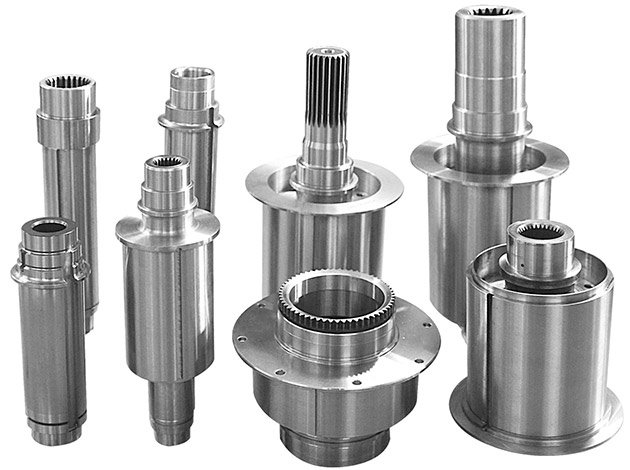
Micro-batch supply also supports risk diversification. Instead of relying solely on a single high-volume release, buyers can establish approved repeat routes, documented manufacturing records, and short-run replenishment options for critical components. This is useful for legacy equipment, aftermarket service, field repairs, product upgrades, and uncertain launches. It can also support dual-source planning when a buyer needs a qualified manufacturing path before a disruption occurs.
Supply-chain optimization requires total-cost thinking. The lowest quoted piece price may not be the lowest operational cost when excess stock, redesign exposure, urgent freight, production downtime, incoming-quality issues, and supplier-management overhead are included. Dixin Technology evaluates the entire manufacturing pathway so customers can make sourcing decisions based on landed risk and lifecycle value, not only nominal unit pricing.
4. Industry Applications
Low MOQ micro-batch production is relevant wherever component value, technical complexity, or demand uncertainty makes large inventory commitments inefficient. Aerospace programs often require controlled releases for development hardware, qualification parts, repair requirements, and low-volume structural assemblies. Precision machining support for aerospace CNC-machined titanium aircraft parts and structural components helps align demanding material and quality requirements with responsive production planning.
Medical-device manufacturers benefit from controlled small batches during product development, validation, and phased commercialization. Implants, surgical instruments, diagnostic equipment parts, and precision housings may require traceable materials, exact surface requirements, and strict dimensional control. Dixin Technology’s ISO-certified CNC machining for medical components provides a focused path for these high-precision applications.
Fluid power, industrial automation, energy, semiconductor equipment, and process industries also depend on rapid access to critical machined components. Hydraulic valve bodies, spools, sleeves, pump housings, manifolds, shafts, and sealing interfaces often create disproportionate operational risk when unavailable. The ability to produce hydraulic pump parts in low-volume, controlled batches can help maintenance and operations teams reduce prolonged downtime without carrying excessive slow-moving stock.
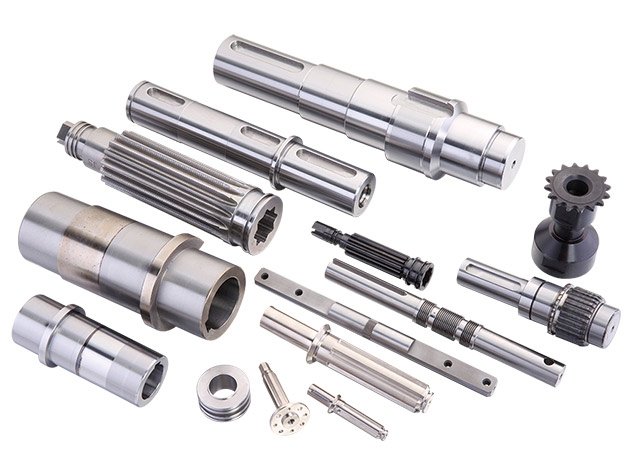
For automotive and mobility programs, micro-batches can support test fleets, tooling validation, motorsport, specialty vehicles, and early-stage electric-powertrain development. In industrial machinery, they enable replacement components for long-life capital equipment, customized automation modules, and design changes driven by customer-specific requirements. Across each sector, the underlying advantage is the same: precise production capacity can be released when needed, in quantities that reflect actual demand and validated engineering requirements.
5. Call to Action
Low MOQ micro-batch production is most effective when it is designed into the sourcing strategy from the beginning. Identify the components where demand uncertainty, high inventory value, service requirements, design iteration, or supply interruption risk make flexible replenishment valuable. Then establish the technical package, inspection plan, material controls, and release process needed for repeatable production.
Dixin Technology can assess your part drawings, annual demand profile, quality requirements, and delivery constraints to develop a practical CNC manufacturing and supply-chain plan. For a quotation, engineering review, or ODM discussion, contact IndustryApex CNC.