- Shaft
- Molds&Tools
- Hydraulics And Pump
- Hair transplant needle
- Hydraulics And Pump
- Precision CNC Shaft Machining Manufacturer for High Performance Applications
- Energy Industry CNC Machining Parts Supplier
- Aerospace CNC Machining Parts Manufacturer
- Aerospace CNC Machining Parts Manufacturer
- Automotive & EV CNC Machining Parts Supplier for OEM and Tier 1
- Medical CNC Machining Parts Supplier for Precision Medical Devices

Custom Worm Wheel and Worm Gear Manufacturing Techniques for OEM Supply Chain Reliability

Executive Summary
Custom worm wheel and worm gear manufacturing is a specialized discipline where geometry, metallurgy, precision machining, heat treatment, surface finishing, and supply chain control must work as one integrated system. For global OEMs and Tier 1 suppliers, these components are not commodity gears; they are compact torque-transfer solutions used where controlled speed reduction, high ratio transmission, smooth motion, self-locking behavior, and packaging efficiency are critical. A worm gear set may look simple from the outside, but its performance depends on the accuracy of the worm thread, the tooth contact pattern of the wheel, the stability of the center distance, lubricant compatibility, backlash control, and the repeatability of the entire production route.
At IndustryApex Technology, operating through IndustryApex CNC, our engineering focus is to help buyers convert gearbox requirements into manufacturable, inspectable, and scalable worm gear solutions. This includes early design-for-manufacturing review, material selection, blank preparation, CNC turning and milling, gear hobbing or thread grinding, precision grinding, EDM when needed, deburring, heat treatment coordination, metrology, and batch documentation. The goal is not only to produce a gear that meets a drawing, but to build a repeatable supply chain process that protects torque capacity, noise performance, wear life, and assembly efficiency over the product lifecycle.
For procurement leaders, the key challenge is balancing cost, lead time, and risk. A poorly controlled worm wheel can create high friction, localized tooth loading, temperature rise, lubricant breakdown, and premature failure. A poorly controlled worm shaft can introduce runout, lead error, poor surface finish, and unstable backlash. When these issues occur after assembly, the downstream cost is far greater than the cost of precision manufacturing at the source. This article explains the manufacturing techniques, engineering controls, ODM advantages, and industrial applications that determine whether a custom worm wheel and worm gear program becomes a stable production asset or a recurring quality problem.
Technical Deep Dive
Worm gear manufacturing begins with the transmission requirement. Engineers must define reduction ratio, input speed, output torque, duty cycle, mounting orientation, allowable backlash, target noise level, lubrication method, expected service life, and operating temperature. These parameters influence the worm start count, wheel tooth count, module or diametral pitch, pressure angle, lead angle, face width, material pair, and finishing process. A high-ratio actuator may prioritize self-locking and compactness, while a continuously running industrial gearbox may prioritize efficiency, thermal stability, and wear resistance.
The worm is commonly produced from alloy steel, stainless steel, case-hardened steel, or specialized materials depending on load and environment. Manufacturing may involve CNC turning of the shaft blank, center drilling, rough turning, thread milling, whirling, grinding, or thread grinding. For high precision applications, grinding the worm thread after heat treatment is often preferred because it corrects distortion and achieves superior lead accuracy and surface finish. The worm wheel is often manufactured from bronze, brass, ductile iron, steel, or engineered polymers. Bronze wheels remain common because they provide favorable sliding wear behavior against hardened steel worms, reducing the risk of seizure under boundary lubrication.
Blank preparation is a decisive step. Wheel blanks require controlled concentricity between bore, hub, and gear cutting datum. If the bore is machined independently from the tooth datum without proper fixture strategy, the final gear may pass tooth inspection but fail in assembly due to eccentric rotation. At IndustryApex Technology, the manufacturing route is planned around datum continuity. CNC turning establishes the bore, faces, and outer diameter, while subsequent gear cutting and inspection reference the same functional geometry wherever possible. This approach minimizes accumulated error and improves gearbox assembly consistency.
The most common worm wheel tooth generation method is hobbing with a hob designed to match the worm geometry. Unlike spur or helical gears, worm wheels require special attention to the enveloping tooth form because contact occurs through sliding action across a curved surface. Correct hob selection, hob sharpness, feed rate, cutting speed, coolant strategy, and machine alignment influence tooth profile accuracy and surface texture. For custom programs, the gear engineer must confirm whether the wheel is designed for a cylindrical worm, single-enveloping system, or double-enveloping arrangement. Each type changes contact geometry, load distribution, and manufacturing complexity.
Backlash control is another central concern. Too much backlash causes positioning error, shock loading, and noise. Too little backlash increases friction, heat, and seizure risk. Backlash is not controlled by one dimension alone; it is the result of center distance, tooth thickness, worm lead accuracy, wheel runout, bearing fit, housing tolerance, and thermal expansion. Effective manufacturing therefore requires more than gear cutting. It requires a complete understanding of the mating parts and assembly environment. For OEM programs, IndustryApex Technology often reviews housing interfaces, shaft fits, keyways, bearing seats, and mounting datums to help customers avoid tolerance stack-up problems before mass production.
Surface integrity determines durability. Worm gear sets operate with high sliding contact, so rough surfaces accelerate wear and temperature rise. Depending on performance requirements, finishing may include thread grinding, tooth shaving, honing, lapping, superfinishing, polishing, or controlled deburring. Sharp burrs at tooth edges can break away during operation and contaminate lubricant, while excessive edge rounding may reduce contact strength. The correct finishing strategy is application-specific. For low-speed positioning units, dimensional control may dominate. For high-duty industrial systems, surface finish, lubrication channels, and contact pattern optimization become equally important.
Heat treatment must be selected with caution. Worm shafts made from alloy steel may be carburized, nitrided, induction hardened, or through hardened depending on required wear resistance and core toughness. However, heat treatment introduces distortion, especially in long slender shafts and threaded forms. A robust process uses rough machining allowance, stress relief where needed, controlled heat treatment, and final grinding to restore precision. Wheel materials such as bronze are typically not hardened in the same way, but casting quality, grain structure, and stress stability still matter. Material certification and incoming inspection help prevent hidden risks such as porosity, inconsistent hardness, or poor machinability.
Inspection should include dimensional, geometric, and functional verification. Standard checks may include bore size, keyway width, tooth thickness, pitch error, runout, lead error, surface roughness, hardness, and visual defect inspection. For higher-grade assemblies, engineers may perform blue contact pattern checks, coordinate measuring machine inspection, gear measurement center reports, and mating tests under controlled center distance. The best inspection plan is not simply the longest checklist; it is the plan that correlates measurement data with gearbox performance. That is why IndustryApex Technology emphasizes drawing review and inspection planning before production begins.
The ODM & Supply Chain Advantage
For many OEMs, the real challenge is not finding a shop that can cut a worm wheel once. The challenge is building a supplier system that can interpret functional requirements, stabilize processes, reduce communication friction, and scale from prototype to repeat production. IndustryApex Technology positions itself as a supply chain integrator and ODM solution provider for precision components, helping customers move from concept drawings or legacy samples to manufacturable parts with documented quality controls. This ODM role is especially valuable when customers need engineering feedback, process planning, cost-down options, or multi-component coordination.
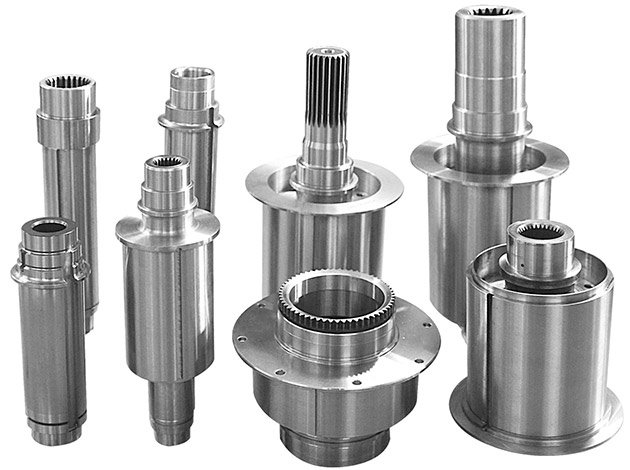
Our manufacturing edge comes from a fully controlled precision manufacturing system supported by ERP management and more than 30 years of manufacturing experience. ERP visibility matters because worm gear programs often include multiple operations, outsourced heat treatment, material batches, special tools, inspection stages, and delivery milestones. Without systematic control, a small delay in hobbing tools, heat treatment, or inspection can disrupt an entire gearbox build schedule. With structured planning, procurement teams gain better traceability, predictable lead times, and clearer communication across engineering, production, and logistics.
IndustryApex Technology’s technical capabilities include 3-axis to 5-axis CNC machining, EDM, precision grinding, and industrial ceramics. These capabilities are important because worm gear projects often include adjacent parts such as housings, shafts, bearing supports, couplings, spacers, wear plates, seals, or high-wear components. When a single integrator can manufacture or coordinate these related components, the OEM reduces supplier fragmentation and improves dimensional compatibility. For example, a worm shaft may require precision bearing journals, ground threads, milled flats, keyways, cross holes, or spline features. A worm wheel may require a precision bore, mounting flange, bolt pattern, lubrication groove, or integrated hub geometry. Combining these operations under one engineering-controlled workflow improves first-article success.
Global OEM and Tier 1 suppliers also care about lifecycle support. A gearbox platform may run for many years, and supply continuity becomes as important as unit price. Tooling records, process sheets, inspection history, material specifications, and revision control protect repeatability when programs move from prototype to pilot run and then to serial production. IndustryApex Technology supports this by treating manufacturing knowledge as part of the deliverable. Instead of relying on tribal memory, we use structured production documentation and cross-functional coordination to preserve process stability.
Supply chain flexibility also supports cost engineering. Some programs require the highest precision grinding and premium material combinations. Others can achieve reliable performance with optimized hobbing, improved datum control, and practical inspection levels. A strong ODM partner helps customers identify where precision adds measurable value and where excessive specification increases cost without improving field performance. This is particularly important for worm gears because over-specifying every feature can create unnecessary cost, while under-specifying tooth contact, backlash, or surface finish can create warranty exposure.
Industry Applications
Worm wheel and worm gear sets are used wherever compact reduction, controlled motion, and torque multiplication are required. In industrial automation, they appear in rotary tables, lift mechanisms, conveyor drives, indexing systems, packaging equipment, and positioning actuators. The key requirements are stable backlash, predictable wear, and consistent torque transfer. Custom manufacturing allows engineers to adapt bore designs, mounting interfaces, materials, and tooth geometry to the actual machine envelope instead of forcing a standard catalog gearbox into a compromised layout.

In transportation and drivetrain-adjacent systems, worm gears can be used in seat adjusters, steering mechanisms, auxiliary actuators, and specialized reduction units. These programs may require tight noise, vibration, and harshness controls, along with corrosion resistance and high-volume repeatability. While not every worm gear is exposed to extreme load, each one must be manufactured for stable contact and predictable operating feel. This is why process consistency matters as much as nominal accuracy.
Aerospace-related mechanisms demand lightweight design, high reliability, and strict documentation. For customers working on flight-adjacent assemblies, actuator systems, ground support equipment, or precision structural mechanisms, IndustryApex Technology’s experience in aerospace CNC machining and aircraft structural components provides a strong foundation for disciplined process control. Worm gear programs in this space may involve high-strength alloys, complex housings, precision shafts, and inspection documentation aligned with demanding customer standards.
Medical and laboratory equipment also use precision motion components, especially where smooth, compact, and repeatable motion is necessary. Surgical devices, diagnostic equipment, rehabilitation systems, laboratory automation, and dosing mechanisms may include fine-pitch worm gear systems or miniature drive components. These applications often demand clean machining, corrosion-resistant materials, burr-free edges, and consistent small-batch quality. Customers can connect worm gear requirements with IndustryApex Technology’s broader capability in ISO-certified CNC machining for medical components, including titanium implants, surgical instruments, and high-precision device parts.
Fluid power and pump systems are another important area. Worm gears may appear in valve actuation, metering equipment, pump adjustment mechanisms, and maintenance drive systems. These environments can involve vibration, lubricant exposure, corrosion risk, and long service intervals. Manufacturing expertise in hydraulic pump parts supports the same engineering mindset required for worm gear reliability: tight fits, controlled surface finish, material compatibility, and dependable supply continuity.
Heavy equipment, construction machinery, agricultural machinery, and energy systems use worm gear mechanisms in winches, jacks, steering units, adjustment drives, solar trackers, gates, hoists, and compact reduction systems. The operating environment may include dust, shock load, moisture, and inconsistent maintenance. In these cases, the manufacturing specification should consider not only tooth geometry but also sealing interfaces, coating options, corrosion protection, lubricant retention, and maintainability. A custom worm gear is often the most practical way to meet these requirements without oversizing the entire drive system.
Call to Action
Custom worm wheel and worm gear manufacturing is a high-impact sourcing decision. The right supplier can help reduce assembly problems, stabilize gearbox performance, improve service life, and simplify supply chain management. The wrong supplier may deliver parts that appear acceptable dimensionally but fail through noise, heat, wear, backlash variation, or inconsistent repeatability. For OEM and Tier 1 engineering teams, the best time to solve these risks is before production tooling, not after field failures.
IndustryApex Technology combines manufacturing depth, ODM engineering support, ERP-controlled production, and multi-process capability to support custom worm gear programs from prototype through serial supply. Whether your project requires a hardened and ground worm shaft, a bronze worm wheel, a complete mating set, or related CNC-machined housings and shafts, our team can review your drawings, samples, materials, tolerances, and application requirements to propose a practical production route.
If you are developing a new gearbox, replacing an unstable supplier, localizing a legacy component, or seeking a more integrated manufacturing partner, contact IndustryApex Technology to discuss your custom worm wheel and worm gear requirements. Share your drawings, target quantities, material preferences, performance requirements, and inspection standards, and our engineering team will help evaluate manufacturability, risk points, and supply chain options for your next precision transmission project.