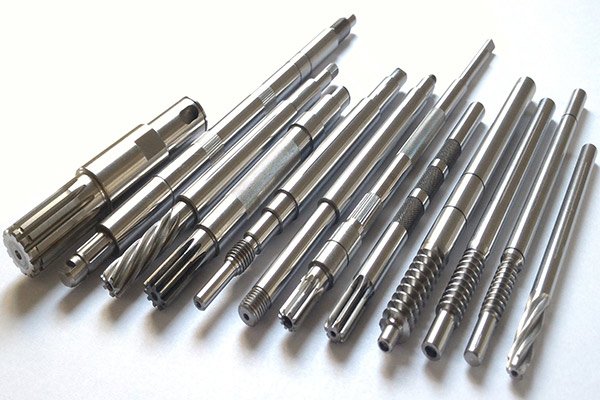
- Shaft
- Molds&Tools
- Hydraulics And Pump
- Hair transplant needle
- Hydraulics And Pump
- Precision CNC Shaft Machining Manufacturer for High Performance Applications
- Energy Industry CNC Machining Parts Supplier
- Aerospace CNC Machining Parts Manufacturer
- Aerospace CNC Machining Parts Manufacturer
- Automotive & EV CNC Machining Parts Supplier for OEM and Tier 1
- Medical CNC Machining Parts Supplier for Precision Medical Devices

2026 Trends in 5-Axis CNC Machining for Aerospace Components: Precision, Traceability, and Supply Chain Resilience

Executive Summary
By 2026, 5-axis CNC machining for aerospace components is being reshaped by three forces that now influence both engineering decisions and sourcing strategy: tighter geometric tolerance requirements, higher expectations for digital traceability, and pressure to reduce supply chain risk without sacrificing compliance. Aerospace programs continue to demand complex parts in titanium, nickel alloys, stainless steels, and high-performance aluminum, yet the buying criteria are no longer limited to machine capability alone. OEMs and Tier 1 suppliers increasingly evaluate whether a manufacturing partner can deliver repeatable quality, multi-process integration, material provenance, and stable lead times across prototype, pilot, and production volumes.
The most important trend is the convergence of process capability and supply chain control. Aerospace buyers want fewer handoffs, more inspection certainty, and stronger control over the full production path. That is pushing qualified suppliers to combine 3-axis and 5-axis machining with EDM, precision grinding, and controlled finishing under one management system. For buyers, this means faster qualification cycles and fewer risks during industrialization. For suppliers, it requires disciplined ERP-driven planning, process documentation, and strong cross-functional engineering support.
For companies sourcing aerospace parts, the practical implication is clear: the winning supplier in 2026 will not simply own a high-end machine tool. It will be able to demonstrate a controlled manufacturing system, export-ready documentation, and the ability to support complex structural components, engine-adjacent parts, fluid system elements, and other precision assemblies with consistent quality. Dixin Technology, through IndustryApex CNC, is positioned around exactly that model as a supply chain integrator and ODM solution provider serving global OEM and Tier 1 customers. Learn more on the Home page and the dedicated Aerospace Parts page.
Technical Deep Dive
5-axis CNC machining is becoming more central to aerospace manufacturing because part complexity is increasing faster than the acceptable cost of error. Modern aircraft structures and propulsion-adjacent components often combine thin walls, angled features, deep cavities, intersecting radii, and hard-to-access interfaces. A 3-axis setup can still be effective for simpler geometry, but 5-axis machining reduces repositioning, improves datum control, and helps maintain tighter relationships between critical features. That advantage matters especially for parts where positional error stacks quickly across multiple setups.
In 2026, the conversation is shifting from pure machine access to system-level capability. Aerospace customers want suppliers that can manage workholding strategy, toolpath stability, thermal control, and in-process verification as one coordinated process. This is particularly important when machining titanium and other difficult alloys, where heat, tool wear, and chatter can compromise surface integrity. High-mix aerospace machining also benefits from digital process planning, because engineering changes are frequent and the supply base must absorb revisions without destabilizing production.
Cutting tool selection and CAM strategy remain central, but they now sit inside a broader quality architecture. A mature supplier will use simulation to validate reach and collision risk, then connect that process to inspection planning and first-article documentation. When the part requires EDM or precision grinding, the objective is not merely to finish the geometry, but to preserve functional interfaces and load-bearing accuracy after rough machining. This is where integrated manufacturing matters: the less a part moves between disconnected vendors, the lower the risk of dimensional drift and schedule slippage.
Inspection is also changing. Aerospace buyers increasingly expect evidence rather than promises, so coordinate measuring machine data, surface finish reports, material certificates, and process records must align cleanly with the part number and revision level. In practice, the supplier that can tie machining parameters to traceable inspection outputs will win more business than the supplier that only advertises spindle speed or machine count. That is why digital ERP integration is not an administrative feature; it is part of the technical deliverable.
Another trend shaping 2026 is the growth of hybrid part portfolios. Aerospace platforms are not only asking for airframe brackets and structural mounts, but also for fluid control housings, precision sleeves, threaded interfaces, and custom subassemblies that interact with hydraulics and motion systems. This broadens the relevance of precision machining beyond a narrow set of aircraft components. For related manufacturing work, see Hydraulics & Pump, where similar control of concentricity, sealing surfaces, and wear resistance is essential.
The ODM & Supply Chain Advantage
The supply chain model behind aerospace machining is becoming as important as the machining itself. Many buyers are now looking for an ODM partner that can convert concept requirements into manufacturable parts, support DFM feedback, and manage production continuity across changing demand. In this context, Dixin Technology’s positioning as a supply chain integrator and ODM solution provider is commercially relevant because it addresses a core pain point: complex aerospace parts often fail not at the design stage, but at the interface between engineering intent and repeatable mass production.
One of the main advantages of a controlled manufacturing system is that it shortens the path from design freeze to stable output. When ERP, process routing, inspection checkpoints, and material handling are connected, production becomes more predictable. That predictability matters to global OEM and Tier 1 suppliers that need reliable delivery across long qualification cycles and sometimes volatile demand. Over 30 years of experience also matters here, not as a marketing claim, but because aerospace customers place a premium on institutional knowledge: understanding which tolerances drift, which alloy combinations are sensitive to process variation, and how to preserve quality under schedule pressure.
From a technical capability standpoint, a supplier that combines 3-axis and 5-axis CNC with EDM, precision grinding, and industrial ceramics can support a wider range of aerospace requirements. 5-axis machining addresses complex metal geometry. EDM helps with hard-to-machine features and precision detail. Grinding supports finishing-critical interfaces. Industrial ceramics extend capability into wear-resistant, heat-tolerant, or electrically insulated applications. This multi-process model is valuable because aerospace programs rarely consist of a single part family; they consist of a network of parts with different performance and certification demands.
Commercially, integrated capability also reduces the hidden cost of sourcing. Managing multiple vendors for rough machining, finishing, and inspection creates communication overhead, longer lead times, and greater exposure to nonconformance. A fully controlled precision manufacturing system lowers that overhead and improves response speed when engineering changes arrive. For procurement teams, the result is simpler supplier management. For engineers, it means less time chasing process gaps and more time validating performance.
If your organization is evaluating a partner for aerospace work, the decisive questions are practical: Can they maintain revision control? Can they produce inspection evidence consistently? Can they scale from small batches to ongoing delivery without losing process discipline? Can they serve as a true integration partner rather than a single-process machine shop? Those are the standards that will define strong aerospace suppliers in 2026. For direct engagement, use the Contact Us page.
Industry Applications
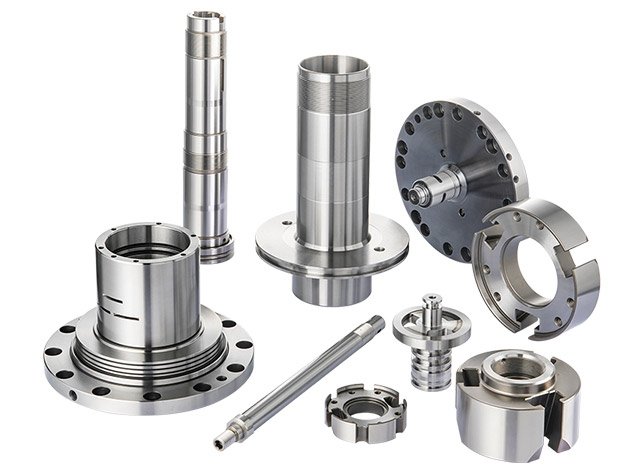
The strongest aerospace applications for 5-axis CNC machining in 2026 are the ones that combine geometric complexity with high consequence. Aircraft structural components remain a core segment because they demand lightweight designs, precise interfaces, and consistent load transfer. Brackets, housings, attachment points, and structural fittings must meet strict dimensional targets while maintaining reliable mechanical performance under vibration, thermal variation, and fatigue loading.
Engine-adjacent parts are another major category. These components often require heat-resistant materials, carefully controlled surface finishes, and stable tolerances that support sealing, fit, or rotating assembly performance. The demand for such parts is reinforced by the broader drivetrain and engine manufacturing ecosystem, where similar process discipline is used to control roundness, concentricity, and wear behavior. Aerospace customers are increasingly selective about partners that can demonstrate this level of multi-domain precision.
Fluid system parts are also expanding in relevance. Valves, manifold bodies, pump elements, and hydraulic interfaces demand accurate internal geometry and robust leak control. These parts often expose weaknesses in a supplier’s process chain because the functional surfaces are difficult to inspect and even harder to recover if a machining error occurs. A supplier with integrated machining and finishing capability can protect these interfaces more effectively. This is one reason aerospace buyers often look at adjacent capability in hydraulic and fluid control components before awarding programs.
Medical and aerospace share a useful overlap as well: both require traceability, documentation discipline, and high precision on critical features. While the regulatory frameworks differ, the manufacturing habits are similar. A supplier that supports Medical Parts typically demonstrates the process control mindset that aerospace sourcing teams value. That cross-industry discipline can improve confidence during audits, supplier approval, and pilot launch.
Ultimately, the most promising aerospace applications for 5-axis CNC are those where complexity, tolerance, and traceability intersect. That includes titanium aircraft parts, aircraft structural components, precision subassemblies, and custom machined interfaces that must perform in demanding environments. The suppliers that win here will be those that combine engineering depth with reliable industrial execution.
Call to Action
As 2026 approaches, aerospace sourcing teams should reassess not only whether a supplier can machine the part, but whether that supplier can support the full production journey from design input to repeatable delivery. The best outcomes will come from partners that unite 5-axis capability, disciplined quality systems, and robust supply chain control under one operating model.
Dixin Technology, operating through IndustryApex CNC, offers that integrated approach for global OEM and Tier 1 programs. If you are sourcing aerospace components, need support with ODM development, or want a more controlled precision manufacturing partner, start with the Aerospace Parts page or contact the team directly through Contact Us.