- Shaft
- Molds&Tools
- Hydraulics And Pump
- Hair transplant needle
- Hydraulics And Pump
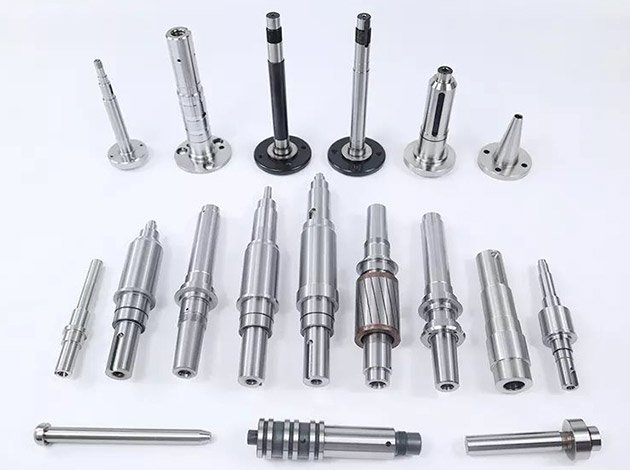
- Precision CNC Shaft Machining Manufacturer for High Performance Applications
- Energy Industry CNC Machining Parts Supplier
- Aerospace CNC Machining Parts Manufacturer
- Aerospace CNC Machining Parts Manufacturer
- Automotive & EV CNC Machining Parts Supplier for OEM and Tier 1
- Medical CNC Machining Parts Supplier for Precision Medical Devices
Sourcing Aerospace CNC Parts: What Tier 1 Suppliers Look For

Sourcing Aerospace CNC Parts: What Tier 1 Suppliers Look For
For aerospace procurement teams, sourcing a CNC-machined component is not simply a price-and-capacity exercise. Each structural fitting, engine-adjacent component, flight-control housing, bracket, manifold, or precision shaft can carry implications for airworthiness, program schedule, traceability, and lifecycle cost. Tier 1 suppliers therefore evaluate machining partners through a disciplined lens that combines technical competence, quality-system maturity, supply-chain resilience, and the ability to support engineering change over a program’s full production life.
Dixin Technology, operating through IndustryApex CNC, supports global OEM and Tier 1 supply chains with precision manufacturing and ODM-oriented coordination. The objective is not merely to produce parts to print, but to create a controlled, transparent path from drawing release and material procurement through machining, inspection, packaging, and delivery.
1. Executive Summary
Aerospace CNC sourcing decisions are made under unusually demanding conditions. Buyers must balance tight dimensional tolerances, difficult materials, documented process control, constrained lead times, and strict requirements for repeatability. A capable supplier must show that it can make the first article correctly, maintain the same result from lot to lot, and provide objective evidence that every critical requirement has been met.
Tier 1 suppliers generally look beyond machine count. They assess whether a manufacturer understands datum strategy, can preserve material and process traceability, has sufficient metrology for critical features, controls subcontracted special processes, and can respond quickly when demand, designs, or schedules change. They also expect commercial communication that is clear enough to prevent technical ambiguity from becoming a delivery or quality issue.
The strongest sourcing model connects engineering, production, quality, and logistics in one managed system. This is especially important for titanium, aluminum aerospace alloys, stainless steels, nickel-based alloys, and high-strength steels, where material behavior, fixturing, tool wear, heat generation, burr control, and inspection planning directly affect conformity. A supplier that provides design-for-manufacturability input before release can often reduce risk before chips are cut.
2. Technical Deep Dive
Tier 1 aerospace organizations begin with technical feasibility. A quotation must demonstrate more than an ability to interpret nominal dimensions. It should identify critical-to-quality characteristics, datum relationships, geometric tolerances, surface-finish requirements, thread specifications, material condition, and any risk associated with thin walls, deep pockets, compound angles, or difficult access features. When these considerations are addressed early, the supplier can propose a process plan that protects function and reduces downstream nonconformance risk.
Material control is central to aerospace machining. Buyers commonly require documented material certification, heat or lot traceability, and positive identification procedures that keep raw stock linked to finished components. For titanium aircraft parts, for example, machining strategy must account for low thermal conductivity, work hardening risk, tool loading, and distortion after material removal. Aluminum structural components introduce different concerns, including burr formation, clamping deformation, corrosion protection, and maintaining geometry across large thin-walled profiles.
Five-axis machining is often a sourcing requirement because aerospace geometry rarely aligns with simple three-axis setups. Multi-axis capability can reduce setup changes, improve positional relationships between features, and provide access to complex contours, angled holes, impeller-like surfaces, and compound structural details. However, Tier 1 buyers also evaluate the supporting process: fixture design, tool-path verification, in-process probing, work-offset management, tool-life monitoring, and controlled inspection routines. A five-axis machine without disciplined process engineering does not automatically create a reliable aerospace result.
Inspection planning must be matched to the drawing and the functional risk of the part. Coordinate measuring machines, calibrated gauges, height measurement, optical inspection, and surface-finish measurement may all be relevant depending on the component. First-article inspection should establish a documented baseline, while in-process and final inspection plans should prevent drift during production. For features with tight position, profile, concentricity, or runout requirements, the inspection method must be capable of measuring the specification with appropriate uncertainty and repeatability.
Tier 1 suppliers also scrutinize how machining providers manage nonconformance. A credible supplier has a defined method for containment, root-cause analysis, corrective action, and communication. The practical question is not whether an issue can occur; it is whether the manufacturing organization can identify the affected material, stop escape, determine the cause, and restore controlled production quickly. This responsiveness protects the wider aerospace supply chain from avoidable line stoppages and costly rework.
Lead time should be evaluated as a technical outcome rather than a simple promise. Reliable delivery depends on available qualified material, stable programming, validated fixturing, realistic machine loading, inspection capacity, and controlled external operations such as anodizing, passivation, plating, heat treatment, or non-destructive testing. The supplier that can make these dependencies visible gives procurement teams a more dependable basis for scheduling decisions.
3. The ODM & Supply Chain Advantage
Dixin Technology’s core identity is that of a supply-chain integrator and ODM solution provider serving global OEM and Tier 1 customers. This model is valuable when a project requires more than isolated machining capacity. Customers often need a manufacturing partner that can coordinate engineering review, material selection support, production routing, quality documentation, packaging requirements, and delivery planning as one accountable program.
With more than 30 years of manufacturing experience, Dixin Technology operates a fully controlled precision manufacturing system supported by ERP management. ERP visibility helps connect order status, material planning, work orders, production progress, inspection records, and delivery coordination. For a Tier 1 buyer, this creates a more controlled information flow than a fragmented sourcing approach in which engineering, production, and logistics are handled by disconnected parties.
The manufacturing platform includes 3-axis to 5-axis CNC machining, EDM, precision grinding, and industrial ceramics capabilities. This breadth matters because aerospace parts may combine prismatic machining, freeform surfaces, fine internal details, precision bores, sealing interfaces, or wear-resistant material requirements. EDM can address intricate profiles and hard materials where conventional cutting is constrained. Precision grinding supports close tolerance, surface integrity, and bearing or sealing relationships. Industrial ceramic expertise can support specialized applications where thermal stability, electrical insulation, or wear resistance is required.
ODM support adds value before full production begins. During early engagement, manufacturing engineers can review geometry for machining access, identify tolerance stacks that may affect assembly, suggest sensible datum schemes, and flag features that would benefit from process changes or alternate material forms. These discussions are not intended to dilute drawing requirements. They are intended to give the customer a clearer view of manufacturability, cost drivers, and schedule exposure before the program is committed.
A disciplined integrator also improves supply continuity. Rather than treating each purchase order as an independent transaction, the program can be planned around demand forecasts, minimum lot quantities, raw-material availability, approved external processes, and phased delivery requirements. This approach is particularly relevant for long-running aerospace platforms, where spare-parts demand, engineering revisions, and production-rate adjustments can continue long after initial qualification.
For aerospace-specific manufacturing support, explore Dixin Technology’s aerospace CNC machining capabilities for titanium aircraft parts and structural components. The same precision-control discipline also supports adjacent regulated applications, including ISO-certified CNC machining for medical components, where traceability, precision, and process consistency are similarly essential.
4. Industry Applications
Aerospace CNC parts span a broad set of applications, and each has its own sourcing priorities. Airframe and structural components commonly require lightweight, high-strength materials, controlled geometry, and dependable finishing coordination. Typical examples include brackets, ribs, fittings, housings, mounts, frames, access components, and complex machined structural details. For these parts, suppliers must demonstrate control of part distortion, thin-wall stability, datum transfer, and surface protection.
Flight-control and actuation systems demand precise interfaces, bores, threaded features, and reliable dimensional relationships. Components may include actuator housings, clevises, linkages, valve bodies, and precision shafts. Manufacturing teams must account for assembly fit, fatigue-sensitive transitions, burr removal, and repeatable inspection of critical locations. When fluid management is involved, experience with hydraulic pump parts and fluid-control components can be relevant to the production of manifolds, sleeves, spools, and tightly controlled sealing features.
Engine-adjacent and high-temperature applications raise material and surface-integrity demands. Nickel alloys, stainless steels, titanium, and other difficult materials require robust tooling, stable cutting parameters, and careful process validation. The ability to coordinate machining with grinding, EDM, heat treatment, and finishing becomes valuable when the component has a complex tolerance scheme or demanding performance environment.
Avionics, sensor, and optical-support hardware often relies on finely machined housings, brackets, frames, and thermal-management components. Here, the part may need accurate feature placement, cosmetic or corrosion-resistant finishes, controlled interfaces, and repeatable production across multiple configurations. A manufacturing partner that can manage revisions and mixed-volume schedules helps buyers avoid disruption as programs mature.
Across all applications, the selection criteria remain consistent: engineering understanding, documented quality control, material traceability, suitable equipment, dependable capacity, and transparent communication. Tier 1 teams should request evidence that these elements operate together, including sample inspection reports, process-flow information, material-control practices, capability data where appropriate, and a realistic production timeline.
5. Call to Action
When sourcing aerospace CNC parts, choose a manufacturing partner that can support the full technical and supply-chain requirement, from DFM review and controlled material sourcing through multi-axis machining, inspection, finishing coordination, and delivery. Dixin Technology combines precision manufacturing capabilities with an ODM and supply-chain integration approach designed for global OEM and Tier 1 programs.
To discuss a drawing package, RFQ, prototype requirement, production schedule, or supply-chain challenge, contact Dixin Technology. Early technical engagement can establish the process controls, documentation expectations, and delivery plan required for a more reliable aerospace sourcing decision.