- Shaft
- Molds&Tools
- Hydraulics And Pump
- Hair transplant needle
- Hydraulics And Pump
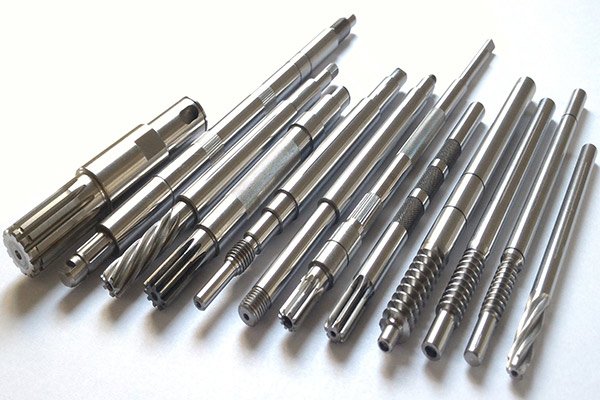
- Precision CNC Shaft Machining Manufacturer for High Performance Applications
- Energy Industry CNC Machining Parts Supplier
- Aerospace CNC Machining Parts Manufacturer
- Aerospace CNC Machining Parts Manufacturer
- Automotive & EV CNC Machining Parts Supplier for OEM and Tier 1
- Medical CNC Machining Parts Supplier for Precision Medical Devices

The Future of Robotics Components in 2026: Micron-Level Precision, ODM Integration, and Supply Chain Resilience

The Future of Robotics Components in 2026: Micron-Level Precision, ODM Integration, and Supply Chain Resilience
Published by Dixin Technology | IndustryApex CNC
1. Executive Summary
Robotics is entering a manufacturing phase in which component precision, system reliability, and supply chain responsiveness are becoming equally important. By 2026, robot builders and automation integrators will face tighter requirements for repeatability, lower backlash, thermal stability, compact packaging, and extended operating life. These requirements are accelerating demand for robotics components manufactured to micron-level tolerances, including precision shafts, gear elements, bearing seats, hydraulic control parts, ceramic insulators, end-effector components, and structural interfaces.
Micron-level precision is not simply a machining target. It is a complete engineering discipline involving material selection, tolerance allocation, process control, temperature management, metrology, surface engineering, and traceable production data. A component that meets a dimensional specification in isolation may still fail in a robotic assembly if its form error, surface finish, concentricity, or thermal behavior creates cumulative positioning error.
For global OEMs and Tier 1 suppliers, the strategic response is moving beyond transactional machining. Robotics manufacturers increasingly need a supply chain integrator and ODM solution provider capable of translating functional requirements into manufacturable designs, coordinating multiple technologies, controlling quality across processes, and delivering stable production at scale. Dixin Technology, operating through IndustryApex CNC, supports this model with a fully controlled precision manufacturing system, ERP-enabled production management, and more than 30 years of manufacturing experience.
This analysis examines the technical forces shaping robotics components in 2026, the role of integrated ODM manufacturing, and the industry applications where micron-level control creates measurable commercial value.
2. Technical Deep Dive
Robotic performance depends on the interaction of many precision components. Harmonic drive interfaces, planetary gears, spline connections, bearing housings, servo motor shafts, linear guide elements, and end-of-arm tooling must work together with minimal variation. At the system level, a few microns of error in several interfaces can become a significant positioning, vibration, or wear problem after assembly.
One major trend is the expansion of tighter geometric tolerances. Dimensional accuracy remains important, but robotics customers are also specifying cylindricity, roundness, perpendicularity, parallelism, and total indicated runout. For a servo shaft, for example, a diameter may be within tolerance while excessive runout causes vibration and uneven bearing loading. For a precision gear or spline, profile and lead errors can affect torque transmission, acoustic performance, and service life.
Manufacturers are therefore applying more controlled process chains. A typical precision robotics component may require multi-axis CNC machining for complex features, EDM for narrow slots or intricate profiles, precision grinding for final dimensional control, and advanced inspection for verification. The objective is to remove variation at each stage rather than rely on final inspection to identify defects after value has already been added.
Material behavior is another decisive factor. Robotics assemblies often combine hardened steels, stainless steels, aluminum alloys, titanium, engineering plastics, and technical ceramics. Each material reacts differently to cutting forces, heat, residual stress, and finishing operations. Hardened steel may require grinding or EDM to achieve the desired geometry. Aluminum components require careful control of burrs, distortion, and surface damage. Ceramics offer wear resistance, electrical insulation, and low mass, but demand specialized tooling and process knowledge.
Industrial ceramics are becoming especially relevant in compact robotic systems. Ceramic parts can provide electrical isolation near sensors and actuators, stable performance at elevated temperatures, and resistance to aggressive chemicals. Their brittleness, however, makes edge integrity and fracture prevention essential. A supplier with both metalworking and industrial ceramic capabilities can reduce the number of interfaces in the program and improve design coordination.
Thermal management is also moving into the center of precision robotics manufacturing. Machine tools, inspection equipment, cutting fluids, and workpieces expand or contract as temperature changes. At micron-level tolerances, uncontrolled thermal drift can produce false acceptance or rejection. Stable production requires environmental monitoring, calibrated equipment, controlled workholding, and inspection methods that account for temperature conditions.
Surface finish has a direct impact on robotics reliability. Smooth bearing seats reduce friction and support consistent preload. Controlled surface texture on sliding or sealing interfaces influences lubrication retention and leakage. Edge preparation prevents particle generation and assembly damage. In high-cycle applications, a small burr or inconsistent chamfer can become a source of premature wear, sensor contamination, or assembly interference.
Digital manufacturing systems are strengthening this technical foundation. ERP integration connects engineering revisions, material purchasing, process routing, inspection results, inventory status, and shipment planning. When production data is connected across departments, engineering teams can identify recurring variation, purchasing teams can forecast critical materials, and customers can receive more reliable delivery commitments.
By 2026, the most capable robotics component suppliers will combine advanced equipment with disciplined process engineering. Their value will be measured not only by the smallest tolerance they can achieve, but by their ability to repeat that result across thousands of parts, multiple production lots, and changing demand conditions.
3. The ODM & Supply Chain Advantage
The shift toward micron-level robotics components is changing the supplier relationship. OEMs and Tier 1 suppliers need early engineering participation because the highest-cost manufacturing problems often originate during design. A part may be technically feasible but unnecessarily difficult to inspect, unstable during machining, exposed to avoidable material risk, or dependent on a process that cannot scale.
An ODM partner contributes before production begins. Dixin Technology operates as a supply chain integrator and ODM solution provider, helping customers connect product requirements with practical manufacturing routes. This can include design-for-manufacturing feedback, material recommendations, tolerance review, process selection, prototype development, first article validation, production planning, and ongoing quality management.
The manufacturing edge comes from a fully controlled precision manufacturing system supported by ERP and more than 30 years of experience. Control across the production chain improves accountability and reduces the communication gaps that occur when machining, grinding, EDM, finishing, inspection, and logistics are managed by unrelated vendors. It also gives customers a clearer path for engineering changes and corrective actions.
Dixin Technology’s technology capabilities include 3-axis through 5-axis CNC machining, EDM, precision grinding, and industrial ceramics. This combination supports a broad range of robotics component requirements, from complex structural parts and precision housings to hardened transmission components, miniature slots, wear-resistant inserts, and electrically insulating ceramic elements. Using the right process for each feature helps balance accuracy, cycle time, surface quality, and cost.
Integrated manufacturing is particularly valuable for global OEM and Tier 1 customers managing multiple robotics platforms. A single component family may require prototype quantities in one quarter, pilot production in the next, and repeat shipments across several regions afterward. An integrated supplier can preserve process knowledge, maintain revision control, coordinate capacity, and support consistent quality as volumes change.
Supply chain resilience also depends on visibility. ERP-based management enables better tracking of raw material availability, work-in-process, inspection status, finished inventory, and shipment timing. This matters when specialized alloys, bearings, coatings, or ceramic materials have extended lead times. Early visibility allows the customer and supplier to make informed decisions about safety stock, alternative materials, lot sizes, and production sequencing.
Quality documentation is another differentiator. Robotics customers may require material certificates, dimensional reports, capability data, inspection records, and traceability by batch or serial number. A structured system makes these records more dependable and easier to connect to engineering revisions. For safety-critical or high-value equipment, documentation is part of product performance because it supports validation, field analysis, and regulatory or customer audits.
The ODM model also reduces total supplier-management effort. Instead of coordinating separate vendors for machining, grinding, EDM, ceramics, inspection, and logistics, an OEM can work with one accountable manufacturing partner. This does not eliminate the need for rigorous supplier qualification. It makes qualification more meaningful by evaluating the complete production system, including technical depth, quality controls, capacity, communication, and delivery performance.
4. Industry Applications
Micron-level robotics components are relevant across industries where automated systems must operate continuously, accurately, and safely.
Automotive and Electric Vehicle Manufacturing
Automotive plants use robots for welding, fastening, adhesive dispensing, inspection, material handling, and battery assembly. These operations depend on precise servo shafts, gear interfaces, tooling adapters, gripper components, and wear-resistant locating elements. Electric vehicle production adds demanding requirements for battery module handling, lightweight structures, high-speed assembly, and contamination control. Consistent component geometry helps maintain robot calibration and reduces unplanned stops.
Aerospace Production
Aerospace manufacturing uses robotics for drilling, trimming, composite handling, inspection, and component assembly. Lightweight robot arms and precision end-effectors must maintain positional accuracy while handling large or sensitive structures. Titanium and other difficult-to-machine alloys require controlled cutting strategies and rigorous inspection. Dixin Technology’s aerospace CNC machining capabilities support applications involving titanium aircraft parts, 5-axis machining, and structural components.
Medical Device Manufacturing
Medical production robots and automation systems support inspection, packaging, surgical instrument manufacturing, laboratory handling, and implant-related processes. Components must provide repeatability, cleanable surfaces, corrosion resistance, and dependable traceability. Precision fixtures, instrument components, titanium parts, and specialized device elements may require close control of form, finish, and burr removal. Customers can review Dixin Technology’s ISO-certified CNC machining for medical components for related manufacturing requirements.
Hydraulics, Pumps, and Fluid Control
Robotic systems used in construction, agricultural, energy, and material-handling equipment often include hydraulic actuators or fluid-control assemblies. Valve spools, sleeves, pump components, and precision sealing surfaces must maintain controlled clearances to prevent leakage and preserve response characteristics. Robotic machining cells also depend on accurate fluid-control components for automated production equipment. Dixin Technology provides specialized hydraulic pump parts for demanding fluid-control applications.
Semiconductor and Electronics Manufacturing
Semiconductor and electronics factories use robots in wafer handling, inspection, dispensing, packaging, and cleanroom material movement. These systems require low-particle components, precise motion, chemical resistance, and stable operation over long production cycles. Ceramic parts can provide insulation and dimensional stability near sensitive process areas, while carefully finished metal components support repeatable motion and accurate positioning.
Food, Packaging, and Consumer Products
High-speed packaging robots require components that tolerate frequent cycling, washdown conditions, and constant acceleration. Grippers, shafts, guide components, and changeover tooling must maintain consistent geometry while minimizing maintenance. In these environments, surface finish, corrosion resistance, cleanability, and quick replacement are as important as nominal dimensional accuracy.
Across all these sectors, the commercial goal is the same: improve equipment uptime, reduce calibration frequency, control total cost of ownership, and shorten the path from engineering release to stable production. Micron-level precision contributes to that goal when it is paired with repeatable processes and dependable supply chain execution.
5. Call to Action
Robotics manufacturers preparing for 2026 should evaluate component suppliers on the complete engineering and supply chain system, not equipment lists alone. Ask how the supplier manages tolerance analysis, material traceability, process validation, inspection, engineering changes, capacity planning, and delivery risk. The strongest partner will be able to support both a demanding prototype and a repeatable global production program.
Dixin Technology and IndustryApex CNC help global OEMs and Tier 1 suppliers develop and produce precision robotics components through integrated ODM support, advanced machining, EDM, precision grinding, industrial ceramics, and ERP-enabled manufacturing control. Share your drawings, specifications, target volumes, and performance requirements through the Contact Us page to begin a technical and supply chain assessment.
For an overview of precision manufacturing capabilities and industry solutions, visit the Dixin Technology CNC components homepage.