- Shaft
- Molds&Tools
- Hydraulics And Pump
- Hair transplant needle
- Hydraulics And Pump
- Precision CNC Shaft Machining Manufacturer for High Performance Applications
- Energy Industry CNC Machining Parts Supplier
- Aerospace CNC Machining Parts Manufacturer
- Aerospace CNC Machining Parts Manufacturer
- Automotive & EV CNC Machining Parts Supplier for OEM and Tier 1
- Medical CNC Machining Parts Supplier for Precision Medical Devices

Titanium Implants: Challenges and Solutions in Medical CNC Machining

Titanium Implants: Challenges and Solutions in Medical CNC Machining
1. Executive Summary
Titanium and its alloys, particularly Ti-6Al-4V (Grade 5) and commercially pure Grade 23 (ELI), have become the gold standard for orthopedic, dental, spinal, and cranio-maxillofacial implants. Their unmatched biocompatibility, corrosion resistance, and strength-to-weight ratio make them indispensable to medical device OEMs worldwide. Yet the very properties that make titanium clinically superior, low thermal conductivity, high chemical reactivity at elevated temperatures, and a low elastic modulus, also make it one of the most demanding materials to machine.
For procurement leaders and engineering directors at medical device OEMs, the question is no longer whether to use titanium, but how to source machined titanium components that meet ISO 13485 traceability, sub-micron surface finish requirements, and cost targets at scale. This article examines the core technical challenges of titanium implant machining, the metallurgical and tooling solutions that address them, and how a vertically integrated ODM supply chain can de-risk delivery for global Tier 1 medical buyers. As an ISO-certified manufacturer of medical CNC components, IndustryApex Technology brings 30+ years of precision manufacturing depth to the medical sector.
2. Technical Deep Dive: Why Titanium Punishes the Machine Tool
Machining titanium implants is a multi-variable optimization problem. Four interlinked challenges dominate every shop-floor decision:
2.1 Heat Concentration at the Cutting Edge
Titanium’s thermal conductivity (around 6.7 W/m·K for Ti-6Al-4V) is roughly one-sixth that of steel. Heat generated in the shear zone cannot dissipate into the chip or workpiece, so up to 80% of it is absorbed directly by the cutting edge. The result: rapid flank wear, crater formation, and catastrophic insert failure if cutting parameters are not tightly controlled. Solution strategies include high-pressure through-spindle coolant (70 bar and above), AlTiN or TiAlSiN PVD-coated carbide inserts with sharp positive geometries, and trochoidal milling toolpaths that limit radial engagement to 5-10% of tool diameter.
2.2 Chemical Reactivity and Built-Up Edge
At temperatures above 500 °C, titanium reacts with carbon, oxygen, and nitrogen, leading to chip welding on the rake face. This built-up edge degrades surface integrity, a critical concern when implants must achieve Ra values below 0.4 µm on articulating surfaces. Counter-measures include diamond-like carbon (DLC) tool coatings, polished rake faces, and aggressive coolant flooding to prevent chip recirculation.
2.3 Low Modulus and Springback
Titanium’s elastic modulus is approximately half that of stainless steel. Thin-walled components, such as acetabular cup shells, dental abutments, or cranial mesh, deflect under cutting forces and spring back after the tool passes. This produces dimensional drift, chatter, and tolerance violations on critical interfaces (e.g., Morse tapers, hex drives). The remedy is a combination of rigid 5-axis fixturing, adaptive feed control, and finishing strategies that use light depths of cut (0.05-0.10 mm) with high-helix end mills.
2.4 Surface Integrity and Fatigue Life
Implants are cyclically loaded for decades. Microstructural damage from machining, white-layer formation, residual tensile stress, alpha-case contamination, can initiate fatigue cracks long before the bulk material fails. Solution architectures include controlled cutting parameters, post-machining electropolishing or shot peening, and 100% inspection via optical profilometry to verify subsurface integrity. For Grade 23 ELI implants, oxygen pickup must be held below 0.13% by mass, which mandates inert machining environments for certain finishing operations.
3. The ODM and Supply Chain Advantage
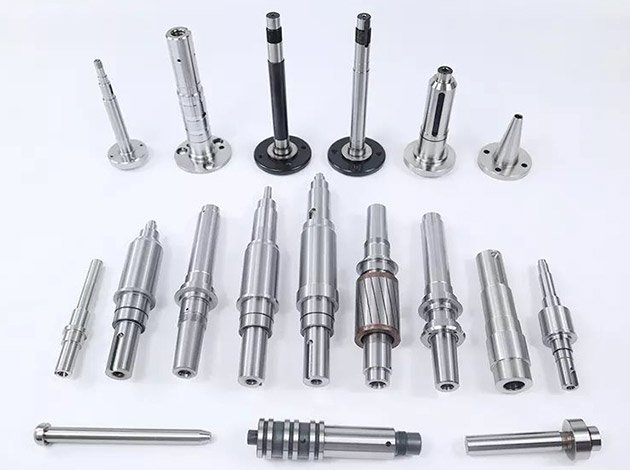
Solving the technical challenges above is necessary but not sufficient. Medical OEMs and Tier 1 suppliers also demand traceability, validated processes, and on-time delivery across multi-year product lifecycles. This is where IndustryApex Technology’s role as a supply chain integrator and ODM solution provider creates measurable value.
3.1 Fully Controlled Precision Manufacturing System
IndustryApex operates a closed-loop manufacturing system governed by an enterprise ERP platform that links quotation, raw material lot tracking, in-process SPC data, final inspection records, and shipment documentation. With over 30 years of precision manufacturing experience, our team has migrated from traditional toolroom practices to a digital-first workflow that meets the documentation rigor expected by ISO 13485 customers.
3.2 Multi-Process Technology Stack Under One Roof
Titanium implant programs rarely involve a single process. A typical spinal cage may require 5-axis CNC milling for the lattice geometry, EDM for sharp internal features, precision grinding for sealing surfaces, and ceramic tooling fixtures for thermal stability during inspection. IndustryApex’s in-house capabilities span:
- 3-axis to 5-axis CNC machining for complex implant geometries and patient-specific designs
- Wire and sinker EDM for sharp corners, micro-features, and hardened tooling
- Precision grinding (cylindrical, surface, and jig grinding) for sub-micron finishes
- Industrial ceramics for fixtures, gauges, and wear-resistant tooling
Consolidating these processes eliminates the delays, quality drift, and traceability gaps that occur when components are shuttled between subcontractors.
3.3 Built for Global OEM and Tier 1 Suppliers
Our customer base is global OEM and Tier 1 suppliers across medical, aerospace, and high-precision industrial sectors. The same disciplines that govern aerospace titanium machining, controlled FAI, AS-level documentation, full material traceability, transfer directly to medical implant programs. Cross-pollination between regulated industries is one of the structural advantages of working with a diversified ODM rather than a single-vertical job shop.
4. Industry Applications
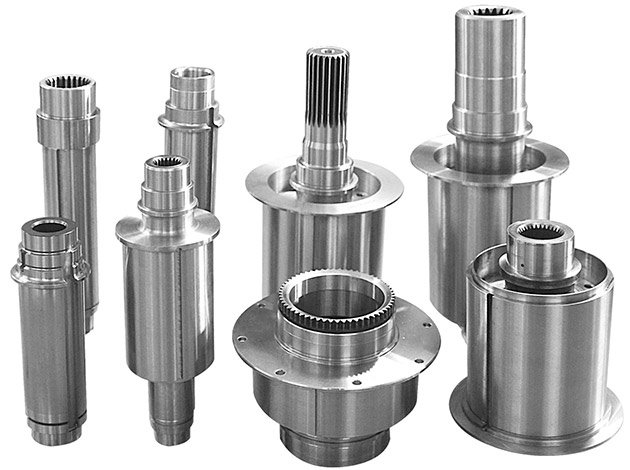
The technical and supply chain capabilities outlined above translate into concrete component categories that IndustryApex produces for medical device OEMs:
4.1 Orthopedic Implants
Hip stems, acetabular shells, knee tibial trays, and bone screws machined from Ti-6Al-4V ELI bar stock. Tolerances on taper interfaces are typically held within ±5 µm, with surface roughness controlled to Ra 0.2 µm on bearing surfaces.
4.2 Spinal and Trauma Hardware
Pedicle screws, interbody cages with porous lattice structures, plates, and rods. These components combine 5-axis milling with thread whirling and precision grinding to meet anatomical fit and pull-out strength specifications.
4.3 Dental Implants and Abutments
Two-piece implant systems with internal hex, conical, or proprietary connection geometries. Dimensional repeatability across high-volume lots is critical because abutments must mate with implants from different manufacturing batches over a patient’s lifetime.
4.4 Surgical Instruments and Device Sub-Assemblies
Beyond implants, the same titanium machining infrastructure produces reusable surgical instruments, robotic surgery end-effectors, and precision sub-assemblies for diagnostic and therapeutic devices. The discipline transfers further to adjacent regulated industries, including hydraulic pump components where surface integrity and dimensional repeatability govern field reliability.
4.5 Patient-Specific and Custom Implants
The shift toward personalized medicine has increased demand for low-volume, high-mix titanium components driven by patient CT data. IndustryApex’s flexible ERP-driven workflow accommodates batch sizes from one to thousands without sacrificing traceability or qualification rigor.
5. Call to Action: Partner with a Proven Titanium Machining ODM
Titanium implant manufacturing rewards partners who combine deep metallurgical know-how, multi-process capability, and disciplined supply chain governance. For medical OEMs and Tier 1 suppliers evaluating new sourcing strategies, consolidating titanium machining with a vertically integrated ODM such as IndustryApex Technology reduces qualification cycles, stabilizes long-term cost, and shortens time-to-market for next-generation implant platforms.
To discuss your titanium implant program, share drawings under NDA, or request a capability audit, visit our main capabilities page or reach our engineering team directly via the contact page. Bring us your toughest titanium component, and we will respond with a manufacturing solution, not just a quotation.