- Shaft
- Molds&Tools
- Hydraulics And Pump
- Hair transplant needle
- Hydraulics And Pump
- Precision CNC Shaft Machining Manufacturer for High Performance Applications
- Energy Industry CNC Machining Parts Supplier
- Aerospace CNC Machining Parts Manufacturer
- Aerospace CNC Machining Parts Manufacturer
- Automotive & EV CNC Machining Parts Supplier for OEM and Tier 1
- Medical CNC Machining Parts Supplier for Precision Medical Devices

Custom Gear Manufacturing: From Prototyping to Mass Production — A B2B Engineering & Supply Chain Analysis

Executive Summary
In today’s precision-driven industrial landscape, custom gear manufacturing has evolved from a niche capability into a strategic supply chain imperative. Whether serving aerospace OEMs demanding sub-micron tolerances, hydraulic system integrators requiring zero-defect valve components, or automotive Tier 1 suppliers managing high-volume drivetrain assemblies, the ability to scale from a validated prototype to full mass production without compromising dimensional accuracy is the defining competitive differentiator.
This analysis examines the engineering workflow, supply chain architecture, and ODM capabilities that separate commodity gear suppliers from true precision manufacturing partners. For global OEM procurement teams and engineering directors, understanding this pipeline is not merely academic — it directly impacts product reliability, time-to-market, and total cost of ownership across the entire component lifecycle.
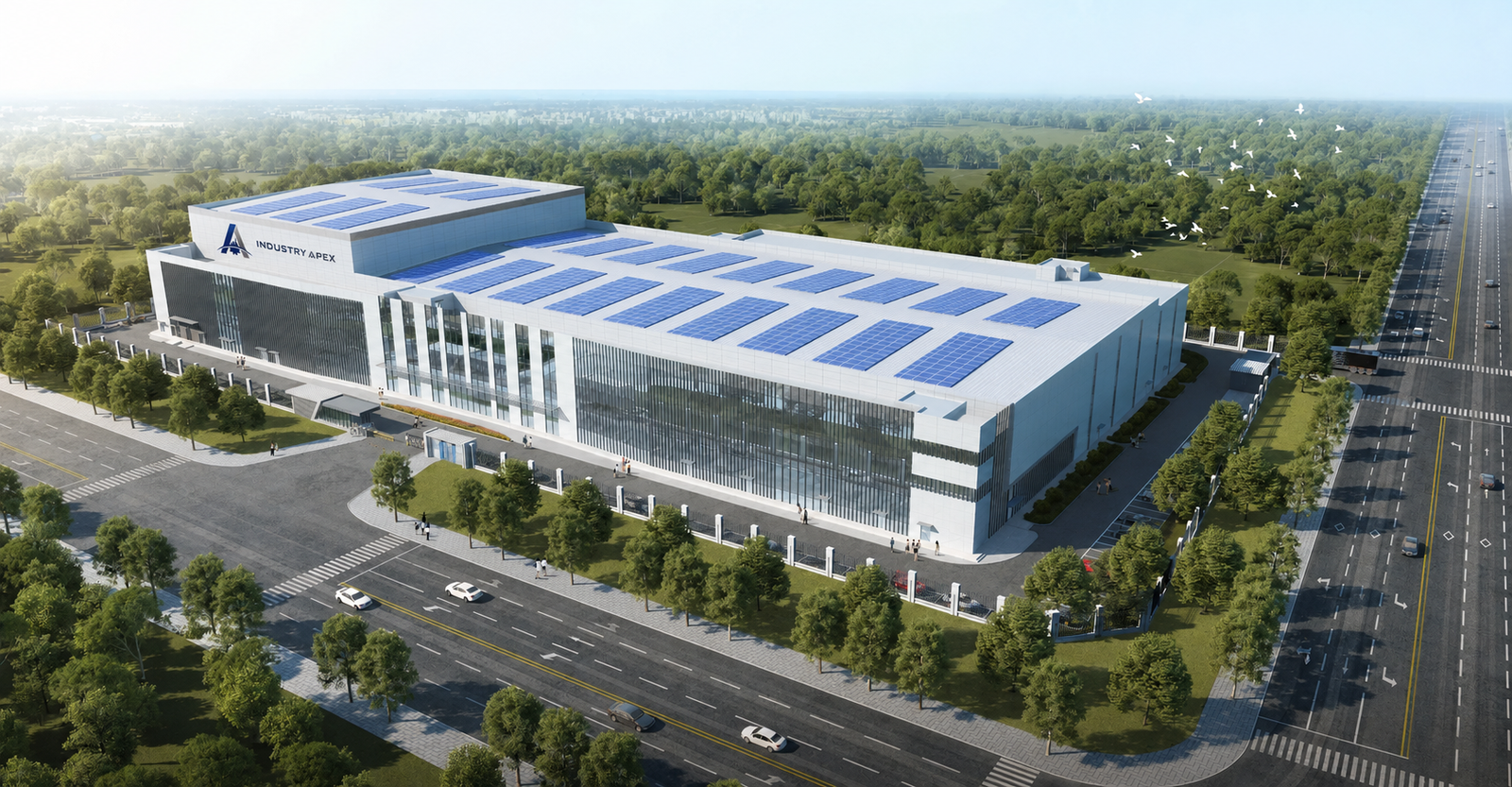
At IndustryApex Technology (IndustryApex CNC), over 30 years of precision manufacturing experience and a fully integrated ERP-controlled production system position us as a supply chain integrator capable of managing every phase of the gear manufacturing journey — from first-article inspection to multi-thousand-unit production runs.
Technical Deep Dive: Engineering the Gear Manufacturing Pipeline
Custom gear manufacturing is not a linear process — it is an iterative engineering discipline that demands tight coordination between design validation, material science, machining strategy, and quality assurance. The pipeline can be broken into four critical phases: design for manufacturability (DFM), prototype machining, process qualification, and production scaling.
Phase 1: Design for Manufacturability (DFM)
Before a single chip is cut, the DFM review stage determines whether a gear design can be produced at the required tolerance class (AGMA, DIN, or ISO) within cost and lead-time constraints. Key parameters evaluated include module and pitch, pressure angle, helix angle for helical gears, root fillet geometry, surface finish requirements (Ra values), and material hardness targets post heat treatment. Errors caught at DFM cost a fraction of those discovered during prototype validation or, worse, during production ramp-up.
Phase 2: Prototype Machining — 3 to 5-Axis CNC and EDM
Prototype gears are typically machined on 5-axis CNC machining centers, which allow complex tooth profiles, undercuts, and integrated shaft features to be produced in a single setup — eliminating cumulative datum errors that multi-setup processes introduce. For hardened tool steel dies and mold inserts used in gear forming operations, Electrical Discharge Machining (EDM) provides the sub-micron surface integrity that grinding alone cannot achieve on complex geometries.
Precision grinding — both cylindrical and profile grinding — is applied post-heat treatment to achieve final tooth geometry within AGMA Quality 10–12 tolerances. This is non-negotiable for gears operating in high-speed, high-load environments such as aerospace actuators or hydraulic pump drives.
Phase 3: Process Qualification and First Article Inspection (FAI)
Before production release, a rigorous FAI protocol validates that the manufacturing process — not just the individual part — is capable of producing conforming gears consistently. This includes CMM-based dimensional verification, gear analysis (involute profile, lead, pitch, runout), material certification, and surface finish measurement. Statistical Process Control (SPC) parameters are established at this stage to govern the production run.
Phase 4: Production Scaling — ERP-Driven Manufacturing Control
Scaling from 10 prototype units to 10,000 production units introduces supply chain complexity that most job shops cannot manage. Material procurement lead times, tooling wear compensation, heat treatment batch scheduling, and outgoing quality control (OQC) sampling plans must all be orchestrated without introducing variation. An ERP-integrated manufacturing system provides real-time visibility into work-in-progress, tooling life, and quality data — enabling proactive intervention before non-conformances propagate through a production batch.
The ODM & Supply Chain Advantage: Why Integration Matters
For global OEM and Tier 1 suppliers, the traditional model of managing multiple single-process vendors — one for rough machining, another for heat treatment, a third for grinding, and a fourth for inspection — introduces unacceptable risk: fragmented accountability, extended lead times, and quality escapes at process handoffs. The ODM (Original Design Manufacturer) model consolidates this complexity under a single, engineering-capable partner.
Fully Controlled Precision Manufacturing System
IndustryApex Technology operates as a supply chain integrator, not merely a machining subcontractor. Our manufacturing system encompasses the complete gear production value chain: 3-axis and 5-axis CNC machining, wire and sinker EDM, precision cylindrical and profile grinding, industrial ceramics processing, and coordinate measuring. Every process is governed by our ERP system, which tracks material traceability, process parameters, tooling history, and quality records from raw material receipt through final shipment.
This level of vertical integration eliminates the inter-vendor quality gaps that plague multi-source supply chains. When a hydraulic pump gear requires a surface finish of Ra 0.4 μm on the tooth flanks and a bore tolerance of H6, there is no ambiguity about which supplier owns the outcome — we do, end to end.
30+ Years of Application Engineering Experience
Technical capability without application knowledge produces parts that pass inspection but fail in service. Over three decades of manufacturing gears for industries ranging from semiconductor equipment to energy infrastructure has built an institutional knowledge base that informs every DFM review, material selection decision, and process parameter choice. This experience is particularly valuable during the prototype-to-production transition, where unforeseen application demands — thermal cycling, shock loading, lubricant compatibility — must be anticipated and designed out before production tooling is committed.
Industrial Ceramics: The High-Performance Frontier
For applications where steel gears reach their performance limits — extreme temperatures, corrosive environments, electrical isolation requirements, or ultra-low friction demands — industrial ceramic gear components offer a compelling alternative. IndustryApex Technology’s ceramics processing capability extends our ODM offering into application spaces that conventional precision machine shops cannot serve, including semiconductor wafer handling equipment and medical device drive systems.
Industry Applications: Where Custom Gear Precision Delivers Competitive Advantage
Aerospace & Defense
Aerospace actuator gears and gearbox components operate under extreme load cycles, wide temperature ranges, and zero-tolerance-for-failure conditions. Aerospace CNC machining for gear components demands AS9100-aligned quality systems, full material traceability to mill certificate level, and first-article documentation packages that satisfy both OEM and regulatory requirements. Titanium and high-strength aluminum alloy gears for weight-critical applications require 5-axis machining strategies that maintain geometric accuracy while managing the thermal and work-hardening challenges these materials present.
Medical Devices
Surgical robotic systems, powered orthopedic instruments, and implantable device drive mechanisms rely on miniature precision gears where dimensional tolerances are measured in microns and surface finish directly impacts biocompatibility and sterilization cycle durability. ISO-certified CNC machining for medical components requires cleanroom-compatible manufacturing protocols, material certifications to ASTM F136 (titanium) or equivalent, and quality records that support FDA 21 CFR Part 820 compliance. The prototype-to-production pathway for medical gears is particularly demanding, as design changes post-510(k) clearance trigger re-validation requirements — making DFM rigor at the prototype stage a regulatory as well as engineering priority.
Hydraulics & Fluid Power
Gear pumps and hydraulic motor assemblies depend on gear geometry precision for volumetric efficiency. Tip clearance, backlash, and tooth profile accuracy directly determine internal leakage rates and pressure capability. Hydraulic pump gear components manufactured to DIN 3962 Quality 6 or better, with matched gear sets selected for minimal composite error, deliver measurable efficiency gains over commodity-sourced alternatives — a compelling total cost of ownership argument for hydraulic system OEMs.
Industrial Automation & Robotics
Collaborative robot (cobot) joint gearboxes, linear actuator drive gears, and conveyor system sprocket assemblies represent a rapidly growing demand segment for custom precision gears. The combination of high cycle counts, compact envelope constraints, and cost sensitivity in this segment rewards suppliers who can optimize gear geometry for manufacturability without sacrificing performance — precisely the value that an ODM partner with integrated DFM capability delivers.
Energy & Power Generation
Wind turbine pitch and yaw drive gears, oil & gas downhole tool gearing, and power generation auxiliary drive components operate in environments where maintenance access is limited and gear failure consequences are severe. Extended service life through optimized tooth geometry, case-hardening depth control, and shot-peening-induced compressive residual stress is the engineering priority — and the manufacturing process discipline to deliver it consistently across production batches is the supply chain priority.
Partner with IndustryApex Technology for Your Custom Gear Program
Whether you are qualifying a new gear design for a next-generation product platform, re-sourcing an existing production program to improve quality and lead time, or exploring ODM partnership for a complete drivetrain subassembly, IndustryApex Technology has the engineering capability, manufacturing infrastructure, and supply chain integration experience to deliver.
Our application engineering team is available to review your gear specifications, provide DFM feedback, and develop a prototype-to-production roadmap aligned with your program timeline and quality requirements. We serve global OEM and Tier 1 customers across aerospace, medical, hydraulics, automation, and energy sectors from our precision manufacturing facility.
Contact our engineering team today to discuss your custom gear manufacturing requirements and request a technical consultation. Bring your drawings, your tolerances, and your production volume targets — we will bring 30 years of precision manufacturing expertise to the conversation.